
Lotte Arai
1,100m vertical, 22m annual snowfall, 8 freeride zones across 524 acres. Ikon Pass access in Myoko, Niigata Prefecture.
Season 2025-2026
Opens
5 Dec 2025
Closes
29 Mar 2026
Days open
114
Annual snow
22m
The Overview
Michael Fulton
Melbourne-based skier and snowboarder with 50+ resorts across 5 continents. Specialises in Australian resorts and international resort comparisons.
Lotte Arai occupies the eastern slopes of 1,429-metre Mount Okenashi in Niigata Prefecture, offering 1,100 metres of vertical drop across 524 acres. The resort operates 14 runs spanning 329 to 1,429 metres elevation, with terrain distributed as 36 per cent beginner, 36 per cent intermediate, 20 per cent advanced and 8 per cent expert. Reopened in December 2017 following extensive refurbishment under Korean conglomerate Lotte, the resort receives an annual average of 18 to 22 metres of dry powder snow. Ikon Pass holders receive seven days of access with no blackout dates, whilst Ikon Base Pass holders receive five days.
The ski area layout centres on a single elongated bowl served by six lifts, with eight designated freeride zones occupying 80 per cent of the terrain. Groomed pistes include the 5.2-kilometre Myoko Long Run and Village Road for beginners, whilst advanced skiers navigate Legendary and Mamushi Gaeshi, the latter named for terrain steep enough to flip a viper. Above-treeline sub-alpine bowls including Zendana Bowl and Big Bowl offer multiple fall lines into the resort. The longest continuous run extends 7 kilometres with avalanche-controlled off-piste areas managed by proactive ski patrol.
The base area centres on a 257-room hotel complex with ski-in, ski-out access, multiple restaurants, Hoshizora onsen with outdoor pools, and Spa Manna wellness facilities. The resort operates Myoko Snowsports, an English-language international ski school that has won Japan's Best Snowsports School at Ski Asia Awards for 2019, 2020, 2022, 2023 and 2024. Lotte Arai won Japan's Best Ski Resort at the World Ski Awards 2020 and maintains recognition for powder quality and luxury facilities.
The integrated resort structure suits families seeking convenience and advanced riders targeting controlled freeride terrain in a single-mountain environment. Season dates run 5 December 2025 to 29 March 2026, covering 115 operating days. Limited groomed variety means intermediate skiers may exhaust piste options within two to three days, though extensive off-piste zones provide depth for confident all-mountain skiers willing to explore beyond marked runs.
1100m
Vertical
14
Runs
524 acres
Skiable
22m
Annual snow
Ikon Pass
Pass
The Terrain
14 runs across 524 acres skiable
Lotte Arai drops a full 1,100 metres across 212 hectares, from a 329-metre base to a 1,429-metre summit, which makes it far bigger than its 14 runs suggest. The split is 36% beginner, 36% intermediate, 20% advanced and 8% expert, a more balanced spread than most Japanese resorts. Two gondolas, two quad chairs and two double chairs move skiers around a mountain in the Myoko region of Niigata Prefecture. Groomed runs are only part of the story, because the larger prize at Arai is the lift-accessed off-piste terrain beyond the piste markers, which draws experienced powder skiers.
On the groomed side, the Myoko Long Run stretches about 5.2 kilometres and Village Road keeps beginners comfortable, while Exciter and Mamushi Gaeshi give advanced skiers real pitch. Off-piste, Zendana Bowl and Big Bowl are broad open faces, with steeper numbered lines such as the KG gates for confident skiers. Tree skiing ranges from open glades to tighter timber, and patrol opens zones after good snowfall. Arai suits strong intermediates through to experts wanting guided-style powder access without leaving the resort boundary. Always check conditions and zone status with patrol first, and carry avalanche gear for anything beyond the gates.
Terrain split
14
runs
14 runs across 4 grades
Beginner5 runs · 36%
Intermediate5 runs · 36%
Advanced3 runs · 20%
Expert1 run · 8%
Time it right
When to visit Lotte Arai
The 2025-2026 season operates from 5 December 2025 to 29 March 2026, spanning 115 days. Lotte Arai typically runs from early December through late March, with some years extending operations into late April or early May depending on snowpack. The Myoko region receives consistent storm cycles from December through March as northwest flow off the Sea of Japan wrings moisture against the first mountain barrier.
Annual snowfall averages between 15 and 22 metres depending on measurement location and seasonal variation, with the resort's position and elevation creating reliable powder accumulation. Base elevation of 329 metres yields denser snow near the gondola, whilst upper elevations above 1,000 metres maintain squeaky, dry conditions through midwinter. The resort offers limited snowmaking, relying primarily on natural accumulation. Base depths regularly exceed three metres during peak winter.
January and early February deliver peak powder conditions with frequent multi-day storm cycles and cold temperatures preserving snow quality. Late December sees strong early-season accumulation, whilst March transitions to spring corn conditions with extended daylight and milder temperatures. Weekdays between mid-January and early February offer optimal powder with minimal crowds, avoiding the holiday rush periods that draw domestic visitors.
The resort operates snow tubing, a Kids' Garden play area and snow rafting activities throughout winter. First tracks programmes allow early gondola access for dedicated powder seekers. Spring events include terrain park setup in the Zendana area from late season onwards. The resort transitions to green season operations from May through November, featuring the 1,501-metre zipline tour and Tree Adventure aerial course.
Season 2025-2026
5 Dec 2025
Opens
29 Mar 2026
Closes
114
Days open
22 m
Annual snow
Getting there
Getting to Lotte Arai, and where to stay
Lotte Arai sits on Mount Okenashi's eastern slopes in Myoko city, Niigata Prefecture, on Honshu's northwest coast. The base village lies at 329 metres elevation in agricultural countryside 21 kilometres north of the core Myoko Kogen resort cluster and 22 kilometres south of Joetsu city. The resort faces east with views extending to the Sea of Japan on clear days, positioned where mountain ranges stretch from Mount Myoko to the coast across rice paddies.
Joetsu city, 15 kilometres northwest with a population exceeding 190,000, provides the nearest significant urban services. The town of Arai, immediately adjacent to the resort, offers limited independent accommodation including Hotel Soboku and Arai Villa. Myoko Kogen resort villages including Akakura Onsen lie 30 minutes south by car. Nagano city sits 50 kilometres southeast, whilst Niigata city and port facilities are located two hours north by car.
From Tokyo, take the Kanetsu Expressway to Fujioka Junction, then the Joshinetsu Expressway to Arai Smart Interchange, totalling 130 minutes of motorway driving plus seven minutes on local roads. The Hokuriku Shinkansen from Tokyo Station to Joetsu-Myoko Station requires one hour 46 minutes, with the resort located 15 kilometres southeast of the station. Drive time from Osaka via Meishin and Hokuriku Expressways extends to approximately five hours 45 minutes.
Narita and Haneda airports in Tokyo serve international arrivals, approximately three to four hours by combined train and shuttle. Niigata Airport, two hours away by car, connects to major Asian hubs. From Joetsu-Myoko Station, free resort shuttles operate throughout the day with advance booking required, or taxis cover the 15-kilometre distance for approximately 4,000 yen. Direct airport shuttle buses run from Narita, Niigata and Toyama airports with advance reservations.
Where to stay
Search all stays →Hotels and lodges near Lotte Arai, powered by Stay22.
Latest News
From the SnowStash desk
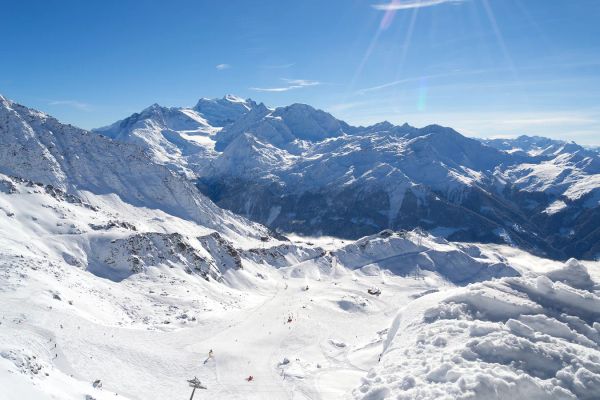
Alps Snow Forecast: Up to 64 cm Headed for the High Glaciers as the Snow Line Drops
The Alps are about to swap mild, sunny October weather for something far more wintry. A cold front arrives Tuesday, and SnowStash forecasts have Monterosa Ski out in front with 64 cm over 14 days, ahead of Blatten Belalp (55 cm) and Verbier (43 cm). The snow line should fall below 2000 metres by Wednesday night, and glaciers across Switzerland, Italy and Austria are in line for the best of it. The wind will have a say too.
20 Oct 2026

Four Dead After Avalanche Near Ski Portillo in Chile
A large avalanche struck near Laguna del Inca adjacent to Ski Portillo on Saturday afternoon, killing four people and injuring four others. The group were day visitors mountaineering in the backcountry after reportedly being warned about elevated avalanche risk by resort staff.
18 Oct 2026

Europe Ski Resorts Open Now: What Is Skiable in Mid-October 2026
Europe’s ski season is open, technically. After a record-warm summer, glaciers in Austria, Switzerland and Italy are running a few pistes apiece, Sölden, Stubai and Kitzsteinhorn started late, Titlis has pushed back to 24 October, and Zermatt reopens a few lifts on 14 October after more than two months shut. Finland’s Levi and Ruka are skiing on stored snow. Here is what is open, and what you actually get at each.
14 Oct 2026

Zermatt Plans World Cup Downhill Return on the Gornergrat for 2028
Zermatt is having another crack at a World Cup downhill, and this time nobody has to cross a border. Around 13 million Swiss francs is going into rebuilding the Gornergrat piste, including a jump fed by a roughly 300-metre in-run across the roof of the Gornergrat Railway gallery, with the Matterhorn lined up behind it for the TV cameras. First men’s race is pencilled in for March 2028, pending FIS homologation.
14 Oct 2026

Mt. Rose Begins Snowmaking for the 2026-27 Season at Lake Tahoe
Lake Tahoe’s highest base elevation is paying off early: Mt. Rose has started making snow for 2026-27 after the first flurries and a cold snap. The Nevada resort is backing it with nearly US$2 million in upgrades, including a replacement snowmaking main line, a new PistenBully groomer and restraint bars on every lift. Opening day is yet to be confirmed, though Heavenly and Northstar are already eyeing 20 November.
13 Oct 2026

Utah Ski Resorts 2026-27: What’s New at Alta, Deer Valley, Powder Mountain and More
Utah is still building flat out. For 2026-27, Powder Mountain opens a steep new Skytrac chair into more than 1,000 acres of advanced terrain, Deer Valley adds 200 acres on Hail Peak, Sundance gets a new quad and Park City adds a gondola from its new parking structure. Snowmaking is expanding almost everywhere, Eagle Point stays closed after the Cottonwood Fire, and the 2034 Games are setting the pace. Here’s what’s new, resort by resort.
13 Oct 2026

Mt Hutt Invests NZ$12 Million in Base Area, Tripling Its Sun Deck
Mt Hutt is getting busier, and its base lodge is about to catch up. NZ$12 million goes into a heated sun deck roughly three times the current size (430 m² to 1,300 m²), plus a new toilet block, heated steps down to snow level, extra storage and a new food and beverage outlet. Building starts after the 2026 season, with everything due for winter 2027.
11 Oct 2026

Vermont Ski Resort Opening Dates 2026-27: Few Dates Set, Killington Waits on the Cold
Vermont's season is slow to take shape. Stratton is tentatively targeting 18 November and Sugarbush 21 November, while Pico has Friday 11 December on the calendar. Killington never sets a date and opens when the snowmaking allows, and Vail Resorts has yet to name days for Stowe, Okemo and Mount Snow. The forecasts disagree about snow, and the main El Niño worry for the Green Mountains is warmth.
9 Oct 2026
Lotte Arai Webcams
6 live angles across the mountain. Tap any camera to go full-screen.
About Lotte Arai's live webcams
Check live conditions across Lotte Arai with 6 real-time webcams showing snow, weather, and lift operations, updated every 10 minutes. Check high-elevation cams for powder visibility and base-area cams for crowd levels before you head up.
Camera guide
- Roppongi Station750m
- Stay connected to lower mountain operations through this Lotte Arai webcam at Roppongi Station at 750 meters elevation. This Lotte Arai live cam provides views of the mid-base area where multiple trails and lifts intersect, offering real-time updates on snow conditions and guest flow. Essential for monitoring weather transitions throughout the day, this live snow cam helps visitors plan their skiing strategy, while this Lotte Arai web cam showcases the resort's modern lift infrastructure and well-designed trail layout in the heart of Japan's snowiest region.
- Summit of Mt. Okenashi1280m
- Experience breathtaking panoramic views from the summit of Mount Okenashi through this commanding Lotte Arai webcam positioned at 1280 meters elevation overlooking the Sea of Japan. This Lotte Arai live cam captures sweeping vistas across the resort's legendary powder terrain and tree skiing zones that receive massive coastal snowfall. Essential for checking upper mountain visibility and snow conditions, this live snow cam showcases the dramatic alpine landscape, while this Lotte Arai web cam reveals why this Chubu region resort has become renowned for deep, consistent powder and world-class terrain in the Myoko area.
- Upper Be Free & Encore1100m
- Track powder conditions on Lotte Arai's premier upper terrain through this strategic Lotte Arai webcam positioned above the Be Free and Encore runs at 1100 meters elevation. This Lotte Arai live cam provides real-time views of the resort's most popular advanced and intermediate slopes, helping powder hunters assess fresh snowfall and snow quality. Perfect for planning your descent through legendary tree runs, this live snow cam captures the upper mountain action, while this Lotte Arai web cam demonstrates why this resort attracts serious skiers seeking authentic Japanese powder experiences in the Niigata prefecture.
- Zendana Station950m
- Monitor mid-mountain lift operations through this Lotte Arai webcam positioned at Zendana Station at 950 meters elevation. This Lotte Arai live cam shows real-time activity at a key lift junction where multiple terrain zones converge, providing essential visibility of current conditions and crowd levels. Crucial for planning your route through the resort's diverse terrain, this live snow cam helps visitors navigate Lotte Arai's extensive trail network, while this Lotte Arai web cam captures the operational pulse of this modern Japanese resort in the snow-rich Myoko region.
- Lotte Arai Webcam Locations750m
- Explore the complete webcam network layout through this comprehensive Lotte Arai reference image showing all camera positions at 750 meters elevation. This Lotte Arai webcam map helps visitors understand the strategic placement of live cams across the mountain, making it easier to check conditions on specific terrain zones. Perfect for trip planning, this visual guide to the Lotte Arai live cam system demonstrates the resort's commitment to transparency, while this Lotte Arai web cam overview ensures powder hunters can monitor every aspect of this premier Japanese ski destination.
- Top 5 SKI RESORTS in JAPAN for SNOW
Lotte Arai snow cams FAQ
How often do Lotte Arai snow cams update?
All Lotte Arai snow cams and webcams update every 10 minutes with fresh images showing current mountain conditions. This frequent update schedule ensures you have access to near real-time conditions for planning your ski day at Lotte Arai.
Which Lotte Arai webcam shows the best powder conditions?
The high-elevation Summit of Mt. Okenashi webcam at 1,280m provides the clearest view of powder conditions and snowfall. These Lotte Arai webcams capture fresh snow accumulation and visibility better than base area cameras.
Can I see Lotte Arai lift queues on the webcams?
Yes. Multiple Lotte Arai snow cams specifically show lift queue areas and chairlift operations, helping you time your arrival and avoid peak queue periods.
When is the best time to check Lotte Arai snow cams?
Check Lotte Arai webcams early morning (7-8am) for overnight snowfall assessment, and mid-afternoon for current crowd levels and weather. The live cams are most useful after storm events to assess fresh powder.
How can I check current conditions before buying Lotte Arai lift tickets?
Use our Lotte Arai webcams alongside the live snow report to assess conditions before purchasing lift tickets. The webcams show real-time visibility, snow quality, and operational status.
Do Lotte Arai webcams work on mobile devices?
Yes. All Lotte Arai snow cams and webcams are optimized for mobile viewing, so you can check live conditions from anywhere using your phone or tablet.
More Lotte Arai intelligence: snow report, lift tickets, trail map, resort overview.