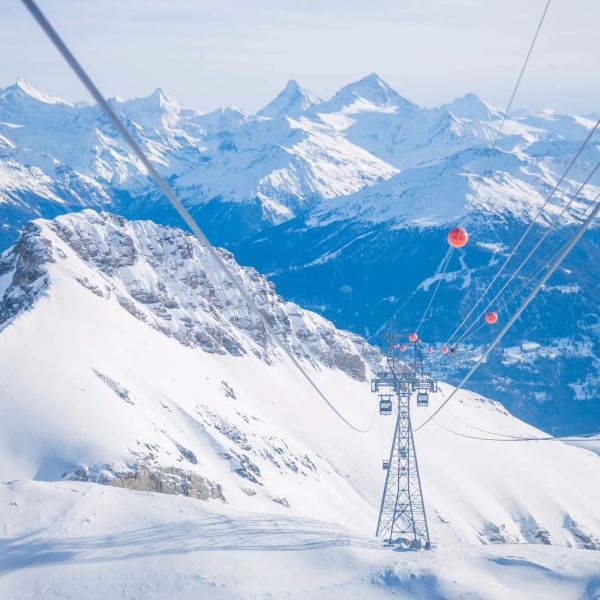
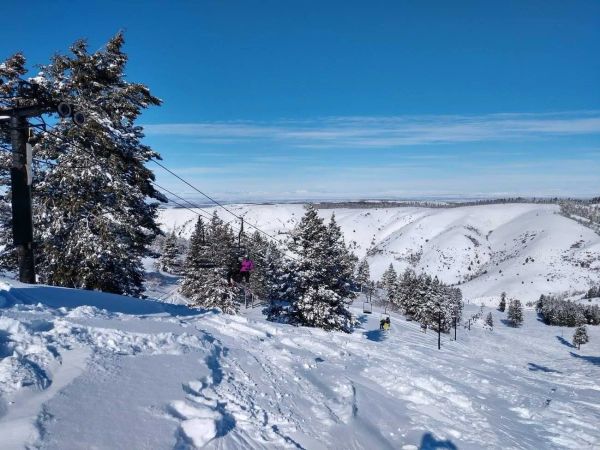
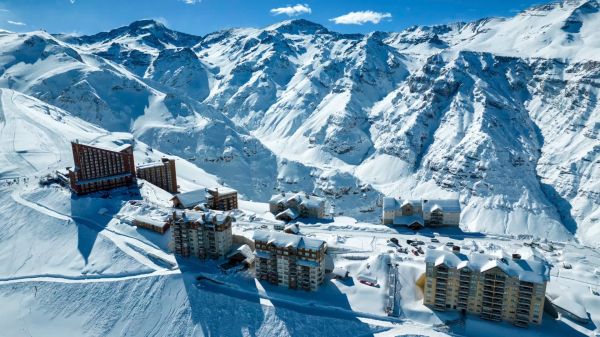
Follow my journey through Mayrhofen's massive 10,751-acre terrain as I transition from the family-friendly Ahornbahn to conquering the infamous Harakiri—Austria's steepest slope with its intimidating 78% pitch. Discover a resort that rivals North America's giants with modern lifts, diverse terrain, and unexpected attractions like a birds of prey sanctuary.
From Family Runs to Austria's Steepest Slope: Exploring Mayrhofen's Massive Terrain
My morning in Zillertal Valley starts with breakfast at Hotel Tipostch. I drove in from Golden the night before, arriving around 8 PM when darkness had already settled over the valley, leaving everything to be discovered in daylight.
With an early start planned, I'm eager to explore. I'm staying in a little town called Stumm, about 15 minutes from Mayrhofen, where I have an 8 AM meeting with the Mayrhofen Bergbahn team at the base of the Ahornbahn gondola.
I drive down and park at the Ahorn Aerial Tram base around 7:30 AM. Surprisingly, nothing in Mayrhofen actually opens before 8 or 8:30 in the morning! After searching, I finally find one place for a small coffee before heading to my meeting.
Meeting the team proves invaluable—getting insights about the resort from the people who know it best. With lift ticket in hand, I'm ready to start my two-day adventure at Mayrhofen.
This massive resort boasts 56 marked trails and 142 kilometres of piste. While that might not sound enormous, my calculations using Calcmaps show the resort covers approximately 10,751 acres. When compared to North American giants like Park City, Whistler, or Snowbird, Mayrhofen is genuinely massive. I know I won't be able to explore the whole area in just two days, but I'm determined to try.
I board the Ahornbahn aerial tram—the largest in Austria, carrying 160 passengers—which accesses the side of the resort primarily designed for families. I choose to start here on this smaller side to warm up with a few laps before jumping on the Penkenbahn after lunch to explore the main part of the resort.
As I'm working on improving my skiing skills, beginning in the family section seems perfect. At the summit, I take several laps around the area. It's refreshing to see that despite being the family area, the lifts aren't neglected—there's a nice eight-seater chairlift, a good six-seater, and a couple of T-bars (though I think they were actually poma lifts).
One of the highlights is the Albert Adler tour. Albert, an eagle, is Mayrhofen's mascot (fitting since the resort "soars high"). The tour features fun, winding slopes perfect for children and families, with plenty to see while learning to ski. It runs from the top of Ahorn all the way down to the six-seater area, covering about 500-600 metres of vertical—not insignificant!
To return to Mayrhofen town, you need to take an advanced run. Most skiers exploring this area spend the day here before taking the Ahorn aerial tram back down to base.
The marketing team recommended I check out the birds of prey sanctuary—something I didn't even know existed. Recently renovated, the birds now stay on the mountain year-round in their new custom-built house and full stadium. It's an unexpected attraction for a ski resort, but Mayrhofen is working to provide complete winter experiences beyond skiing—catering to winter hikers and those who might not want to ski every day.
After a few more enjoyable laps in this area, I make my way from the top of the Ahorn area at 1,565 metres all the way back to the base in town at 630 metres. The journey takes me through a beginner run transitioning to an intermediate run, before finally descending the number 5 piste—an advanced run from the bottom of the six-seater chair all the way to town.
My FIRST time at MAYRHOFEN, Austria 🇦🇹
Taking on the Infamous Harakiri
It's now around 11:30, maybe midday, and I'm back at the base in the town of Mayrhofen. Knowing I'm heading to the Penken side of the resort, home to more technical terrain and adventure, I decide to switch to my trusty snowboard.
I'm much more comfortable on a board and don't want to tackle advanced technical terrain while still early in my ski journey. I walk five minutes from the Ahornbahn parking to the Penkenbahn, a massive gondola that opened perhaps five or six years ago, replacing a much older one. It's quick and efficient, speeding straight up over the towering cliff faces that look down on Mayrhofen. The views of the town and surrounding mountains as you ascend are world-class, and I feel privileged to ride these lifts and enjoy these spectacular vistas.
Once at the top of the Penkenbahn, I head over to the Kombibahn, a combination lift featuring an eight-seater chairlift and gondola. You need to take this lift (or ride to one of the others) to continue ascending. Up here, you'll find yourself at the main top section of the Penken part of the resort. Many lifts connect at the top, and I make my way down the number 33 piste as I head straight towards the six-seater Knorren lift.
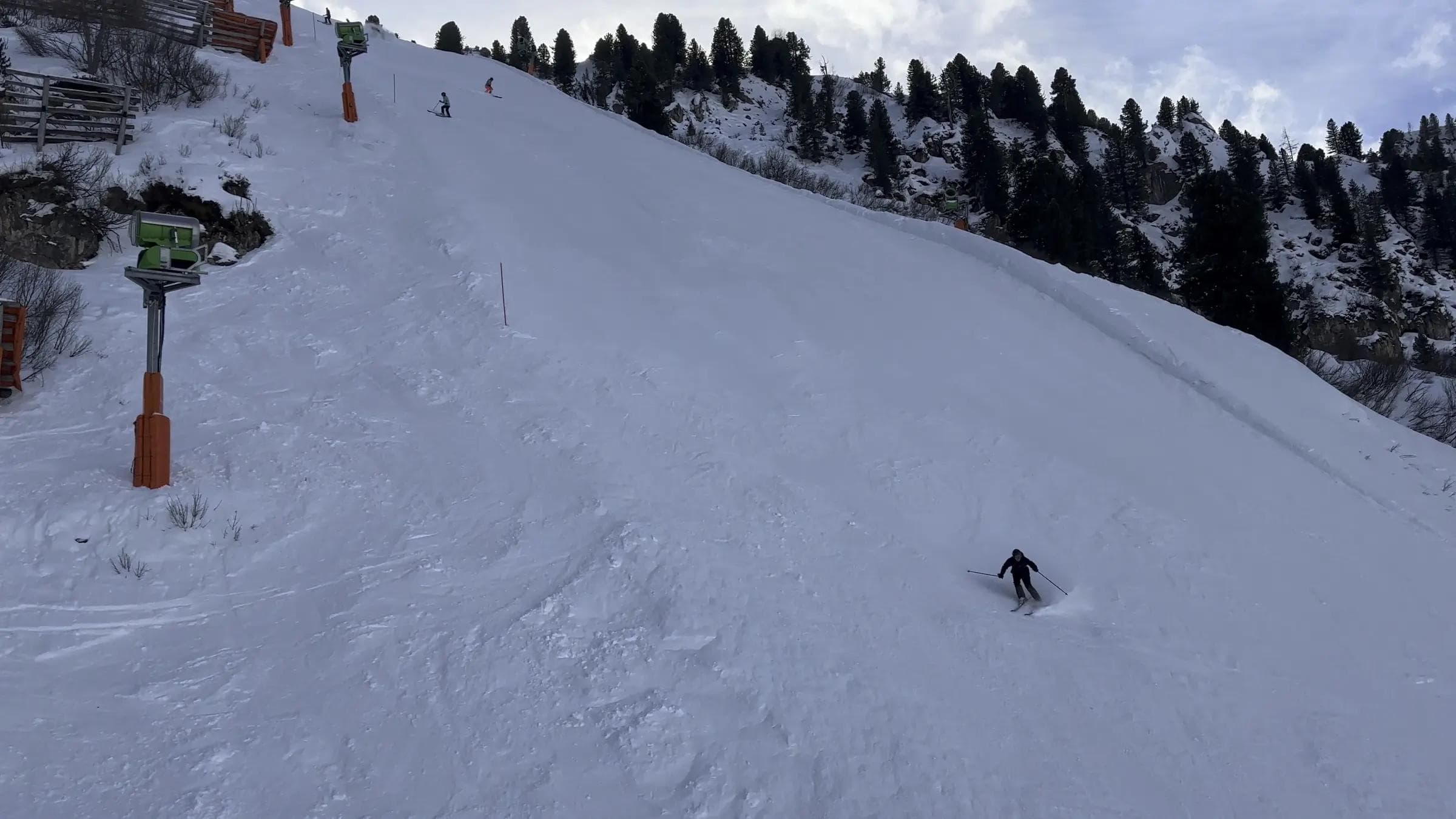
Now, if you know anything about Mayrhofen or the steepest ski slopes in Austria, you'll be familiar with a piste called the Harakiri. "Harakiri" means "suicide" in Japanese, and there are countless videos of people falling on this piste and unable to get back up because it's so steep that once you fall, gravity just pulls you down—you simply cannot get back up until you reach the bottom.
The pitch is 78%. I don't know what that converts to in degrees, but it's steep. It doesn't look particularly steep when viewing it on YouTube or GoPro footage, but when you're sitting on the lift heading straight up to the top and watching skiers and riders come down—many of them falling—you realise just how steep this run truly is.
So, with a certain level of confidence, I jump on the lift and set off to take on the Harakiri. There's a nice meandering entrance, but once you start, there's no going back. You turn the corner and it feels like the ground just plummets from beneath you. The run was in the shade—I think it sits in shadow all day, every day—and it was icy.
I made it about halfway down on my first attempt before catching an edge, ending up on my bum and sliding as snow was pummelled towards me from my snowboard. I knew this was one of the hardest ski slopes in Austria, so I wasn't shocked that I didn't make it down on my first run. There's nothing better to do than get back on the lift and give it another go.
So it was back up the Knorren lift to the top to take on the Harakiri again. Thankfully, this time I successfully made it all the way down, having gained prior knowledge of the icy sections and what to expect. It was quite incredible to look back up at this piste, knowing I had just conquered it, even though it had conquered me earlier.
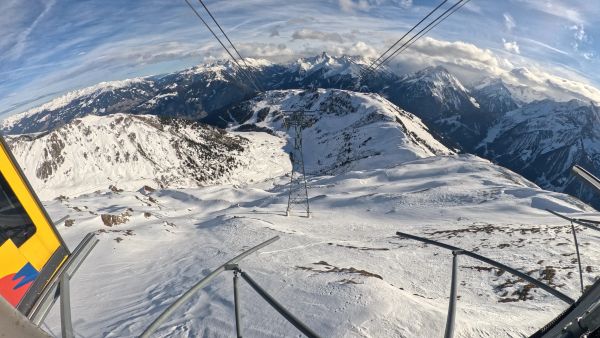
A skier on the Harakiri Piste as seen from the lift. Credit: SnowStash
Exploring Rastkogel and Beyond
From here, I jumped on the 150er-tux, another aerial tram. My favourite thing about Austria is that they have aerial trams in seemingly random locations, while other countries use them primarily as a main transport method. These resorts use them to connect certain areas. This is another huge aerial tram that fits 150 people and is the only way to get over to the Rastkogel part of the resort.
I was meeting friends in this area, so I took the aerial tram and did a few laps. This section is home to an incredible number of blue runs and intermediate red runs, with views straight down the rest of the Zillertal Valley all the way to Eggalm and the Hintertux Glacier, which we planned to visit later in the week. This area gets plenty of sunshine, so by 2 PM, it felt like beautiful spring conditions.
I headed down to the Lämmerbichl lift, a six-seater in the far corner of the Rastkogel zone, and met up with my friends. We spent the entire afternoon riding the side of the piste, enjoying fresh turns and making the most of the fun in the sun. We slowly made our way back towards the Horbergjoch lift for a few laps before returning to the 150er-tux and making our way down into the valley.
To get back, you take trail 66, then connect to 56, an advanced run that takes you straight down beneath the 150er-tux. We did a few more laps on the Nordhangbahn and Knorren lift before heading down pistes 25 and 26 back to the Penkenbahn.
To return from Penken to Mayrhofen, you must download on the Penkenbahn. If you've been to the resort, you'll understand why—it's all cliff faces from top to bottom with no way to create a ski piste because there simply isn't space for one. Going down is nearly as fun as going up.
Once back in town, we visited a local deli right at the base of the Penkenbahn where you can get some incredible meat sandwiches. It's packed, cheap, and easy—perfect for an early dinner. I collected my car and returned to Stumm, which, after a full day from 8 AM until 4 PM skiing at Mayrhofen, was a welcome sight. I was very excited for a hot shower to warm up, then to find some dinner and start exploring the local area in Stumm and the Zillertal Valley to discover what makes this particular valley such an incredible part of the world.