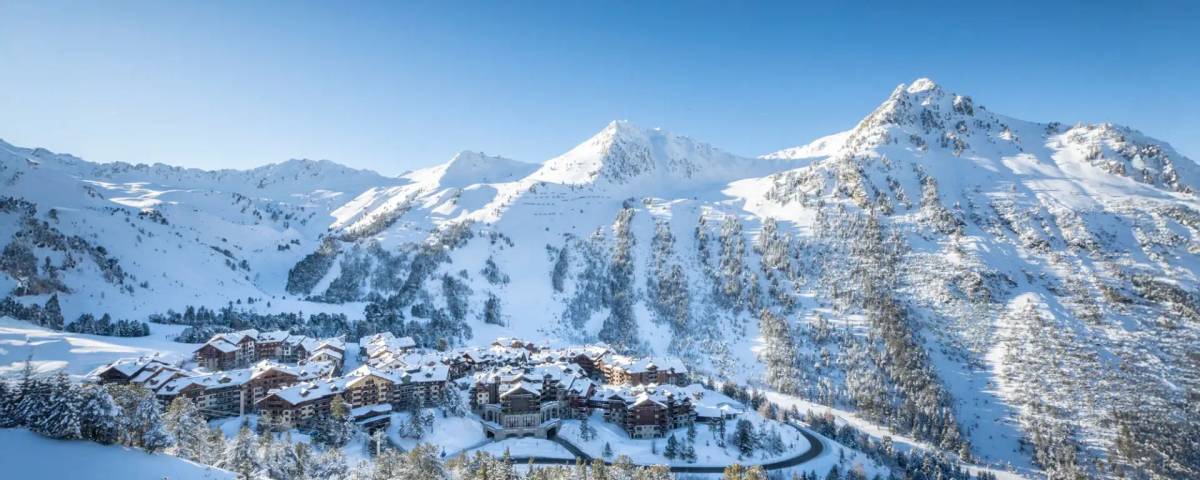
Les Arcs
Les Arcs offers 200km across 122 runs from 1,200-3,226m. Part of 425km Paradiski. Direct Eurostar access. Season: 13 Dec-26 Apr.

Season 2026 - 2027
Opens
12 Dec 2026
Closes
25 Apr 2027
Days open
134
Annual snow
6.1m
The Overview
Michael Fulton
Melbourne-based skier and snowboarder with 50+ resorts across 5 continents. Specialises in Australian resorts and international resort comparisons.
Les Arcs spans 200 kilometres of marked pistes across 122 runs between 1,200 and 3,226 metres, delivering a 2,026-metre vertical drop from the Aiguille Rouge summit to Villaroger village. The resort forms half of the 425-kilometre Paradiski domain alongside La Plagne, linked since 2003 by the Vanoise Express double-decker cable car. Terrain distribution weighs heavily towards beginners and intermediates with 52 per cent green and blue runs, 35 per cent reds, and 13 per cent blacks, whilst 70 per cent of pistes sit above 2,000 metres ensuring reliable coverage from December through April.
Four purpose-built villages—Arc 1600, 1800, 1950, and 2000—stack up the north-facing bowl alongside the traditional hamlets of Peisey-Vallandry and Villaroger. The 7-kilometre Aiguille Rouge descent ranks among the Alps' longest continuous runs, whilst the resort's mix of open alpine bowls and tree-lined sectors around Arc 1600 and Peisey-Vallandry provides options across all visibility conditions. Arc 1800's Apocalypse Park serves freestylers, and the infamous Flying Kilometre speed skiing track remains from the 1992 Albertville Olympics.
The villages split personality by altitude and era. Arc 1600 retains Charlotte Perriand's 1960s modernist architecture with a 7-minute funicular link to Bourg-Saint-Maurice's TGV station. Arc 1800 forms the commercial hub with 100 shops, two cinemas, and the majority of nightlife including La Folie Douce. Arc 1950 delivers pedestrianised luxury with Canadian-designed chalet architecture, whilst Arc 2000 at 2,100 metres prioritises snow reliability and rapid summit access over amenities.
The Paradiski pass unlocks La Plagne's additional 225 kilometres plus reciprocal day tickets to Espace Killy, Les Trois Vallées, and neighbouring Tarentaise resorts. The 2025-26 season runs 13 December to 26 April with recent infrastructure investments including the December 2024 Transarc gondola replacement and the new 10-person Villaroger gondola cutting valley ascent from 17 to 7 minutes. Les Arcs suits mixed-ability groups seeking extensive intermediate terrain, reliable snow conditions, and direct rail access from London, Paris, and Brussels via Eurostar connections to Bourg-Saint-Maurice.
2026m
Vertical
122
Runs
200 km
Piste
6.1m
Annual snow
The Terrain
122 runs across 200 km of piste
Les Arcs covers 200 kilometres of piste across 122 runs, from 1,200 metres at Villaroger to the 3,226-metre Aiguille Rouge, a vertical drop of 2,026 metres. The grading is gentle on paper, with 52% beginner, 35% intermediate, 10% advanced and 3% expert, so mixed groups can ski together without much friction. Most of the skiing faces north and is stacked above four purpose-built villages plus Peisey-Vallandry, so you pick a sector and work across it. Gondolas, six-seaters, two trams and a funicular keep things moving, and the lower woodland slopes stay skiable when the high ground is closed in.
The Aiguille Rouge descent is the showpiece, a run of around 7 kilometres and more than 2,000 vertical metres down to Villaroger, with its upper pitches now graded black. Below the Varet gondola the Lanches and Crêtes pistes form one long mogul field for strong legs. Arc 2000 suits confident skiers, with reds, blacks and off-piste close to the lifts, while the forests around Arc 1600 and Peisey-Vallandry give cover in flat light. Freeriders can follow an off-piste guide to Aiguille Rouge lines, ideally with a local guide. Intermediates and families will cover the most ground here.
Terrain split
122
runs
122 runs across 4 grades
Beginner63 runs · 52%
Intermediate43 runs · 35%
Advanced12 runs · 10%
Expert4 runs · 3%
Time it right
When to visit Les Arcs
Les Arcs opened 13 December 2025 and closes 26 April 2026, delivering a 19-week season typical of Tarentaise high-altitude resorts. The 2025-26 winter follows the pattern of mid-December starts and late-April closures, with occasional November weekend operations for early-season ski touring when snowfall permits. The funicular and main gondolas typically begin services by late November for autumn access to Arc 1600 and 1800 restaurants before full resort opening.
The domain receives an average 383 centimetres of annual snowfall with December averaging 76 centimetres and January peaking at 102 centimetres according to historical data. Summit snowpack at 3,226 metres typically exceeds 3 metres by mid-season, whilst base depths at 1,200 metres maintain 50-80 centimetres through north-facing exposure and snowmaking coverage across 43 kilometres of piste. Seventy per cent of terrain above 2,000 metres ensures reliable conditions from opening through April, with the Aiguille Rouge and Grand Col remaining skiable into late spring whilst lower west-facing slopes around Arc 1600 require morning skiing by March.
January through March delivers optimal powder conditions with February averaging 83 centimetres and 2.7 snowy days per week at mid-mountain elevation. Early December and late April offer quieter periods with shorter lift queues, though December's snowpack builds gradually and requires checking base-area coverage. March combines reliable snow depths with increasing sunshine hours—averaging 18 sunny days according to Paradiski statistics—making it popular for families. Spring skiing from mid-March sees softer morning snow and afternoon slush on sun-exposed terrain, whilst high runs retain good coverage through closing day.
The European Film Festival occupies the opening week from 13-20 December, screening over 100 films across Arc 1800 venues and attracting cinema professionals to the slopes. The Launchpad freestyle competition runs annually at Arc 2000, featuring European Big Air qualifiers with French national team riders. Speed skiing demonstrations occasionally use the Flying Kilometre track above Arc 2000, though the slope remains closed to public access. Weekly events include torchlight descents, live music at La Folie Douce from 3pm daily, and the resort operates limited night skiing on 2 kilometres of floodlit piste near Arc 1800.
Season 2026 - 2027
12 Dec 2026
Opens
25 Apr 2027
Closes
134
Days open
6.1 m
Annual snow
The record
Historical snowfall at Les Arcs
Daily snow reports at Les Arcs go back to 1996, 31 winters on the books. Open the record to compare winters, lifts and piste.
99 cm
Snowiest day
16 Apr 2025
64 cm
This winter · 2026-27
so far
611 cm
Typical winter
average of complete seasons
Winter totals
cm
Past wintersThis winter
Getting there
Getting to Les Arcs, and where to stay
Les Arcs occupies the north-facing slopes of the Vanoise Massif above the Haute Tarentaise valley in Savoie département, with villages spread across the communes of Bourg-Saint-Maurice, Landry, Peisey-Nancroix, and Villaroger. The valley town of Bourg-Saint-Maurice sits at 810 metres on the Isère river, whilst the ski domain spans from 1,200 metres at Villaroger to the 3,226-metre Aiguille Rouge summit with Mont Blanc visible 40 kilometres northwest. The resort borders the Vanoise National Park to the east, restricting development and preserving the Hautes de Villaroger nature reserve across the Aiguille Rouge's back slopes.
Bourg-Saint-Maurice functions as the transport hub 7 kilometres down-valley, serving as base for budget accommodation and offering baroque churches, weekly markets, and valley-floor amenities. Arc 1600 sits directly above via funicular, whilst Arc 1800 perches at its namesake elevation with views across to the Beaufortain range. Arc 2000 actually occupies 2,100 metres at the bowl's head, with Arc 1950 and the Peisey-Vallandry sector spreading west towards La Plagne. The Tarentaise valley concentrates Europe's largest ski resort density including Tignes-Val d'Isère 26 kilometres southeast and Les Trois Vallées 45 kilometres west via Moûtiers.
Road access follows the A430 dual carriageway from Albertville 55 kilometres northwest, continuing as the N90 through Moûtiers to Bourg-Saint-Maurice—a journey of 1 hour 50 minutes from Chambéry or 2 hours 45 minutes from Geneva in normal conditions. The final ascent from Bourg-Saint-Maurice to the villages takes 20-30 minutes on winding mountain roads requiring winter tyres or chains during snowfall. Parking costs approximately €88 weekly for indoor or €71 for outdoor lots at Arc 1600, 1800, and 2000, whilst all villages maintain car-free pedestrian cores with underground garage access.
Chambéry airport lies 125 kilometres west with 1 hour 50 minute transfers, serving UK regional flights from Bristol, Birmingham, and Edinburgh on weekend winter schedules. Geneva airport sits 165-180 kilometres northwest offering the broadest flight selection with 2 hour 30 minute to 3 hour 15 minute transfers depending on Saturday traffic and customs delays. Lyon-Saint-Exupéry and Grenoble airports both sit approximately 205 kilometres distant with 2 hour 35 minute journey times via the A43 motorway and N90. Bourg-Saint-Maurice TGV station receives direct Paris services in 4 hours 40 minutes and London Eurostar connections via Lille, with the funicular providing immediate slope access without road transfers.
Where to stay
Search all stays →Stays map loads when you scroll here
Hotels and lodges near Les Arcs, powered by Stay22.
Latest News
From the SnowStash desk

Val Gardena to Alpe di Siusi Lift Link Back in Play After Court Ruling
The Val Gardena-Alpe di Siusi lift link isn’t dead after all. A South Tyrol court has overturned Santa Cristina’s rejection of the new Monte Pana-Saltria link on procedural grounds, after the council skipped required public information sessions. Opponents want the missing sessions held and a fresh vote, and nothing has been approved. For now it’s still a bus between the two, but a plan first floated in 2017 is back in the conversation.
8 Nov 2026
Whistler Blackcomb Rockslide Zone Stays Closed Through 2026-27 Season
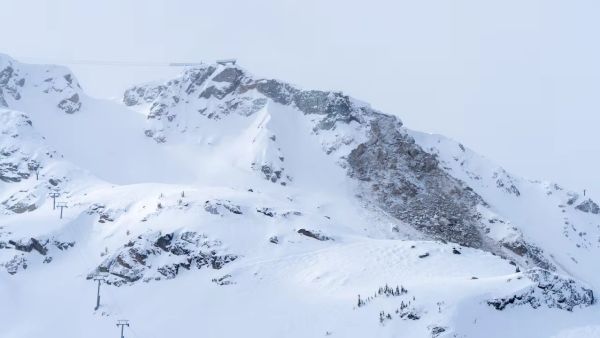
A section of Whistler Peak terrain will stay closed all 2026-27 season, Vail Resorts has confirmed, with rockslide mitigation work continuing into summer 2027. Peak Express is still expected to run this winter, but locals are already arguing about what’s actually off limits, whether the Whistler Bowl is gone, and why the news landed after pass sales wound down. Here’s where things stand.
7 Nov 2026
Loveland Ski Area Opens for 2026-27 and Marks 60 Years of Snowmaking
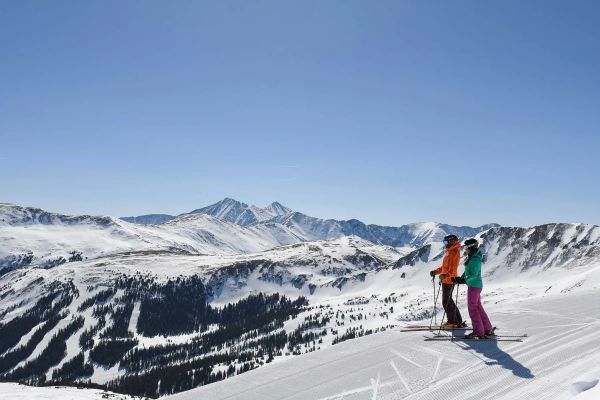
Loveland is open. The Colorado ski area started Chet’s Dream turning on Saturday 7 November to kick off 2026-27, with $60 adult lift tickets to mark 60 years of snowmaking. Expect three runs, nearly 1,000 vertical feet (about 300 metres) of top-to-bottom skiing, live music on the Basin Patio and no beginner terrain yet. Here’s what’s open, what it costs and when Loveland Valley follows.
7 Nov 2026
KFC Is Coming to the Slopes at Cortina and Madonna di Campiglio
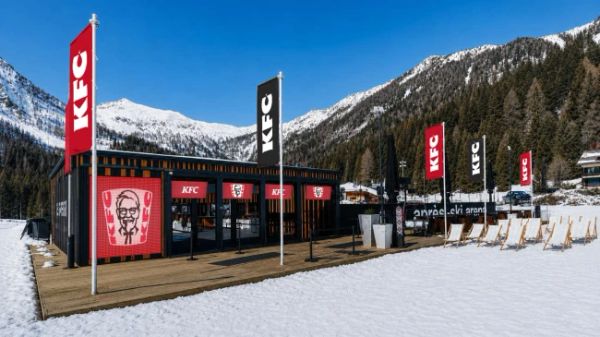
Fried chicken is heading up the Dolomites. From 5 December KFC will run two restaurants on the slopes - one at 2,123 metres at Cortina, one at 1,700 metres at Madonna di Campiglio - and the polenta-and-canederli crowd has opinions. Local politicians, conservation groups and plenty of Facebook commenters are calling it a step too far, while others just want a cheaper lunch. Here’s what’s on the menu and what’s the fuss.
5 Nov 2026

Mt Rose Aims to Open First in Tahoe on November 6
Mt Rose is going for the first-in-Tahoe title, with the Lakeview Express due to spin at 9 a.m. on Friday, November 6. One main lift, three runs and plenty of snowmaking, sitting on the highest base elevation in the region at 8,260 ft. Here is what is open, what is not (sorry, tubing fans), and how the early North American openings are stacking up.
4 Nov 2026

Europe Snow Forecast: Serre Chevalier Leads With 82 cm Over the Next 10 Days
Europe has had a quiet start to November, but our 10-day forecast has Serre Chevalier on 82 cm and Les 2 Alpes on 71 cm. Two pushes are lined up: a western Alps top-up from Friday, then a bigger, wider system on Thursday, November 12 and Friday, November 13 that reaches Italy and Switzerland. Full leaderboard inside.
4 Nov 2026

Mammoth Mountain Opens Early on November 5 With Up to 33 Inches of Snow in the Forecast
Mammoth just moved opening day forward to Thursday, November 5, eight days ahead of schedule. A snowy weekend and cold snowmaking nights did the work, and our forecast shows up to 33 inches more landing on November 13 and 14. Here is what opens, what the weather looks like and where Mammoth sits among the early Ikon Pass openers.
3 Nov 2026

Utah Snow Storm Builds Early-Season Base Ahead of November Openings
Rain down low, snow up high, and a snow report full of zeros that mostly means ‘not updated yet’. Utah’s first proper storm of 2026-27 is rolling through the Wasatch, Snowbird’s snow stake is closing in on 10 inches, and Brian Head is five days from opening day. Early November snow rarely looks like much, but it is the layer every November opening date is built on. Here is where it stands.
1 Nov 2026
Les Arcs Lift System
Les Arcs operates 52 lifts comprising 7 gondolas, 2 aerial trams, 11 six-packs, 11 quad chairs, 2 triple chairs, 9 surface lifts, 9 T-bars, and 1 funicular railway. The network shifts 85,000 skiers per hour across four sectors with the 2003 Vanoise Express cable car transporting 2,000 passengers hourly between Plan Peisey and La Plagne's Les Coches in under 4 minutes at 45 kilometres per hour. The Arc en Ciel funicular connects Bourg-Saint-Maurice station at 810 metres to Arc 1600 in 7 minutes, rebuilt in 2019 with 250-person capacity cars running every 20 minutes from 7.30am to 8pm.
The Aiguille Rouge cable car accesses the 3,226-metre summit via the Varet gondola from Arc 2000, whilst the Transarc gondola links Arc 1800 to 2,544 metres in 13 minutes following its December 2024 replacement with 138 ten-person cabins. Key chairs include the six-seat Vagère serving Arc 1800's intermediate terrain, the Arcabulle and Bois de l'Ors six-packs distributing traffic from Arc 2000, and the Cachette chair connecting Arc 1600 to higher sectors. The network includes dedicated beginner zones with free surface lifts at Arc 1800 and Arc 2000.
Sector connections flow through three main cols. The Col du Grand Renard at 2,425 metres links the Arc 2000 bowl to Arc 1600, 1800, and Peisey-Vallandry with an 825-metre descent. The Comborcière crossing at 2,316 metres and Col des Frettes at 2,413 metres provide alternative routes between the west-facing forest sector and the high alpine terrain. Plan Peisey's Vanoise Express station sits at 1,612 metres, creating the Paradiski gateway with La Plagne visible across the valley.
The resort invested €19 million in the 2025-26 Villaroger gondola, replacing two chairlifts with 40 ten-person cabins ascending 919 metres in 6 minutes 45 seconds. The 2024 Transarc project added a panoramic terrace at 2,544 metres and a mineral gallery at mid-station. Modern features include external ski racks on newer gondolas, heated seats on recent chairlifts, and the Paradiski YUGE app providing real-time lift queue data. Snowboarders benefit from minimal drag lifts, with most ascent via chairs and gondolas across the predominantly detachable system.
52lifts across 8 types
1
Train
2
Aerial Trams
7
Gondolas
11
6-Person Chairs
11
Quad Chairs
2
Triple Chairs
9
T-Bars
9
Surface Lifts
Les Arcs lift system
Les Arcs is served by 52 lifts, listed here by type. Check which lifts are turning against the live conditions before you plan your first laps - early lifts and high-speed chairs get you to the best snow fastest.
More Les Arcs intelligence: trail map, snow report, webcams, resort overview.