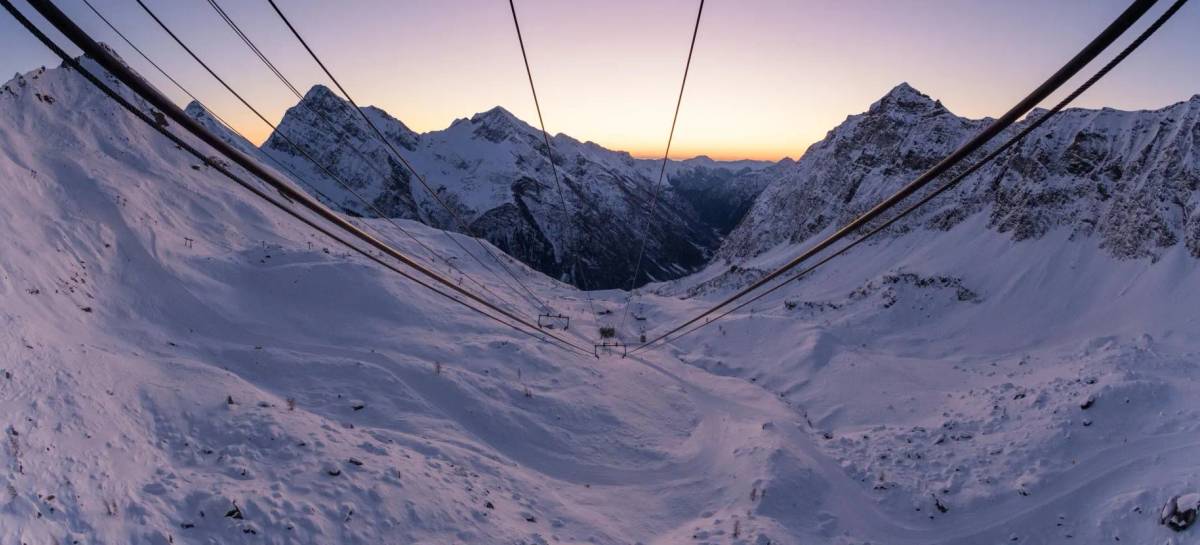
Monterosa Ski
Ski 180km across three Italian valleys, 1,212–3,275m, with glacier access and Freeride World Tour terrain above Alagna.

Season 2026 - 2027
Opens
28 Nov 2026
Closes
18 Apr 2027
Days open
141
Annual snow
5.3m
The Overview
Michael Fulton
Melbourne-based skier and snowboarder with 50+ resorts across 5 continents. Specialises in Australian resorts and international resort comparisons.
Monterosa Ski links three valleys — Valle d'Ayas, Valle di Gressoney and Valsesia — across 180km of slopes at the foot of Monte Rosa, the second highest massif in the Alps. The ski area spans from 1,212m at Alagna, the lowest base in the domain, to 3,275m at Punta Indren on the edge of the Monte Rosa glacier — a vertical range of more than 2,000m across three interconnected resorts: Champoluc, Gressoney-La-Trinité and Alagna.
The on-piste terrain is predominantly intermediate, with 67% of marked runs graded red and long, well-groomed descents connecting the three valleys. But Monterosa's defining character is off-piste: the terrain above Passo dei Salati and across the Indren glacier is among the most extensive and accessible high-alpine freeride terrain in the Alps, and has featured as a stop on the Freeride World Tour.
Alagna, at the eastern end of the domain, is the most demanding sector and the gateway to the glacier. Champoluc, in the western Valle d'Ayas, carries the most beginner and intermediate terrain and is the most practical base for mixed-ability groups. Gressoney-La-Trinité sits at the centre, acting as the main hub between the two other valleys, with the lift connections to Passo dei Salati branching toward both Indren and Alagna.
A single lift pass covers all three interconnected valleys as well as smaller satellite areas including Antagnod, Brusson and Gressoney-Saint-Jean. Traversing the full domain from Champoluc to Alagna in a single day is achievable for confident skiers and covers close to 20km of terrain as the crow flies.
2063m
Vertical
51
Runs
132 km
Piste
5.3m
Annual snow
The Terrain
51 runs across 132 km of piste
Monterosa Ski links the valleys of Champoluc, Gressoney and Alagna beneath the Monte Rosa massif, with 132 kilometres of piste over 51 runs. The vertical is the headline: 2,063 metres between the 1,212-metre valley floor and the 3,275-metre high point. On snow, the grading is mostly red, at 22% beginner, 67% intermediate and 11% advanced, with no marked expert runs. Long, well-groomed descents tie the three valleys together, and the high altitude keeps the upper slopes holding snow well into spring. The area rewards skiers who like covering ground rather than lapping a single sector.
The real draw here is off the groomed runs. From the Indren lift, the La Balma itinerary drops more than 2,000 metres of vertical towards Alagna, and the high terrain around Passo dei Salati offers some of the most open unpatrolled skiing in Italy. Treat all of it as guided country with full avalanche gear. Lower down, tree skiing above Gressoney-La-Trinité suits storm days. The longest groomed descent, from Olen to Alagna, runs about eight kilometres. Strong intermediates cruise happily, while freeriders and ski tourers get the most from Monterosa.
Terrain split
51
runs
51 runs across 4 grades
Beginner11 runs · 22%
Intermediate34 runs · 67%
Advanced6 runs · 11%
Expert0 runs · 0%
Time it right
When to visit Monterosa Ski
Monterosa Ski operates from early December through to late April, with the 2025–26 season running from 6 December 2025 to 21 April 2026. The extended spring window is supported by the domain's high-altitude terrain — particularly the Indren glacier zone above 3,000m, which holds snow reliably deep into April — and by 170km of snowmaking coverage across the pisted area.
Annual snowfall averages 3.5 metres across the domain, with the north-facing slopes of Alagna and the high terrain around Passo dei Salati typically holding the best snow quality longest. The combination of glacier access, extensive snowmaking and high elevation makes Monterosa one of the more snow-reliable mid-sized resorts in the western Italian Alps.
Mid-season conditions from January through March offer the most consistent all-mountain access, with the Indren Funifor operational when wind and snowpack allow. Spring skiing from late March onward draws a dedicated freeride crowd to the Alagna side, where the long off-piste descents from Indren — some running to 2,000m vertical — are at their most accessible under stabilised snowpack.
The resort has hosted stages of the Freeride World Tour, reflecting the calibre of its backcountry terrain. The three valley villages retain an authentically Italian character throughout the season — quiet on weekdays, lively at weekends when day-trippers arrive from Milan and Turin — which contributes to an unhurried atmosphere on the mountain that larger, better-known resorts in the region rarely match.
Season 2026 - 2027
28 Nov 2026
Opens
18 Apr 2027
Closes
141
Days open
5.3 m
Annual snow
The record
Historical snowfall at Monterosa Ski
Daily snow reports at Monterosa Ski go back to 1996, 31 winters on the books. Open the record to compare winters, lifts and piste.
90 cm
Snowiest day
29 Oct 2018
59 cm
This winter · 2026-27
so far
527 cm
Typical winter
average of complete seasons
Winter totals
cm
Past wintersThis winter
Getting there
Getting to Monterosa Ski, and where to stay
Monterosa Ski straddles the border of Valle d'Aosta and Piedmont in north-west Italy, with its three base villages — Champoluc, Gressoney-La-Trinité and Alagna Valsesia — each accessed via separate valley roads off the A5 Turin–Aosta motorway. The gateway junction is the Verrès tollbooth on the A5, from where the Ayas Valley road leads to Champoluc and the Gressoney Valley road runs to Stafal. Alagna is accessed separately from the Piedmont side via Varallo and Valsesia.
Turin Caselle Airport is the closest major international gateway for Champoluc and Gressoney, at 107km and approximately 90 minutes by car. Milan Malpensa is the more practical option for Alagna at 110km, around two hours' drive. Geneva Airport is within reach for those routing through France via the Mont Blanc Tunnel into Aosta, at approximately 217km.
Train connections run on the Turin–Aosta line to Verrès for Champoluc, or to Pont-Saint-Martin for Gressoney, with onward bus services to each valley. Alagna is served by bus from Varallo, reached via train from Milan or Turin through Novara. Driving remains the most practical option for most visitors, particularly those splitting time between more than one valley.
The three resort villages are distinctly low-key — Champoluc and Gressoney-La-Trinité are small, traditional alpine communities with limited but good-quality accommodation and restaurants serving local Valdostana cuisine. The relative obscurity of the area compared to higher-profile Italian resorts is a deliberate draw for those seeking serious terrain without the crowds.
Where to stay
Search all stays →Stays map loads when you scroll here
Hotels and lodges near Monterosa Ski, powered by Stay22.
Latest News
From the SnowStash desk
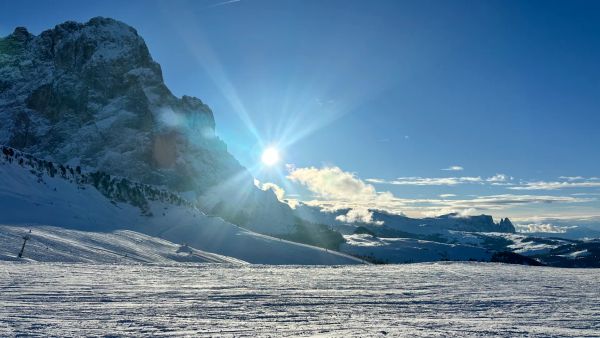
Val Gardena to Alpe di Siusi Lift Link Back in Play After Court Ruling
The Val Gardena-Alpe di Siusi lift link isn’t dead after all. A South Tyrol court has overturned Santa Cristina’s rejection of the new Monte Pana-Saltria link on procedural grounds, after the council skipped required public information sessions. Opponents want the missing sessions held and a fresh vote, and nothing has been approved. For now it’s still a bus between the two, but a plan first floated in 2017 is back in the conversation.
8 Nov 2026
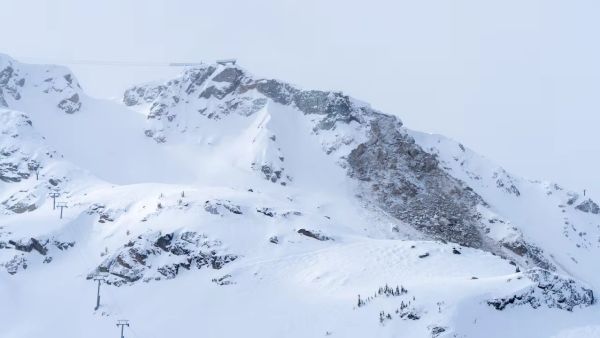
Whistler Blackcomb Rockslide Zone Stays Closed Through 2026-27 Season
A section of Whistler Peak terrain will stay closed all 2026-27 season, Vail Resorts has confirmed, with rockslide mitigation work continuing into summer 2027. Peak Express is still expected to run this winter, but locals are already arguing about what’s actually off limits, whether the Whistler Bowl is gone, and why the news landed after pass sales wound down. Here’s where things stand.
7 Nov 2026
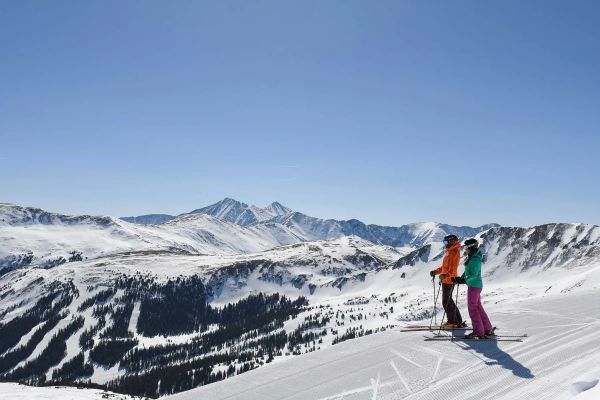
Loveland Ski Area Opens for 2026-27 and Marks 60 Years of Snowmaking
Loveland is open. The Colorado ski area started Chet’s Dream turning on Saturday 7 November to kick off 2026-27, with $60 adult lift tickets to mark 60 years of snowmaking. Expect three runs, nearly 1,000 vertical feet (about 300 metres) of top-to-bottom skiing, live music on the Basin Patio and no beginner terrain yet. Here’s what’s open, what it costs and when Loveland Valley follows.
7 Nov 2026
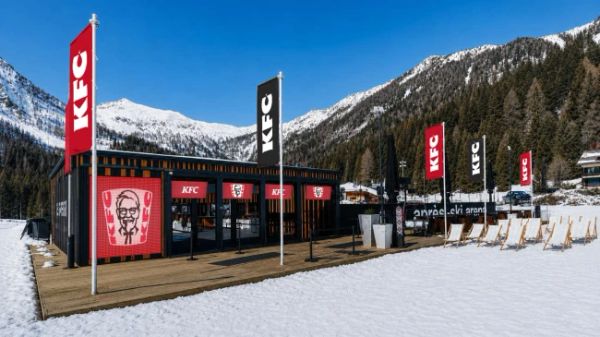
KFC Is Coming to the Slopes at Cortina and Madonna di Campiglio
Fried chicken is heading up the Dolomites. From 5 December KFC will run two restaurants on the slopes - one at 2,123 metres at Cortina, one at 1,700 metres at Madonna di Campiglio - and the polenta-and-canederli crowd has opinions. Local politicians, conservation groups and plenty of Facebook commenters are calling it a step too far, while others just want a cheaper lunch. Here’s what’s on the menu and what’s the fuss.
5 Nov 2026
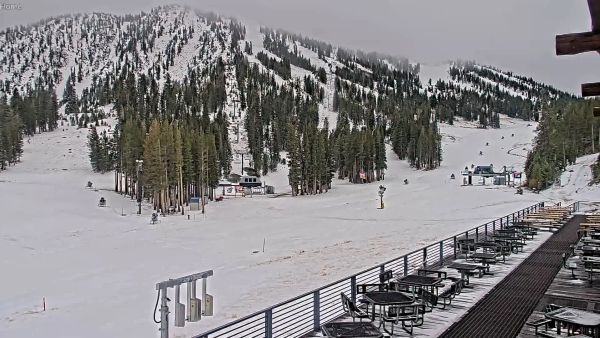
Mt Rose Aims to Open First in Tahoe on November 6
Mt Rose is going for the first-in-Tahoe title, with the Lakeview Express due to spin at 9 a.m. on Friday, November 6. One main lift, three runs and plenty of snowmaking, sitting on the highest base elevation in the region at 8,260 ft. Here is what is open, what is not (sorry, tubing fans), and how the early North American openings are stacking up.
4 Nov 2026
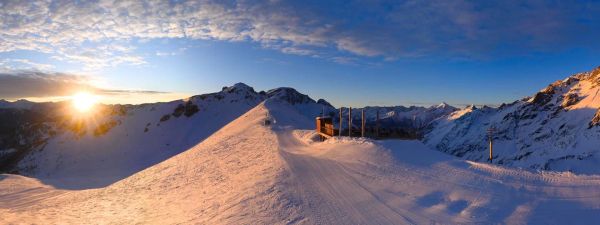
Europe Snow Forecast: Serre Chevalier Leads With 82 cm Over the Next 10 Days
Europe has had a quiet start to November, but our 10-day forecast has Serre Chevalier on 82 cm and Les 2 Alpes on 71 cm. Two pushes are lined up: a western Alps top-up from Friday, then a bigger, wider system on Thursday, November 12 and Friday, November 13 that reaches Italy and Switzerland. Full leaderboard inside.
4 Nov 2026
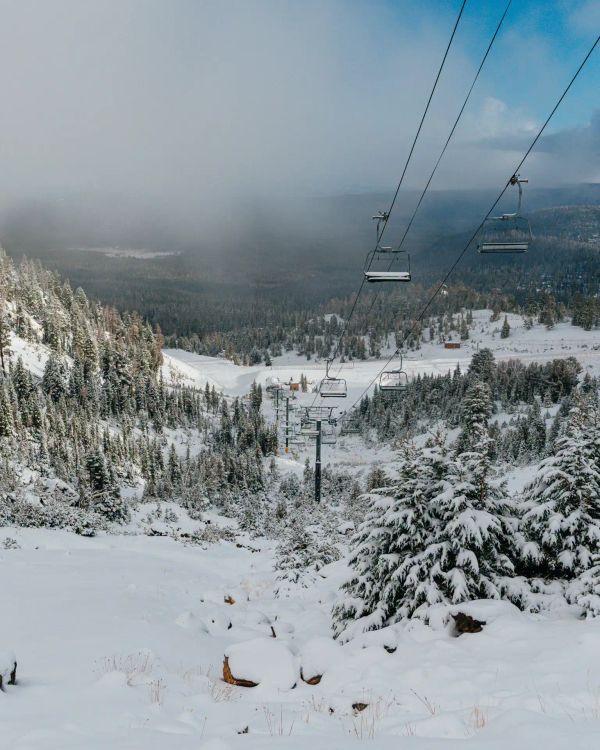
Mammoth Mountain Opens Early on November 5 With Up to 33 Inches of Snow in the Forecast
Mammoth just moved opening day forward to Thursday, November 5, eight days ahead of schedule. A snowy weekend and cold snowmaking nights did the work, and our forecast shows up to 33 inches more landing on November 13 and 14. Here is what opens, what the weather looks like and where Mammoth sits among the early Ikon Pass openers.
3 Nov 2026
Utah Snow Storm Builds Early-Season Base Ahead of November Openings
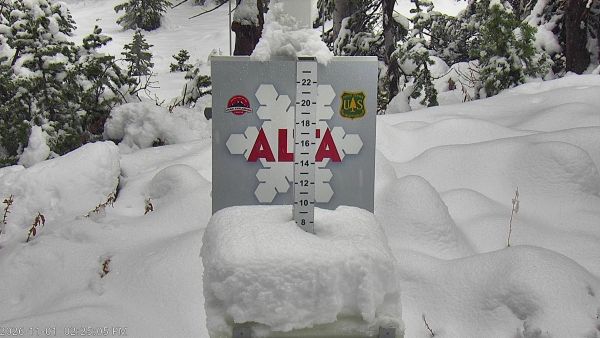
Rain down low, snow up high, and a snow report full of zeros that mostly means ‘not updated yet’. Utah’s first proper storm of 2026-27 is rolling through the Wasatch, Snowbird’s snow stake is closing in on 10 inches, and Brian Head is five days from opening day. Early November snow rarely looks like much, but it is the layer every November opening date is built on. Here is where it stands.
1 Nov 2026
Monterosa Ski Snow Report
Snow Report
Updated 10 Nov 2026
3275m
summit
+2cm
new snow · last 24 hours
Overcast-1°C / 2°C · W 43km/h
Snowfall
24 hours
2cm
48 hours
2cm
7 days
19cm
Base depth
0cm
Season total
59cm
Typical winter 527cm
Total lifts32
Live open status isn’t available right now.
28 Nov 2026 - 18 Apr 2027
Hour by Hour
Next 45 hours· Updated Nov 11, 2026 at 5:02 AM
Scroll for the full outlook · Open-Meteo
7-Day Outlook
2,862 mUpdated Nov 11, 2026 at 5:02 AMOpen-Meteo
Days 1–7
31cm
Days 8–14
20cm
Wed, Nov 11
Slight Snow Showers
Temp2° / -1°°C
Snow0.0cm(70%)
Wind43 km/h W
Live snow from the resort feed; forecast from Open-Meteo, via Supabase.
Understanding the Monterosa Ski snow report
Track current conditions at Monterosa Ski in Italy. This report covers snowfall totals, base and summit depth, and the forecast across 51 runs.
Snow measurements
Snow depth at Monterosa Ski is tracked at both the base and summit, since the two elevations often see different totals — roughly a 2063m difference here. We report fresh snowfall over the last 24 hours and 7 days alongside the running season total, in both metric and imperial units.
Weather conditions
Wind and temperature swings matter as much as fresh snowfall. Cold, calm conditions hold snow quality well, while wind-loading or a warm-up can change things quickly — especially given the elevation spread between Monterosa Ski's base and summit.
Data sources
Snowfall and depth figures for Monterosa Ski come from official mountain sources; weather and outlook data comes from independent forecasting services. The mountain is served by 32 lifts, including 3 aerial trams and 4 8-person chairlifts.
When to check
The biggest swings usually happen right after a storm. Check Monterosa Ski's report in the morning for the freshest numbers, and again in the afternoon as conditions evolve.