
Sierra Nevada
Ski Europe's southernmost and Spain's highest resort — 107km of Andalusian terrain near Granada with the continent's most sunshine.
Season 2026 - 2027
Opens
28 Nov 2026
Closes
25 Apr 2027
Days open
148
Annual snow
4m
The Overview
Michael Fulton
Melbourne-based skier and snowboarder with 50+ resorts across 5 continents. Specialises in Australian resorts and international resort comparisons.
Sierra Nevada is the highest ski resort in Spain and the southernmost in Europe, a combination that produces one of the most geographically unusual skiing experiences on the continent. The ski area sits on the northwestern slopes of Veleta — the third-highest peak in mainland Spain at 3,398m — with the base village of Pradollano at 2,100m and the highest lifts reaching 3,282m, delivering a skiable vertical of 1,182m.
The resort covers 107km of marked terrain across 116 runs, weighted toward intermediate and advanced skiers with 40% intermediate, 37% advanced, 16% beginner and 7% expert — an accessible spread that reflects Sierra Nevada's status as one of the most heavily visited ski resorts in Spain, predominantly by a domestic clientele travelling up from Granada, Málaga and the wider Andalusian coast.
The resort hosted the FIS Alpine World Ski Championships in 1996, the 2015 Winter Universiade and the FIS Freestyle Ski and Snowboarding World Championships in March 2017 — a competition record that confirms both the calibre of the groomed race terrain and the infrastructure capacity to handle major international events.
The entire ski area sits above the treeline, as Sierra Nevada's latitude and elevation place it in a Mediterranean alpine climate zone with virtually no subalpine forest at skiable altitudes. This gives the mountain an open, exposed character distinct from the forested Pyrenean resorts further north, with sweeping uninterrupted views across Andalusia that on clear days extend south to the African coastline across the Strait of Gibraltar.
1182m
Vertical
116
Runs
107 km
Piste
4m
Annual snow
The Terrain
116 runs across 107 km of piste
Sierra Nevada is Spain's highest ski resort and one of the most southerly in Europe, with its pistes running from 2,100 metres to 3,282 metres in the Andalusian mountains near Granada. The 116 runs cover 107 kilometres, and the 1,182-metre vertical is a serious drop by Spanish standards. Intermediates hold the largest share at 40%, followed by advanced at 37%, beginner at 16% and expert at 7%. The altitude and the sunshine make for a very different ski day from the Pyrenees: warm afternoons are common, and snow quality changes through the day, so start early.
Most of the action sits above Pradollano, with gondolas taking skiers up to Borreguiles, where the ski school and the gentler blues are found. Veleta, the high sector, is mostly reds, and the Águila run, near six kilometres long, stretches almost the whole vertical back to the village. The Loma de Dílar area has the snowpark and the few black runs, and Laguna de las Yeguas offers a network of reds. It suits intermediates, families and anyone wanting skiing in the sun. Freeriders should go with a guide.
Terrain split
116
runs
116 runs across 4 grades
Beginner19 runs · 16%
Intermediate46 runs · 40%
Advanced43 runs · 37%
Expert8 runs · 7%
Time it right
When to visit Sierra Nevada
Sierra Nevada operates one of the longest ski seasons in Spain, running from late November through to early May in strong snow years, with the 2025/26 season scheduled from 13 December to 4 May. The resort averages around 4 metres of annual snowfall, delivered predominantly in concentrated winter storms rather than the sustained Atlantic snowfall patterns of the Pyrenees.
What distinguishes Sierra Nevada's snow preservation is altitude — with the entire ski area above 2,100m in a high-pressure Mediterranean climate, cold temperatures persist long after natural snowfall, and the base depth as of early March 2025/26 stands at 400cm against a season total of 298cm. This reflects the resort's pattern of relying on altitude-preserved snowpack rather than frequent fresh accumulation.
The resort records the most sunshine hours of any ski destination in Europe — a product of its Andalusian latitude and the predominance of Mediterranean high-pressure systems across southern Spain in winter. This makes spring skiing at Sierra Nevada a genuinely different proposition to alpine alternatives: warm temperatures at the base, firm morning groomers on upper runs and the surreal possibility of combining a morning ski session with an afternoon on the Costa del Sol beaches 90 minutes away by road.
The late-season window — typically March through to early May — is widely regarded as the optimal period, when base depths are at their deepest, daylight hours are long and the mountain's competition-grade terrain on the Veleta sector is running at full capacity.
Season 2026 - 2027
28 Nov 2026
Opens
25 Apr 2027
Closes
148
Days open
4 m
Annual snow
Getting there
Getting to Sierra Nevada, and where to stay
Sierra Nevada sits within the Sierra Nevada National Park in the province of Granada, Andalusia, approximately 32km southeast of Granada city along the A-395 road. The resort base at Pradollano is around 50 minutes by car from Granada city centre, making it one of the most city-proximate ski resorts in Europe — a factor that drives the predominantly day-visitor and weekend character of the mountain during the season.
A regular bus service operates from Granada's main bus station to Pradollano during ski season, running several times daily on weekdays and more frequently on weekends, with the journey taking around 45 minutes. The closest major international airport is Granada-Jaén Federico García Lorca Airport, 55km from the resort, though it handles limited international routes. Málaga Airport is the main international gateway at around 170km to the west, with connections from across Europe during the winter season.
The city of Granada is the resort's most compelling draw beyond the skiing itself. The Alhambra Palace — one of the most visited monuments in Europe and a UNESCO World Heritage site — sits within the city, making Granada one of the few places on earth where a day on a ski slope can be followed by dinner in the shadow of a medieval Moorish fortress.
The resort village of Pradollano operates as a year-round community with a permanent population, giving it a more self-contained character than the seasonal stations typical of the Pyrenees, including supermarkets, a pharmacy, multiple ski schools and a range of restaurants and bars that operate on Spanish hours through the après-ski period and into the evening.
Where to stay
Search all stays →Hotels and lodges near Sierra Nevada, powered by Stay22.
Latest News
From the SnowStash desk
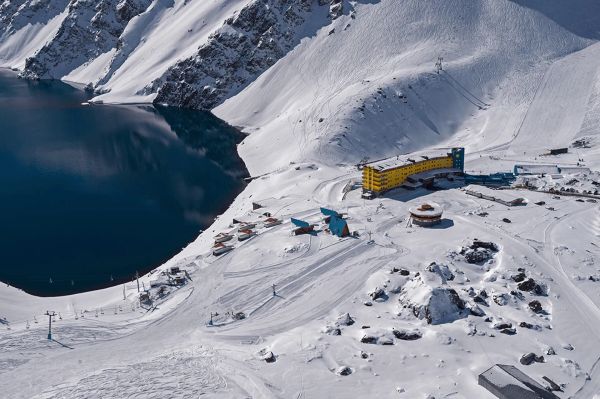
Four Dead After Avalanche Near Ski Portillo in Chile
A large avalanche struck near Laguna del Inca adjacent to Ski Portillo on Saturday afternoon, killing four people and injuring four others. The group were day visitors mountaineering in the backcountry after reportedly being warned about elevated avalanche risk by resort staff.
18 Oct 2026

Europe Ski Resorts Open Now: What Is Skiable in Mid-October 2026
Europe’s ski season is open, technically. After a record-warm summer, glaciers in Austria, Switzerland and Italy are running a few pistes apiece, Sölden, Stubai and Kitzsteinhorn started late, Titlis has pushed back to 24 October, and Zermatt reopens a few lifts on 14 October after more than two months shut. Finland’s Levi and Ruka are skiing on stored snow. Here is what is open, and what you actually get at each.
14 Oct 2026

Zermatt Plans World Cup Downhill Return on the Gornergrat for 2028
Zermatt is having another crack at a World Cup downhill, and this time nobody has to cross a border. Around 13 million Swiss francs is going into rebuilding the Gornergrat piste, including a jump fed by a roughly 300-metre in-run across the roof of the Gornergrat Railway gallery, with the Matterhorn lined up behind it for the TV cameras. First men’s race is pencilled in for March 2028, pending FIS homologation.
14 Oct 2026

Mt. Rose Begins Snowmaking for the 2026-27 Season at Lake Tahoe
Lake Tahoe’s highest base elevation is paying off early: Mt. Rose has started making snow for 2026-27 after the first flurries and a cold snap. The Nevada resort is backing it with nearly US$2 million in upgrades, including a replacement snowmaking main line, a new PistenBully groomer and restraint bars on every lift. Opening day is yet to be confirmed, though Heavenly and Northstar are already eyeing 20 November.
13 Oct 2026

Utah Ski Resorts 2026-27: What’s New at Alta, Deer Valley, Powder Mountain and More
Utah is still building flat out. For 2026-27, Powder Mountain opens a steep new Skytrac chair into more than 1,000 acres of advanced terrain, Deer Valley adds 200 acres on Hail Peak, Sundance gets a new quad and Park City adds a gondola from its new parking structure. Snowmaking is expanding almost everywhere, Eagle Point stays closed after the Cottonwood Fire, and the 2034 Games are setting the pace. Here’s what’s new, resort by resort.
13 Oct 2026

Mt Hutt Invests NZ$12 Million in Base Area, Tripling Its Sun Deck
Mt Hutt is getting busier, and its base lodge is about to catch up. NZ$12 million goes into a heated sun deck roughly three times the current size (430 m² to 1,300 m²), plus a new toilet block, heated steps down to snow level, extra storage and a new food and beverage outlet. Building starts after the 2026 season, with everything due for winter 2027.
11 Oct 2026

Vermont Ski Resort Opening Dates 2026-27: Few Dates Set, Killington Waits on the Cold
Vermont's season is slow to take shape. Stratton is tentatively targeting 18 November and Sugarbush 21 November, while Pico has Friday 11 December on the calendar. Killington never sets a date and opens when the snowmaking allows, and Vail Resorts has yet to name days for Stowe, Okemo and Mount Snow. The forecasts disagree about snow, and the main El Niño worry for the Green Mountains is warmth.
9 Oct 2026

Crans-Montana 2027 World Championships President Resigns Ahead of Fraud Hearing
Less than four months out from the Crans-Montana 2027 World Championships, the man running the organising committee has stepped down. Claude-Alain Schmidhalter resigned as Swiss-Ski vice president and OC president after being indicted over a business dispute unrelated to skiing. He denies the allegations and faces court on October 27. Interim leaders are in place for the February 1-14 event.
9 Oct 2026
Sierra Nevada Webcams
5 live angles across the mountain. Tap any camera to go full-screen.
About Sierra Nevada's live webcams
Check live conditions across Sierra Nevada with 5 real-time webcams showing snow, weather, and lift operations, updated every 10 minutes. Check high-elevation cams for powder visibility and base-area cams for crowd levels before you head up.
Camera guide
- Borreguiles Central Zone2690m
- Monitor the beating heart of Spain's highest ski resort through this webcam sierra nevada at the Borreguiles mid-station at 2690 meters — the central hub from which the vast majority of the resort's 107km of terrain originates. This continuously panning sierra nevada webcam delivers real-time 360-degree coverage of slope conditions, lift operations and visibility across all four resort sectors simultaneously, making it the single most informative live cam on the mountain. The go-to webcam sierra nevada en directo reference for day visitors travelling up from Granada — check conditions here before the 50-minute drive to Pradollano.
- Zona Veleta High-Alpine3029m
- Experience the extraordinary from the highest webcam sierra nevada on the mountain, positioned at 3029 meters in the Zona Veleta — the roof of Europe's southernmost ski domain and the staging ground for the resort's FIS World Championship race terrain. This sierra nevada webcam delivers unfiltered views of the high-alpine environment above 3000 meters where above-treeline open runs descend through one of the most geographically dramatic ski settings on the continent. Essential for expert skiers and advanced riders assessing summit visibility and wind conditions on the webcams sierra nevada network before riding the upper Veleta lifts.
- Zona Laguna Scenic2603m
- Survey the scenic Zona Laguna terrain through this webcam sierra nevada at 2603 meters, where intermediate and advanced runs traverse the open Andalusian high-alpine landscape with panoramic views stretching south toward the Mediterranean on clear days. This sierra nevada webcam monitors real-time conditions across some of the resort's most popular and well-connected pistes, giving intermediate skiers essential visibility of snow quality and slope traffic before planning their route through this central sector. A key reference across the sierra nevada webcams network, this live snow cam showcases the unique character of skiing above the treeline under Andalusian sunshine.
- Zona Montebajo Family2371m
- Check conditions in the resort's most family-oriented sector through this webcam sierra nevada at Zona Montebajo at 2371 meters, where accessible blue and green runs provide the ideal terrain for beginners, families and skiers building confidence at high altitude. This sierra nevada webcam monitors the slopes and facilities in this dedicated family zone, helping parents plan arrival times and assess morning snow quality before making the drive up from Granada or the coast. A practical addition to the webcams sierra nevada network for families and developing skiers, this live cam reveals current conditions on the runs that serve as the resort's primary learning ground.
- Mirlo Blanco Base Area2150m
- Monitor the Pradollano base zone through this webcam sierra nevada at Mirlo Blanco at 2150 meters — the arrival point for the entire resort where the gondola terminals, ski school, rental shops and the ice rink and toboggan area all converge. This sierra nevada webcam en directo delivers real-time views of base operations, gondola queues and weather conditions at resort level, giving day visitors from Granada and Málaga a live read on conditions before committing to the mountain road. One of the most-checked sierra nevada webcams for pre-visit planning, this live snow cam captures the full operational atmosphere of the highest and southernmost ski resort base in Spain.
Sierra Nevada snow cams FAQ
How often do Sierra Nevada snow cams update?
All Sierra Nevada snow cams and webcams update every 10 minutes with fresh images showing current mountain conditions. This frequent update schedule ensures you have access to near real-time conditions for planning your ski day at Sierra Nevada.
Which Sierra Nevada webcam shows the best powder conditions?
The high-elevation Zona Veleta High-Alpine webcam at 3,029m provides the clearest view of powder conditions and snowfall. These Sierra Nevada webcams capture fresh snow accumulation and visibility better than base area cameras.
Can I see Sierra Nevada lift queues on the webcams?
Yes. Multiple Sierra Nevada snow cams specifically show lift queue areas and chairlift operations, helping you time your arrival and avoid peak queue periods.
When is the best time to check Sierra Nevada snow cams?
Check Sierra Nevada webcams early morning (7-8am) for overnight snowfall assessment, and mid-afternoon for current crowd levels and weather. The live cams are most useful after storm events to assess fresh powder.
How can I check current conditions before buying Sierra Nevada lift tickets?
Use our Sierra Nevada webcams alongside the live snow report to assess conditions before purchasing lift tickets. The webcams show real-time visibility, snow quality, and operational status.
Do Sierra Nevada webcams work on mobile devices?
Yes. All Sierra Nevada snow cams and webcams are optimized for mobile viewing, so you can check live conditions from anywhere using your phone or tablet.
More Sierra Nevada intelligence: snow report, lift tickets, trail map, resort overview.