Evolène
Evolène: 41km piste, 1228m vertical, CHF 43 day pass. Quiet alternative to Verbier in traditional Valais village.

Season 2026 - 2027
Opens
19 Dec 2026
Closes
28 Mar 2027
Days open
99
Annual snow
0.9m
The Overview
Michael Fulton
Melbourne-based skier and snowboarder with 50+ resorts across 5 continents. Specialises in Australian resorts and international resort comparisons.
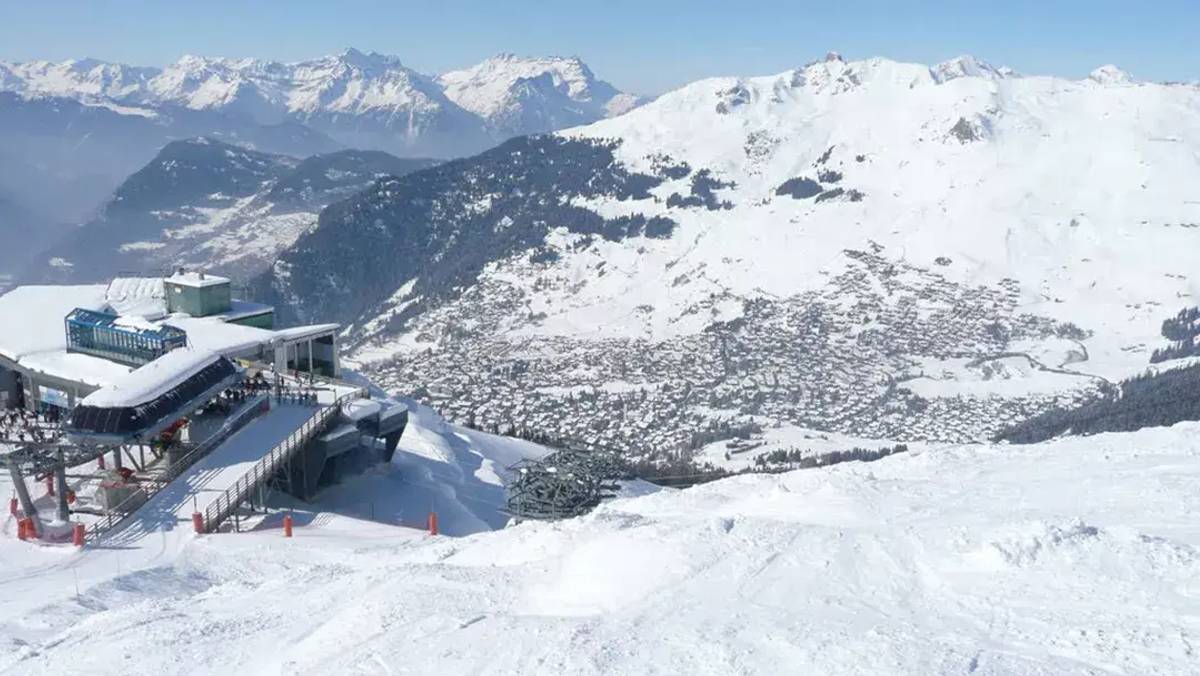
Evolène operates 41.1 kilometres of piste across 11 marked runs between 1404 and 2632 metres, delivering 1228 metres of vertical drop in the Val d'Hérens. The terrain splits into 38 per cent beginner, 27 per cent intermediate and 35 per cent advanced, with four red runs, three black runs and two blue descents threading through high-alpine terrain facing the Dent-Blanche and Matterhorn. The ski area receives an annual average of 4.3 metres of snowfall, with predominantly north and east-facing slopes that hold cover reliably from late December through March.
The upper slopes above 2000 metres provide access to extensive off-piste zones that track out slowly due to modest visitor numbers, whilst groomed runs include the demanding Vouasson descent and an ungroomed black variant favoured by powder seekers. Lifts depart from the hamlet of Lannaz, located 2.1 kilometres above Evolène village at 1404 metres, with free shuttle buses connecting the two. Chamois are frequently visible from the Lannaz-Chemeuille chairlift during the ascent to mid-mountain terrain. The ski area extends to the Arpilles sector when snow conditions permit, adding two additional runs to the upper mountain.
The resort maintains a quiet, uncrowded atmosphere distinct from the packed pistes of nearby Verbier and Zermatt, with aged but functional infrastructure and minimal on-mountain development. Restaurant de Chemeuille operates at mid-mountain with terrace dining facing the Dent-Blanche. Evolène village itself sits below the ski area and was voted most beautiful village in French-speaking Switzerland in 2012, its sun-blackened larch chalets and traditional granaries preserved as heritage architecture. The February carnival runs for a month with nightly gatherings in village bars.
The Espace Dent-Blanche pass grants access to Arolla and La Forclaz, totalling 100 kilometres of slopes across three valleys between 1400 and 3000 metres. Magic Pass holders ski free at all three areas. Adult day tickets cost CHF 43, with heliskiing experiences available for CHF 450. The 2025-26 season runs 21 December to 23 March, with the resort suiting advanced skiers, freeriders and families seeking affordable Swiss skiing outside the major destination resorts.
1228m
Vertical
11
Runs
41.1 km
Piste
0.9m
Annual snow
The Terrain
11 runs across 41.1 km of piste
Evolène is a small area with an unusual shape: 11 runs and 41.1 kilometres of piste fall 1,228 metres, from 2,632 metres to the base at 1,404 metres at Lannaz. The difficulty split is 38% beginner, 27% intermediate and 35% advanced, with no expert grading, so the middle of the mountain is thinner than at most resorts. Only five lifts do the work, a double chair, three T-bars and a surface lift, and the 1981 Von Roll chair is the only chairlift in the whole Espace Dent-Blanche.
Everything starts with the Lannaz-Chemeuille double chair, a slow fixed-grip lift that climbs to the mid-mountain terrace facing the Dent Blanche and keeps crowds thin. From there, T-bars reach 2,632 metres, the Vouasson descent is the demanding groomed option, and an ungroomed black variant appeals to powder seekers. Above 2,000 metres, off-piste zones track out slowly, and the Arpilles sector adds two runs when snow allows. Evolène suits advanced skiers, freeriders and families who value quiet slopes, free village shuttle buses and good views over lift speed.
Terrain split
11
runs
11 runs across 4 grades
Beginner4 runs · 38%
Intermediate3 runs · 27%
Advanced4 runs · 35%
Expert0 runs · 0%
Time it right
When to visit Evolène
The 2025-26 season opens 21 December 2025 and closes 23 March 2026, with additional weekend operation scheduled for 28-29 March and 2-6 April inclusive. This 13-week core season aligns with typical Valais mid-altitude timing. Arolla within the same pass area operates longer due to higher base elevation at 2000 metres, opening weekends from early December and running through mid-April.
Evolène receives 4.3 metres of annual snowfall on average, with week two of January historically the snowiest period delivering 51 centimetres across 3.7 snowy days. The ski area's elevation between 1400 and 2632 metres provides a snow reliability advantage over lower resorts, particularly on upper slopes above 2000 metres that benefit from a high-mountain microclimate. North and east-facing aspects preserve snow quality well into spring, often maintaining excellent conditions through March when south-facing terrain at similar elevations deteriorates rapidly. Modest snowmaking infrastructure exists but natural snow quality remains the primary asset.
January through March delivers the most consistent conditions, with February representing peak powder reliability and March offering longer daylight and spring corn snow on sunny aspects. December and early January can be variable at lower elevations until the seasonal snowpack establishes. Off-piste zones track out more slowly than at major resorts due to light crowds, with fresh snow remaining skiable for days after storms rather than hours.
The village hosts a month-long February carnival with traditional costumes and nightly festivities. No night skiing operates. Lift tickets include a heliskiing experience option for CHF 450, with drops into the surrounding Val d'Hérens peaks arranged through local operators. Cross-country skiing operates on 20 kilometres of Nordic trails between Evolène and Les Haudères villages.
Season 2026 - 2027
19 Dec 2026
Opens
28 Mar 2027
Closes
99
Days open
0.9 m
Annual snow
The record
Historical snowfall at Evolène
Daily snow reports at Evolène go back to 2017, 10 winters on the books. Open the record to compare winters, lifts and piste.
105 cm
Snowiest day
4 Mar 2024
74 cm
This winter · 2026-27
so far
92 cm
Typical winter
average of complete seasons
Winter totals
cm
Past wintersThis winter
Getting there
Getting to Evolène, and where to stay
Evolène sits at 1404 metres in the Val d'Hérens, a side valley branching south from the Rhône valley in Valais canton. The valley extends from Sion towards the glaciated peaks of Dent Blanche at 4357 metres and Dent d'Hérens at 4171 metres, with Evolène village located 25 kilometres up-valley from the Rhône plain. Ski lifts operate from Lannaz, a hamlet 2.1 kilometres above the main village. The Val d'Hérens forms part of the French-speaking Valais region, surrounded by 4000-metre peaks and accessed via a single valley road.
Sion, the Valais capital, lies 25 kilometres north with a 30-minute drive time under normal conditions. The village of Les Haudères sits 5 kilometres further up-valley from Evolène, whilst Arolla occupies the valley head 14 kilometres beyond. Evolène village retains centuries-old vernacular architecture with sun-weathered wooden buildings, stone-framed doorways and traditional granaries raised on stilts. The commune covers nearly 21,000 hectares, making it one of Switzerland's largest municipalities by area.
Motorway A9 provides the primary access corridor, with drivers taking exit 27 marked Sion-Est / Val d'Hérens before following cantonal roads through Vex, Saint-Martin and Hérémence to reach Evolène. The valley road is wide, well-maintained and suitable for all vehicle types including campervans. Geneva lies 185 kilometres west with a two-hour drive via the A9, whilst Zurich sits approximately three hours northeast. The dramatic earth pyramids of Euseigne mark the valley entrance 15 kilometres below Evolène.
Sion Airport is 20 minutes away by road, though Geneva Airport at 182 kilometres represents the primary international gateway with a 1 hour 56 minute drive. Train services run from Geneva Airport to Sion station in approximately 90 minutes, from where PostAuto bus line 381 operates hourly to Evolène village in 34 minutes. Total public transport journey time from Geneva Airport reaches 3 hours 37 minutes with one connection at Sion. Private transfers and rental cars are available at both airports.
Where to stay
Search all stays →Stays map loads when you scroll here
Hotels and lodges near Evolène, powered by Stay22.
Latest News
From the SnowStash desk
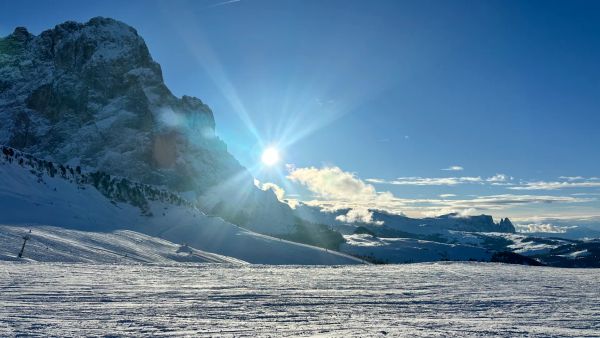
Val Gardena to Alpe di Siusi Lift Link Back in Play After Court Ruling
The Val Gardena-Alpe di Siusi lift link isn’t dead after all. A South Tyrol court has overturned Santa Cristina’s rejection of the new Monte Pana-Saltria link on procedural grounds, after the council skipped required public information sessions. Opponents want the missing sessions held and a fresh vote, and nothing has been approved. For now it’s still a bus between the two, but a plan first floated in 2017 is back in the conversation.
8 Nov 2026
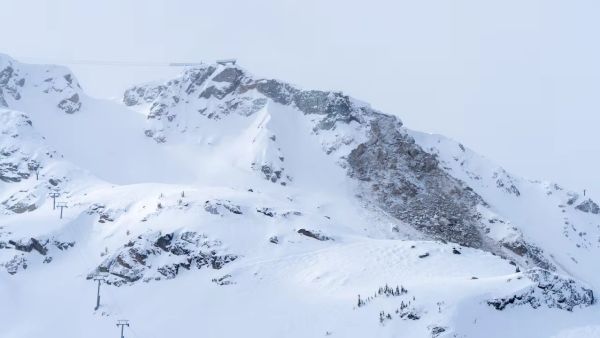
Whistler Blackcomb Rockslide Zone Stays Closed Through 2026-27 Season
A section of Whistler Peak terrain will stay closed all 2026-27 season, Vail Resorts has confirmed, with rockslide mitigation work continuing into summer 2027. Peak Express is still expected to run this winter, but locals are already arguing about what’s actually off limits, whether the Whistler Bowl is gone, and why the news landed after pass sales wound down. Here’s where things stand.
7 Nov 2026
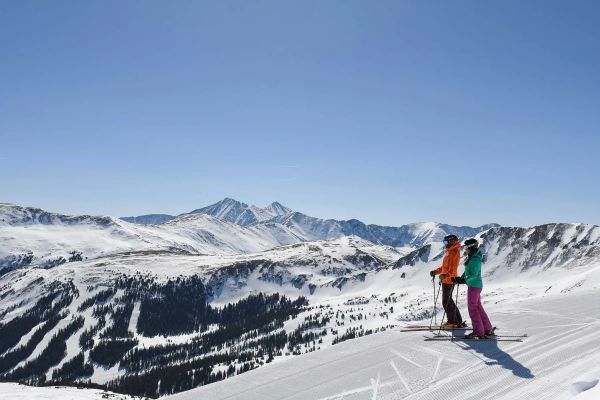
Loveland Ski Area Opens for 2026-27 and Marks 60 Years of Snowmaking
Loveland is open. The Colorado ski area started Chet’s Dream turning on Saturday 7 November to kick off 2026-27, with $60 adult lift tickets to mark 60 years of snowmaking. Expect three runs, nearly 1,000 vertical feet (about 300 metres) of top-to-bottom skiing, live music on the Basin Patio and no beginner terrain yet. Here’s what’s open, what it costs and when Loveland Valley follows.
7 Nov 2026
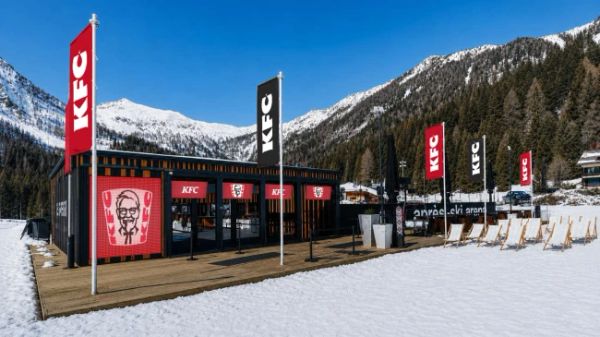
KFC Is Coming to the Slopes at Cortina and Madonna di Campiglio
Fried chicken is heading up the Dolomites. From 5 December KFC will run two restaurants on the slopes - one at 2,123 metres at Cortina, one at 1,700 metres at Madonna di Campiglio - and the polenta-and-canederli crowd has opinions. Local politicians, conservation groups and plenty of Facebook commenters are calling it a step too far, while others just want a cheaper lunch. Here’s what’s on the menu and what’s the fuss.
5 Nov 2026
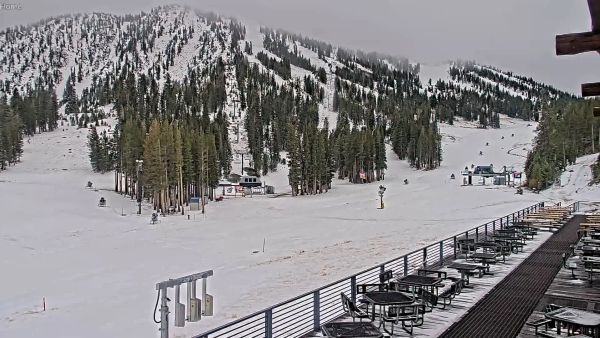
Mt Rose Aims to Open First in Tahoe on November 6
Mt Rose is going for the first-in-Tahoe title, with the Lakeview Express due to spin at 9 a.m. on Friday, November 6. One main lift, three runs and plenty of snowmaking, sitting on the highest base elevation in the region at 8,260 ft. Here is what is open, what is not (sorry, tubing fans), and how the early North American openings are stacking up.
4 Nov 2026
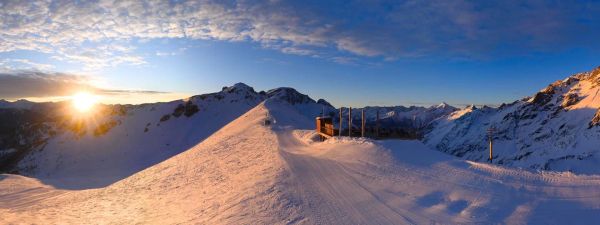
Europe Snow Forecast: Serre Chevalier Leads With 82 cm Over the Next 10 Days
Europe has had a quiet start to November, but our 10-day forecast has Serre Chevalier on 82 cm and Les 2 Alpes on 71 cm. Two pushes are lined up: a western Alps top-up from Friday, then a bigger, wider system on Thursday, November 12 and Friday, November 13 that reaches Italy and Switzerland. Full leaderboard inside.
4 Nov 2026
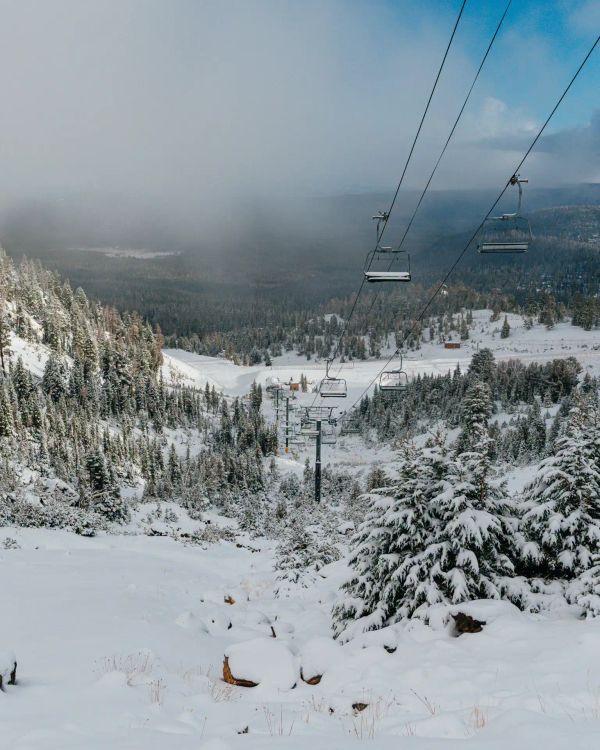
Mammoth Mountain Opens Early on November 5 With Up to 33 Inches of Snow in the Forecast
Mammoth just moved opening day forward to Thursday, November 5, eight days ahead of schedule. A snowy weekend and cold snowmaking nights did the work, and our forecast shows up to 33 inches more landing on November 13 and 14. Here is what opens, what the weather looks like and where Mammoth sits among the early Ikon Pass openers.
3 Nov 2026

Utah Snow Storm Builds Early-Season Base Ahead of November Openings
Rain down low, snow up high, and a snow report full of zeros that mostly means ‘not updated yet’. Utah’s first proper storm of 2026-27 is rolling through the Wasatch, Snowbird’s snow stake is closing in on 10 inches, and Brian Head is five days from opening day. Early November snow rarely looks like much, but it is the layer every November opening date is built on. Here is where it stands.
1 Nov 2026
Evolène Snow Report
Snow Report
Updated 13 Nov 2026
2632m
summit
+4cm
new snow · last 24 hours
Mainly Clear-3°C / 0°C · SW 12km/h
Snowfall
24 hours
4cm
48 hours
12cm
7 days
19cm
Base depth
0cm
Season total
74cm
Typical winter 92cm
Total lifts5
Live open status isn’t available right now.
19 Dec 2026 - 28 Mar 2027
Hour by Hour
Next 41 hours· Updated Nov 13, 2026 at 5:02 PM
Scroll for the full outlook · Open-Meteo
7-Day Outlook
2,386 mUpdated Nov 13, 2026 at 5:02 PMOpen-Meteo
Days 1–7
52cm
Days 8–14
32cm
Fri, Nov 13
Slight Snow Showers
Temp0° / -3°°C
Snow0.1cm(100%)
Wind12 km/h SW
Live snow from the resort feed; forecast from Open-Meteo, via Supabase.
Understanding the Evolène snow report
Planning a day at Evolène? Our snow report combines official mountain data with live weather so you know exactly what conditions look like right now, from the 1404m base to the 2632m summit.
Snow measurements
Our snow reports measure snowfall in centimeters over multiple time windows — last 24 hours, last 7 days, and the season total. Base depth reflects accumulation at the 1404m base area, while summit depth captures conditions 1228m higher at 2632m, where snow typically stays colder and lingers longer. Imperial conversions are shown alongside for convenience.
Weather conditions
Current weather conditions affect snow quality. Cold temperatures with low wind typically preserve snow quality, while warm temperatures or rain can impact conditions negatively — something worth watching closely at Evolène's 1404m base elevation, where temperatures run milder than the summit.
Data sources
We pull Evolène's conditions from on-the-ground mountain reporting, then layer in forecast data so you get a fuller picture than either source alone. The mountain is served by 5 lifts in total.
When to check
The biggest swings usually happen right after a storm. Check Evolène's report in the morning for the freshest numbers, and again in the afternoon as conditions evolve.