Mythenregion
50km of pistes, 20 lifts, 1,593m summit. Central Swiss family resort 55min from Zurich with Hoch-Ybrig connection.

Season 2026 - 2027
Opens
28 Nov 2026
Closes
21 Mar 2027
Days open
113
Annual snow
1.5m
The Overview
Michael Fulton
Melbourne-based skier and snowboarder with 50+ resorts across 5 continents. Specialises in Australian resorts and international resort comparisons.
Mythenregion spans 50 kilometres of piste across four interconnected sectors in Canton Schwyz, rising from 1,070 metres at base to 1,593 metres at summit with 523 metres of vertical drop. The resort stretches between the towns of Schwyz and Einsiedeln in Central Switzerland, offering direct connection to neighbouring Hoch-Ybrig and membership in the Swiss Knife Valley ski region. With 20 lifts serving predominantly intermediate terrain, the area remains quieter than major Swiss destinations whilst providing reliable pre-Alpine snow conditions throughout the season.
Terrain distribution favours progression skiers, with 62 per cent intermediate runs, 36 per cent beginner slopes, and 2 per cent advanced pistes spread across the Rotenflue, Holzegg, Handgruobi, and Ibergeregg sectors. Forest pistes characterise the lower elevations, whilst open bowls dominate above 1,400 metres. The Mythenpark freestyle facility between Grossenboden and Brünnelistock serves all ability levels with rails, jumps, and obstacles. Signature terrain includes the 7-kilometre longest run and ski safari routes linking through to Hoch-Ybrig via Ibergeregg pass.
The resort operates as a loosely connected collection of village lift systems rather than a single base development, with access points at Rickenbach, Brunni, Ibergeregg, and Illgau. Over 20 mountain restaurants dot the slopes, including Gäda Beiz Brüschrain on run 55 and Sonnenhütte at Ibergeregg. The Kabi Schneepark at Handgruobi provides dedicated learner facilities with magic carpets and beginner lifts. Crowds remain light on weekdays, with local families from Zurich dominating weekend traffic.
Day passes cover all Mythenregion lifts, whilst the Hoch-Ybrig Plus ticket expands access to 25 lifts across both areas. The 2025-26 season runs from 30 November to 23 March, typical for the region's 1,070-metre base elevation. Families receive 10 per cent discount on day tickets for groups of three or more. The resort suits intermediates seeking uncrowded slopes within an hour of Zurich, beginners requiring gentle progression terrain, and families prioritising affordability over extensive mileage.
523m
Vertical
0
Runs
50 km
Piste
1.5m
Annual snow
The Terrain
0 runs across 50 km of piste
Mythenregion is a modest pre-Alpine area with 50 kilometres of piste, with 523 metres of vertical between 1,593 metres and the 1,070-metre base. Intermediates dominate with 62% of terrain, followed by 36% beginner and a sliver (2%) rated advanced, with nothing graded expert. About 20 lifts serve it, including three aerial trams, a gondola, an eight-seat chair, two six-seat chairs and 11 T-bars. It is close enough to Zurich to work as a convenient day trip rather than a full-week destination, and the slopes stay light on weekdays, with local families filling the car parks at weekends.
The area links four sectors, Rotenflue, Holzegg, Handgruobi and Ibergeregg, with the Ibergeregg pass connecting through to Hoch-Ybrig. Rickenbach and Brunni provide valley access, and forest pistes below give way to open slopes higher up. The Mythenpark brings rails, jumps and obstacles for freestyle riders at all levels, and the Kabi Schneepark at Handgruobi gives learners magic carpets and easy lifts. Steep skiing and off-piste are limited, so experts will find little to chase. Families, beginners moving up to blues and reds, and locals wanting a short, uncrowded day will get good value.
Terrain split
0
runs
0 runs across 4 grades
Beginner0 runs · 36%
Intermediate0 runs · 62%
Advanced0 runs · 2%
Expert0 runs · 0%
Time it right
When to visit Mythenregion
The 2025-26 season operates from 30 November 2025 through 23 March 2026, spanning 16 weeks and aligning with typical Central Swiss resort calendars. Base elevation at 1,070 metres limits early and late-season reliability compared to higher altitude areas, making December openings dependent on natural snowfall. Mid-winter operation proves most consistent, with summit elevations above 1,500 metres holding cover through March.
Annual snowfall averages 4.3 metres across the resort, with February historically providing peak base depths. The 2025-26 season through mid-May recorded 319 centimetres total snowfall and maintained 50-centimetre base depth, demonstrating adequate if not exceptional accumulation for the elevation band. Mythenregion's pre-Alpine position exposes slopes to both Atlantic and continental weather patterns, yielding variable conditions but frequent sunny windows between storms. Snowmaking covers 5 kilometres of critical lower runs to protect valley access.
January and February deliver optimal conditions, with average snow depths reaching 80-100 centimetres at summit and cold temperatures preserving quality. December sees establishment phase with 60-100 centimetres monthly accumulation, whilst March offers spring corn conditions under longer daylight. Mythenregion averages 51 sunny days per season, ranking amongst the brighter Central Swiss areas and making January the sunniest month with 14 clear days.
Night skiing operates Friday and Saturday evenings at Handgruobi with floodlit runs and toboggan access. The 4-kilometre Rotenflue toboggan run to Rätigs provides non-skiing entertainment. No major competition events anchor the calendar, keeping the resort focused on recreational skiing. Early bookers purchasing Rotenfluebahn tickets online receive 28-35 per cent discounts, with greater savings available for advance purchases. Quietest periods fall in early December and late March, whilst Swiss school holidays in February drive peak crowds.
Season 2026 - 2027
28 Nov 2026
Opens
21 Mar 2027
Closes
113
Days open
1.5 m
Annual snow
The record
Historical snowfall at Mythenregion
Daily snow reports at Mythenregion go back to 2017, 10 winters on the books. Open the record to compare winters, lifts and piste.
100 cm
Snowiest day
4 Feb 2019
11 cm
This winter · 2026-27
so far
118 cm
Typical winter
average of complete seasons
Winter totals
cm
Past wintersThis winter
Getting there
Getting to Mythenregion, and where to stay
Mythenregion occupies the pre-Alpine foothills of Canton Schwyz in Central Switzerland, with lift bases in Rickenbach (just east of Schwyz town centre), Brunni near Alpthal, and Ibergeregg pass at 1,360 metres. The resort sits beneath the distinctive twin peaks of Grosser and Kleiner Mythen, which dominate sightlines and serve as natural landmarks visible throughout the ski area. The Sihl valley to the south and Lake Lucerne basin to the north define the geographic catchment.
Schwyz town lies 1.8 kilometres from Rickenbach, serving as the canton capital with 15,000 residents and full services. Einsiedeln, 11 kilometres southeast, hosts the famous Baroque abbey and provides alternative rail access. Rickenbach functions as a village within Schwyz municipality, positioned 0.2 kilometres from the Rotenfluebahn base station. Alpthal (2.9 kilometres) and Oberiberg (6 kilometres) serve the Brunni and Ibergeregg sectors respectively. The region forms part of historic central Switzerland, where the 1291 Federal Charter establishing the Swiss Confederation originated.
Road access from Zurich follows the A3 motorway south past Pfäffikon to the Schwyz exit, then cantonal roads via Steinen to Rickenbach, totalling 77 kilometres in 55 minutes. Lucerne sits 33 kilometres northwest via the A4 and cantonal route 2, requiring 35 minutes. From Zug, the A4 and cantonal roads cover approximately 30 kilometres in 30 minutes. The Schwyz-Ibergeregg pass road (open seasonally) provides direct car access to mid-mountain, with 350 parking spaces at Ibergeregg.
Zurich Airport serves as the primary international gateway at 77 kilometres distance, offering hourly train connections to Schwyz station in 72 minutes with changes at Zug. From Schwyz Bahnhof, bus 503 runs directly to Rickenbach Rotenfluebahn in 3 minutes. Alternatively, trains reach Einsiedeln station, where PostBus 554 connects to Brunni-Alpthal. Geneva Airport lies 190 kilometres west via A1 motorway. The Snow'n'Rail scheme bundles rail transport from any Swiss station with discounted lift tickets, making car-free access practical from Zurich, Lucerne, and Zug within 60-90 minutes door-to-door.
Where to stay
Search all stays →Stays map loads when you scroll here
Hotels and lodges near Mythenregion, powered by Stay22.
Latest News
From the SnowStash desk
Val Gardena to Alpe di Siusi Lift Link Back in Play After Court Ruling
The Val Gardena-Alpe di Siusi lift link isn’t dead after all. A South Tyrol court has overturned Santa Cristina’s rejection of the new Monte Pana-Saltria link on procedural grounds, after the council skipped required public information sessions. Opponents want the missing sessions held and a fresh vote, and nothing has been approved. For now it’s still a bus between the two, but a plan first floated in 2017 is back in the conversation.
8 Nov 2026
Whistler Blackcomb Rockslide Zone Stays Closed Through 2026-27 Season
A section of Whistler Peak terrain will stay closed all 2026-27 season, Vail Resorts has confirmed, with rockslide mitigation work continuing into summer 2027. Peak Express is still expected to run this winter, but locals are already arguing about what’s actually off limits, whether the Whistler Bowl is gone, and why the news landed after pass sales wound down. Here’s where things stand.
7 Nov 2026
Loveland Ski Area Opens for 2026-27 and Marks 60 Years of Snowmaking
Loveland is open. The Colorado ski area started Chet’s Dream turning on Saturday 7 November to kick off 2026-27, with $60 adult lift tickets to mark 60 years of snowmaking. Expect three runs, nearly 1,000 vertical feet (about 300 metres) of top-to-bottom skiing, live music on the Basin Patio and no beginner terrain yet. Here’s what’s open, what it costs and when Loveland Valley follows.
7 Nov 2026
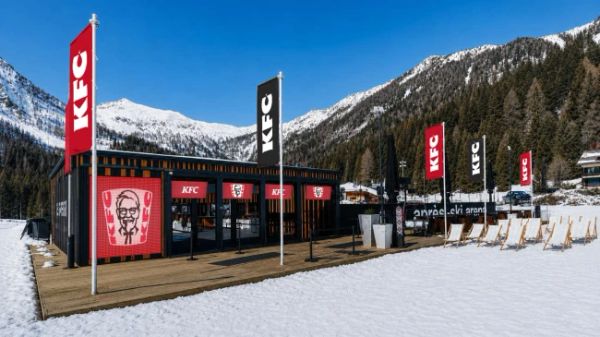
KFC Is Coming to the Slopes at Cortina and Madonna di Campiglio
Fried chicken is heading up the Dolomites. From 5 December KFC will run two restaurants on the slopes - one at 2,123 metres at Cortina, one at 1,700 metres at Madonna di Campiglio - and the polenta-and-canederli crowd has opinions. Local politicians, conservation groups and plenty of Facebook commenters are calling it a step too far, while others just want a cheaper lunch. Here’s what’s on the menu and what’s the fuss.
5 Nov 2026
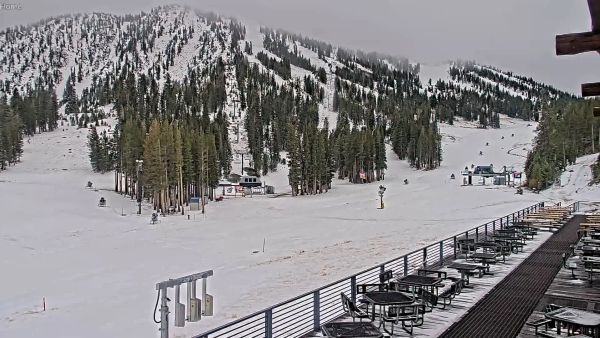
Mt Rose Aims to Open First in Tahoe on November 6
Mt Rose is going for the first-in-Tahoe title, with the Lakeview Express due to spin at 9 a.m. on Friday, November 6. One main lift, three runs and plenty of snowmaking, sitting on the highest base elevation in the region at 8,260 ft. Here is what is open, what is not (sorry, tubing fans), and how the early North American openings are stacking up.
4 Nov 2026
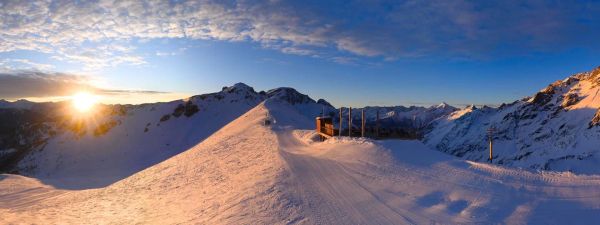
Europe Snow Forecast: Serre Chevalier Leads With 82 cm Over the Next 10 Days
Europe has had a quiet start to November, but our 10-day forecast has Serre Chevalier on 82 cm and Les 2 Alpes on 71 cm. Two pushes are lined up: a western Alps top-up from Friday, then a bigger, wider system on Thursday, November 12 and Friday, November 13 that reaches Italy and Switzerland. Full leaderboard inside.
4 Nov 2026
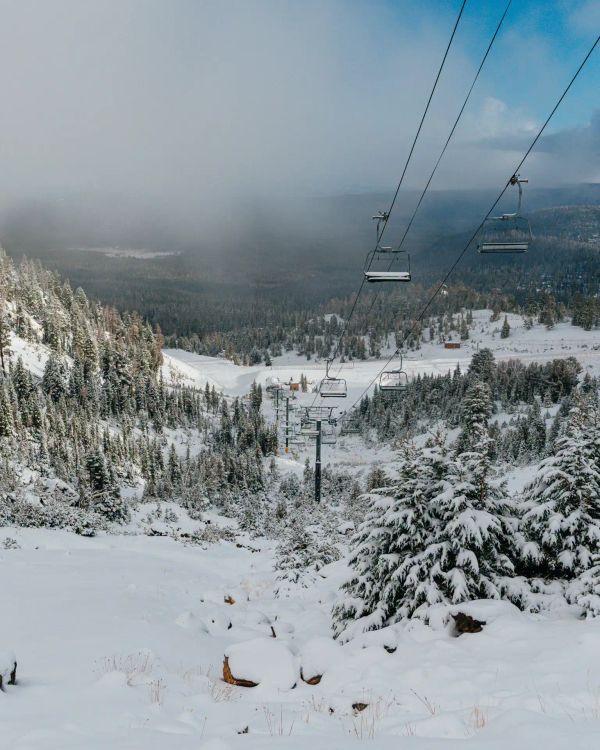
Mammoth Mountain Opens Early on November 5 With Up to 33 Inches of Snow in the Forecast
Mammoth just moved opening day forward to Thursday, November 5, eight days ahead of schedule. A snowy weekend and cold snowmaking nights did the work, and our forecast shows up to 33 inches more landing on November 13 and 14. Here is what opens, what the weather looks like and where Mammoth sits among the early Ikon Pass openers.
3 Nov 2026

Utah Snow Storm Builds Early-Season Base Ahead of November Openings
Rain down low, snow up high, and a snow report full of zeros that mostly means ‘not updated yet’. Utah’s first proper storm of 2026-27 is rolling through the Wasatch, Snowbird’s snow stake is closing in on 10 inches, and Brian Head is five days from opening day. Early November snow rarely looks like much, but it is the layer every November opening date is built on. Here is where it stands.
1 Nov 2026
Mythenregion Lift System
Twenty lifts serve Mythenregion's four sectors, comprising three aerial tramways, one eight-person gondola, one eight-seater chairlift, two six-seater chairlifts, 11 T-bars, and two surface lifts. The gondola and modern chairlifts handle primary uphill transport, whilst the extensive T-bar network accesses secondary bowls and maintains the area's traditional family character. Total uphill capacity remains modest compared to major resorts, though queues rarely develop outside peak holiday periods.
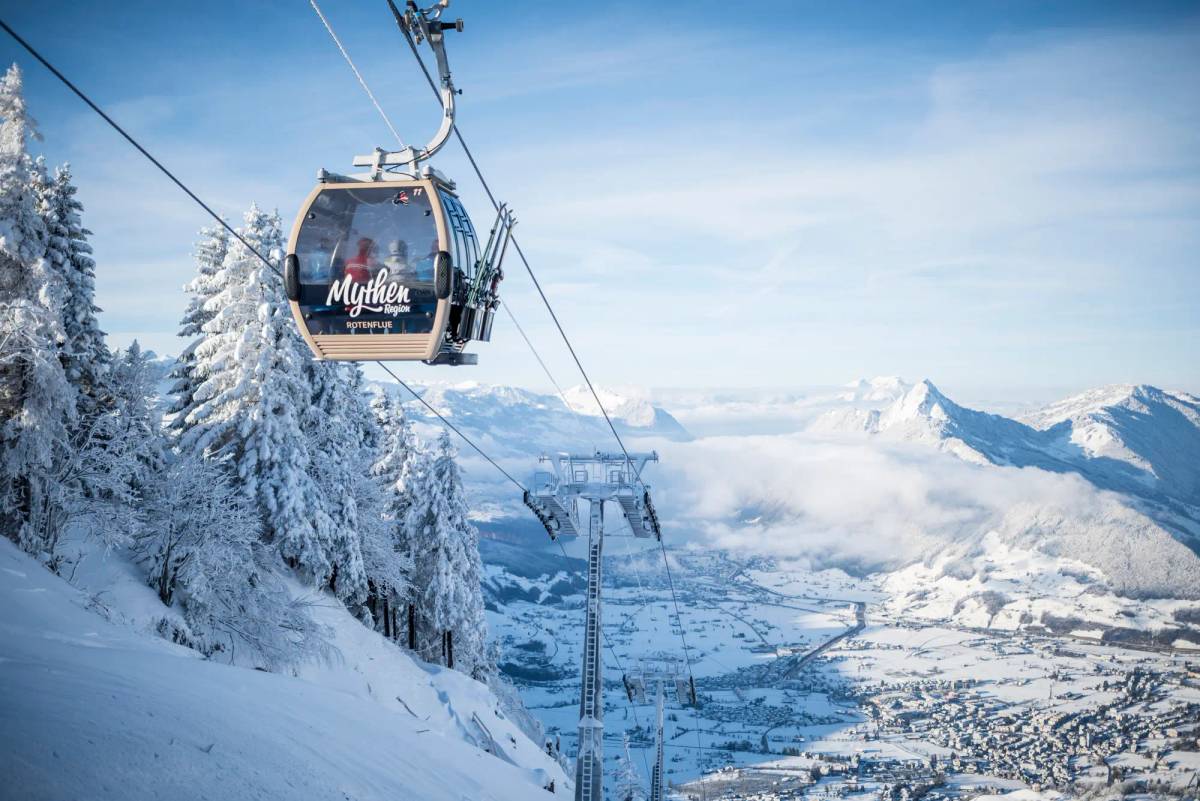
The Rotenfluebahn anchors access from Rickenbach, with Doppelmayr's 8-person gondola installed in 2014 running continuously from valley to Rotenflue at 1,571 metres via mid-station Rätigs. The 15-person Brunni-Holzegg aerial tramway by Garaventa connects Alpthal to Holzegg beneath Grosser Mythen. An 8-seater chairlift and two 6-seater chairs provide fast uplift at key junctions, whilst magic carpets serve the Kabi Schneepark learner area at Handgruobi and Rotenflue beginner zones.
Sector connectivity relies on ski-through links rather than direct lift connections, with the Ibergeregg pass serving as the physical junction between Mythenregion and Hoch-Ybrig. Two T-bars at Ibergeregg—Alpstubli (400 metres) and Kulm (800 metres)—function as the primary interchange point. From Rotenflue, skiers traverse via Zwäcken and Handgruobi to reach Holzegg, or descend to Ibergeregg for Hoch-Ybrig access. The Illgau sector operates semi-independently with its own aerial tramway from Ried.
Infrastructure investments focus on reliability over expansion, with the 2014 Rotenfluebahn representing the most significant recent upgrade. Operating hours run 8:45am to 4:30pm, with the gondola providing enclosed transport in adverse weather. Snow'n'Rail programme participants receive 10 per cent discount on combined rail-lift tickets. The predominance of T-bars keeps legs engaged but preserves snow quality longer than chair-served equivalents, appealing to traditionalists whilst potentially challenging novices unfamiliar with surface lifts.
20lifts across 6 types
3
Aerial Trams
1
Gondola
1
8-Person Chair
2
6-Person Chairs
11
T-Bars
2
Surface Lifts
Mythenregion lift system
Mythenregion is served by 20 lifts, listed here by type. Check which lifts are turning against the live conditions before you plan your first laps - early lifts and high-speed chairs get you to the best snow fastest.
More Mythenregion intelligence: trail map, snow report, webcams, resort overview.