
Obersaxen Mundaun
120km pistes, 1,109m vertical, 4 peaks in Graubünden. Carlo Janka's home mountain 40km from Chur. Season: 20 Dec-6 Apr 2026.
Season 2026 - 2027
Opens
18 Dec 2026
Closes
4 Apr 2027
Days open
107
Annual snow
4m
The Overview
Michael Fulton
Melbourne-based skier and snowboarder with 50+ resorts across 5 continents. Specialises in Australian resorts and international resort comparisons.
Obersaxen Mundaun spreads across 120 kilometres of piste between 1,201 and 2,310 metres elevation, delivering 1,109 metres of vertical drop. The ski circuit connects the sunny slopes of Val Lumnezia with the varied terrain of Obersaxen across four peaks: Piz Mundaun, Stein, Hitzeggen and Piz Sezner. With 50 per cent beginner, 33 per cent intermediate and 17 per cent advanced terrain, the resort suits progression-focused skiers. The resort receives 430 centimetres of annual snowfall, supplemented by 297 snow cannons covering 29 kilometres of piste.
The terrain layout favours wide, open slopes above 1,500 metres with north-facing exposure preserving snow quality through spring. The 15-kilometre run from Piz Sezner to Vella descends 1,010 metres, making it one of Switzerland's longer single descents. The Carlo Janka Piste from Stein to Kartitscha honours the resort's most famous resident, the 2010 Olympic giant slalom champion and World Cup overall winner. Off-piste options flank the Wali-Piz Sezner chairlift for confident skiers.
The scattered hamlets of Meierhof, Vella, Valata and Surcuolm maintain a quiet, local atmosphere. Seventeen mountain restaurants serve the ski area, with Restaurant Wali noted for its sun terrace. The Rufalipark in Misanenga offers family entertainment beyond skiing. This is skiing without queues or international crowds, attracting locals from Chur and those seeking uncrowded Swiss terrain.
The resort sits 40 kilometres from Chur in the Surselva region of Graubünden. Season pass holders from other Swiss and international resorts receive day tickets at half price. The 2025-26 season runs from 20 December to 6 April. The resort appeals to families seeking wide beginner terrain, intermediates wanting varied cruising, and Swiss locals avoiding the larger Flims-Laax circuit 25 kilometres west.
1109m
Vertical
0
Runs
120 km
Piste
4m
Annual snow
The Terrain
0 runs across 120 km of piste
Obersaxen Mundaun spreads 120 kilometres of piste across the Surselva, with 1,109 metres of vertical between the 2,310-metre top and the 1,201-metre base. Half the terrain is beginner, 33% intermediate and 17% advanced, with nothing graded expert. Three six-seat chairs, four quads, two triples and three T-bars carry skiers up, and extensive snowmaking backs up natural cover on the lower slopes. Queues are rare even in school holidays, and the sunny, wide-open layout rewards skiers who like to cover ground without fighting for lift space or crowds.
The Four Peaks circuit links Piz Mundaun, Hitzeggen, Stein and Piz Sezner, giving broad, open pistes with long views across the Alps. The longest run, from Piz Sezner to Vella, covers about 15 kilometres, while the Carlo Janka run is the steepest but short at roughly 1 kilometre. Valley runs drop to villages including Lumbrein, Vignogn, Luven and Flond, which then need a ski bus back. There is some off-piste beside the Wali-Piz Sezner chairlift for confident skiers. Families and relaxed cruisers suit it best, with a few challenges for advanced skiers.
Terrain split
0
runs
0 runs across 4 grades
Beginner0 runs · 50%
Intermediate0 runs · 33%
Advanced0 runs · 17%
Expert0 runs · 0%
Time it right
When to visit Obersaxen Mundaun
The 2025-26 season opens on 20 December 2025 and closes on 6 April 2026, providing a 108-day operating window. Typical season length runs mid-December through early April depending on snowfall. The base at 1,201 metres and summit at 2,310 metres offer reliable snow conditions throughout winter. Average season totals reach 430 centimetres, with most terrain above 1,500 metres benefiting from northern exposure.
The second week of January typically delivers the snowiest conditions, averaging 3.4 snowy days with 32 centimetres of accumulation. February offers the deepest base, with 91 centimetres at summit and 49 centimetres at base elevation. Average snow depths during peak season reach 76 centimetres at the summit and 39 centimetres at base. The resort reports 51 sunny days per season on average, with March recording the most sunshine at 14 days.
January through March provides optimal timing for powder and consistent coverage. The north-facing aspect preserves snow quality into April, when spring conditions and longer days attract touring skiers. December opening depends on early-season snowfall and snowmaking on the 29 kilometres of equipped piste. Quieter periods occur in early December and late March when neighbouring resorts face similar conditions.
Cross-country skiing operates on 18 kilometres of trails in Obersaxen, Lumnezia and Mundaun at approximately 1,300 metres elevation. The 1.6-kilometre Foppa trail at Flond runs illuminated until 21:00 for evening sessions. Six toboggan runs totalling 15 kilometres operate when snow permits. The Cuolm Sura to Surcuolm sledge run remains the most reliable for transport via the Valata chairlift.
Season 2026 - 2027
18 Dec 2026
Opens
4 Apr 2027
Closes
107
Days open
4 m
Annual snow
Getting there
Getting to Obersaxen Mundaun, and where to stay
Obersaxen Mundaun occupies a 12-kilometre sun terrace on the northern face of the Mundaun mountain chain in Graubünden's Surselva region. The scattered hamlets sit between 1,072 and 1,430 metres on a high plateau south of the Vorderrhein river. Obersaxen forms a German-speaking Walser enclave within the predominantly Romansh-speaking Surselva valley. The municipalities of Obersaxen and Mundaun merged in January 2016 to form the current administrative unit.
The town of Ilanz sits nine kilometres north in the Vorderrhein valley, offering supermarkets, banks and services. Chur, the cantonal capital and Switzerland's oldest town, lies 40 kilometres northeast with rail connections throughout Graubünden. The resort neighbours Flims-Laax-Falera 25 kilometres west and Brigels 10 kilometres northeast. Twenty-eight settlements spread across five Pirten districts around the central village of Meierhof.
Road access follows the A13 motorway to Reichenau-Tamins, then cantonal roads through Ilanz to the resort base areas. Driving time from Zurich measures approximately 1 hour 45 minutes covering 158 kilometres. From Chur, the 40-kilometre drive takes 35 minutes via Ilanz. Basel sits 242 kilometres away with a 2 hour 40 minute drive time. Free parking operates at Meierhof, Vella and Valata base stations.
Zurich Airport lies 165 kilometres distant with a 2 hour 6 minute transfer. St Gallen-Altenrhein Airport sits 97 minutes away. Friedrichshafen and Lugano airports serve the region within three hours. Train service via Rhätische Bahn connects Chur to Ilanz in 35 minutes, where Postauto buses serve Meierhof, Vella and Valata base stations. Bus frequency suits ski touring but car access offers greater flexibility for scattered accommodation.
Where to stay
Search all stays →Hotels and lodges near Obersaxen Mundaun, powered by Stay22.
Latest News
From the SnowStash desk
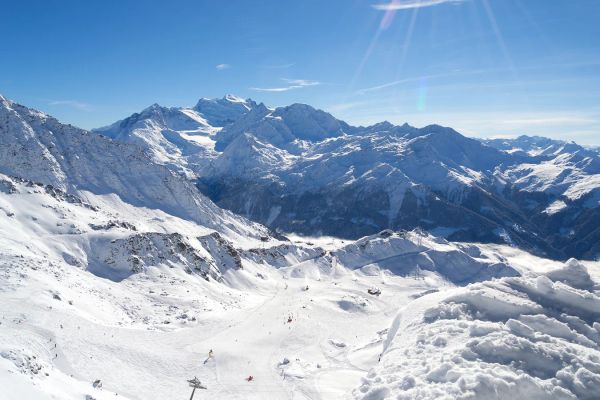
Alps Snow Forecast: Up to 64 cm Headed for the High Glaciers as the Snow Line Drops
The Alps are about to swap mild, sunny October weather for something far more wintry. A cold front arrives Tuesday, and SnowStash forecasts have Monterosa Ski out in front with 64 cm over 14 days, ahead of Blatten Belalp (55 cm) and Verbier (43 cm). The snow line should fall below 2000 metres by Wednesday night, and glaciers across Switzerland, Italy and Austria are in line for the best of it. The wind will have a say too.
20 Oct 2026
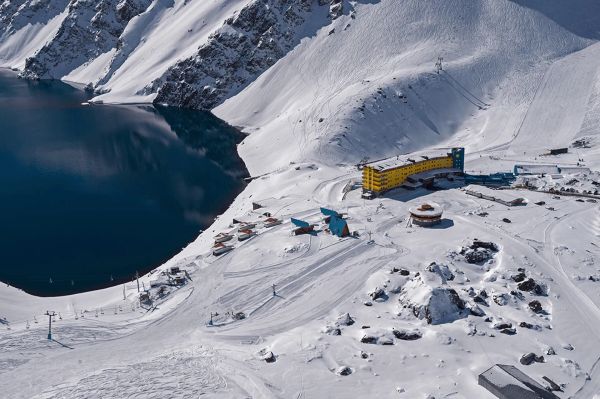
Four Dead After Avalanche Near Ski Portillo in Chile
A large avalanche struck near Laguna del Inca adjacent to Ski Portillo on Saturday afternoon, killing four people and injuring four others. The group were day visitors mountaineering in the backcountry after reportedly being warned about elevated avalanche risk by resort staff.
18 Oct 2026
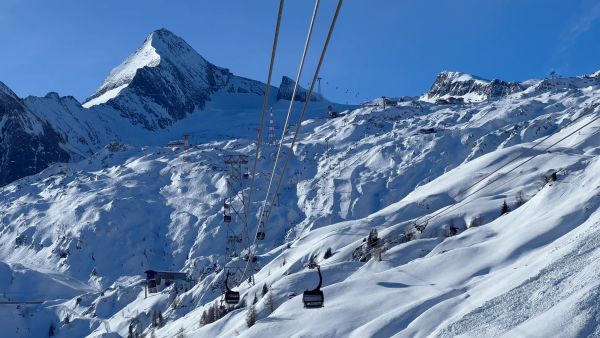
Europe Ski Resorts Open Now: What Is Skiable in Mid-October 2026
Europe’s ski season is open, technically. After a record-warm summer, glaciers in Austria, Switzerland and Italy are running a few pistes apiece, Sölden, Stubai and Kitzsteinhorn started late, Titlis has pushed back to 24 October, and Zermatt reopens a few lifts on 14 October after more than two months shut. Finland’s Levi and Ruka are skiing on stored snow. Here is what is open, and what you actually get at each.
14 Oct 2026
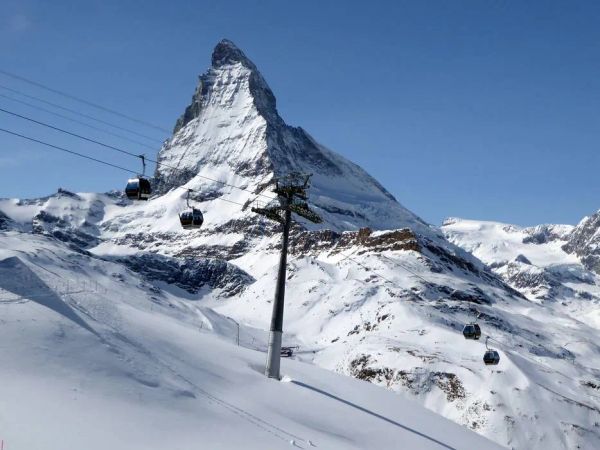
Zermatt Plans World Cup Downhill Return on the Gornergrat for 2028
Zermatt is having another crack at a World Cup downhill, and this time nobody has to cross a border. Around 13 million Swiss francs is going into rebuilding the Gornergrat piste, including a jump fed by a roughly 300-metre in-run across the roof of the Gornergrat Railway gallery, with the Matterhorn lined up behind it for the TV cameras. First men’s race is pencilled in for March 2028, pending FIS homologation.
14 Oct 2026
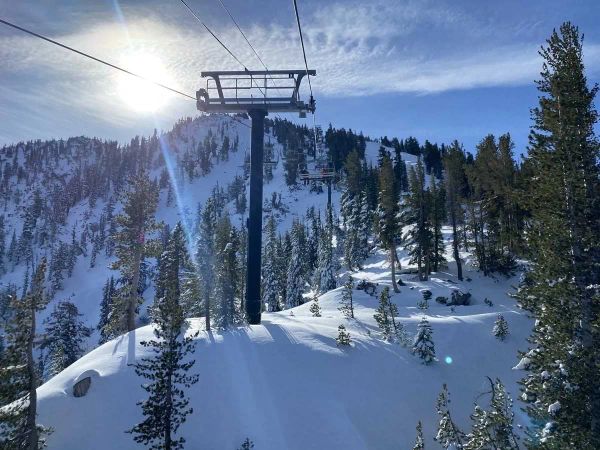
Mt. Rose Begins Snowmaking for the 2026-27 Season at Lake Tahoe
Lake Tahoe’s highest base elevation is paying off early: Mt. Rose has started making snow for 2026-27 after the first flurries and a cold snap. The Nevada resort is backing it with nearly US$2 million in upgrades, including a replacement snowmaking main line, a new PistenBully groomer and restraint bars on every lift. Opening day is yet to be confirmed, though Heavenly and Northstar are already eyeing 20 November.
13 Oct 2026
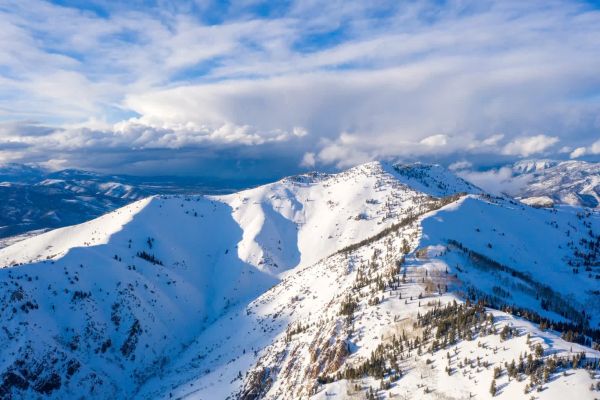
Utah Ski Resorts 2026-27: What’s New at Alta, Deer Valley, Powder Mountain and More
Utah is still building flat out. For 2026-27, Powder Mountain opens a steep new Skytrac chair into more than 1,000 acres of advanced terrain, Deer Valley adds 200 acres on Hail Peak, Sundance gets a new quad and Park City adds a gondola from its new parking structure. Snowmaking is expanding almost everywhere, Eagle Point stays closed after the Cottonwood Fire, and the 2034 Games are setting the pace. Here’s what’s new, resort by resort.
13 Oct 2026
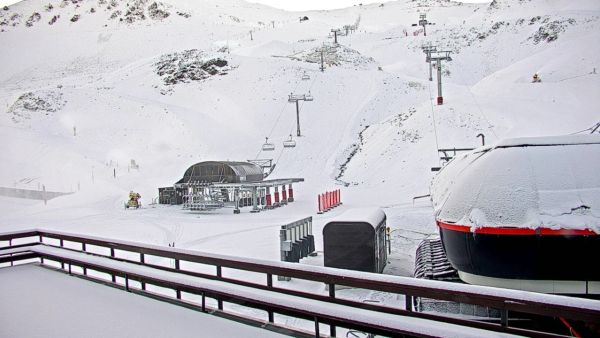
Mt Hutt Invests NZ$12 Million in Base Area, Tripling Its Sun Deck
Mt Hutt is getting busier, and its base lodge is about to catch up. NZ$12 million goes into a heated sun deck roughly three times the current size (430 m² to 1,300 m²), plus a new toilet block, heated steps down to snow level, extra storage and a new food and beverage outlet. Building starts after the 2026 season, with everything due for winter 2027.
11 Oct 2026
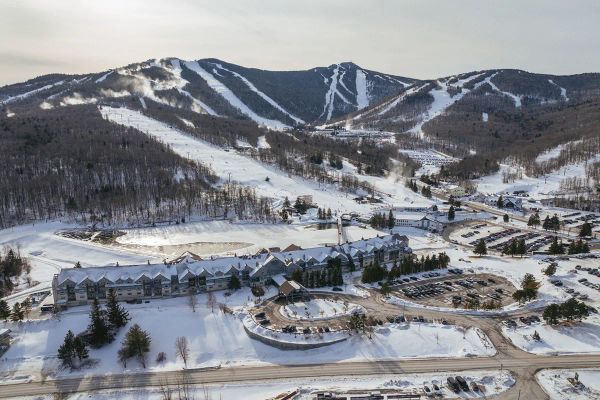
Vermont Ski Resort Opening Dates 2026-27: Few Dates Set, Killington Waits on the Cold
Vermont's season is slow to take shape. Stratton is tentatively targeting 18 November and Sugarbush 21 November, while Pico has Friday 11 December on the calendar. Killington never sets a date and opens when the snowmaking allows, and Vail Resorts has yet to name days for Stowe, Okemo and Mount Snow. The forecasts disagree about snow, and the main El Niño worry for the Green Mountains is warmth.
9 Oct 2026
Obersaxen Mundaun Lift Tickets
Obersaxen Mundaun lift tickets & passes
Opening day for the winter 2026 - 2027 season is scheduled for Dec 18, 2026 (subject to change). Lift tickets at Obersaxen Mundaun typically go on sale well before the start of the ski season.
Lift tickets FAQ
How much does a Obersaxen Mundaun day pass cost?
Obersaxen Mundaun day pass pricing varies by date and advance booking - see the full breakdown in the tickets panel.
Can I buy Obersaxen Mundaun lift tickets online?
Yes, you can purchase tickets online or at the resort ticket office.
Are there discounts for multi-day passes?
Yes, multi-day packages typically offer significant savings compared to individual day passes. The per-day cost decreases with longer stays.
What is included with a Obersaxen Mundaun lift ticket?
Full access to all lifts and trails at Obersaxen Mundaun, including mountain safety and patrol services.
What is the difference between Obersaxen Mundaun lift tickets and ski passes?
"Lift tickets" and "ski passes" refer to the same thing at Obersaxen Mundaun - your access to the mountain's lifts and trails for your chosen duration.
When should I buy Obersaxen Mundaun lift tickets for the best price?
Purchase tickets at least 7 days in advance for the best rates, and consider weekday visits for further savings over weekend rates.
Does Obersaxen Mundaun offer group discounts on lift tickets?
Group discounts are typically available for parties of 10 or more. Contact Obersaxen Mundaun directly for group booking information and rates.
How can I check current conditions before buying tickets?
Before purchasing, check the live snow report and mountain webcams to see current weather, snow conditions, and lift operations at Obersaxen Mundaun.
More Obersaxen Mundaun intelligence: snow report, webcams, resort overview.