
Seki Onsen
310m vertical, 14-16m annual snow, two lifts, ungroomed powder terrain. Family-run since 1917 in Myoko, Niigata Prefecture.
Season 2025-2026
Opens
5 Dec 2025
Closes
29 Mar 2026
Days open
114
Annual snow
15m
The Overview
Michael Fulton
Melbourne-based skier and snowboarder with 50+ resorts across 5 continents. Specialises in Australian resorts and international resort comparisons.
Seki Onsen operates across 310 metres of vertical drop from a 900-metre base to a 1,210-metre summit. The area records 14 to 16 metres of annual snowfall and comprises four official runs serviced by two chairlifts, spanning approximately 30 hectares. The ski area sits 30 kilometres from the Sea of Japan on the northeastern slopes of Mount Myoko in Niigata Prefecture, capturing Siberian storm systems that deliver exceptional powder depth. The resort operates from early December through early May, often extending its season well beyond neighbouring areas.
Terrain splits 30 per cent beginner, 40 per cent intermediate and 30 per cent advanced across short but steep runs. The Silver Fan Course remains ungroomed throughout the season, offering the steepest gradients and deepest powder within the Myoko mountain range. Most slopes receive minimal grooming, preserving natural snow conditions for powder skiing. The area allows unrestricted off-piste access through marked sidecountry zones and tree skiing terrain, unusual among Japanese resorts.
Seki Onsen has operated continuously since 1917, making it one of Japan's oldest ski areas. The Inoue family has owned and managed the resort for nearly 50 years, maintaining a low-key operation with no ski patrol presence. A single on-mountain restaurant serves homemade meals, whilst the base village contains minimal facilities. The area attracts international powder skiers seeking untracked terrain and an authentic mountain experience free from modern resort infrastructure.
The resort functions independently with no pass affiliations to neighbouring Myoko resorts. Day tickets cost ¥4,500 for adults, reflecting the minimal lift infrastructure and facilities. Seki suits advanced skiers and snowboarders comfortable navigating steep, ungroomed terrain without patrol oversight. The tiny scale means fresh snow tracks out quickly on popular powder days, typically within hours of opening.
310m
Vertical
4
Runs
74 acres
Skiable
15m
Annual snow
The Terrain
4 runs across 74 acres skiable
Seki Onsen is a tiny, family-run area on the north-eastern side of the Myoko range, with only four runs over just 30 hectares and a vertical of 310 metres, from 900 metres to 1,210 metres. Despite the size, the snow is the draw. The split is 20% beginner, 50% intermediate and 30% advanced, and the lift system of doubles, triples and quads simply repeats those short, steep pitches. Marked pistes matter less than ungroomed snow, so think of it as a place to ski powder rather than to tick off runs.
The Silver Fan Course is the name to know, an advanced run left ungroomed to hold the steepest slopes and deepest snow on the mountain. Around it are tree runs and sidecountry lines, with moguls forming in spring. Facilities are minimal, with a single on-mountain restaurant and a low-key atmosphere. Seki Onsen suits strong intermediates through to advanced skiers who want a powder-first day without the crowds of larger Myoko areas. Beginners will find it limiting, and anyone heading beyond the marked terrain should carry avalanche gear and go with a guide. Check lift status before travelling, as the season runs long into spring.
Terrain split
4
runs
4 runs across 4 grades
Beginner1 run · 20%
Intermediate2 runs · 50%
Advanced1 run · 30%
Expert0 runs · 0%
Time it right
When to visit Seki Onsen
The 2025-2026 season runs from 5 December 2025 through 29 March 2026, though operations frequently extend into early May when snowpack permits. Lifts operate 9:00 AM to 4:30 PM daily. Seki regularly outlasts all other Myoko resorts due to its exceptional snow retention and north-facing aspect. The area celebrated 100 years of skiing operations in 2017.
Annual snowfall averages 14 to 16 metres, among the highest totals in Japan. The resort's position at 1,000 metres elevation where cold Siberian air meets moisture from the Sea of Japan creates ideal powder conditions. Minimal snowmaking exists as natural accumulation proves sufficient throughout winter. Base depths regularly exceed two metres by mid-season, with the upper single chair sometimes buried during storm cycles.
January and February deliver peak powder conditions with frequent storm cycles refreshing terrain every few days. December offers early-season depth whilst March provides longer daylight and spring corn conditions. Late-season skiing continues through April when mogul fields develop on ungroomed slopes. The area's compact size means fresh lines disappear quickly after storms, making timing critical for untracked snow.
Mid-March onwards brings increased activity as other resorts close, with banked slalom competitions and a fireworks festival marking the late season. No night skiing operates. The resort publishes minimal advance scheduling, reflecting its owner-operated flexibility. Powder board test rides and terrain park features appear intermittently depending on conditions and staffing.
Season 2025-2026
5 Dec 2025
Opens
29 Mar 2026
Closes
114
Days open
15 m
Annual snow
Getting there
Getting to Seki Onsen, and where to stay
Seki Onsen sits in Myoko city, Niigata Prefecture, on the northeastern flank of Mount Myoko, a 2,454-metre active stratovolcano. The base village rests at 900 metres elevation in a narrow valley formed by the Myoko mountain range. The Joshinetsu National Park surrounds the area, with the resort positioned 30 kilometres inland from the Sea of Japan coast. Traditional hot spring baths line the village streets, which opened in 1729 as one of Myoko's oldest onsen settlements.
Sekiyama Station on the Myoko Haneuma Line provides the nearest rail access, 10 to 15 minutes by bus or taxi from the resort. Akakura Onsen village, the main accommodation hub for Myoko, lies 12 kilometres south and 30 minutes by road. The town of Myokokogen sits 12 kilometres southeast near the rail station. Tsubame Onsen, another hot spring village, is located 3 kilometres uphill from Seki via Prefecture Road 39.
Road access follows Route 18 to either Myoko Kogen Interchange or Nakago Interchange on the Joshinetsu Expressway, then 15 to 20 kilometres via Prefecture Road 39. Drive times from Nagano city average one hour, whilst Tokyo lies approximately four to five hours south. Winter road conditions require caution as heavy snowfall frequently impacts Route 39. Limited parking at the resort base fills quickly on powder days.
Tokyo's Narita and Haneda airports serve as primary international gateways, approximately 300 kilometres south. Direct shuttle buses operate from both airports to Myoko, taking five to six hours. Niigata Airport sits 160 kilometres northeast, offering limited international flights and two-hour road transfers. Train connections require the Hokuriku Shinkansen to Nagano Station, then the Kita-Shinano Line 45 minutes to Myoko-Kogen Station, followed by a local train to Sekiyama.
Where to stay
Search all stays →Hotels and lodges near Seki Onsen, powered by Stay22.
Latest News
From the SnowStash desk
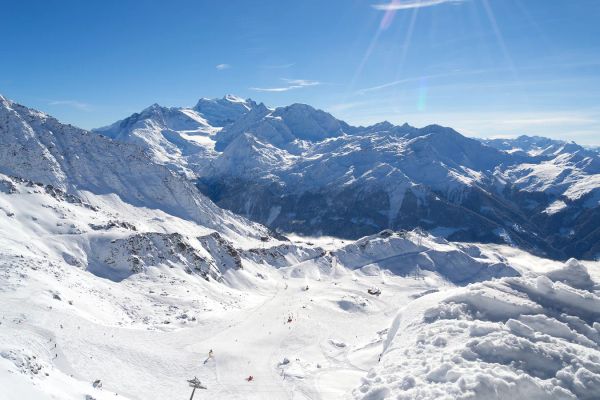
Alps Snow Forecast: Up to 64 cm Headed for the High Glaciers as the Snow Line Drops
The Alps are about to swap mild, sunny October weather for something far more wintry. A cold front arrives Tuesday, and SnowStash forecasts have Monterosa Ski out in front with 64 cm over 14 days, ahead of Blatten Belalp (55 cm) and Verbier (43 cm). The snow line should fall below 2000 metres by Wednesday night, and glaciers across Switzerland, Italy and Austria are in line for the best of it. The wind will have a say too.
20 Oct 2026
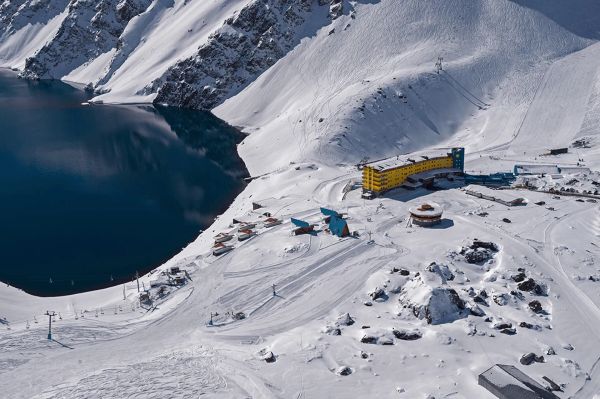
Four Dead After Avalanche Near Ski Portillo in Chile
A large avalanche struck near Laguna del Inca adjacent to Ski Portillo on Saturday afternoon, killing four people and injuring four others. The group were day visitors mountaineering in the backcountry after reportedly being warned about elevated avalanche risk by resort staff.
18 Oct 2026
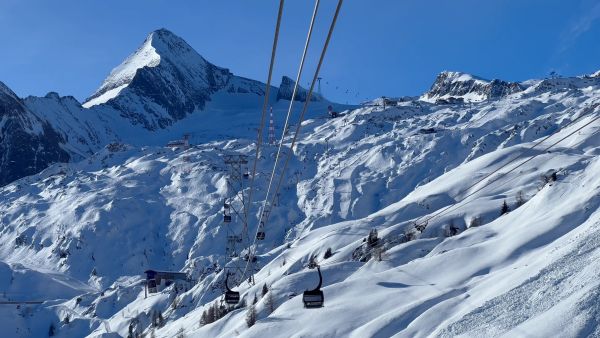
Europe Ski Resorts Open Now: What Is Skiable in Mid-October 2026
Europe’s ski season is open, technically. After a record-warm summer, glaciers in Austria, Switzerland and Italy are running a few pistes apiece, Sölden, Stubai and Kitzsteinhorn started late, Titlis has pushed back to 24 October, and Zermatt reopens a few lifts on 14 October after more than two months shut. Finland’s Levi and Ruka are skiing on stored snow. Here is what is open, and what you actually get at each.
14 Oct 2026
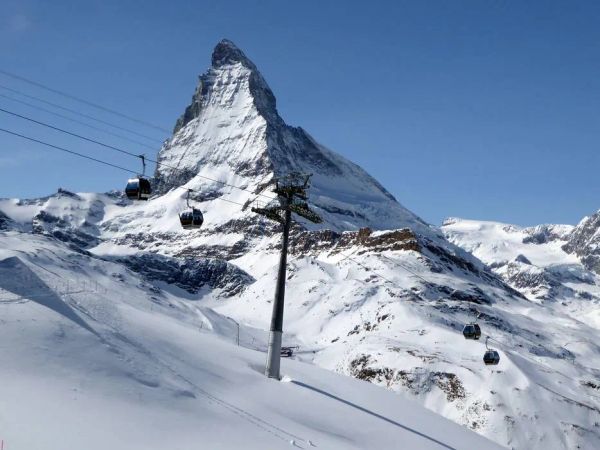
Zermatt Plans World Cup Downhill Return on the Gornergrat for 2028
Zermatt is having another crack at a World Cup downhill, and this time nobody has to cross a border. Around 13 million Swiss francs is going into rebuilding the Gornergrat piste, including a jump fed by a roughly 300-metre in-run across the roof of the Gornergrat Railway gallery, with the Matterhorn lined up behind it for the TV cameras. First men’s race is pencilled in for March 2028, pending FIS homologation.
14 Oct 2026
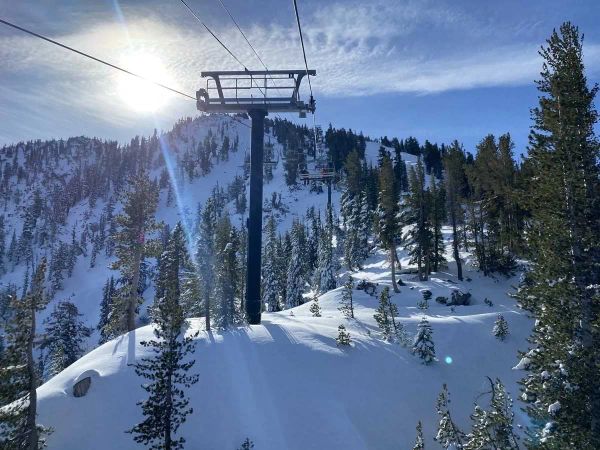
Mt. Rose Begins Snowmaking for the 2026-27 Season at Lake Tahoe
Lake Tahoe’s highest base elevation is paying off early: Mt. Rose has started making snow for 2026-27 after the first flurries and a cold snap. The Nevada resort is backing it with nearly US$2 million in upgrades, including a replacement snowmaking main line, a new PistenBully groomer and restraint bars on every lift. Opening day is yet to be confirmed, though Heavenly and Northstar are already eyeing 20 November.
13 Oct 2026

Utah Ski Resorts 2026-27: What’s New at Alta, Deer Valley, Powder Mountain and More
Utah is still building flat out. For 2026-27, Powder Mountain opens a steep new Skytrac chair into more than 1,000 acres of advanced terrain, Deer Valley adds 200 acres on Hail Peak, Sundance gets a new quad and Park City adds a gondola from its new parking structure. Snowmaking is expanding almost everywhere, Eagle Point stays closed after the Cottonwood Fire, and the 2034 Games are setting the pace. Here’s what’s new, resort by resort.
13 Oct 2026
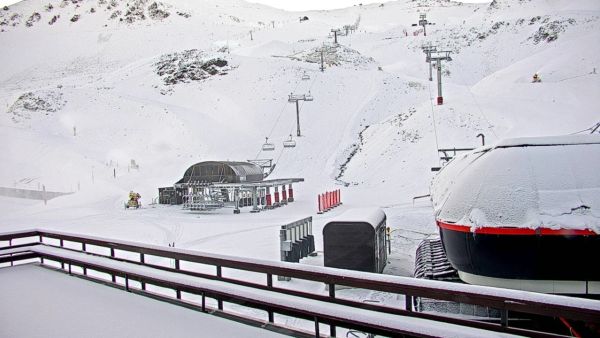
Mt Hutt Invests NZ$12 Million in Base Area, Tripling Its Sun Deck
Mt Hutt is getting busier, and its base lodge is about to catch up. NZ$12 million goes into a heated sun deck roughly three times the current size (430 m² to 1,300 m²), plus a new toilet block, heated steps down to snow level, extra storage and a new food and beverage outlet. Building starts after the 2026 season, with everything due for winter 2027.
11 Oct 2026

Vermont Ski Resort Opening Dates 2026-27: Few Dates Set, Killington Waits on the Cold
Vermont's season is slow to take shape. Stratton is tentatively targeting 18 November and Sugarbush 21 November, while Pico has Friday 11 December on the calendar. Killington never sets a date and opens when the snowmaking allows, and Vail Resorts has yet to name days for Stowe, Okemo and Mount Snow. The forecasts disagree about snow, and the main El Niño worry for the Green Mountains is warmth.
9 Oct 2026
Seki Onsen Lift Tickets
Seki Onsen lift tickets & passes
The 2025-2026 season at Seki Onsen closed on Mar 29, 2026. Check back for next season's opening date and ticket pricing.
Lift tickets FAQ
How much does a Seki Onsen day pass cost?
Seki Onsen day pass pricing varies by date and advance booking - see the full breakdown in the tickets panel.
Can I buy Seki Onsen lift tickets online?
Yes, you can purchase tickets online or at the resort ticket office.
Are there discounts for multi-day passes?
Yes, multi-day packages typically offer significant savings compared to individual day passes. The per-day cost decreases with longer stays.
What is included with a Seki Onsen lift ticket?
Full access to all lifts and trails at Seki Onsen, including mountain safety and patrol services.
What is the difference between Seki Onsen lift tickets and ski passes?
"Lift tickets" and "ski passes" refer to the same thing at Seki Onsen - your access to the mountain's lifts and trails for your chosen duration.
When should I buy Seki Onsen lift tickets for the best price?
Purchase tickets at least 7 days in advance for the best rates, and consider weekday visits for further savings over weekend rates.
Does Seki Onsen offer group discounts on lift tickets?
Group discounts are typically available for parties of 10 or more. Contact Seki Onsen directly for group booking information and rates.
How can I check current conditions before buying tickets?
Before purchasing, check the live snow report and mountain webcams to see current weather, snow conditions, and lift operations at Seki Onsen.
More Seki Onsen intelligence: snow report, webcams, resort overview.