
Manganui
59-hectare club field on Mount Taranaki with 420m vertical, 4 T-bars, NZ$50 day pass. Walk-in access, New Zealand.
Season 2026
Opens
22 Aug 2026
Closes
27 Sept 2026
Days open
36
Annual snow
3m
The Overview
Michael Fulton
Melbourne-based skier and snowboarder with 50+ resorts across 5 continents. Specialises in Australian resorts and international resort comparisons.
Manganui operates on the eastern slopes of Mount Taranaki within Egmont National Park, spanning 59 hectares between 1,260 and 1,680 metres elevation. The club field delivers 420 metres of vertical drop across 17 runs with 10 kilometres of trails, recording 2.5 metres of annual snowfall. Adult day passes cost NZ$50, among the lowest in New Zealand, whilst children and super seniors ski free. The field's lower slopes consist of mowed tussock meadow requiring only 30 centimetres of snow to operate, allowing it to frequently open first among North Island areas.
Terrain splits 5 per cent beginner, 35 per cent intermediate and 60 per cent advanced, with no designated expert runs but abundant unpatrolled off-piste zones. The beginner T-bar serves 140 metres of gentle vertical, whilst the Nutcracker rope tow climbs 300 metres of fall-line skiing with gradients averaging 25 to 30 degrees. Natural halfpipes thread through the volcanic terrain, alongside open bowls and ridgelines. The longest run extends two kilometres from the upper mountain.
Access requires a 25 to 30-minute walk from the Plateau car park at 1,050 metres, with a goods lift positioned halfway and a suspension bridge crossing Manganui Gorge. The Department of Conservation public shelter houses a modest canteen, ticket office and first aid station, but no rental shop or ski school operates on-mountain. The 33-bed Manganui Lodge provides self-catering accommodation at the base. Crowds peak at 300 to 400 skiers on busy days, and the club atmosphere fosters a high snowboarder-to-skier ratio.
The Stratford Mountain Club operates the field on a volunteer basis with no multi-resort pass affiliations. Mount Taranaki ranks second in New Zealand for precipitation, creating volatile snow conditions that can transform overnight due to coastal weather patterns. The 2026 season runs 22 August to 27 September, though typical seasons span mid-June to early October depending on natural snowfall. The field suits budget-conscious intermediates, families learning surface lifts, and advanced riders seeking raw alpine terrain without commercial infrastructure.
420m
Vertical
17
Runs
146 acres
Skiable
3m
Annual snow
The Terrain
17 runs across 146 acres skiable
Manganui is a small club field on the eastern flank of Mt Taranaki, inside Egmont National Park, spread across about 59 hectares. A handful of surface tows serve 17 runs over 420 vertical metres, from 1,260 to 1,680 metres. The split leans steep, with 5% beginner, 35% intermediate and 60% advanced, so the modest footprint hides real pitch. The lower slopes are open tussock meadow that needs little snow cover to run, while the upper mountain tightens into volcanic gullies and ridgelines. There is no road to the base, because you walk in from the Plateau car park.
The Nutcracker rope tow is the signature, pulling riders up fall-line pitches averaging 25 to 30 degrees, while a T-bar and gentle learner tow look after beginners lower down. Natural halfpipes, wind-scoured bowls and ridgelines give strong intermediates and advanced riders plenty to chase, with unpatrolled off-piste beyond the marked runs. Facilities are basic, with a public shelter, a small canteen and no hire shop. Volunteers from the Stratford Mountain Club keep it running. It suits adventurous skiers and snowboarders who want raw volcanic terrain and small crowds, and who do not mind carrying their gear.
Terrain split
17
runs
17 runs across 4 grades
Beginner1 run · 5%
Intermediate6 runs · 35%
Advanced10 runs · 60%
Expert0 runs · 0%
Time it right
When to visit Manganui
The 2026 season opens 22 August and closes 27 September, spanning just over five weeks. Typical seasons run mid-June to early October, dependent entirely on natural snowfall as no snowmaking exists. The field's low base elevation at 1,260 metres and mowed tussock meadow allow operations with minimal snow cover. Recent years have seen Manganui claim bragging rights as the first North Island field to open each winter.
Annual snowfall averages 2.5 metres, though Mount Taranaki's coastal position generates extreme precipitation variability. The snowiest week occurs in the second week of July, typically delivering 14 centimetres across 2.2 snowy days. Rain events can rapidly melt the snowpack or turn it isothermal, creating temporary closures mid-season. Snow conditions fluctuate dramatically overnight due to coastal weather patterns, and operators advise getting to the mountain when conditions turn favourable.
July delivers the most consistent snow and coldest temperatures for powder skiing, whilst August offers longer daylight hours and more stable weather. Early season the field loses sun after 2pm, firming the snow but occasionally improving surface quality. September brings spring conditions with softer snow and higher avalanche risk in unpatrolled zones. The field's avalanche advisory board at the tunnel entrance displays daily risk levels, and access closes when ratings reach high or extreme.
No major events calendar or night skiing programmes are promoted. The field focuses on day operations with occasional closures for avalanche control and weather. The canteen sells modest snacks including locally popular pies, and EFTPOS accepts all major cards. Visitors can combine skiing with exploring the SH43 Heritage Highway, which threads through native forest and unspoiled sub-tropical rainforest landscapes dating back thousands of years.
Season 2026
22 Aug 2026
Opens
27 Sept 2026
Closes
36
Days open
3 m
Annual snow
Getting there
Getting to Manganui, and where to stay
Manganui sits on the eastern slopes of Mount Taranaki, a 2,518-metre active stratovolcano in the Taranaki region of New Zealand's North Island. The field operates within Egmont National Park, the country's second-oldest national park established in 1900 encompassing 33,500 hectares. The Plateau car park sits at 1,050 metres elevation, accessed via Upper Pembroke Road through podocarp and montane forest. The walk to the ski area crosses the 100-metre Manganui Gorge suspension bridge, opened May 2024, which hangs 50 metres above the gorge floor with designs by Ngāti Ruanui iwi.
Stratford township lies immediately south of the field along State Highway 3, serving as the primary service town with gear hire available at Taranaki Ski Hire on Pembroke Road. New Plymouth, the major city of Taranaki with 80,000 residents, sits 45 minutes and 40 kilometres northwest of the Plateau car park. The Stratford district sits in the agricultural heartland of Taranaki, with views extending to the Tasman Sea from higher elevations. The Ngāti Ruanui Stratford Mountain House provides accommodation along the access route.
Pembroke Road turnoff connects directly to State Highway 3 just south of Stratford, with the sealed road climbing 18 kilometres through native forest to the Plateau. The road remains sealed to the car park, unique among New Zealand club fields, though chains are required for two-wheel-drive vehicles on occasion and recommended for all vehicles. Four-wheel-drive vehicles with road tyres suffice most days. The Stratford Plateau car park offers no overnight security, and the council contractor maintains gritting during winter.
New Plymouth Airport lies 42 kilometres west with domestic connections to Auckland, Wellington and Christchurch via Air New Zealand. Wellington Airport sits 220 kilometres south by road, representing the nearest international gateway with a four-hour drive via State Highway 3. No direct bus service connects the airport to Stratford, though InterCity runs five weekly services between New Plymouth and Stratford taking 29 minutes. Driving time from New Plymouth to the Plateau totals 45 minutes, with an additional 25 to 30-minute walk carrying equipment to reach the base facilities.
Where to stay
Search all stays →Hotels and lodges near Manganui, powered by Stay22.
Latest News
From the SnowStash desk
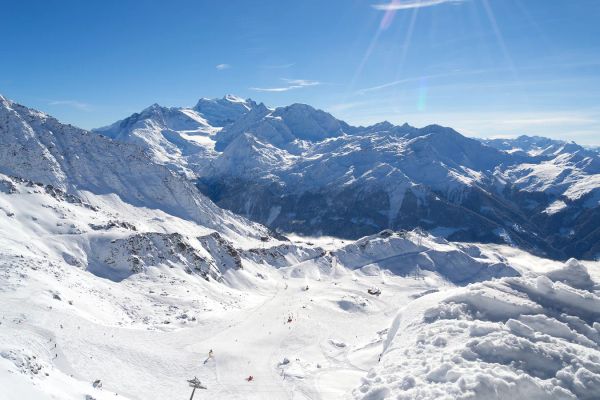
Alps Snow Forecast: Up to 64 cm Headed for the High Glaciers as the Snow Line Drops
The Alps are about to swap mild, sunny October weather for something far more wintry. A cold front arrives Tuesday, and SnowStash forecasts have Monterosa Ski out in front with 64 cm over 14 days, ahead of Blatten Belalp (55 cm) and Verbier (43 cm). The snow line should fall below 2000 metres by Wednesday night, and glaciers across Switzerland, Italy and Austria are in line for the best of it. The wind will have a say too.
20 Oct 2026
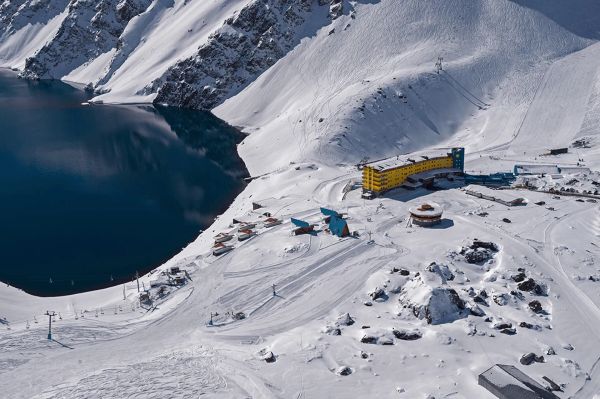
Four Dead After Avalanche Near Ski Portillo in Chile
A large avalanche struck near Laguna del Inca adjacent to Ski Portillo on Saturday afternoon, killing four people and injuring four others. The group were day visitors mountaineering in the backcountry after reportedly being warned about elevated avalanche risk by resort staff.
18 Oct 2026

Europe Ski Resorts Open Now: What Is Skiable in Mid-October 2026
Europe’s ski season is open, technically. After a record-warm summer, glaciers in Austria, Switzerland and Italy are running a few pistes apiece, Sölden, Stubai and Kitzsteinhorn started late, Titlis has pushed back to 24 October, and Zermatt reopens a few lifts on 14 October after more than two months shut. Finland’s Levi and Ruka are skiing on stored snow. Here is what is open, and what you actually get at each.
14 Oct 2026

Zermatt Plans World Cup Downhill Return on the Gornergrat for 2028
Zermatt is having another crack at a World Cup downhill, and this time nobody has to cross a border. Around 13 million Swiss francs is going into rebuilding the Gornergrat piste, including a jump fed by a roughly 300-metre in-run across the roof of the Gornergrat Railway gallery, with the Matterhorn lined up behind it for the TV cameras. First men’s race is pencilled in for March 2028, pending FIS homologation.
14 Oct 2026

Mt. Rose Begins Snowmaking for the 2026-27 Season at Lake Tahoe
Lake Tahoe’s highest base elevation is paying off early: Mt. Rose has started making snow for 2026-27 after the first flurries and a cold snap. The Nevada resort is backing it with nearly US$2 million in upgrades, including a replacement snowmaking main line, a new PistenBully groomer and restraint bars on every lift. Opening day is yet to be confirmed, though Heavenly and Northstar are already eyeing 20 November.
13 Oct 2026

Utah Ski Resorts 2026-27: What’s New at Alta, Deer Valley, Powder Mountain and More
Utah is still building flat out. For 2026-27, Powder Mountain opens a steep new Skytrac chair into more than 1,000 acres of advanced terrain, Deer Valley adds 200 acres on Hail Peak, Sundance gets a new quad and Park City adds a gondola from its new parking structure. Snowmaking is expanding almost everywhere, Eagle Point stays closed after the Cottonwood Fire, and the 2034 Games are setting the pace. Here’s what’s new, resort by resort.
13 Oct 2026

Mt Hutt Invests NZ$12 Million in Base Area, Tripling Its Sun Deck
Mt Hutt is getting busier, and its base lodge is about to catch up. NZ$12 million goes into a heated sun deck roughly three times the current size (430 m² to 1,300 m²), plus a new toilet block, heated steps down to snow level, extra storage and a new food and beverage outlet. Building starts after the 2026 season, with everything due for winter 2027.
11 Oct 2026

Vermont Ski Resort Opening Dates 2026-27: Few Dates Set, Killington Waits on the Cold
Vermont's season is slow to take shape. Stratton is tentatively targeting 18 November and Sugarbush 21 November, while Pico has Friday 11 December on the calendar. Killington never sets a date and opens when the snowmaking allows, and Vail Resorts has yet to name days for Stowe, Okemo and Mount Snow. The forecasts disagree about snow, and the main El Niño worry for the Green Mountains is warmth.
9 Oct 2026
Manganui Webcams
4 live angles across the mountain. Tap any camera to go full-screen.
About Manganui's live webcams
Check live conditions across Manganui with 4 real-time webcams showing snow, weather, and lift operations, updated every 10 minutes. Check high-elevation cams for powder visibility and base-area cams for crowd levels before you head up.
Camera guide
- Manganui Top Tow1750m
- Top Tow station at Manganui Ski Area on Mt Taranaki showing the highest lift access at 1750m elevation. This Manganui webcam captures the legendary rope tow operations and access to advanced terrain, with live snow cam views of the spectacular Tasman Sea coastline and unique volcanic mountain skiing experience.
- Manganui Flying Fox1680m
- Flying Fox Goods Lift top station at Manganui showing the unique transport system at 1680m elevation. This Manganui live cam monitors the equipment transport operations essential for this adventure ski field, with Manganui webcams revealing the pioneering spirit of skiing on an active volcanic mountain.
- Manganui T-Bar1600m
- T-Bar lift area at Manganui Ski Area providing access to intermediate terrain at 1600m elevation. This Manganui web cam shows the main skiing area with its dramatic mountain views, with live cams capturing the unique club atmosphere and challenging terrain on New Zealand's most accessible volcanic peak.
- Manganui Access Tow1520m
- Access Tow area at Manganui looking east toward the T-Bar and base facilities at 1520m elevation. This Manganui snowcam shows the car park, access track and base facilities, with Manganui live cam footage essential for checking conditions on Mt Taranaki's distinctive skiing terrain and club field operations.
Manganui snow cams FAQ
How often do Manganui snow cams update?
All Manganui snow cams and webcams update every 10 minutes with fresh images showing current mountain conditions. This frequent update schedule ensures you have access to near real-time conditions for planning your ski day at Manganui.
Which Manganui webcam shows the best powder conditions?
The high-elevation Manganui Top Tow webcam at 1,750m provides the clearest view of powder conditions and snowfall. These Manganui webcams capture fresh snow accumulation and visibility better than base area cameras.
Can I see Manganui lift queues on the webcams?
Yes. Multiple Manganui snow cams specifically show lift queue areas and chairlift operations, helping you time your arrival and avoid peak queue periods.
When is the best time to check Manganui snow cams?
Check Manganui webcams early morning (7-8am) for overnight snowfall assessment, and mid-afternoon for current crowd levels and weather. The live cams are most useful after storm events to assess fresh powder.
How can I check current conditions before buying Manganui lift tickets?
Use our Manganui webcams alongside the live snow report to assess conditions before purchasing lift tickets. The webcams show real-time visibility, snow quality, and operational status.
Do Manganui webcams work on mobile devices?
Yes. All Manganui snow cams and webcams are optimized for mobile viewing, so you can check live conditions from anywhere using your phone or tablet.
More Manganui intelligence: snow report, lift tickets, trail map, resort overview.