TL;DR
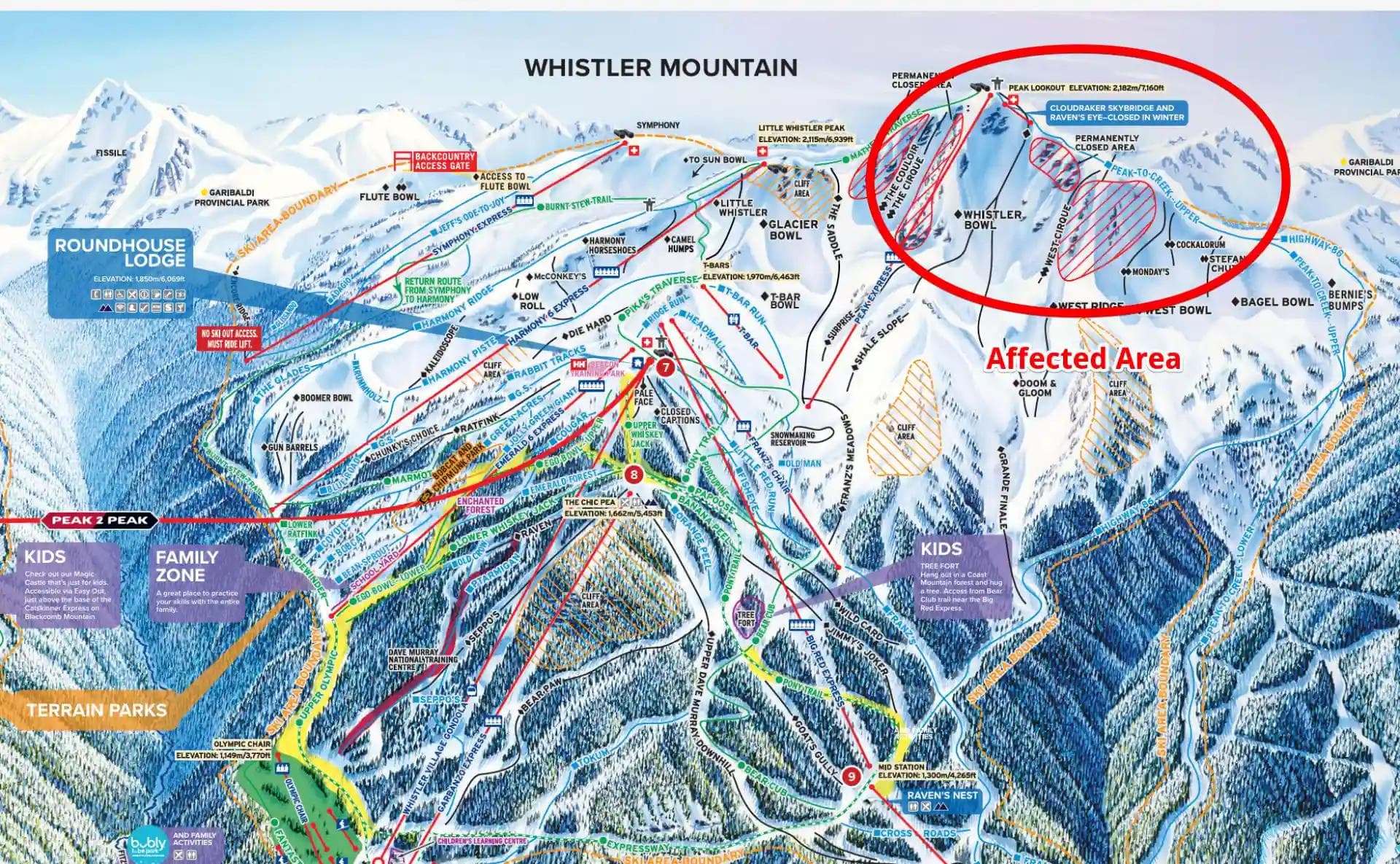
A significant rockslide hit inbounds terrain near Whistler Peak on March 12, closing the Peak Express chair and upper terrain indefinitely. The debris field stretched roughly 100 metres across steep terrain between West Cirque and Monday's run, raising questions about geological stability in the Coast Mountains.
Rockslide Hits Summit Terrain at Whistler
A substantial rockslide struck inbounds terrain near the summit of Whistler Peak early on March 12, closing the Peak Express chair and upper terrain indefinitely whilst operations teams work through what comes next. The timing was fortunate—the slide occurred before lifts started turning, meaning no skiers or riders were in the impact zone. No injuries were reported.
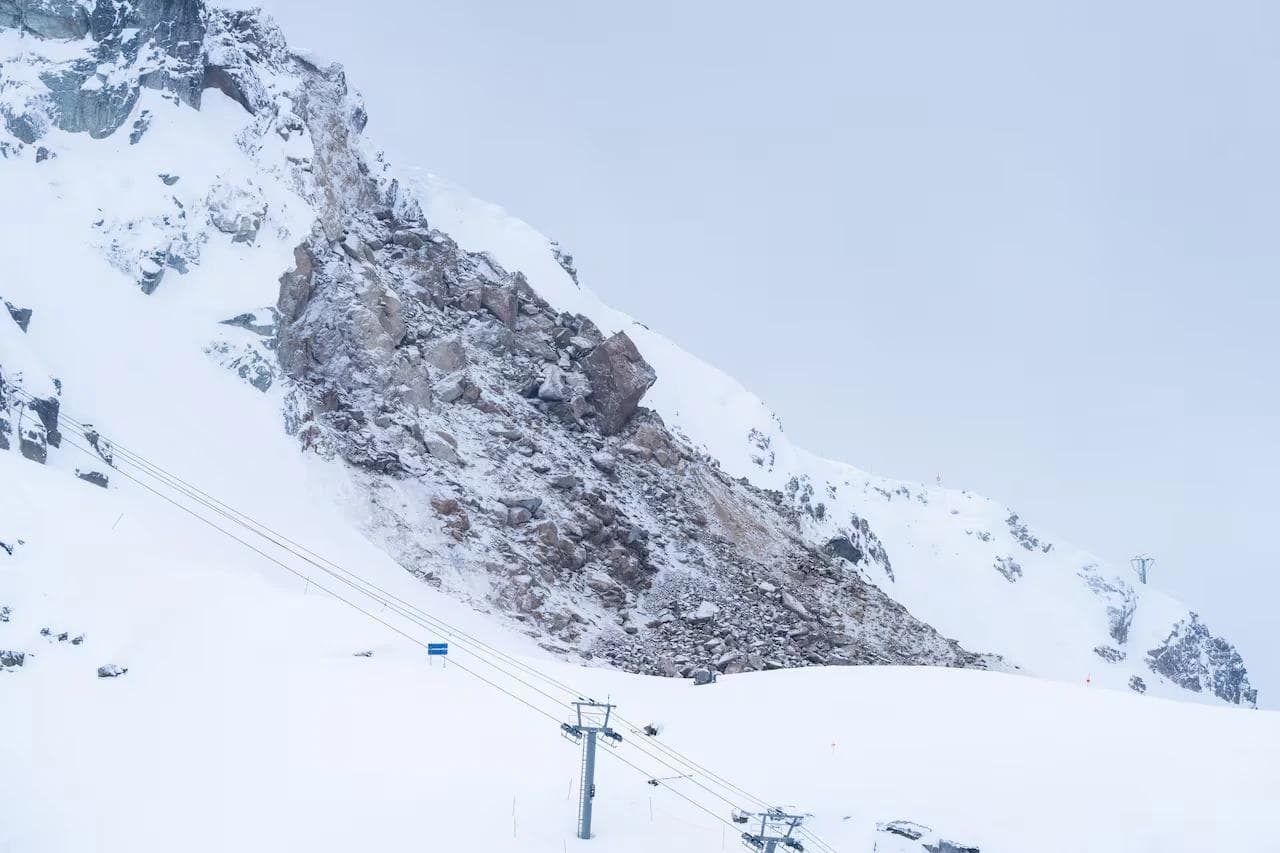
The debris field cut through roughly 100 metres of steep terrain between West Cirque and Monday's, both double black diamond lines that see regular traffic from advanced skiers and riders. Images from the mountain show large blocks of rock scattered across the face, creating obvious terrain hazards that will require careful assessment before anyone can safely access the area again.
Vail Resorts, which operates Whistler Blackcomb, hasn't provided a timeline for reopening. That's probably the right call—rushing these assessments tends to create more problems than it solves. The rest of the resort remains open, though losing the Peak zone removes some of the most interesting terrain on the mountain.
Pinning down exactly what caused a rockslide is rarely straightforward, but several factors likely contributed. The Coast Mountains are geologically active—still rising from tectonic forces and rebounding from the weight of glaciers that retreated millennia ago. This ongoing movement, combined with erosion from precipitation and freeze-thaw cycles, gradually destabilises steep rock faces over time.The weather conditions preceding the slide are worth noting. The area received 20 to 30 centimetres of snow overnight, accompanied by strong winds and temperatures around –11°C at the summit. Wind chills dropped to –23°C with gusts reportedly hitting 180 km/h. When water infiltrates rock fissures and freezes, it expands—sometimes enough to dislodge previously stable material.Whether this particular slide resulted from long-term geological processes or more immediate weather impacts—or both—remains unclear. What's certain is that rockfall in alpine environments isn't unusual. What makes this incident noteworthy is the location: inbounds terrain at one of North America's busiest ski resorts, not some remote backcountry zone.The Coast Mountains have produced similar events before. These ranges are young, steep, and subject to intense weathering. Glacial retreat over recent decades has exposed rock that was previously supported by ice, making slides more common in certain areas. Climate patterns that increase temperature fluctuations and precipitation intensity don't help.