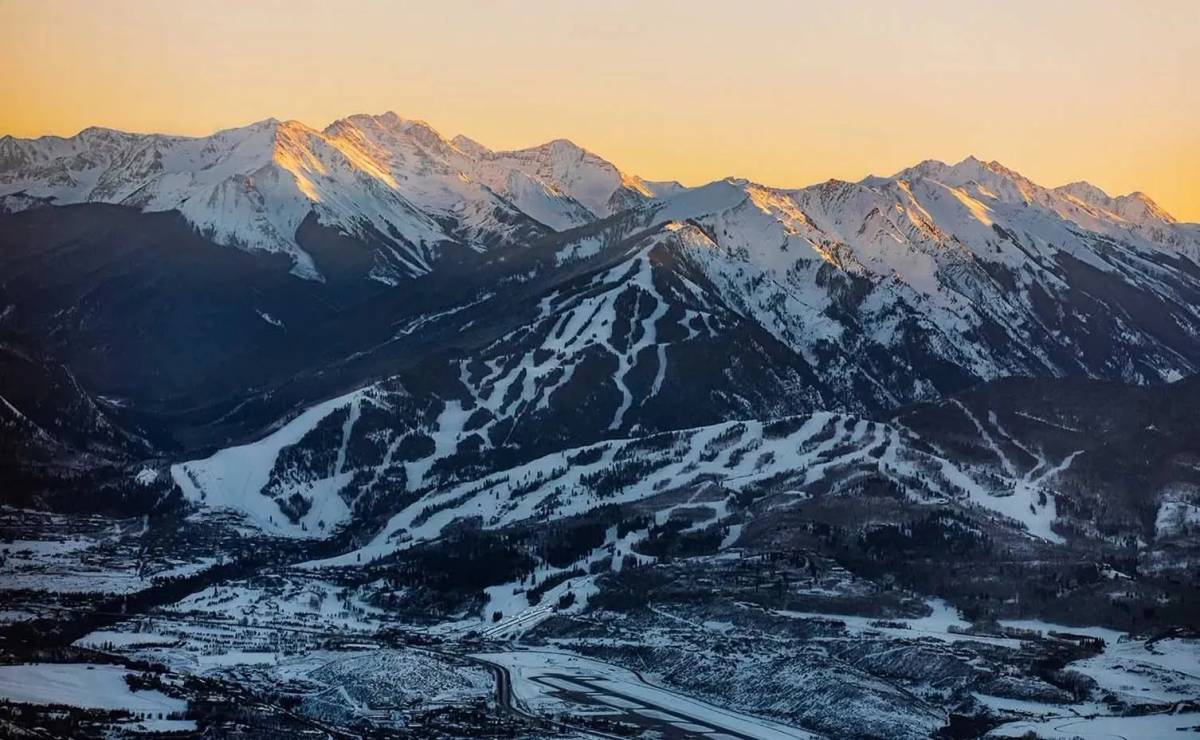
Aspen Buttermilk
469 acres, 44 runs near Aspen. Winter X Games venue, beginner-friendly terrain, Ikon Pass access.

Season 2026 - 2027
Opens
12 Dec 2026
Closes
28 Mar 2027
Days open
106
Annual snow
210in
The Overview
Michael Fulton
Melbourne-based skier and snowboarder with 50+ resorts across 5 continents. Specialises in Australian resorts and international resort comparisons.
Aspen Buttermilk's summit reaches 9,902 feet, dropping 2,031 vertical feet to a base at 7,868 feet across 44 runs spread over 469 acres near Aspen, Colorado. Terrain splits 39 per cent intermediate, 35 per cent beginner, 21 per cent advanced and 5 per cent expert. Average annual snowfall runs to roughly 210 inches. The resort carries Ikon Pass and Mountain Collective affiliation. Four lifts, including three quad chairs and one double chair, serve the mountain alongside four surface lifts.
Buttermilk serves as the beginner-friendly counterpart within the four-mountain Aspen Skiing Company portfolio, offering considerably gentler terrain than its sister mountains, Aspen Mountain, Aspen Highlands and Snowmass. Its role as the host of the Winter X Games has also given Buttermilk an unexpected international profile for a mountain built primarily around learning terrain.
Friedl Pfeifer, the Austrian ski instructor and racing champion who co-founded the Aspen Skiing Company in 1946, sold his interest in the company in 1958 and turned his attention to developing Buttermilk Mountain that same year, giving Aspen its dedicated beginner-focused ski area. Buttermilk subsequently joined the broader Aspen Skiing Company portfolio alongside Aspen Mountain, Highlands and, later, Snowmass.
Aspen Skiing Company's ownership has remained with the Crown family of Illinois since the mid-1980s, following the company's 1977 sale to Twentieth Century Fox and subsequent 1985 transition. Buttermilk continues to operate as the accessible, learning-focused member of the Aspen four-mountain family. Adult daily tickets run from 189 to 259 US dollars, matching pricing across all four Aspen Skiing Company mountains.
2,031ft
Vertical
44
Runs
469 acres
Skiable
210in
Annual snow
Ikon / Mountain Collective
Pass
The Terrain
44 runs across 469 acres skiable
Aspen Buttermilk is the gentle member of the four Aspen Snowmass mountains, with 469 acres (190 hectares) of terrain over 44 runs. The base sits at 7,870 ft (2,399 m) and the summit at 9,900 ft (3,018 m), a vertical of 2,030 ft (619 m). Terrain divides into 35% beginner, 39% intermediate, 21% advanced and 5% expert, so it favours learners and cruisers. Snowfall averages around 210 inches a year. It is also the long-time home of the Winter X Games, so the terrain parks get as much attention as the learning slopes.
West Buttermilk Express serves the S3 Park beside the ski school, and Panda Peak adds a beginner chairlift, a rope tow and a magic carpet for first turns. Tiehack, served by the Tiehack Express high-speed quad, has steeper blues, some easy black runs, glades and the occasional small mogul zone for intermediates. Main Buttermilk Parks run from the top of Little Teaser through Uncle Chuck's and Jacob's Ladder toward the X Games park at the bottom of the mountain, where a 22-foot superpipe features in X Games Aspen. Expert skiers will run out of challenge quickly and should head to Aspen Highlands or Aspen Mountain. Families, beginners and progressing intermediates are the natural audience.
Terrain split
44
runs
44 runs across 4 grades
Beginner15 runs · 35%
Intermediate17 runs · 39%
Advanced9 runs · 21%
Expert2 runs · 5%
Time it right
When to visit Aspen Buttermilk
The 2025-26 season at Aspen Buttermilk ran from 14 December 2025 to 5 April 2026, a roughly sixteen-week season supported by average annual snowfall of around 210 inches. Season dates can shift depending on early and late-season weather and terrain park build schedules.
Midwinter, from December through February, typically brings the most consistent conditions to Buttermilk's beginner-and-intermediate-weighted terrain. As an Ikon Pass and Mountain Collective resort, Buttermilk draws families and beginner skiers specifically seeking gentler terrain than neighbouring Aspen Mountain, alongside visitors drawn by the mountain's Winter X Games hosting history.
Buttermilk's terrain parks and beginner-focused infrastructure continue to support strong family and learn-to-ski visitation throughout the season. School holiday periods bring substantial demand given the mountain's accessible terrain profile within the broader Aspen area. Weekend crowds draw from across the four-mountain Aspen Skiing Company visitor base.
Specific event programming beyond standard operations and the Winter X Games is not confirmed in available resort information. Under continued Crown family ownership, Buttermilk continues building on nearly seven decades of history since Friedl Pfeifer's 1958 development of the mountain. Its role as Aspen's dedicated learning mountain remains central to its seasonal identity.
Season 2026 - 2027
12 Dec 2026
Opens
28 Mar 2027
Closes
106
Days open
210 in
Annual snow
The record
Historical snowfall at Aspen Buttermilk
Daily snow reports at Aspen Buttermilk go back to 2025, 2 winters on the books. Open the record to compare winters, lifts and piste.
11 in
Snowiest day
5 Dec 2025
2 in
This winter · 2026-27
so far
54 in
Typical winter
average of complete seasons
Winter totals
in
Past wintersThis winter
Getting there
Getting to Aspen Buttermilk, and where to stay
Aspen Buttermilk sits near Aspen, Colorado, with a base elevation of 7,868 feet and a summit at 9,902 feet across a 2,031-foot vertical drop over 469 acres. This setting places Buttermilk within the broader Aspen ski area cluster alongside Aspen Mountain, Highlands and Snowmass.
Aspen itself offers extensive luxury lodging, dining and shopping within a short drive of Buttermilk, giving visitors access to the town's considerable amenities regardless of which of the four mountains they choose to ski. The broader Roaring Fork Valley surrounds the area with additional recreation.
Colorado State Highway 82 provides access to Buttermilk from Aspen and the broader region. Winter driving conditions on this route can include snow and ice, though the well-travelled highway is regularly maintained given the area's status as a major ski destination. Free shuttle services connect Buttermilk to downtown Aspen and the other three mountains.
Aspen-Pitkin County Airport, within a short drive, offers direct flights from numerous major US cities, making Buttermilk and the broader Aspen area genuinely accessible for fly-in visitors from across the country.
Where to stay
Search all stays →Stays map loads when you scroll here
Hotels and lodges near Aspen Buttermilk, powered by Stay22.
Good to know
Frequently asked
When is Aspen Buttermilk's ski season?
Aspen Buttermilk's 2026 - 2027 season typically runs from December 12 through March 28. That window is roughly 106 calendar days, though daily operations depend on snow cover, weather, and lift maintenance.
Resorts in Colorado, Usa often announce firm dates closer to winter; check the live snow report before you travel if you are planning around opening weekend or spring closure.
How much skiable terrain does Aspen Buttermilk have?
Aspen Buttermilk lists about 469 acres skiable of marked terrain spread across 44 named runs (190 hectares alongside 469 acres skiable). That footprint is what most riders experience on a lift-served day. Side-country or hike-to terrain may sit outside these published numbers.
Use the trail map to see how the mountain is laid out and where the longest fall-line runs connect back to base.
What is the terrain like at Aspen Buttermilk?
Trail grading at Aspen Buttermilk breaks down roughly as 35% beginner, 39% intermediate, 21% advanced, 5% expert. The mix is balanced enough for mixed-ability groups, so learners can stay on marked green/blue (Green/Blue) terrain while stronger skiers peel off to steeper pitches.
Percentages describe the resort's published piste mix, not vertical feet. A mountain with modest "expert" stats can still feel demanding if the steep terrain is long or exposed. Read the trail map alongside these numbers when planning your route.
How many lifts does Aspen Buttermilk have?
Aspen Buttermilk operates 8 lifts across 3 lift types. The fleet includes 4 surface lifts, 3 quad chairs, and 1 double chair.
Lift mix affects how quickly you can lap your favourite zones. Gondolas and trams move big crowds to mid-mountain, while shorter chairs and surface lifts often serve learning areas or local pods. Check the live snow report on ski days for real-time open/closed status.
What is the elevation and vertical drop at Aspen Buttermilk?
Base elevation at Aspen Buttermilk is about 7,871 ft (2,399 m), with the summit around 9,902 ft (3,018 m), giving roughly 2,031 ft (619 m) of vertical from base to top.
Higher start heights usually mean colder, drier snow holding longer into spring, but also thinner air and faster weather changes. Pack layers if you are riding from village level to summit lifts in one day.
How much snow does Aspen Buttermilk get each season?
Aspen Buttermilk averages about 210 inches (533 cm) of natural snowfall per season. That is a long-term climate figure. Any single winter can run well above or below it depending on storm track and temperature.
For trip planning, pair this baseline with the live snow report and webcams: fresh cycles show up in overnight totals and summit cameras long before season averages tell you much about today's surface.
Does Aspen Buttermilk accept the Ikon / Mountain Collective?
Aspen Buttermilk is affiliated with the Ikon / Mountain Collective. Pass holders should confirm current season benefits, blackout dates, and reservation rules on the pass issuer's site. Policies change year to year and can differ between international and domestic products.
If you are not on Ikon / Mountain Collective, day tickets and multi-day bundles are still available; see the lift tickets page for published rates and purchase links.
Where can I buy Aspen Buttermilk lift tickets and how much do they cost?
Published single-day adult pricing on SnowStash currently spans US$132 to US$309, depending on date band and whether you are buying peak or regular windows. Multi-day products (multi-day passes, season passes) usually lower the per-day cost if you are staying several days. Tickets can be bought online through the resort's official checkout (linked from our lift tickets page) or at on-mountain ticket windows, subject to availability.
Buying ahead of peak holidays and weekends generally saves money and guarantees access on sold-out days. Before you commit, scan the snow report and webcams so you are paying for conditions that match your expectations.
How can I check snow and mountain conditions at Aspen Buttermilk before I go?
SnowStash pulls together 4 live mountain webcams, a downloadable piste map, and the daily snow report for Aspen Buttermilk so you can plan from home. Webcams refresh on a short interval and are the fastest way to judge visibility, wind exposure, and whether storm snow is still falling.
The snow report adds structured totals, base depth where available, and lift/trail status when the resort publishes it. Use both together: cameras show what it looks like right now, and the report summarises numbers your group can compare day to day.
Does Aspen Buttermilk have a trail map?
Yes. The downloadable PDF/image map is better for offline planning, marking meeting points, and understanding the full mountain layout at a glance.
Both versions are on the trail map page for Aspen Buttermilk. If you are navigating with kids or meeting friends across separate lifts, screenshot or print the static map and keep the live map open on your phone for operational updates.
Where is Aspen Buttermilk located?
Aspen Buttermilk sits in Colorado, Usa. That regional context matters for travel planning: airport transfers, snow tyres, and typical storm patterns all follow geography as much as resort marketing.
Browse nearby accommodation from the resort page if you are comparing village-base vs valley-base stays; where you sleep changes your first lift of the day more than most trail stats do.
Latest News
From the SnowStash desk

Val Gardena to Alpe di Siusi Lift Link Back in Play After Court Ruling
The Val Gardena-Alpe di Siusi lift link isn’t dead after all. A South Tyrol court has overturned Santa Cristina’s rejection of the new Monte Pana-Saltria link on procedural grounds, after the council skipped required public information sessions. Opponents want the missing sessions held and a fresh vote, and nothing has been approved. For now it’s still a bus between the two, but a plan first floated in 2017 is back in the conversation.
8 Nov 2026
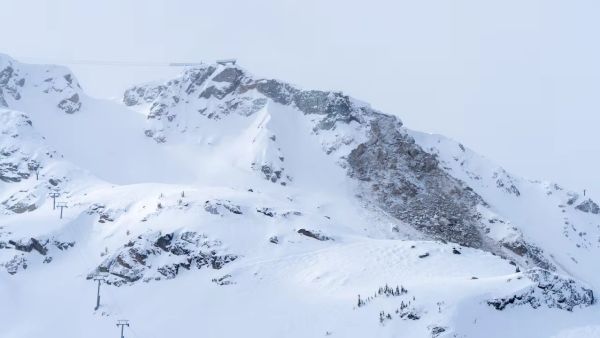
Whistler Blackcomb Rockslide Zone Stays Closed Through 2026-27 Season
A section of Whistler Peak terrain will stay closed all 2026-27 season, Vail Resorts has confirmed, with rockslide mitigation work continuing into summer 2027. Peak Express is still expected to run this winter, but locals are already arguing about what’s actually off limits, whether the Whistler Bowl is gone, and why the news landed after pass sales wound down. Here’s where things stand.
7 Nov 2026
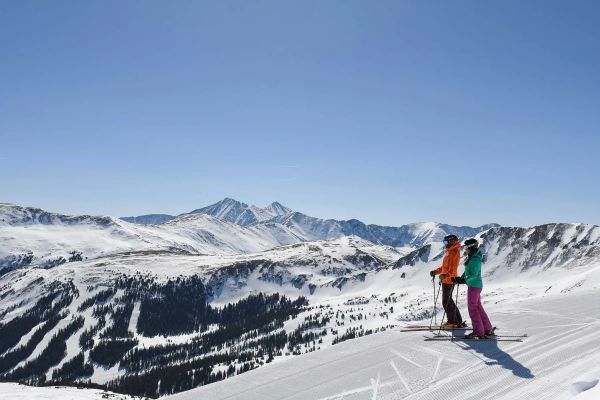
Loveland Ski Area Opens for 2026-27 and Marks 60 Years of Snowmaking
Loveland is open. The Colorado ski area started Chet’s Dream turning on Saturday 7 November to kick off 2026-27, with $60 adult lift tickets to mark 60 years of snowmaking. Expect three runs, nearly 1,000 vertical feet (about 300 metres) of top-to-bottom skiing, live music on the Basin Patio and no beginner terrain yet. Here’s what’s open, what it costs and when Loveland Valley follows.
7 Nov 2026
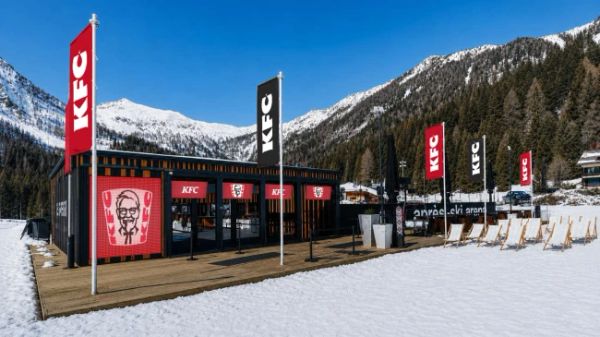
KFC Is Coming to the Slopes at Cortina and Madonna di Campiglio
Fried chicken is heading up the Dolomites. From 5 December KFC will run two restaurants on the slopes - one at 2,123 metres at Cortina, one at 1,700 metres at Madonna di Campiglio - and the polenta-and-canederli crowd has opinions. Local politicians, conservation groups and plenty of Facebook commenters are calling it a step too far, while others just want a cheaper lunch. Here’s what’s on the menu and what’s the fuss.
5 Nov 2026

Mt Rose Aims to Open First in Tahoe on November 6
Mt Rose is going for the first-in-Tahoe title, with the Lakeview Express due to spin at 9 a.m. on Friday, November 6. One main lift, three runs and plenty of snowmaking, sitting on the highest base elevation in the region at 8,260 ft. Here is what is open, what is not (sorry, tubing fans), and how the early North American openings are stacking up.
4 Nov 2026

Europe Snow Forecast: Serre Chevalier Leads With 82 cm Over the Next 10 Days
Europe has had a quiet start to November, but our 10-day forecast has Serre Chevalier on 82 cm and Les 2 Alpes on 71 cm. Two pushes are lined up: a western Alps top-up from Friday, then a bigger, wider system on Thursday, November 12 and Friday, November 13 that reaches Italy and Switzerland. Full leaderboard inside.
4 Nov 2026

Mammoth Mountain Opens Early on November 5 With Up to 33 Inches of Snow in the Forecast
Mammoth just moved opening day forward to Thursday, November 5, eight days ahead of schedule. A snowy weekend and cold snowmaking nights did the work, and our forecast shows up to 33 inches more landing on November 13 and 14. Here is what opens, what the weather looks like and where Mammoth sits among the early Ikon Pass openers.
3 Nov 2026

Utah Snow Storm Builds Early-Season Base Ahead of November Openings
Rain down low, snow up high, and a snow report full of zeros that mostly means ‘not updated yet’. Utah’s first proper storm of 2026-27 is rolling through the Wasatch, Snowbird’s snow stake is closing in on 10 inches, and Brian Head is five days from opening day. Early November snow rarely looks like much, but it is the layer every November opening date is built on. Here is where it stands.
1 Nov 2026