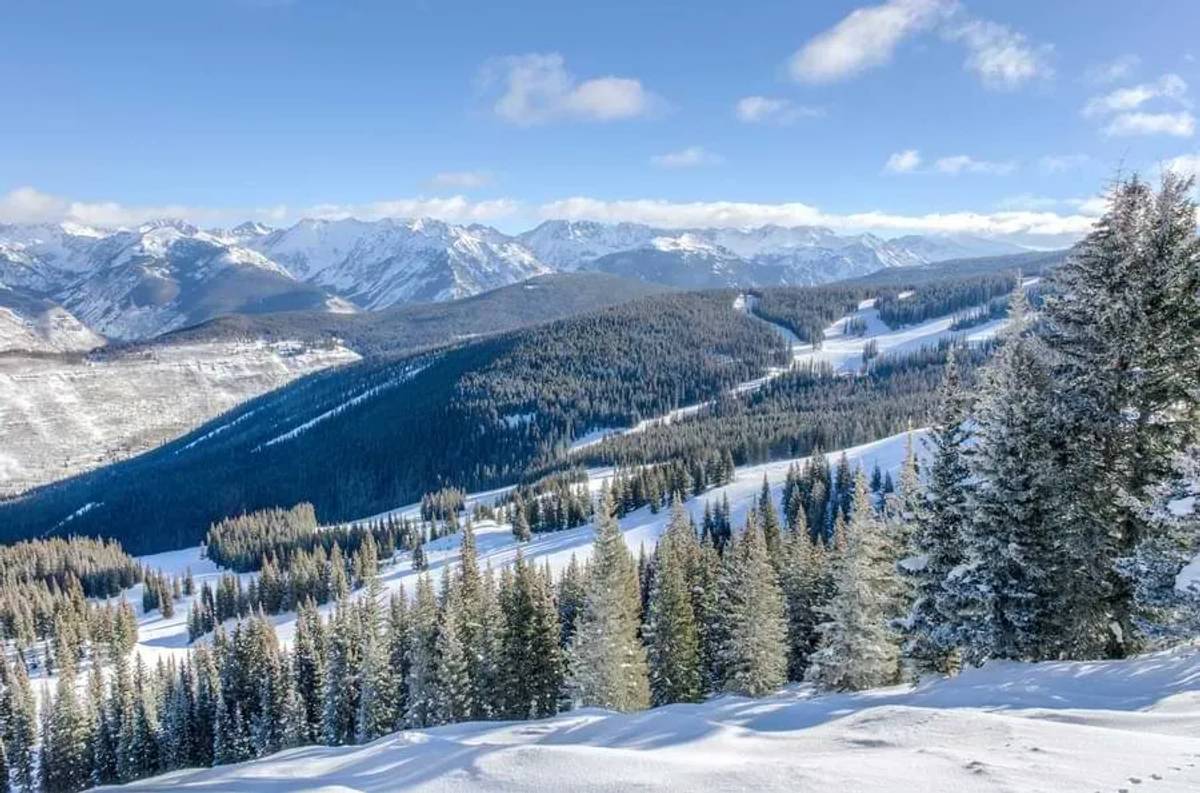
Vail
5,317 acres, 195 runs in Vail. Legendary Back Bowls, one of the largest resorts in the US, Epic Pass.

Season 2026 - 2027
Opens
13 Nov 2026
Closes
18 Apr 2027
Days open
156
Annual snow
354in
The Overview
Michael Fulton
Melbourne-based skier and snowboarder with 50+ resorts across 5 continents. Specialises in Australian resorts and international resort comparisons.
Vail's summit reaches 11,570 feet, dropping 3,450 vertical feet to a base at 8,120 feet across 195 runs spread over 5,317 acres in Vail, Colorado, making it one of the largest single ski resorts in the United States. Terrain splits 37 per cent intermediate, 32 per cent advanced, 18 per cent beginner and 13 per cent expert, with average annual snowfall of roughly 300 inches. The resort carries Epic Pass affiliation. Thirty-one lifts, including ten quad chairs and one gondola, serve the mountain alongside seven six-person chairs, four double chairs, four triple chairs and five surface lifts.
Vail holds a distinguished place as the founding resort of what became the world's largest ski resort operator, and its considerable scale, including the famous Back Bowls, makes it one of the most significant single-mountain ski destinations in North America. The purpose-built alpine-style village at its base remains a defining feature.
Pete Seibert and Earl Eaton, both veterans of the US Army's 10th Mountain Division who trained nearby at Camp Hale during the Second World War, discovered the potential of what became Vail Mountain in 1957, and Seibert went on to found Vail Associates. The resort opened in 1962 with a single gondola and modest lift infrastructure, designed around a purpose-built Bavarian-style village unlike any other American ski town of its era.
Vail Associates grew considerably over subsequent decades, eventually becoming Vail Resorts, which has since acquired dozens of resorts across North America and built the Epic Pass into the industry's dominant multi-resort pass. Adult daily tickets run from 219 to 289 US dollars.
3,448ft
Vertical
195
Runs
5,317 acres
Skiable
354in
Annual snow
Epic
Pass
The Terrain
195 runs across 5,317 acres skiable
Vail is one of the largest single-mountain ski areas in the United States, covering 5,317 acres (2,152 hectares) across 195 runs above the town of Vail, Colorado. Lifts run from 8,120 ft (2,475 m) to 11,570 ft (3,526 m), a vertical of 3,450 ft (1,051 m). Advanced terrain dominates at 48 per cent, with 29 per cent intermediate, 19 per cent beginner and 4 per cent expert. Around 354 inches of snow falls each season. The mountain is laid out in three zones, the Front Side, the Back Bowls and Blue Sky Basin, linked by a large network of chairs and gondolas.
The seven Back Bowls (Sun Up, Sun Down, Tea Cup, China, Siberia, Inner Mongolia and Outer Mongolia) hold close to 3,000 acres of wide, treeless skiing along the southern flank. Blue Sky Basin sits furthest back, a wilder zone of largely ungroomed runs with natural features. Game Creek Bowl is a favourite with intermediates, and the Front Side holds groomers like Riva Ridge, a run of about 4 miles, and Born Free, a long blue and green cruiser from Lionshead. Vail suits intermediates and advanced skiers wanting variety and scale, and beginners have dedicated slopes at Golden Peak and above Lionshead.
Terrain split
195
runs
195 runs across 4 grades
Beginner37 runs · 19%
Intermediate57 runs · 29%
Advanced94 runs · 48%
Expert8 runs · 4%
Time it right
When to visit Vail
The 2025-26 season at Vail ran from 21 November 2025 to 3 May 2026, a roughly twenty-four-week season supported by average annual snowfall of around 300 inches. This extended season reflects Vail's considerable scale and reliable early and late-season conditions across its varied terrain.
Midwinter, from December through February, typically brings the most consistent conditions across Vail's Front Side, Back Bowls and Blue Sky Basin. As the flagship Epic Pass resort within the Vail Resorts network, Vail draws substantial global visitation from Epic Pass holders and destination travellers alike.
Vail's purpose-built alpine village continues to draw considerable visitation for its dining, shopping and nightlife alongside the skiing itself. School holiday periods and major weekends bring some of the heaviest crowds in Colorado, reflecting Vail's status as one of the most internationally recognised ski destinations in the world.
Specific event programming beyond standard operations is not confirmed in available resort information. Since its 1962 founding by Pete Seibert and Earl Eaton, Vail has grown into the flagship of what became Vail Resorts, the world's largest ski resort operator. The resort's considerable scale and Bavarian-style village remain central to its enduring global reputation.
Season 2026 - 2027
13 Nov 2026
Opens
18 Apr 2027
Closes
156
Days open
354 in
Annual snow
The record
Historical snowfall at Vail
Daily snow reports at Vail go back to 2025, 2 winters on the books. Open the record to compare winters, lifts and piste.
12 in
Snowiest day
3 Apr 2026
10 in
This winter · 2026-27
so far
158 in
Typical winter
average of complete seasons
Winter totals
in
Past wintersThis winter
Getting there
Getting to Vail, and where to stay
Vail sits in Vail, Colorado, with a base elevation of 8,120 feet and a summit at 11,570 feet across a 3,450-foot vertical drop over 5,317 acres, making it one of the largest single ski mountains in the United States. This setting places the resort directly along Interstate 70, roughly 100 miles west of Denver.
The town of Vail itself, a purpose-built Bavarian-style alpine village established alongside the resort's 1962 opening, offers extensive lodging, dining, shopping and nightlife directly at the mountain's base.
Interstate 70 provides direct access to the resort, making Vail one of the more straightforward major Colorado destinations to reach despite its considerable distance from Denver. Winter driving conditions on the interstate can include snow and ice, particularly near Vail Pass, though the route is well maintained given its status as a major national corridor.
Eagle County Regional Airport, a manageable drive from the resort, offers direct seasonal flights from numerous major US cities, providing a considerably more convenient gateway than the roughly two-hour drive required from Denver International Airport.
Where to stay
Search all stays →Stays map loads when you scroll here
Hotels and lodges near Vail, powered by Stay22.
Latest News
From the SnowStash desk

Val Gardena to Alpe di Siusi Lift Link Back in Play After Court Ruling
The Val Gardena-Alpe di Siusi lift link isn’t dead after all. A South Tyrol court has overturned Santa Cristina’s rejection of the new Monte Pana-Saltria link on procedural grounds, after the council skipped required public information sessions. Opponents want the missing sessions held and a fresh vote, and nothing has been approved. For now it’s still a bus between the two, but a plan first floated in 2017 is back in the conversation.
8 Nov 2026
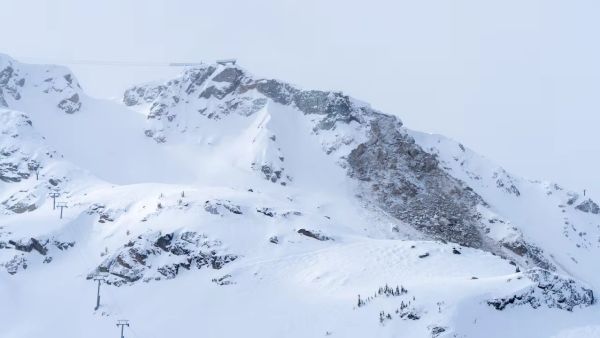
Whistler Blackcomb Rockslide Zone Stays Closed Through 2026-27 Season
A section of Whistler Peak terrain will stay closed all 2026-27 season, Vail Resorts has confirmed, with rockslide mitigation work continuing into summer 2027. Peak Express is still expected to run this winter, but locals are already arguing about what’s actually off limits, whether the Whistler Bowl is gone, and why the news landed after pass sales wound down. Here’s where things stand.
7 Nov 2026
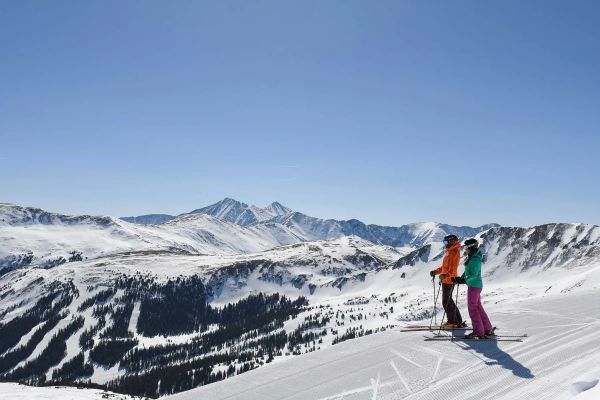
Loveland Ski Area Opens for 2026-27 and Marks 60 Years of Snowmaking
Loveland is open. The Colorado ski area started Chet’s Dream turning on Saturday 7 November to kick off 2026-27, with $60 adult lift tickets to mark 60 years of snowmaking. Expect three runs, nearly 1,000 vertical feet (about 300 metres) of top-to-bottom skiing, live music on the Basin Patio and no beginner terrain yet. Here’s what’s open, what it costs and when Loveland Valley follows.
7 Nov 2026
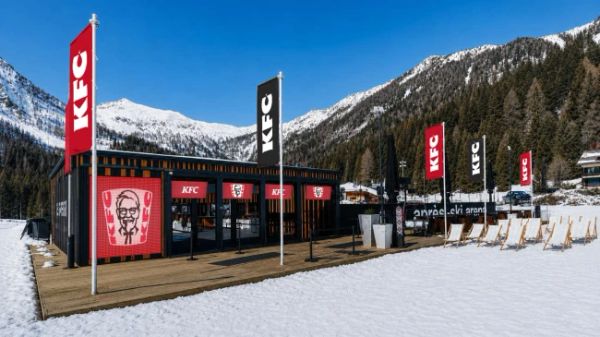
KFC Is Coming to the Slopes at Cortina and Madonna di Campiglio
Fried chicken is heading up the Dolomites. From 5 December KFC will run two restaurants on the slopes - one at 2,123 metres at Cortina, one at 1,700 metres at Madonna di Campiglio - and the polenta-and-canederli crowd has opinions. Local politicians, conservation groups and plenty of Facebook commenters are calling it a step too far, while others just want a cheaper lunch. Here’s what’s on the menu and what’s the fuss.
5 Nov 2026

Mt Rose Aims to Open First in Tahoe on November 6
Mt Rose is going for the first-in-Tahoe title, with the Lakeview Express due to spin at 9 a.m. on Friday, November 6. One main lift, three runs and plenty of snowmaking, sitting on the highest base elevation in the region at 8,260 ft. Here is what is open, what is not (sorry, tubing fans), and how the early North American openings are stacking up.
4 Nov 2026

Europe Snow Forecast: Serre Chevalier Leads With 82 cm Over the Next 10 Days
Europe has had a quiet start to November, but our 10-day forecast has Serre Chevalier on 82 cm and Les 2 Alpes on 71 cm. Two pushes are lined up: a western Alps top-up from Friday, then a bigger, wider system on Thursday, November 12 and Friday, November 13 that reaches Italy and Switzerland. Full leaderboard inside.
4 Nov 2026

Mammoth Mountain Opens Early on November 5 With Up to 33 Inches of Snow in the Forecast
Mammoth just moved opening day forward to Thursday, November 5, eight days ahead of schedule. A snowy weekend and cold snowmaking nights did the work, and our forecast shows up to 33 inches more landing on November 13 and 14. Here is what opens, what the weather looks like and where Mammoth sits among the early Ikon Pass openers.
3 Nov 2026

Utah Snow Storm Builds Early-Season Base Ahead of November Openings
Rain down low, snow up high, and a snow report full of zeros that mostly means ‘not updated yet’. Utah’s first proper storm of 2026-27 is rolling through the Wasatch, Snowbird’s snow stake is closing in on 10 inches, and Brian Head is five days from opening day. Early November snow rarely looks like much, but it is the layer every November opening date is built on. Here is where it stands.
1 Nov 2026
Vail Snow Report
Snow Report
Updated 12 Nov 2026
11,568ft
summit
+0in
new snow · last 24 hours
Clear26°F / 43°F · SW 11mph
Snowfall
24 hours
0in
48 hours
0in
7 days
0in
Base depth
4in
Season total
10in
Typical winter 158in
Total lifts33
Live open status isn’t available right now.
13 Nov 2026 - 18 Apr 2027
Hour by Hour
Next 45 hours· Updated Nov 12, 2026 at 5:02 PM
Scroll for the full outlook · Open-Meteo
7-Day Outlook
10,879 ftUpdated Nov 12, 2026 at 5:02 PMOpen-Meteo
Days 1–7
1.3"
Days 8–14
2.3"
Fri, Nov 13
Overcast
Temp43° / 26°°F
Snow0.0"
Wind11 mph SW
Live snow from the resort feed; forecast from Open-Meteo, via Supabase.
Understanding the Vail snow report
Vail snow conditions, updated regularly: current snowfall, snow depth, temperatures, and the outlook for this Colorado resort on the Epic.
Snow measurements
Snow depth at Vail is tracked at both the base and summit, since the two elevations often see different totals — roughly a 1051m difference here. We report fresh snowfall over the last 24 hours and 7 days alongside the running season total, in both metric and imperial units.
Weather conditions
Wind and temperature swings matter as much as fresh snowfall. Cold, calm conditions hold snow quality well, while wind-loading or a warm-up can change things quickly — especially given the elevation spread between Vail's base and summit.
Data sources
We pull Vail's conditions from on-the-ground mountain reporting, then layer in forecast data so you get a fuller picture than either source alone. The mountain is served by 33 lifts, including 16 quad chairlifts and 3 6-person chairlifts.
When to check
The biggest swings usually happen right after a storm. Check Vail's report in the morning for the freshest numbers, and again in the afternoon as conditions evolve.