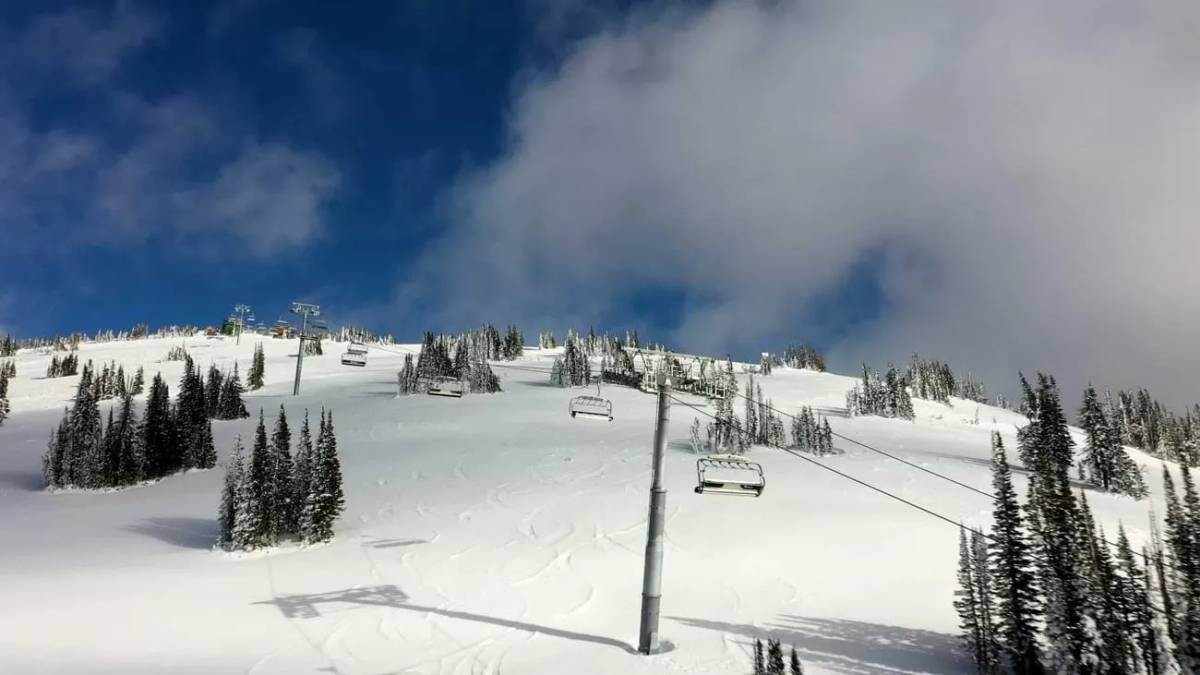
Grand Targhee
97 runs across 2,602 acres on the Tetons' west side. 464in average snowfall. Mountain Collective access.

Current Conditions→
Season 2026 - 2027
Opens
20 Nov 2026
Closes
18 Apr 2027
Days open
149
Annual snow
464in
The Overview
Michael Fulton
Melbourne-based skier and snowboarder with 50+ resorts across 5 continents. Specialises in Australian resorts and international resort comparisons.
Grand Targhee's summit reaches 9,918 feet, dropping 2,067 vertical feet to a base at 7,851 feet across 97 runs spread over 2,602 acres in the Caribou-Targhee National Forest. Terrain splits 33 per cent beginner, 37 per cent intermediate, 25 per cent advanced and 5 per cent expert. Average annual snowfall reaches 464 inches, among the highest totals of any resort on the Wyoming-Idaho border. The resort operates on the Mountain Collective pass, giving members two days of access alongside more than 20 other partner resorts.
The mountain sits on the western, leeward side of the Teton Range, catching storms that Jackson Hole's eastern slopes miss, which explains its outsized snowfall relative to its modest 2,067-foot vertical drop. Intermediate terrain dominates at 37 per cent, spread across groomed runs on the mountain's two main peaks. Advanced skiers get access to glade skiing and steeper pitches, while the five per cent expert terrain sits near the summit. The 97-run count is spread wide rather than steep, favouring cruising over technical descents.
Grand Targhee opened on 26 December 1969 as a joint venture of east Idaho investors trading under Grand Targhee, Inc., formed in 1966. The resort takes its name from Chief Targhee, a 19th-century leader of the Bannock people. Idaho Governor Don Samuelson formally dedicated the resort on 2 February 1970, six weeks after its opening lifts began running. The base village remains small and low-key compared with Jackson Hole, an hour and a half away by road.
Mountain Collective pass holders receive two days at Grand Targhee as part of a network spanning more than 20 resorts worldwide. Full-day adult tickets range from 103 to 110 US dollars depending on date, with a season pass priced at 849 dollars. The resort suits skiers prioritising snow quantity and a quieter base area over Jackson Hole's steeper terrain and larger crowds. Its position on the far side of the Tetons from Jackson keeps visitor numbers lower despite the exceptional snowfall.
2,067ft
Vertical
97
Runs
2,602 acres
Skiable
464in
Annual snow
Mountain Collective
Pass
The Terrain
97 runs across 2,602 acres skiable
Grand Targhee spreads across 2,602 acres (1,053 hectares) on the western side of the Tetons, making it one of the larger ski areas in Wyoming. Elevations run from 7,850 ft (2,393 m) at the base to 9,920 ft (3,023 m) at the top, a vertical of 2,070 ft (630 m), and the 97 runs split 33% beginner, 37% intermediate, 25% advanced and 5% expert. That balance suits mixed groups well. Snowfall is the real draw, averaging about 464 inches a year, and four quad chairs, a six-pack and a surface lift keep the skiing uncomplicated.
Terrain is split between Fred's Mountain and Peaked Mountain. The Dreamcatcher lift near the summit of Fred's gives confident beginners a way up high, while Dreamcatcher and Sacajawea serve wide, groomed intermediate cruising. Some of the toughest skiing is on the north face of Peaked Mountain, and the hike-to terrain on Mary's Nipple offers untouched snow with real alpine exposure. Open bowls, glades and ridgelines fill the gaps between. Grand Targhee suits powder-minded skiers of every level who prefer deep snow and short lift lines over steep vertical, and it is best planned around the weather forecast.
Terrain split
97
runs
97 runs across 4 grades
Beginner32 runs · 33%
Intermediate36 runs · 37%
Advanced24 runs · 25%
Expert5 runs · 5%
Time it right
When to visit Grand Targhee
The 2025-26 season at Grand Targhee ran from 22 November 2025 to 12 April 2026, a roughly twenty-week window that ranks among the longer seasons in Wyoming. The resort's high base elevation of 7,851 feet supports an extended operating window compared with lower Wyoming ski areas. Opening and closing dates shift slightly year to year based on early and late-season snowpack. The nearly five-month season reflects the mountain's position as one of the higher-elevation resorts in the region.
Average annual snowfall of 464 inches ranks Grand Targhee among the snowiest resorts in the Rocky Mountain region, a product of its exposure to Pacific storm systems crossing the Snake River Plain before hitting the Tetons' western slopes. This orographic position gives Targhee notably more snow than Jackson Hole, roughly 40 miles away on the range's drier eastern side. Base depths build steadily through midwinter given the volume of natural snowfall. Snowmaking plays a secondary role compared with resorts reliant on machine-made cover.
January and February typically deliver the deepest natural snowpack, consistent with the broader Rocky Mountain storm pattern. March and early April often extend the season with spring storms layered on a deep base, a pattern the 12 April 2026 close date reflects. Early season conditions in late November can be thinner before the snowpack builds. Midweek visits generally carry lighter crowds than weekends, given the resort's reliance on destination rather than day-trip visitors from Jackson.
Grand Targhee does not compete on event programming to the extent some larger resorts do, with its calendar centred on reliable powder skiing rather than festivals. The resort's position 42 miles from Jackson by road, but accessible only via Driggs, Idaho, limits casual day-trip crowds relative to Jackson Hole. Mountain Collective pass holders add to visitor numbers during their two allotted days per season. The base area's smaller scale, relative to Jackson Hole's Teton Village, keeps the atmosphere quieter despite the resort's snowfall reputation drawing visitors from further afield.
Season 2026 - 2027
20 Nov 2026
Opens
18 Apr 2027
Closes
149
Days open
464 in
Annual snow
The record
Historical snowfall at Grand Targhee
Daily snow reports at Grand Targhee go back to 2025, 2 winters on the books. Open the record to compare winters, lifts and piste.
19 in
Snowiest day
25 Feb 2026
3 in
This winter · 2026-27
so far
94 in
Typical winter
average of complete seasons
Winter totals
in
Past wintersThis winter
Getting there
Getting to Grand Targhee, and where to stay
Grand Targhee sits in the Caribou-Targhee National Forest on the western slope of the Teton Range, in Alta, Wyoming, though the resort is reachable only from the Idaho side of the mountains. Base elevation is 7,851 feet, with the summit reaching 9,918 feet. The resort lies 42 miles northwest of Jackson as measured directly, but no through road crosses the mountains in winter, making the practical route far longer. Its position on the leeward side of the Tetons defines both its access and its snowfall.
Driggs, Idaho, sits just 12 miles from the resort and serves as the nearest town of any size, with Idaho Falls a further hour's drive beyond that. Jackson, Wyoming, lies on the opposite side of the range and is reached via a roughly 90-minute drive around the mountains rather than the shorter direct distance. The Teton Valley on the Idaho side has a quieter, more agricultural character than the tourist-driven town of Jackson. Both valleys share the Teton Range as a backdrop but differ substantially in development and visitor infrastructure.
Idaho State Highway 33 and local roads provide the main access route from Driggs, climbing into the Caribou-Targhee National Forest to reach the resort. Reaching Grand Targhee from Jackson typically means driving via Teton Pass to Victor and Driggs on the Idaho side, rather than a direct route across the range. The drive from Jackson takes roughly 90 minutes under normal winter conditions. Winter driving on the approach roads can include snowpack and icy sections, standard for a high-elevation forest route in the Tetons.
Jackson Hole Airport (JAC), inside Grand Teton National Park, is the nearest airport with scheduled commercial service, roughly 90 minutes from the resort by road. Idaho Falls Regional Airport offers an alternative roughly 83 miles away, often with more affordable fares than Jackson's seasonal-driven pricing. Bozeman Yellowstone International Airport in Montana sits within four hours' drive for visitors combining multiple destinations. No rail or scheduled bus service reaches Alta, Wyoming, or Driggs, Idaho, making a rental car the standard way to arrive.
Where to stay
Search all stays →Stays map loads when you scroll here
Hotels and lodges near Grand Targhee, powered by Stay22.
Latest News
From the SnowStash desk
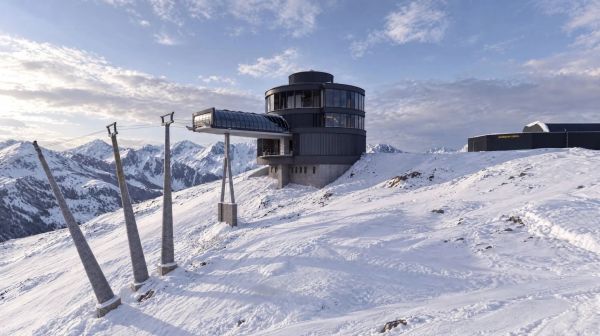
New Möseralm Gondola in Fiss: One Ride to the Fisser Joch from 2028/29
Fiss is getting the biggest lift project in its history, and the old Möseralm queue has a finite shelf life. A Doppelmayr 10-person gondola will run from the village straight to the Fisser Joch in about 12 minutes, with a new central station, a table-service mid-station and a rooftop viewing platform. Construction starts on 5 April 2027. The old gondola keeps running until the end of winter 2027/28. The catch is that the new one opens for 2028/29.
27 Nov 2026
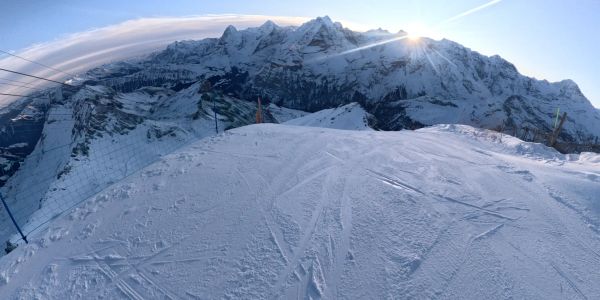
Swiss Avalanche Danger Hits Level 4 From Valais to Glarus
Level 4 of 5 avalanche danger is forecast for Monday 23 November from the Valais Alps to the Glarus Alps, and the SLF says to skip ski touring for now. Engelberg, Leukerbad and the Wildhorn are all on the list, while snow on the Bernina pass sent cars sliding off the road and shut it for two hours on Sunday. Early-season snow is welcome, but it is also what is loading the slopes. Here is where the danger sits and what to do about it.
23 Nov 2026
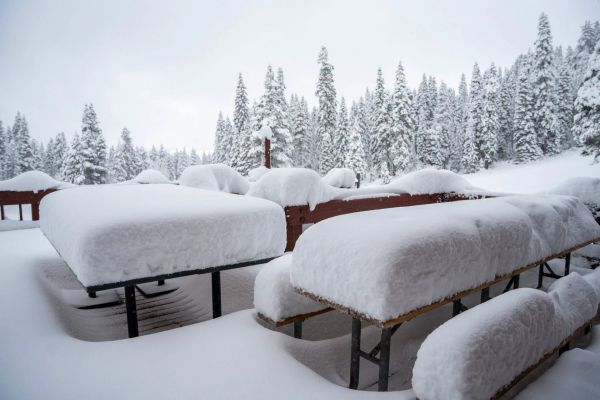
California Storm Cycle Delivers 86 Inches at Sugar Bowl and Pulls Openings Forward
A run of storms, including an atmospheric river, has buried the Sierra Nevada, with Sugar Bowl recording 86 inches (218 cm) between 14 and 20 November. Resorts across California and Nevada have pulled opening days forward after a dismal last winter. Here is what fell, who is open this weekend and what the forecast brings before Thanksgiving.
22 Nov 2026
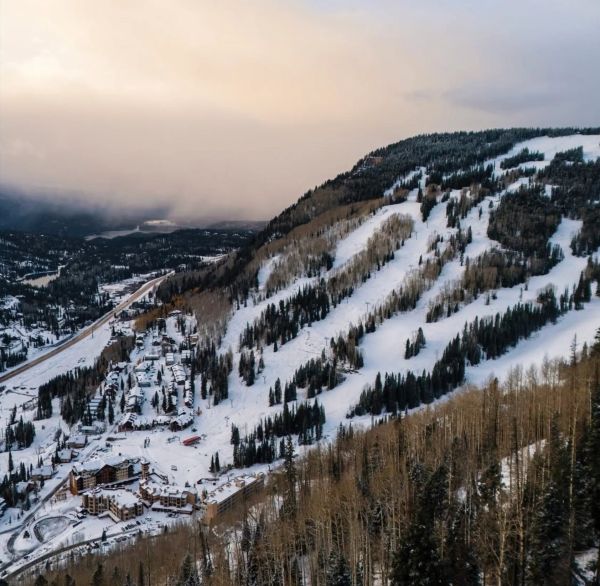
Purgatory Reveals Seven New Trails and a Colorado Couloir Chairlift Opening in December
Purgatory’s new trail map reads like a warning label. Seven new trails named after Dante’s Divine Comedy arrive with the Colorado Couloir chairlift in December, adding around 40 acres (16 ha) of steep pitches and gladed tree skiing. Five of them are black or double black. The resort opens for the season this Friday, 20 November.
19 Nov 2026
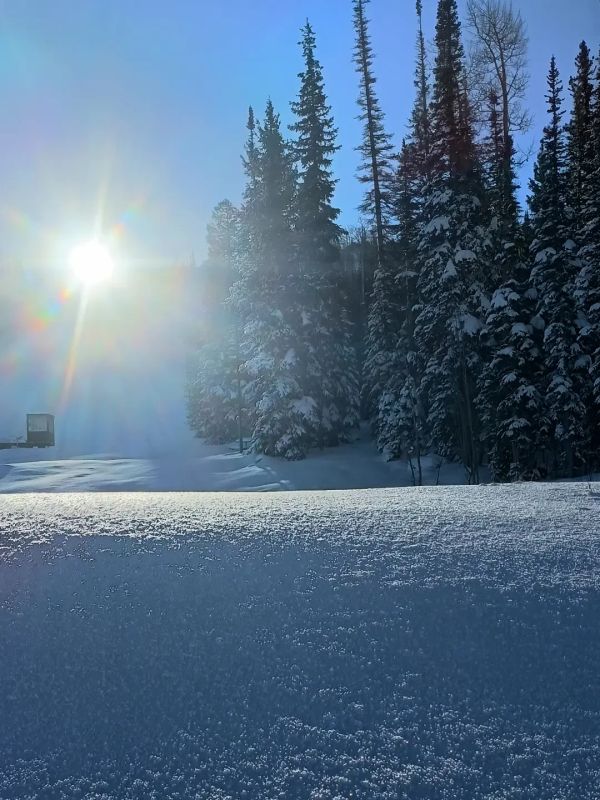
Brian Head Becomes First Utah Resort to Open for 2026-27, With Six Trails and a New Snowmaking Pipeline
Utah’s ski season has started, and it began in the south. Brian Head opened on Tuesday, 17 November, with six trails on the Navajo Express after 14 inches (36 cm) of storm snow and another half foot on opening day. It is the second year running the resort has beaten the rest of the state to first chair, and it has put nearly $1 million into a new snowmaking pipeline that can run 24 guns at once.
19 Nov 2026
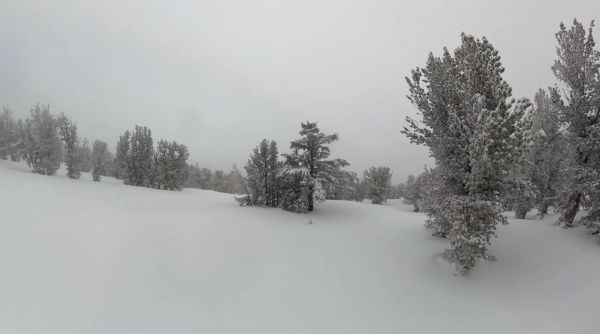
Heavenly and Northstar Open Friday as Lake Tahoe Snow Stacks Up, With Kirkwood Eyeing an Early Start
Tahoe has gone from dry to deep in a week. Heavenly and Northstar open this Friday, 20 November, with up to 24 inches (61 cm) already down at Kirkwood and 50+ inches (127 cm) in the 10-day forecast. Kirkwood normally waits until December, but this snow might change that. Heavenly is even talking about opening Stagecoach in Nevada early, which almost never happens this soon.
18 Nov 2026
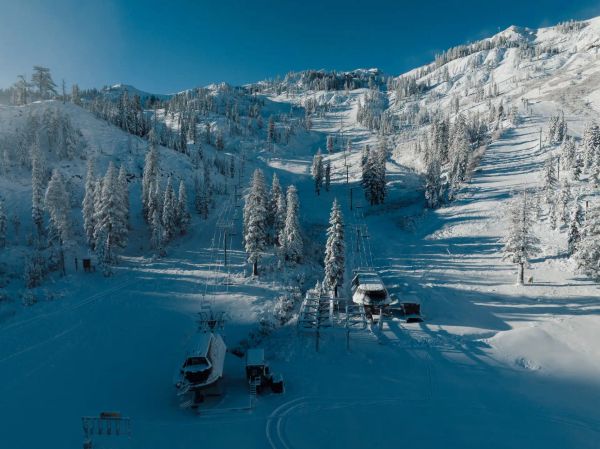
Palisades Tahoe Opens Saturday, Four Days Early, After 26 Inches of New Snow
Palisades Tahoe has pulled its opening forward by four days. Lifts spin this Saturday, 21 November, after 26 inches (66 cm) of new snow, with up to 50 more in the forecast. Opening terrain includes Treeline Cirque at Alpine and Gold Coast and Sunkid 1 at Palisades, though the resort says the weather could change the plan. Tickets are $99 through Tuesday.
18 Nov 2026
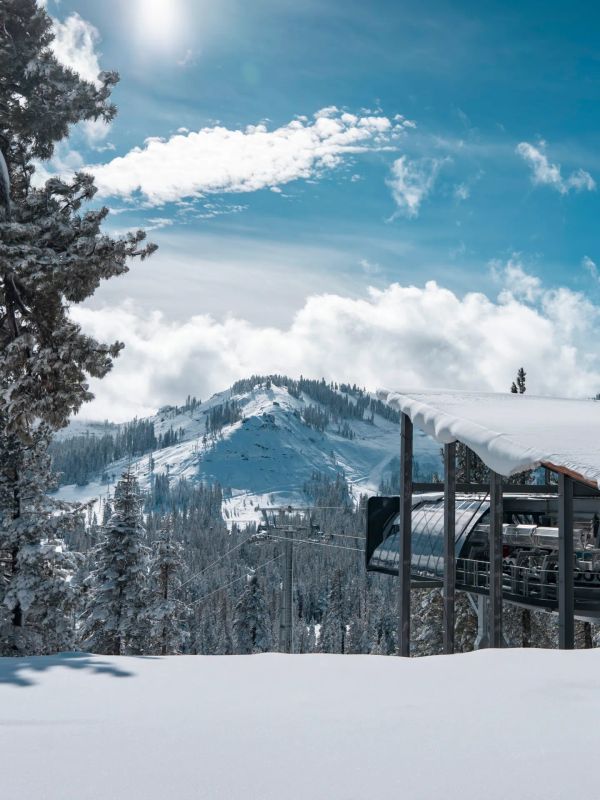
Sugar Bowl Gondola Slips to January 2027 as Opening Day Holds
Sugar Bowl still opens on 27 November, just without its new gondola. The eight-passenger Village Gondola is now targeting January 2027, with all eight towers up, the haul rope on and the first cabin hanging. Until it runs, everyone gets in through the Main Lodge, with curbside drop-off and parking lot shuttles. It replaces the first gondola in the western US, which dates from 1953.
16 Nov 2026
Grand Targhee Lift System
Grand Targhee runs six lifts: four quad chairs, one six-passenger chair and one surface lift, serving 97 runs across 2,602 acres. There is no gondola or tram, unlike neighbouring Jackson Hole. The six-pack is the newest and highest-capacity installation, while the four quads distribute traffic across the mountain's beginner and intermediate zones. This lift count is modest relative to the resort's acreage, reflecting lower visitor volumes than larger Teton-area resorts.
The six-passenger chair provides the fastest uphill capacity on the mountain, a relatively recent addition compared with the original 1969 Bannock and Shoshone lifts. Quad chairs handle the bulk of intermediate and advanced terrain access, spread across the mountain's two main peaks. The surface lift serves the beginner learning zone near the base area. Fixed-grip and detachable technology are both present across the network, unlike the fully detachable systems at some larger competitors.
Skiers base out of the Targhee Lodge area and ride quad chairs to reach the bulk of the mountain's 2,602 acres. There is no mid-mountain lodge separating major sectors; lifts return to the same base village. Advanced and expert terrain, concentrated on the five per cent of runs rated expert, sits accessible from the same lift network as beginner terrain. The layout keeps the mountain simple to navigate despite its size.
Grand Targhee's lift network has grown from the original two lifts installed for the 1969 opening to six today, added incrementally over more than five decades. The six-passenger chair represents the most significant capacity upgrade in the resort's recent history. Snowmaking and grooming investment has been a lower priority than at drier resorts, given the mountain's naturally high snowfall. The base area retains its smaller-scale character relative to lift investment made at larger Teton-area competitors.
6lifts across 3 types
1
6-Person Chair
4
Quad Chairs
1
Surface Lift
Grand Targhee lift system
Grand Targhee is served by 6 lifts, listed here by type. Check which lifts are turning against the live conditions before you plan your first laps - early lifts and high-speed chairs get you to the best snow fastest.
More Grand Targhee intelligence: trail map, snow report, webcams, resort overview.