
Hintertux Glacier
Ski 365 days on Hintertux Glacier. 62km of pistes, 1,750m vertical drop, summit at 3,250m in the Austrian Tyrol.
Season 2026 - 2027
Opens
2 Oct 2026
Closes
18 July 2027
Days open
289
Annual snow
9m
The Overview
Michael Fulton
Melbourne-based skier and snowboarder with 50+ resorts across 5 continents. Specialises in Australian resorts and international resort comparisons.
Austria's only year-round ski area spans 62 kilometres of piste between the valley station at 1,500 metres and the summit at 3,250 metres, delivering a vertical drop of 1,750 metres across terrain suitable for all abilities. The glacier maintains 62 kilometres of winter pistes - 17.2 kilometres blue, 35.1 kilometres red, and 11.7 kilometres black - across approximately 233 hectares of skiable terrain. Snow reliability is exceptional; the ADAC has rated the resort "especially snow secure" due to its high-altitude glaciers and north-facing aspect. The Hintertux Glacier is one of only two ski resorts globally offering year-round skiing, alongside Zermatt in Switzerland.
Terrain splits across two distinct glacier zones - the Gefrorene-Wand-Kees and the Riepenkees - connected via the mid-mountain hub at Sommerbergalm. Intermediate skiers dominate proceedings, with 55% of terrain graded red, while the 12-kilometre Schwarze Pfanne valley descent from Gefrorene Wand ranks as the Zillertal's longest run. The Lärmstange sector draws powder seekers to its north-facing freeride terrain, whilst the Betterpark at 3,200 metres operates as Austria's highest freestyle area. Beginners find dedicated learning terrain at Sommerbergalm including the Flohpark nursery zone and the Funslope feature run.
The mountain atmosphere combines serious altitude with accessible facilities centred around the Tuxer Fernerhaus at 2,660 metres, a substantial complex housing restaurants, lockers, and equipment storage. Crowds remain manageable outside peak periods due to the extended operating season spreading demand across months rather than weeks. The valley village of Hintertux is compact - just two distinct areas roughly one kilometre apart - with ski-in/ski-out hotels positioned directly at the base station. Après-ski concentrates at the Hohenhaus Tenne bar adjacent to the valley station, while additional nightlife extends to the nearby villages of Tux and Lanersbach.
The Zillertal Superskipass connects Hintertux to 542 kilometres of terrain across the entire valley, including Mayrhofen, Hochzillertal, and Zillertal Arena, accessible with passes of two days or more. Winter operations integrate with Ski- und Gletscherwelt Zillertal 3000, combining Hintertux with Eggalm, Rastkogel, Finkenberg, and Penken for 202 kilometres on a single pass. The glacier circuit challenge offers ambitious skiers 15,000 vertical metres and 60 kilometres in a single day across this linked terrain. The resort suits committed intermediates seeking guaranteed snow, freestyle athletes requiring year-round training facilities, and families wanting reliable conditions without extreme resort prices.
1750m
Vertical
32
Runs
62 km
Piste
9m
Annual snow
Zillertal Superskipass
Pass
The Terrain
32 runs across 62 km of piste
With 1,750 metres of vertical between the valley station at 1,500 metres and the 3,250-metre summit, Hintertux skis more like a big mountain than its 32 runs suggest. Reds dominate at 55%, beginners take 26%, and the 15% advanced and 4% expert share is meaningful for a glacier. The pistes sit in two glacier zones: the wide, smooth blues of Sommerbergalm form the easy mid-mountain base, while the reds and blacks around Tuxer Fernerhaus and Gefrorene Wand sit above it across 62 kilometres of piste.
The black mogul run from Gefrorene Wand to Tuxer Fernerhaus is the test piece, with Olperer 1 offering a second steep, sustained descent for confident skiers. At the other end of the scale, the Schwarze Pfanne valley run covers roughly 12 kilometres from Gefrorene Wand down to the village and is the longest descent in the Zillertal, a good way to use the full vertical. North-facing glacier slopes keep snow quality high, and the Lärmstange sector draws powder seekers to its freeride terrain once fresh snow has settled.
Terrain split
32
runs
32 runs across 4 grades
Beginner8 runs · 26%
Intermediate18 runs · 55%
Advanced5 runs · 15%
Expert1 run · 4%
Time it right
When to visit Hintertux Glacier
Operating dates for the 2025-2026 season run from 14 September 2025 through to 13 September 2026, making this one of the world's longest continuous ski seasons. The glacier has offered year-round skiing since 1968, when the Gefrorene Wand chairlift became the world's first with towers built on glacier ice. Winter terrain expands significantly from early December when lower slopes open, connecting to the wider Zillertal 3000 network through late April. Summer operations continue on approximately 18-20 kilometres of terrain above 2,500 metres, served by up to 10-12 lifts, with the longest summer run measuring 2 kilometres ending at Tuxer Fernerhaus.
Annual snowfall averages approximately 388 centimetres according to historical records, with the snowiest period typically occurring in the second week of January when an average of 37 centimetres falls across 3.4 snow days. Glacier elevations above 3,000 metres maintain freezing temperatures and persistent snow year-round, whilst the ice itself reaches depths of up to 120 metres. Snowmaking infrastructure covers the 12-kilometre Schwarze Pfanne valley descent, ensuring the full run to Hintertux village remains skiable throughout the main winter season. Base depths during peak season typically hold between 3-4 metres on the upper glacier.
January and February deliver the most consistent powder conditions combined with cold temperatures that preserve snow quality across both glaciers. Spring skiing from March through May offers exceptional corn snow on south-facing aspects and longer daylight hours at altitude. The quietest periods fall in early December before European school holidays and again in late January between Christmas crowds and February half-terms. Autumn skiing from late September through November attracts racing teams and freestyle athletes seeking early-season training on fresh glacier snow.
The Hintertux Park Opening, held annually on the first weekend of October, marks Europe's first snowpark event of the season and has run for over 21 years. This weekend attracts international freestyle athletes to Betterpark Hintertux for sessions, contests, and equipment testing at 3,200 metres. The Betterpark operates from April through early December, including a halfpipe when conditions permit. Early Morning Skiing sessions allow keen skiers first tracks on freshly groomed glacier pistes before standard opening hours.
Season 2026 - 2027
2 Oct 2026
Opens
18 July 2027
Closes
289
Days open
9 m
Annual snow
Getting there
Getting to Hintertux Glacier, and where to stay
The resort occupies the head of the Tuxertal, a side valley branching south from the main Zillertal at Mayrhofen in the Tyrol region of western Austria. The valley station sits at 1,500 metres elevation in the small village of Hintertux, where steep mountainsides rise immediately from the road's end like a Alpine cul-de-sac. The glacier complex comprises two ice fields - the Gefrorene-Wand-Kees and Riepenkees - extending beneath the 3,476-metre Olperer peak. The surrounding landscape transitions from forested lower slopes to barren rock above the treeline, with the glacier ice reaching thicknesses of 120 metres and containing approximately 190 million cubic metres of ice.
Mayrhofen, the valley's principal town, lies 20 kilometres northwest and provides the main commercial centre with supermarkets, equipment shops, and a wider accommodation selection. The smaller villages of Tux (7 kilometres), Lanersbach, Juns, and Madseit string along the valley road, connected by free ski buses during winter. Innsbruck, the Tyrolean capital, sits 87 kilometres northwest, whilst Salzburg lies 190 kilometres to the northeast. The Zillertal has a long skiing history, with traditional Tyrolean architecture and mountain farming culture preserved throughout the valley communities.
Road access follows the A12 Inntal motorway to the Wiesing/Achensee/Zillertal exit, then the B169 Zillertalstraße through the valley to Mayrhofen, where the L6 branches into the Tuxertal. Total driving time from Innsbruck measures under 1.5 hours, whilst the journey from Munich takes approximately 2.5 hours covering 215 kilometres. Free parking and an underground garage serve the valley station, with free shuttle buses connecting the village of Hintertux. The road terminates at the lift base, with no through route - all traffic either parks or turns around.
Innsbruck Airport provides the closest air link at 92 kilometres, offering frequent European and UK connections with transfer times around 90 minutes. Munich Airport lies 215 kilometres north with extensive international services and transfer times of approximately 2.5 hours by private vehicle. Salzburg Airport sits 190 kilometres northeast as a third option. Rail travellers take intercity trains to Jenbach, then transfer to the narrow-gauge Zillertalbahn for the scenic 50-minute journey to Mayrhofen, where the 4104 bus continues to Hintertux hourly - local buses run free for ski pass holders during winter.
Where to stay
Search all stays →Hotels and lodges near Hintertux Glacier, powered by Stay22.
Latest News
From the SnowStash desk

Europe Ski Resorts Open Now: What Is Skiable in Mid-October 2026
Europe’s ski season is open, technically. After a record-warm summer, glaciers in Austria, Switzerland and Italy are running a few pistes apiece, Sölden, Stubai and Kitzsteinhorn started late, Titlis has pushed back to 24 October, and Zermatt reopens a few lifts on 14 October after more than two months shut. Finland’s Levi and Ruka are skiing on stored snow. Here is what is open, and what you actually get at each.
14 Oct 2026

Zermatt Plans World Cup Downhill Return on the Gornergrat for 2028
Zermatt is having another crack at a World Cup downhill, and this time nobody has to cross a border. Around 13 million Swiss francs is going into rebuilding the Gornergrat piste, including a jump fed by a roughly 300-metre in-run across the roof of the Gornergrat Railway gallery, with the Matterhorn lined up behind it for the TV cameras. First men’s race is pencilled in for March 2028, pending FIS homologation.
14 Oct 2026

Mt. Rose Begins Snowmaking for the 2026-27 Season at Lake Tahoe
Lake Tahoe’s highest base elevation is paying off early: Mt. Rose has started making snow for 2026-27 after the first flurries and a cold snap. The Nevada resort is backing it with nearly US$2 million in upgrades, including a replacement snowmaking main line, a new PistenBully groomer and restraint bars on every lift. Opening day is yet to be confirmed, though Heavenly and Northstar are already eyeing 20 November.
13 Oct 2026

Utah Ski Resorts 2026-27: What’s New at Alta, Deer Valley, Powder Mountain and More
Utah is still building flat out. For 2026-27, Powder Mountain opens a steep new Skytrac chair into more than 1,000 acres of advanced terrain, Deer Valley adds 200 acres on Hail Peak, Sundance gets a new quad and Park City adds a gondola from its new parking structure. Snowmaking is expanding almost everywhere, Eagle Point stays closed after the Cottonwood Fire, and the 2034 Games are setting the pace. Here’s what’s new, resort by resort.
13 Oct 2026

Mt Hutt Invests NZ$12 Million in Base Area, Tripling Its Sun Deck
Mt Hutt is getting busier, and its base lodge is about to catch up. NZ$12 million goes into a heated sun deck roughly three times the current size (430 m² to 1,300 m²), plus a new toilet block, heated steps down to snow level, extra storage and a new food and beverage outlet. Building starts after the 2026 season, with everything due for winter 2027.
11 Oct 2026

Vermont Ski Resort Opening Dates 2026-27: Few Dates Set, Killington Waits on the Cold
Vermont's season is slow to take shape. Stratton is tentatively targeting 18 November and Sugarbush 21 November, while Pico has Friday 11 December on the calendar. Killington never sets a date and opens when the snowmaking allows, and Vail Resorts has yet to name days for Stowe, Okemo and Mount Snow. The forecasts disagree about snow, and the main El Niño worry for the Green Mountains is warmth.
9 Oct 2026
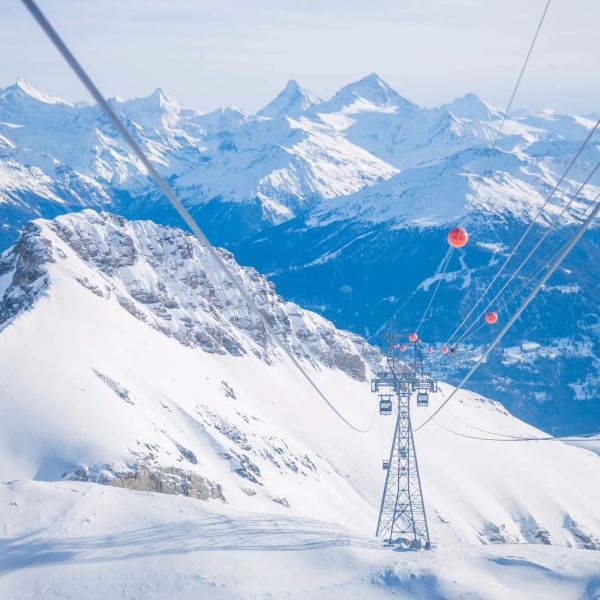
Crans-Montana 2027 World Championships President Resigns Ahead of Fraud Hearing
Less than four months out from the Crans-Montana 2027 World Championships, the man running the organising committee has stepped down. Claude-Alain Schmidhalter resigned as Swiss-Ski vice president and OC president after being indicted over a business dispute unrelated to skiing. He denies the allegations and faces court on October 27. Interim leaders are in place for the February 1-14 event.
9 Oct 2026
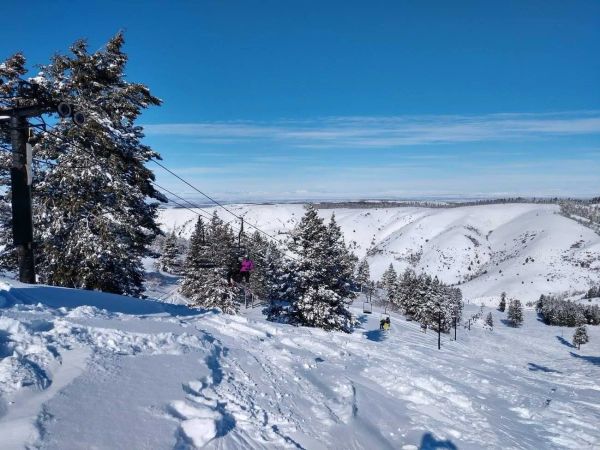
Kelly Canyon, Idaho, Adds Snowmaking, a Bigger Terrain Park and More Parking for 2026-27
Kelly Canyon had a rough 2025-26, and the Idaho resort has spent the summer making sure it doesn’t repeat. Snowmaking now reaches the top of Goldrush, the terrain park is doubling in size with a stereo system, lights and a snack shack, and the car park is getting bigger. Grooming is stepping up too. Target opening is December 4, conditions permitting.
9 Oct 2026