Kaunertal Glacier
Ski Austria's steepest slope on 55km of Tyrolean glacier terrain, spanning 2,150–3,113m, open October to May.

Season 2026 - 2027
Opens
9 Oct 2026
Closes
17 May 2027
Days open
220
Annual snow
4m
The Overview
Michael Fulton
Melbourne-based skier and snowboarder with 50+ resorts across 5 continents. Specialises in Australian resorts and international resort comparisons.
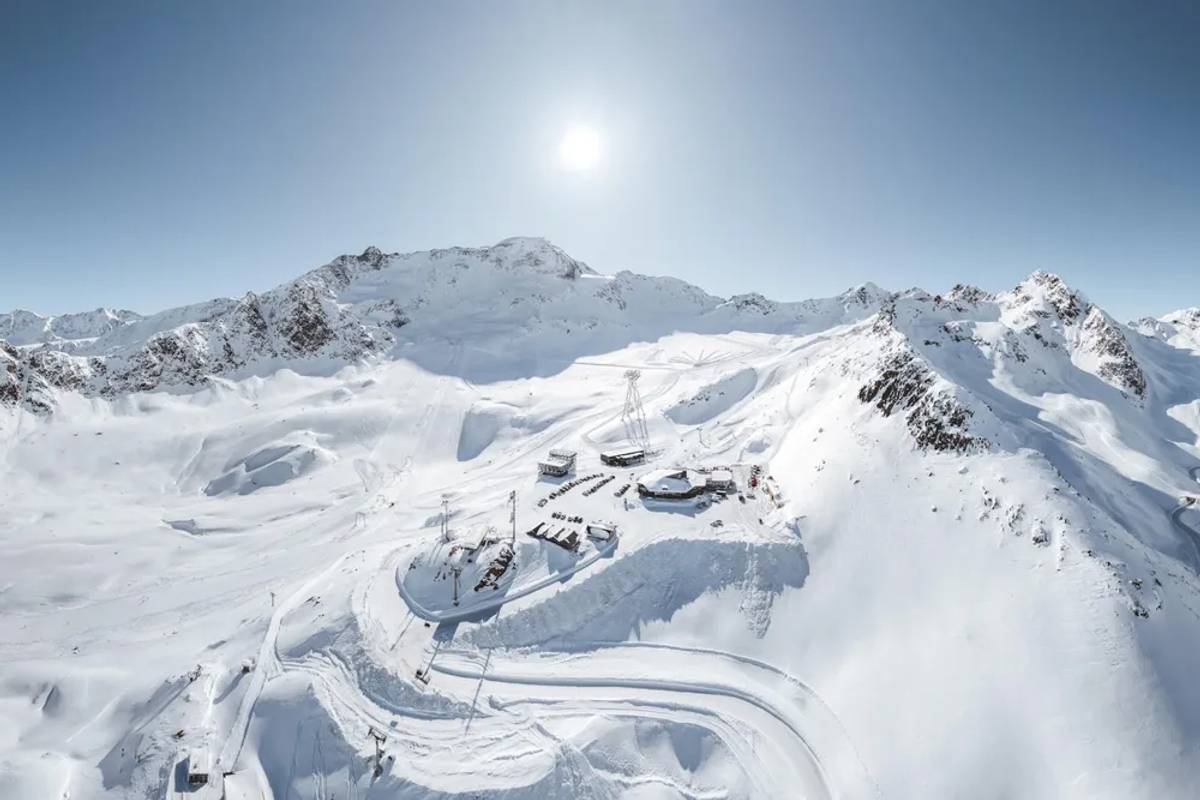
Kaunertal Glacier is one of Austria's highest and most snow-reliable ski areas, spanning 2,150m to 3,113m across 55km of pistes and 36km of marked ski routes deep in the Tyrolean Alps. The resort is home to the Black Ibex — Austria's steepest groomed slope — with a gradient of 87.85%, steeper than the Mausefalle at Kitzbühel's famed Streif. The mountain sits on the Austrian-Italian border, with three summits exceeding 3,000m and a 360-degree viewing platform at the Karlesjoch that sweeps across Austria, Italy and Switzerland.
The glacier terrain is predominantly above the treeline, set in a wide north-facing bowl that preserves snow quality throughout an exceptionally long season. A single lift pass covers both the glacier ski area and the family-focused Fendels resort further down the valley, as well as the Feichten village lift — making the combined offering well suited to mixed-ability groups. Despite the calibre of the skiing, lift queues remain rare, a consequence of the resort's deliberately remote setting.
963m
Vertical
27
Runs
55 km
Piste
4m
Annual snow
Tyrol Pass
Pass
The Terrain
27 runs across 55 km of piste
Kaunertal Glacier sits between 2,150 and 3,113 metres, so its 27 runs and 55 kilometres of piste lie entirely above the treeline. The 963-metre vertical is split evenly between 41% beginner and 41% intermediate terrain, with 18% advanced and none graded expert. A wide, north-facing bowl preserves snow into a long season, and the Weißseejochbahn lifts skiers to 3,044 metres beneath the 3,535-metre Weißseespitze, which keeps the upper mountain open and uncluttered. Everything here is high, groomed and wide, with no forested descents to break up the day.
The standout piste is the Black Ibex, a groomed pitch with a gradient of 87.85%, steeper than the Mausefalle on Kitzbühel's Streif. Off-piste is the other draw: the area has 36 kilometres of ski routes and a free Pistenbully shuttle to the Nörderjoch, from where a freeride descent drops 1,100 vertical metres to Fernergries. Queues are rare, but those lines are serious glacier terrain, so a guided descent such as the Glacier Safari is the sensible choice for anyone unfamiliar with the conditions.
Terrain split
27
runs
27 runs across 4 grades
Beginner11 runs · 41%
Intermediate11 runs · 41%
Advanced5 runs · 18%
Expert0 runs · 0%
Time it right
When to visit Kaunertal Glacier
Kaunertal Glacier operates from early October through to late May, one of the longest guaranteed seasons of any ski area in the Austrian Alps. The 2025–26 season runs from 3 October 2025 to 25 May 2026, with the glacier elevation and north-facing orientation delivering consistent natural snow across the full season window. Annual snowfall averages 5 metres, and the resort's position above 2,150m means snow quality holds well into spring when lower-altitude areas have long since closed.
The extended spring period draws a dedicated crowd of freestylers and freestylers to the Snowpark Kaunertal, with the annual Spring Classics event a fixture on the Austrian freestyle calendar. The combination of reliable snow coverage and minimal lift queues makes mid-season visits particularly rewarding, while October and November openings attract race teams and early-season skiers seeking uncrowded glacier conditions.
Season 2026 - 2027
9 Oct 2026
Opens
17 May 2027
Closes
220
Days open
4 m
Annual snow
The record
Historical snowfall at Kaunertal Glacier
Daily snow reports at Kaunertal Glacier go back to 2017, 10 winters on the books. Open the record to compare winters, lifts and piste.
135 cm
Snowiest day
24 Jan 2018
49 cm
This winter · 2026-27
so far
397 cm
Typical winter
average of complete seasons
Winter totals
cm
Past wintersThis winter
Getting there
Getting to Kaunertal Glacier, and where to stay
Kaunertal Glacier sits at the head of the 28km Kaunertal valley in the Landeck district of Tyrol, accessed via the Kaunertal Gletscherstrasse — the fifth-highest paved road in the Alps, climbing 29 hairpin bends to the glacier base at 2,750m. The access road is toll-free for valid lift pass holders. The nearest town with services is Feichten im Kaunertal, 21km below the glacier base, with the regional hub of Prutz a further 11km down the valley at 884m.
Innsbruck Airport is the closest international gateway, approximately 90km to the east via the A12 Inntal Autobahn to the Landeck exit. Train services reach Landeck, from where bus connections run into the valley. Visitors driving from Germany can approach via Füssen or Garmisch to Imst and Landeck. The deliberate remoteness of the location — the Kaunertal road is a toll road for non-skiers — contributes directly to the unhurried atmosphere on the mountain that the resort is known for.
Where to stay
Search all stays →Stays map loads when you scroll here
Hotels and lodges near Kaunertal Glacier, powered by Stay22.
Latest News
From the SnowStash desk
Brian Head Becomes First Utah Resort to Open for 2026-27, With Six Trails and a New Snowmaking Pipeline
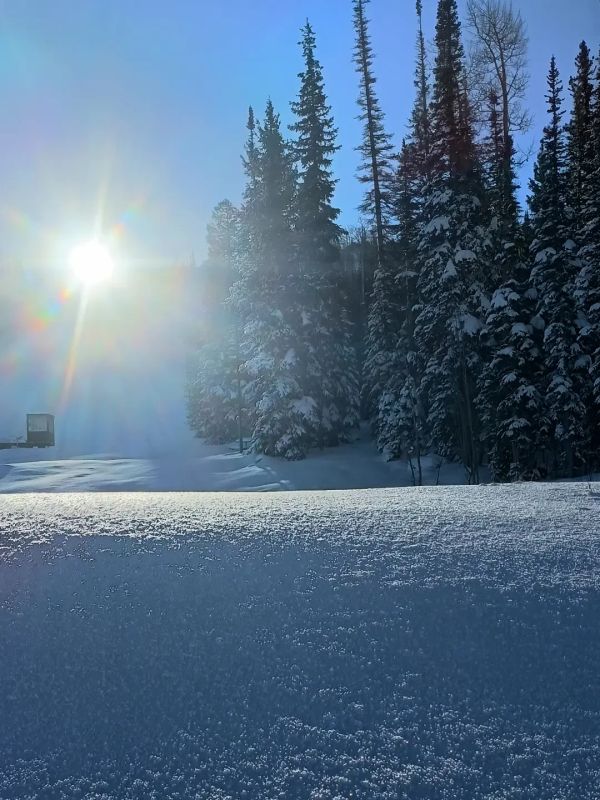
Utah’s ski season has started, and it began in the south. Brian Head opened on Tuesday, 17 November, with six trails on the Navajo Express after 14 inches (36 cm) of storm snow and another half foot on opening day. It is the second year running the resort has beaten the rest of the state to first chair, and it has put nearly $1 million into a new snowmaking pipeline that can run 24 guns at once.
19 Nov 2026
Heavenly and Northstar Open Friday as Lake Tahoe Snow Stacks Up, With Kirkwood Eyeing an Early Start
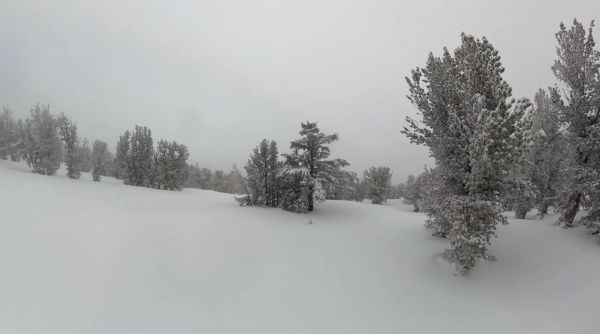
Tahoe has gone from dry to deep in a week. Heavenly and Northstar open this Friday, 20 November, with up to 24 inches (61 cm) already down at Kirkwood and 50+ inches (127 cm) in the 10-day forecast. Kirkwood normally waits until December, but this snow might change that. Heavenly is even talking about opening Stagecoach in Nevada early, which almost never happens this soon.
18 Nov 2026
Palisades Tahoe Opens Saturday, Four Days Early, After 26 Inches of New Snow
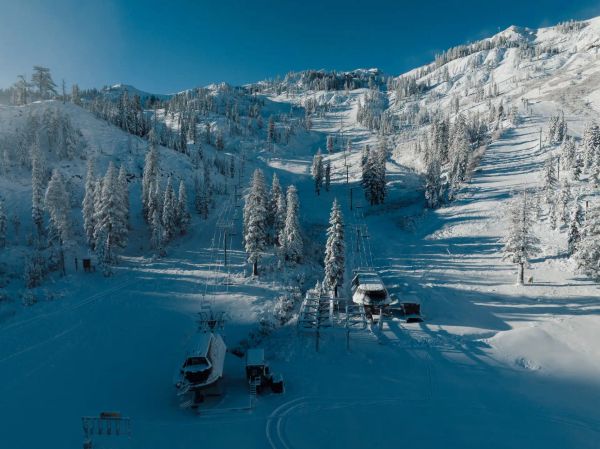
Palisades Tahoe has pulled its opening forward by four days. Lifts spin this Saturday, 21 November, after 26 inches (66 cm) of new snow, with up to 50 more in the forecast. Opening terrain includes Treeline Cirque at Alpine and Gold Coast and Sunkid 1 at Palisades, though the resort says the weather could change the plan. Tickets are $99 through Tuesday.
18 Nov 2026
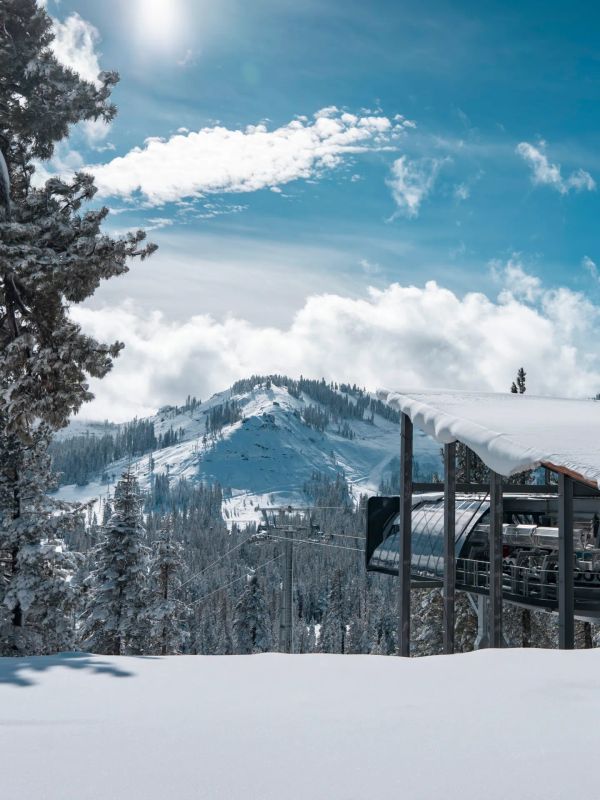
Sugar Bowl Gondola Slips to January 2027 as Opening Day Holds
Sugar Bowl still opens on 27 November, just without its new gondola. The eight-passenger Village Gondola is now targeting January 2027, with all eight towers up, the haul rope on and the first cabin hanging. Until it runs, everyone gets in through the Main Lodge, with curbside drop-off and parking lot shuttles. It replaces the first gondola in the western US, which dates from 1953.
16 Nov 2026
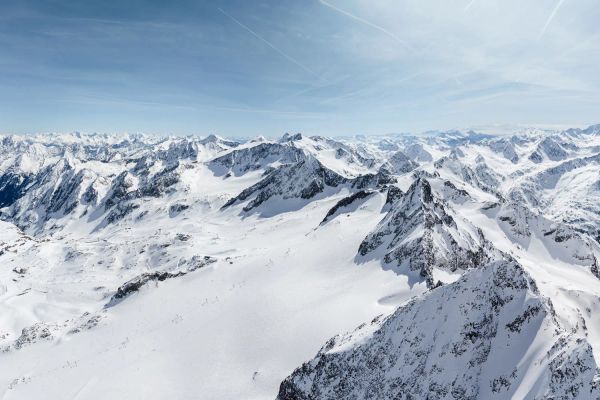
Stubai Glacier Avalanche Ends in Austria’s First Death of the Season
A 72-year-old American skier has died on Stubai Glacier after a small slab avalanche carried him over rocky ground and into a 20-metre crevasse. It is Austria’s first avalanche death of the 2026-27 season, and forecasters had flagged this exact setup two days earlier. Here is what happened near the Daunscharte, and what the snowpack was already telling anyone who was reading it.
15 Nov 2026
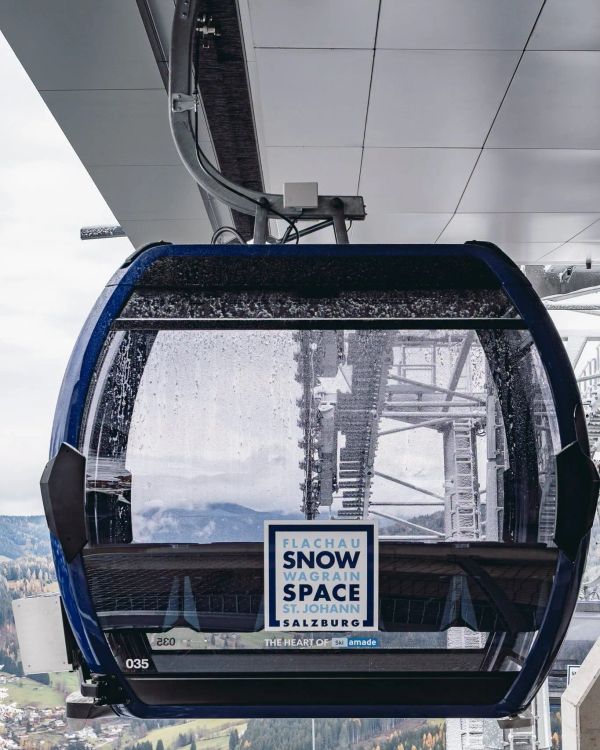
Wagrain’s New Grafenbergbahn Gondola Appears in First Photos
Wagrain’s new Grafenbergbahn is nearly here, and Snow Space Salzburg stamped “no AI” on the first photos, which says plenty about 2026. One 10-person gondola takes over from three old lifts, with 120 cabins moving up to 3,400 people an hour and a mid-station link into the G-Link. Dark blue cabins, fresh snow, no opening date yet.
14 Nov 2026
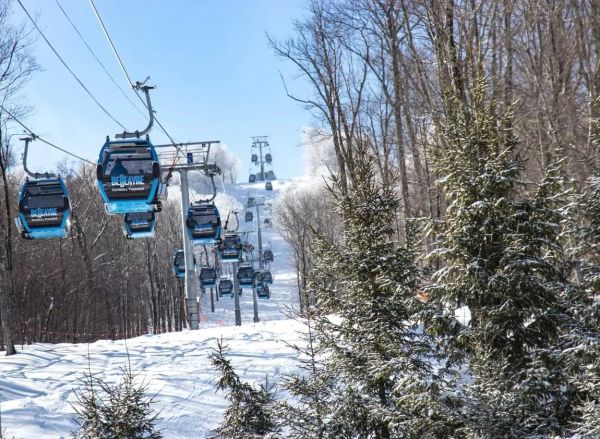
Indy Pass Adds 10 Alpine and 5 Nordic Partners for 2026-27
Indy Pass just got bigger. On 12 November it announced 10 new alpine resorts and 5 Nordic centres for 2026-27, including four in Norway and one in Austria. Three New York State mountains - Whiteface, Gore and Belleayre - also signed on to its Allied Program, with discounted tickets rather than included days. Waitlisted customers are being offered passes, and Learn to Turn news is due this week. Full list inside.
13 Nov 2026
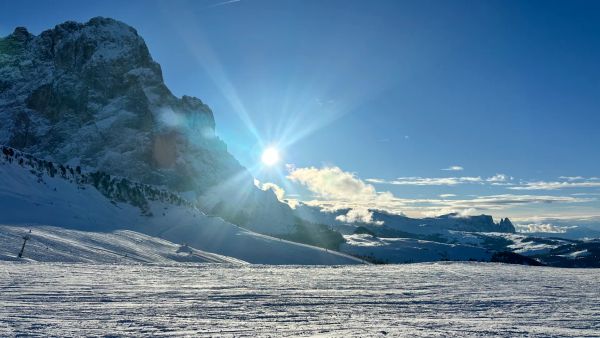
Val Gardena to Alpe di Siusi Lift Link Back in Play After Court Ruling
The Val Gardena-Alpe di Siusi lift link isn’t dead after all. A South Tyrol court has overturned Santa Cristina’s rejection of the new Monte Pana-Saltria link on procedural grounds, after the council skipped required public information sessions. Opponents want the missing sessions held and a fresh vote, and nothing has been approved. For now it’s still a bus between the two, but a plan first floated in 2017 is back in the conversation.
8 Nov 2026
Kaunertal Glacier Snow Report
Snow Report
Updated 19 Nov 2026
3113m
summit
+6cm
new snow · last 24 hours
Overcast-9°C / -5°C · SW 37km/h
Snowfall
24 hours
6cm
48 hours
8cm
7 days
15cm
Base depth
45cm
Season total
49cm
Typical winter 397cm
Lifts open5 / 9
km open17 / 55 km
9 Oct 2026 - 17 May 2027
Hour by Hour
Next 42 hours· Updated Nov 19, 2026 at 5:02 AM
Scroll for the full outlook · Open-Meteo
7-Day Outlook
2,920 mUpdated Nov 19, 2026 at 5:02 AMOpen-Meteo
Days 1–7
25cm
Days 8–14
14cm
Thu, Nov 19
Slight Snow Showers
Temp-5° / -9°°C
Snow6.1cm(100%)
Wind37 km/h SW
Live snow from the resort feed; forecast from Open-Meteo, via Supabase.
Understanding the Kaunertal Glacier snow report
See what's happening on the mountain at Kaunertal Glacier right now — snowfall, snow depth, and weather data to help you plan your day in Austria.
Snow measurements
Snow depth at Kaunertal Glacier is tracked at both the base and summit, since the two elevations often see different totals — roughly a 963m difference here. We report fresh snowfall over the last 24 hours and 7 days alongside the running season total, in both metric and imperial units.
Weather conditions
Current weather conditions affect snow quality. Cold temperatures with low wind typically preserve snow quality, while warm temperatures or rain can impact conditions negatively — something worth watching closely at Kaunertal Glacier's 2150m base elevation, where temperatures run milder than the summit.
Data sources
We pull Kaunertal Glacier's conditions from on-the-ground mountain reporting, then layer in forecast data so you get a fuller picture than either source alone. The mountain is served by 18 lifts, including an aerial tram and 2 quad chairlifts.
When to check
The biggest swings usually happen right after a storm. Check Kaunertal Glacier's report in the morning for the freshest numbers, and again in the afternoon as conditions evolve.