TL;DR
A 72-year-old American skier has died on Stubai Glacier after a small slab avalanche carried him over rocky ground and into a 20-metre crevasse. It is Austria’s first avalanche death of the 2026-27 season, and forecasters had flagged this exact setup two days earlier. Here is what happened near the Daunscharte, and what the snowpack was already telling anyone who was reading it.

A small avalanche was enough to kill a skier on Stubai Glacier on Saturday, because of what lay beneath it.
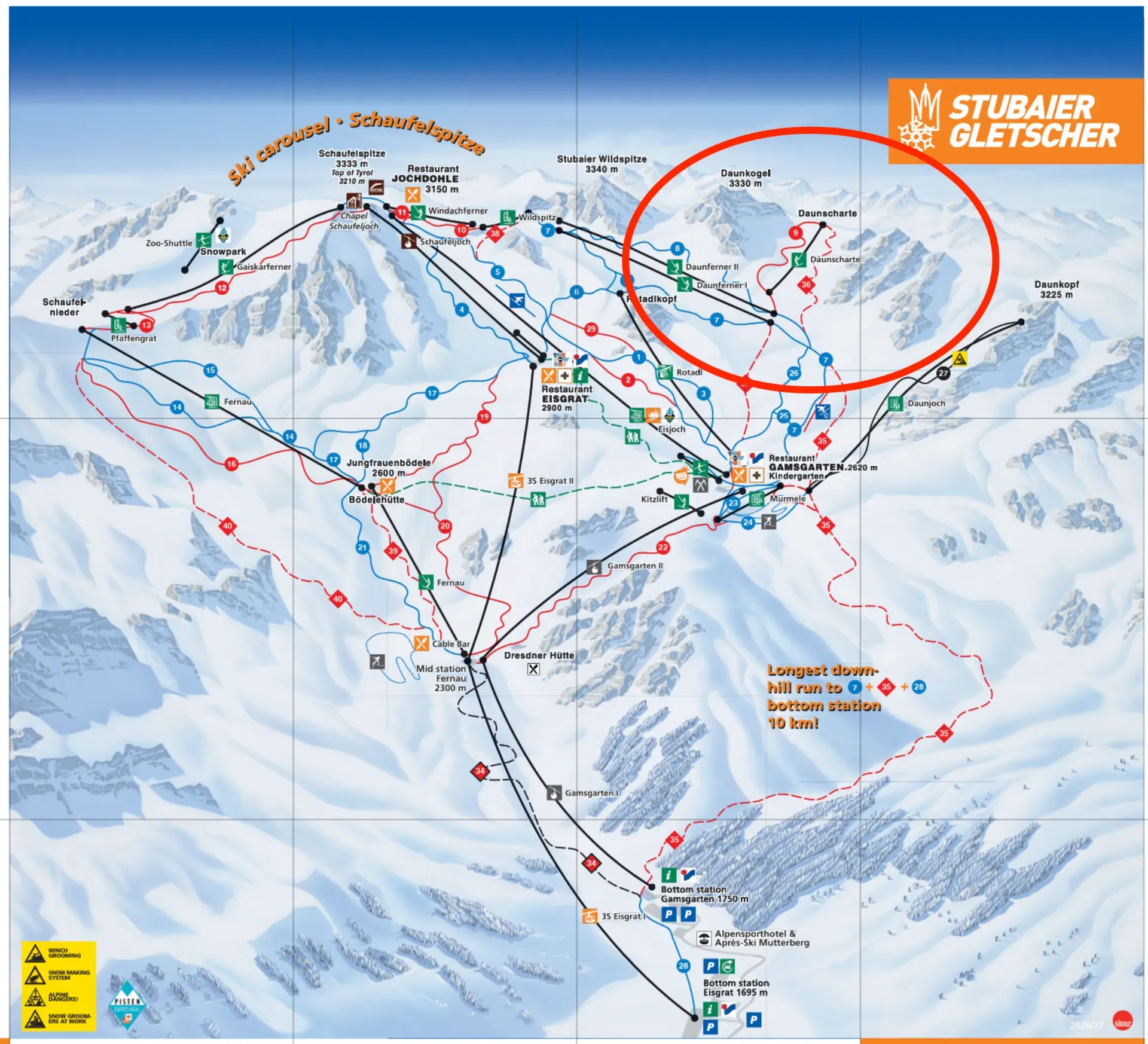
The man, a 72-year-old US citizen, was skiing off-piste outside the resort’s secured terrain when a slab released at around 11:30 am local time near the Daunscharte. That is a notch at 3,155 metres (10,351 ft) in the Daunferner area, above Neustift im Stubaital. Tyrol’s emergency dispatch centre confirmed the death to the Austria Press Agency (APA), which reported it as the country’s first avalanche fatality of the 2026-27 winter.
How the Avalanche Played Out
Local mountain rescue in Neustift told ORF Tirol the slab was small, a description Oe24 echoed. The problem was the ground. The snow released over rock and carried the skier to the edge of the glacier, where he fell into a crevasse roughly 20 metres (66 ft) deep. A slide that might have been survivable on open, smooth terrain became fatal because of what was waiting at the bottom of the run.
The Rescue
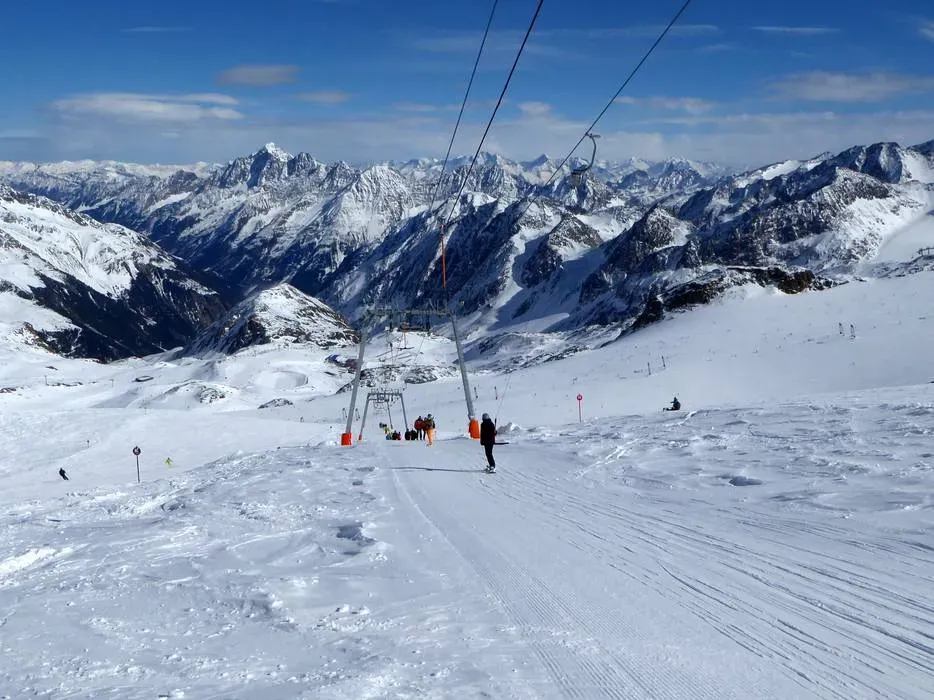
Skiers on a nearby piste saw the avalanche and raised the alarm. Mountain rescue teams from Neustift and Sölden responded, along with the glacier’s own piste rescue team, and two helicopters (the emergency helicopter Alpin 2 and the police helicopter Libelle Tirol) flew to the scene. Rescuers and an emergency doctor attempted to resuscitate him inside the crevasse. He died there, according to ORF.
Police released his age and nationality on Sunday morning, after the first reports had said only that a skier had died. His name has not been made public.
What the Forecasters Had Said
The Avalanche Warning Service Tyrol had published a blog post on Thursday 12 November describing a thin early-season snowpack. Shady slopes above about 2,500 metres (8,200 ft) held only 20 to 50 centimetres (8 to 20 in) of snow, with weak, sugary layers sitting between crusts. The post said fresh snow and wind would build slabs that a single person could trigger, and it singled out steep, glaciated, wind-sheltered terrain as the most dangerous, since weak layers there can propagate over a wider area.
Daily danger ratings had not started for the season. On Friday, forecaster Matthias Walcher told ORF that anyone moving above roughly 2,500 metres should not underestimate the avalanche danger, and urged skiers to plan carefully and carry emergency gear.
Same Spot, Second Season
The accident happened almost exactly where a much larger slide released last season. On 27 November 2025, an avalanche below the Daunscharte caught eight skiers and set off a rescue involving about 250 people. All eight survived. Two snowboarders were later killed in February in an avalanche in open terrain lower on the glacier. Austria’s avalanche toll last winter reached at least 28.
Glacier terrain keeps early-season risk high for a simple reason. Crevasses are only partly covered in November, and a thin snowpack means rock and ice are close to the surface. Any slide, however small, has less to cushion it and more to hit.
Planning Off-Piste Terrain on a Glacier
Slab avalanches on a weak early-season base are something the forecast can tell you about, and in this case it did. Reading the Tyrol avalanche bulletin and blog before heading out, carrying a transceiver, probe and shovel, and treating terrain traps like crevasses as part of the avalanche decision are all standard practice in the Alps. Whether the skier had checked the forecast, or what gear he carried, has not been reported.
About Stubai Glacier
Stubai Glacier sits at the head of the Stubai Valley, about an hour’s drive south of Innsbruck, and is one of Austria’s largest glacier ski areas. It opened for the 2026-27 season on 9 October.
About the author

Michael Fulton
Melbourne-based skier and snowboarder with 50+ resorts across 5 continents. Specialises in Australian resorts and international resort comparisons.