TL;DR
A section of Whistler Peak terrain will stay closed all 2026-27 season, Vail Resorts has confirmed, with rockslide mitigation work continuing into summer 2027. Peak Express is still expected to run this winter, but locals are already arguing about what’s actually off limits, whether the Whistler Bowl is gone, and why the news landed after pass sales wound down. Here’s where things stand.

A slice of Whistler Peak stays closed for the whole 2026-27 season.
Vail Resorts confirmed on Friday that the terrain affected by this year’s rockslide at Whistler Blackcomb will not reopen this winter. Spokesperson Dane Gergovich said the decision rests on expert recommendations and leaves room for mitigation work, which will continue into summer 2027. Additional safety measures are also planned around Whistler Peak, based on expert guidance.
What the closure covers
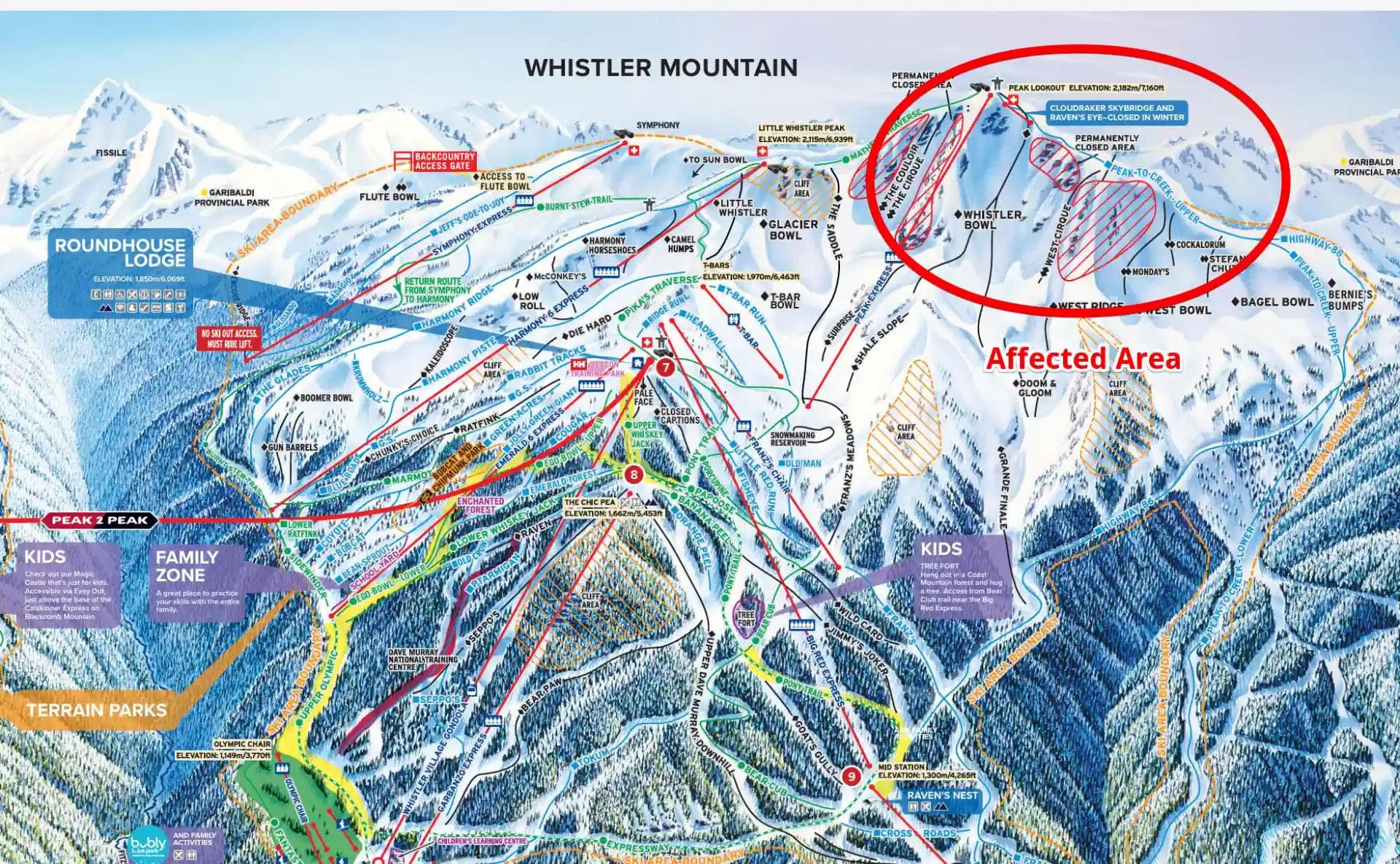
The detail most people want is the one we haven’t seen published. The coverage we’ve found refers to “affected terrain” and “areas adjacent to the closure” without naming runs or showing a map, and that vagueness is already driving plenty of speculation (more on that below).
What Vail has said is that the Peak Express chairlift is expected to open this winter, giving access to the alpine terrain including Symphony, The Saddle, Peak to Creek and areas next to the closed zone. When the peak reopened after the slide in March, closed areas were marked with “No Hiking” signage, and the resort warned that entering them would cost you your pass privileges. Expect the same approach this season.
How we got here
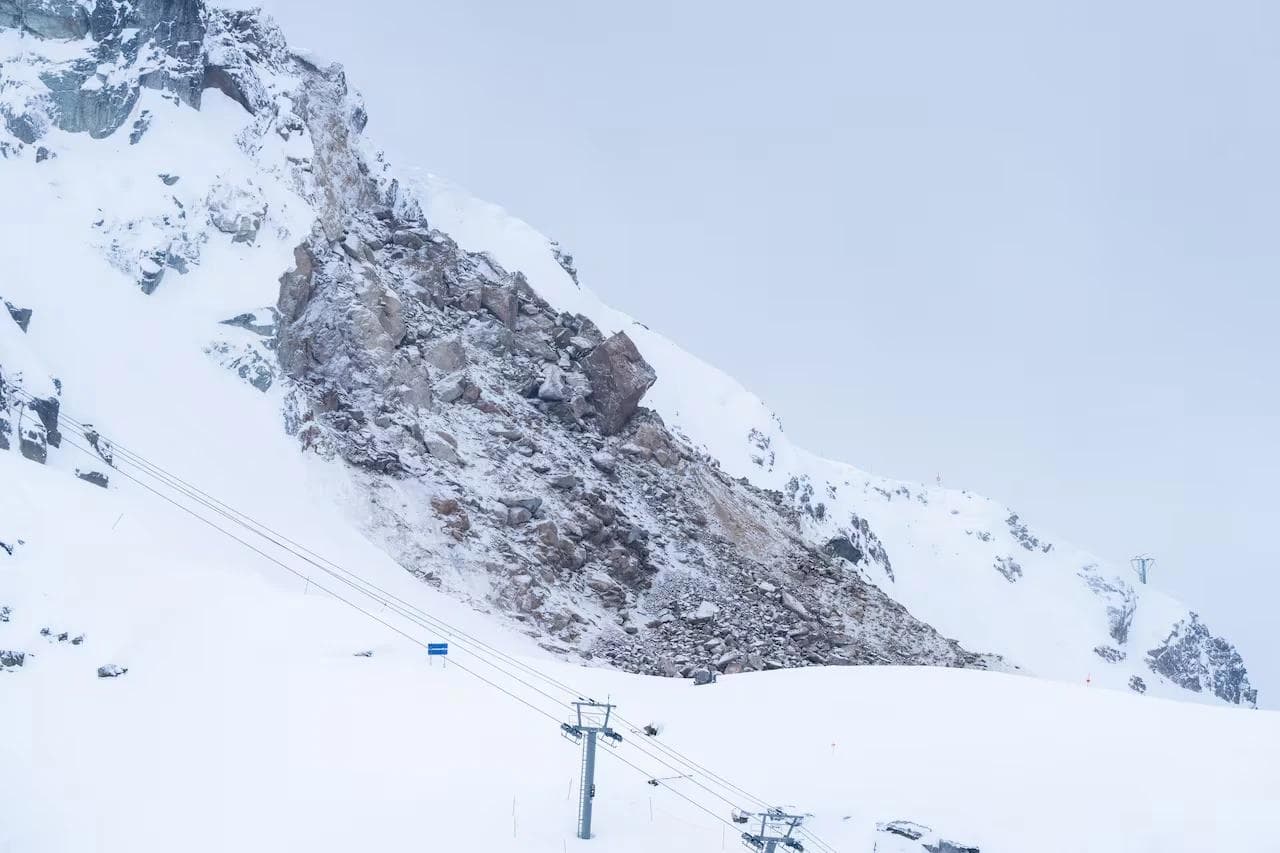
The rockslide happened at around 6:30am PT on 12 March, before the resort opened, and nobody was hurt. Whistler Peak and Peak Express stayed shut until 22 March, and the section around the slide itself never reopened for the season. On 28 May, with the resort closed for the off-season, Vail confirmed further rock movement near the slide site. We covered the original slide at the time.
Consulting geoscientist Pierre Friele, who has worked in the Sea-to-Sky region for more than 30 years, told CBC News in March that photographs taken before the slide showed joints in the rock that read as structural weakness. His assessment was that the underlying cause is unfavourable bedrock structure, with the intense cold likely the trigger. He also pointed to climate warming in the southern Coast Mountains melting alpine permafrost, which he described as the glue holding the mountains together.
What locals are saying
The r/Whistler thread on the news ran to dozens of comments within hours, and it’s a decent barometer of the mood. A few themes came up repeatedly.
The biggest argument is about the Whistler Bowl. The original poster described it as closed all season, and plenty of commenters ran with that. Others pointed out that the CBC story never names it, and a few asked whether anyone could post a map. Some locals claimed signage along the Peak lift line will stop skiers dropping into the bowl, leaving only the skier’s-right line toward Surprise open, but that’s chatter rather than anything confirmed by the resort.
Then there’s what people feel they’re losing. Commenters listed West Cirque, West Ridge and the views of Air Jordan from the Peak chair line as the big hits, while others said Air Jordan is still reachable with a bit of effort. One resigned local’s response was that at least Flute is still there and it’s time to get fit. A more practical worry was crowding, with the suggestion that everyone who normally skis the bowl will now spread across the rest of the mountain. One commenter reckoned Revelstoke should brace for the overflow.
The timing didn’t go down well with everyone. Several people noted the announcement arrived just as pass sales were wrapping up. Others weren’t buying the outrage, saying nobody was going to skip Whistler over this and asking whether anyone had actually passed on a pass because of it.
And then the question of whether it ever comes back. The pessimists reckon it never will, citing liability and the cost of stabilising the rock. Others pointed to the Porteau Cove rock bluff above Highway 99, which has been managed through a monitoring and mitigation program, as proof that engineers can sign off on risk in unstable terrain.
The counter-argument was that highways and railways are critical infrastructure and a few black runs are not. As one commenter put it, it might simply take more blasting and anchoring than Vail wants to pay for.
A fair amount of the thread drifted into climate and energy politics, which we’ll leave where it is.
Opening day and what to check
Whistler Blackcomb is targeting 20 November for the start of the 2026-27 winter season. Before you head up, check the resort’s current trail map and lift status for the Peak zone, and treat any rope or “No Hiking” sign as a hard boundary. Losing a pass over one line isn’t a great trade.
About the author

Michael Fulton
Melbourne-based skier and snowboarder with 50+ resorts across 5 continents. Specialises in Australian resorts and international resort comparisons.