
Mayrhofen
142km of pistes, 61 lifts, 1,870m vertical. Home to Austria's steepest run Harakiri and Penken Park in Tyrol's Zillertal.
Season 2026 - 2027
Opens
4 Dec 2026
Closes
11 Apr 2027
Days open
128
Annual snow
4m
The Overview
Michael Fulton
Melbourne-based skier and snowboarder with 50+ resorts across 5 continents. Specialises in Australian resorts and international resort comparisons.
Mayrhofen delivers 142 kilometres of piste across six interconnected sectors - Penken, Horberg, Ahorn, Finkenberg, Rastkogel and Eggalm - with a vertical drop of 1,870 metres spanning 630 to 2,500 metres elevation. The resort claims Austria's steepest groomed run, the Harakiri, with a 78% gradient on the Penken sector. Snow reliability comes from 89% of terrain sitting above 1,700 metres and snowmaking coverage across 80% of runs using 360 snow cannons. The Zillertal Superskipass extends access to 544 kilometres across four major ski areas including Hintertux Glacier.
Terrain breaks down as 27 red runs, 22 blue runs and 3 black runs across predominantly open alpine bowls above the treeline. The Penken sector draws confident skiers to the Harakiri and the eight-zone Penken Park, one of Europe's most developed freestyle facilities with areas ranging from beginner to professional level. Ahorn offers a contrasting character with wide, sunny blue runs suited to beginners and families, plus the 5.5-kilometre Valley Run descent with nearly 1,300 metres of vertical back to Mayrhofen. Off-piste terrain opens up after fresh snowfall, with challenging steeps and alpine bowls accessible from multiple lifts.
The Tyrolean village of Mayrhofen sits at the head of the Zillertal valley and maintains traditional architecture alongside a well-developed après-ski scene. Bars like the Ice Bar at the Penkenbahn summit and Bruck'n Stadl in the village anchor a nightlife reputation that rivals St Anton and Ischgl. On-mountain dining spans traditional huts including Gschösswandhaus and Schneekarhütte, with the White Lounge Ice Bar and Igloo Hotel on Ahorn offering alternative experiences. The April Snowbombing festival transforms the resort into Europe's largest on-snow music event.
The Zillertal Superskipass - automatically included with any pass of two days or more - unlocks Hintertux Glacier's year-round skiing 30 minutes by free ski bus from town. Multi-day passes also include free valley public transport on the Zillertalbahn train and ski buses. The resort suits intermediate skiers seeking mileage, advanced riders chasing steep terrain, and freestyle enthusiasts heading to Penken Park. Families benefit from Ahorn's dedicated learning terrain and ski schools, whilst the lively village appeals to groups seeking post-skiing entertainment.
1870m
Vertical
56
Runs
142 km
Piste
4m
Annual snow
Zillertal Superskipass
Pass
The Terrain
56 runs across 142 km of piste
Mayrhofen drops 1,870 metres from its 2,500-metre high point to the valley at 630 metres, with 56 runs and 142 kilometres of piste spread across the Penken, Horberg, Ahorn, Finkenberg, Rastkogel and Eggalm sectors. Intermediates lead with 46%, followed by beginners on 31%, advanced skiers on 15% and experts on 8%, a more expert-heavy profile than most big Tyrolean areas. The pistes sit mainly above the treeline in wide alpine bowls, served by fast chairlifts, while Ahorn is the smaller, sunnier area with wide pistes that suit beginners and families.
Penken is where the serious skiing happens. The Harakiri is 1.2 kilometres long, falls 376 metres and carries a 78% gradient, which makes it the steepest groomed piste in Austria and a rite of passage for confident skiers. The eight-zone Penken Park caters to freestylers at every level, and the 5.5-kilometre valley run from Ahorn drops nearly 1,300 metres back to town. Anyone wanting a big, varied day should treat Penken as the main attraction and Ahorn as the easy alternative.
Terrain split
56
runs
56 runs across 4 grades
Beginner17 runs · 31%
Intermediate26 runs · 46%
Advanced8 runs · 15%
Expert4 runs · 8%
Time it right
When to visit Mayrhofen
Mayrhofen's 2025-2026 season runs from December 5th through April 12th, spanning approximately 19 weeks of operation. Lifts typically operate from 8:00am until 4:00pm, with last cable car ascents at 4:30pm. The Ahornbahn opens at 7:30am during peak season for early morning runs on the freshly groomed 5.5-kilometre Valley Run before crowds arrive. Access gondolas at Penken, Horberg and Mösl open by 8:00am throughout the main winter period.
Annual snowfall averages around 420 centimetres at summit elevation, with the snowiest period falling in the second week of January when three to four snowy days typically deliver 28 centimetres. February offers the most reliable base depths, averaging 115 centimetres at upper elevations. Snowmaking covers 80% of marked runs using 360 snow cannons fed by five reservoirs, ensuring coverage from December through April even in low-snowfall years. The 2,500-metre summit elevation helps preserve snow quality while the low 630-metre base can see variable conditions in warmer periods.
January and February deliver the most consistent powder conditions, though slopes above 1,700 metres - representing 89% of the ski area - hold snow reliably throughout the season. March brings the sunniest skiing with an average 18 clear days, whilst late-season visitors in early April find softer spring snow and fewer crowds outside the Snowbombing festival week. Christmas and February half-term see peak visitor numbers and potential morning queues at the Penkenbahn, which the 3,840-person hourly capacity largely manages.
Snowbombing festival runs from April 6-11, 2026, transforming the resort with six days of electronic music across mountain and village venues including the Forest Stage and Igloo. The Full Metal Mayrhofen event takes place March 23-28, 2026, bringing heavy metal to the slopes. Night skiing operates on selected evenings on Ahorn with floodlit sessions. The resort closes on April 12th, though Hintertux Glacier - accessible on the Zillertal Superskipass - offers year-round skiing just 30 minutes away.
Season 2026 - 2027
4 Dec 2026
Opens
11 Apr 2027
Closes
128
Days open
4 m
Annual snow
Getting there
Getting to Mayrhofen, and where to stay
Mayrhofen sits at 630 metres elevation at the head of the Zillertal valley in the Austrian state of Tyrol, where four valleys converge beneath 3,000-metre peaks of the Zillertal Alps. The town lies in the Schwaz district, approximately 67 kilometres southeast of the regional capital Innsbruck. The Ziller river runs through the valley floor, with the Penken mountain rising to the west and Ahorn to the south. Surrounding communities of Hippach, Schwendau, Finkenberg and Tux form part of the extended ski area.
The nearest major town, Jenbach, sits 31 kilometres north at the junction of the Zillertal with the main Inn valley and serves as the rail gateway to the region. Innsbruck, with its historic old town and twice-hosted Winter Olympics legacy, lies an hour's drive northwest. The Hintertux Glacier terminus sits 20 kilometres further up the Tuxertal side valley from Mayrhofen. Zell am Ziller, the valley's main commercial centre, lies 10 kilometres north and offers connections to the Zillertal Arena ski area.
Road access follows the B169 Zillertal main road from the A12 Inntal autobahn exit near Wiesing. The drive from Innsbruck takes 58 minutes in normal conditions, following the motorway east before turning south into the valley at Jenbach. From Munich, the 190-kilometre journey takes around two hours via the A8 and A12 motorways through Kufstein. Salzburg lies 175 kilometres northeast with a drive time of approximately two hours. No mountain passes are involved in reaching the valley floor.
Innsbruck Airport sits 70-74 kilometres away with transfers taking 60-90 minutes depending on traffic and conditions. Munich Airport lies 190-200 kilometres distant, with transfers of around two hours. Salzburg Airport at 170 kilometres offers another option with 2.5-hour transfer times. Rail travellers take Austrian Federal Railways (ÖBB) mainline services to Jenbach, then connect to the narrow-gauge Zillertalbahn for the scenic 32-kilometre journey terminating at Mayrhofen station in the village centre. The Zillertalbahn ride takes approximately 55 minutes with stops at valley ski areas including Zell am Ziller and Fügen.
Where to stay
Search all stays →Hotels and lodges near Mayrhofen, powered by Stay22.
Latest News
From the SnowStash desk
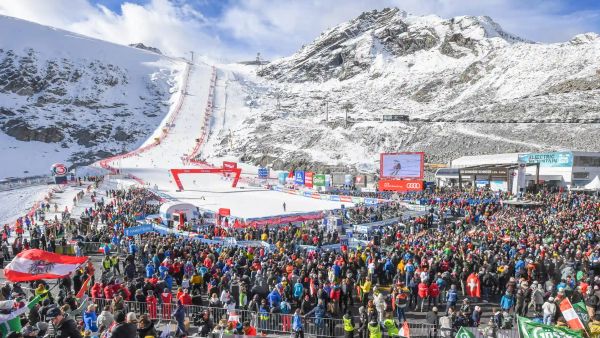
Pinheiro Braathen Wins Sölden Giant Slalom Opener by 0.48 Seconds
Two days at Sölden, two races decided by a hundredth somewhere on the podium, and one very quick Brazilian. Lucas Pinheiro Braathen led from the first run to win the men’s World Cup opener by 0.48 seconds, with Loïc Meillard second and Marco Odermatt third. River Radamus charged from 15th to fourth on a rutted course, and Britain’s Freddy Carrick-Smith banked his first World Cup points. Braathen still hasn’t lost a giant slalom since Olympic gold.
25 Oct 2026

Alps Snow Forecast: Up to 64 cm Headed for the High Glaciers as the Snow Line Drops
The Alps are about to swap mild, sunny October weather for something far more wintry. A cold front arrives Tuesday, and SnowStash forecasts have Monterosa Ski out in front with 64 cm over 14 days, ahead of Blatten Belalp (55 cm) and Verbier (43 cm). The snow line should fall below 2000 metres by Wednesday night, and glaciers across Switzerland, Italy and Austria are in line for the best of it. The wind will have a say too.
20 Oct 2026

Four Dead After Avalanche Near Ski Portillo in Chile
A large avalanche struck near Laguna del Inca adjacent to Ski Portillo on Saturday afternoon, killing four people and injuring four others. The group were day visitors mountaineering in the backcountry after reportedly being warned about elevated avalanche risk by resort staff.
18 Oct 2026

Europe Ski Resorts Open Now: What Is Skiable in Mid-October 2026
Europe’s ski season is open, technically. After a record-warm summer, glaciers in Austria, Switzerland and Italy are running a few pistes apiece, Sölden, Stubai and Kitzsteinhorn started late, Titlis has pushed back to 24 October, and Zermatt reopens a few lifts on 14 October after more than two months shut. Finland’s Levi and Ruka are skiing on stored snow. Here is what is open, and what you actually get at each.
14 Oct 2026

Zermatt Plans World Cup Downhill Return on the Gornergrat for 2028
Zermatt is having another crack at a World Cup downhill, and this time nobody has to cross a border. Around 13 million Swiss francs is going into rebuilding the Gornergrat piste, including a jump fed by a roughly 300-metre in-run across the roof of the Gornergrat Railway gallery, with the Matterhorn lined up behind it for the TV cameras. First men’s race is pencilled in for March 2028, pending FIS homologation.
14 Oct 2026

Mt. Rose Begins Snowmaking for the 2026-27 Season at Lake Tahoe
Lake Tahoe’s highest base elevation is paying off early: Mt. Rose has started making snow for 2026-27 after the first flurries and a cold snap. The Nevada resort is backing it with nearly US$2 million in upgrades, including a replacement snowmaking main line, a new PistenBully groomer and restraint bars on every lift. Opening day is yet to be confirmed, though Heavenly and Northstar are already eyeing 20 November.
13 Oct 2026

Utah Ski Resorts 2026-27: What’s New at Alta, Deer Valley, Powder Mountain and More
Utah is still building flat out. For 2026-27, Powder Mountain opens a steep new Skytrac chair into more than 1,000 acres of advanced terrain, Deer Valley adds 200 acres on Hail Peak, Sundance gets a new quad and Park City adds a gondola from its new parking structure. Snowmaking is expanding almost everywhere, Eagle Point stays closed after the Cottonwood Fire, and the 2034 Games are setting the pace. Here’s what’s new, resort by resort.
13 Oct 2026

Mt Hutt Invests NZ$12 Million in Base Area, Tripling Its Sun Deck
Mt Hutt is getting busier, and its base lodge is about to catch up. NZ$12 million goes into a heated sun deck roughly three times the current size (430 m² to 1,300 m²), plus a new toilet block, heated steps down to snow level, extra storage and a new food and beverage outlet. Building starts after the 2026 season, with everything due for winter 2027.
11 Oct 2026
Mayrhofen Webcams
6 live angles across the mountain. Tap any camera to go full-screen.
About Mayrhofen's live webcams
Check live conditions across Mayrhofen with 6 real-time webcams showing snow, weather, and lift operations, updated every 10 minutes. Check high-elevation cams for powder visibility and base-area cams for crowd levels before you head up.
Camera guide
- Penken Mayrhofen2000m
- The webcam penken mayrhofen delivers spectacular views from the summit area, showcasing the entire Zillertal Valley below. Monitor conditions across multiple runs while watching skiers tackle the diverse terrain on this popular mountain face.
- Zimmereben853m
- This mayrhofen webcam captures the stunning valley perspective, with the Penken and Ahorn peaks rising dramatically above the town. Perfect for checking current conditions and enjoying views of the traditional Zillertal architecture against snowy mountain backdrops.
- Coolnest | Ramsau600m
- The livecam mayrhofen at Ramsau offers a peaceful view of the lower valley, where traditional Alpine farmhouses dot the landscape. Watch as the morning sun illuminates the surrounding peaks and valley floor.
- Ahorn2000m
- From the family-friendly Ahorn area, this mayrhofen zillertal webcam provides panoramic views across the entire valley. Monitor conditions on the gentler slopes while taking in the spectacular mountain vistas.
- Unterberg2200m
- The penken webcam at Unterberg shows stunning high-alpine terrain from one of the resort's highest vantage points. Watch as advanced skiers tackle the challenging slopes while enjoying views stretching across the Zillertal Alps.
- Penken Park1807m
- The mayrhofen webcam penken positioned above the famous Penken Park lets you check out the freestyle action. Monitor conditions at this world-renowned terrain park while watching riders hit the perfectly shaped features.
Mayrhofen snow cams FAQ
How often do Mayrhofen snow cams update?
All Mayrhofen snow cams and webcams update every 10 minutes with fresh images showing current mountain conditions. This frequent update schedule ensures you have access to near real-time conditions for planning your ski day at Mayrhofen.
Which Mayrhofen webcam shows the best powder conditions?
The high-elevation Unterberg webcam at 2,200m provides the clearest view of powder conditions and snowfall. These Mayrhofen webcams capture fresh snow accumulation and visibility better than base area cameras.
Can I see Mayrhofen lift queues on the webcams?
Yes. Multiple Mayrhofen snow cams specifically show lift queue areas and chairlift operations, helping you time your arrival and avoid peak queue periods.
When is the best time to check Mayrhofen snow cams?
Check Mayrhofen webcams early morning (7-8am) for overnight snowfall assessment, and mid-afternoon for current crowd levels and weather. The live cams are most useful after storm events to assess fresh powder.
How can I check current conditions before buying Mayrhofen lift tickets?
Use our Mayrhofen webcams alongside the live snow report to assess conditions before purchasing lift tickets. The webcams show real-time visibility, snow quality, and operational status.
Do Mayrhofen webcams work on mobile devices?
Yes. All Mayrhofen snow cams and webcams are optimized for mobile viewing, so you can check live conditions from anywhere using your phone or tablet.
More Mayrhofen intelligence: snow report, lift tickets, trail map, resort overview.