
The Overview
Michael Fulton
Melbourne-based skier and snowboarder with 50+ resorts across 5 continents. Specialises in Australian resorts and international resort comparisons.
Austria’s Colossal Alpine Giant That Redefines “Big”
When North Americans boast about their massive ski resorts, they haven’t experienced Sölden. This Austrian colossus spans an astounding 8,190 acres—larger than both Park City and Whistler Blackcomb individually—yet it’s considered merely “medium-sized” by Austrian standards. After exploring 31 lifts, 3 peaks above 3,000m, 2 glaciers, and 145km of pistes across two intensive days, I can confidently say Sölden doesn’t just challenge the definition of “big”—it obliterates it.
Why Sölden Stands Apart: The Scale That Stuns
Most skiers think they understand big mountains until they encounter Sölden’s sheer scope. Using precision mapping, we’ve confirmed what locals know: this resort is genuinely massive. The journey from base to glacier involves at least three gondolas and two chairlifts with minimal skiing between connections. This isn’t inefficiency—it’s geography. Sölden sprawls across such vast terrain that it feels like three distinct resorts operating under one lift ticket.
The statistics tell the story: 15km of connected skiing from Austria’s highest lift-accessed point at 3,340m down to 1,363m—that’s 1,977m of vertical in a single run. This isn’t just Austria’s longest connected ski run; it’s a leg-burning odyssey that redefines what “top-to-bottom” means.
1990m
Vertical
45
Runs
147 km
Piste
4m
Annual snow
Watch
See Sölden in motion
The Terrain
45 runs across 147 km of piste
Three Mountains in One
Giggijoch Zone: The Confidence Builder
Best for: Beginners to intermediates, families, first-time Sölden visitors
Starting from the main Giggijoch base area, Europe’s fastest gondola whisks you into terrain that’s deceptively forgiving. The wide, well-groomed runs here build confidence quickly, but don’t let the gentle introduction fool you—venture onto the wrong chairlift and you’ll find yourself committed to advanced terrain with no escape routes.
Key runs to know:
- Warm-up circuits: Perfect for morning preparation
- Piste 19: The main route back to base—longer and more challenging than it appears
- Piste 22: A short, steep advanced surprise that catches many off-guard
- Fun Park area: Excellent for families and beginners wanting park experience
Insider strategy: This zone works perfectly for morning warm-ups before tackling the glaciers. The magic carpet connector provides unique glacier views as you glide past genuine thousand-year-old ice.
Gaislachkogl: The Technical Challenge
Best for: Intermediate to advanced skiers, powder enthusiasts, those seeking variety
The Gaislachkogl side feels like a separate resort entirely, connected to the main mountain by just one chairlift. This isolation creates a more intimate skiing experience within Sölden’s vastness.
Standout experiences:
- Piste 1: The only way down from the 3,058m summit—long, wide, and varied
- Piste 8: A forest cruise that demands speed maintenance
- A12 T-bar through trees: Magical in fresh snow conditions
Powder stashes under A16 lift: Untracked terrain on the north-facing slopes
Technical note: The 3S Gondola to Gaislachkogl summit is engineering marvel, climbing from 2,174m to 3,058m while offering the resort’s best views.
Glacier Terrain: High-Alpine Perfection
Best for: All levels (surprisingly), early/late season skiing, mountain photography
Both Rettenbach and Tiefenbach glaciers offer skiing above 3,000m with conditions that shame lower-elevation resorts. The Tiefenbach glacier particularly excels for beginners seeking high-altitude bragging rights.
Glacier highlights:
- Tiefenbach slopes: Beginner-friendly with serious vertical
- Rettenbach runs: Connect to the epic 15km descent
- Ski tunnel experience: Carved through mountainside between glaciers
- Big 3 Panorama platforms: Suspension walkways over genuine glacier ice
Planning essential: Once you commit to glacier skiing, stay there. The journey up takes considerable time, making multiple glacier visits per day impractical.
Terrain split
45
runs
45 runs across 4 grades
Beginner21 runs · 47%
Intermediate14 runs · 30%
Advanced7 runs · 15%
Expert4 runs · 8%
How it compares
Within the Ötztal Valley alone, Sölden operates alongside Hochgurgl and Obergurgl, yet dwarfs both in scale and glacier access. While those resorts offer more intimate, traditional Austrian experiences, Sölden delivers the valley’s only true big-mountain skiing with glacier reliability.
- vs. Innsbruck area resorts: Sölden’s glacier terrain and sheer scale make it the obvious choice for serious vertical and snow guarantee, though resorts like Stubai offer easier day-trip access from the city.
- vs. other regions: St. Anton and other Arlberg resorts provide more challenging off-piste terrain, but Sölden counters with higher elevation, longer seasons, and family-friendly glacier access.
International Mountain Comparisons - vs. French mega-resorts (Les Trois Vallées, Paradiski): Sölden matches their scale but delivers distinctly Austrian efficiency and mountain culture. The glacier access provides snow security that even high-altitude French resorts can’t guarantee.
- vs. Swiss giants (Verbier, Zermatt): Similar elevation profiles and glacier skiing, but Sölden offers better value and less crowded glacier terrain. Zermatt’s Matterhorn views trump Sölden’s vistas, but Sölden’s ski-through tunnel between glaciers creates unique experiences.
- vs. North American resorts: While Whistler and Park City offer more integrated village experiences, neither matches Sölden’s high-altitude glacier skiing or the 15km continuous descent. Sölden feels more like a mountain expedition than a resort experience.
Unique Selling Propositions
What only Sölden offers:
- Ski tunnel connecting two separate glaciers
- Austria’s longest connected ski run (15km)
- Three peaks above 3,000m on one ticket
- James Bond filming locations with museum access
- Genuine thousand-year-old glacier ice visible from lifts
When competitors might be better:
- Seamless connectivity: Purpose-built resorts like Whistler flow more naturally
- Beginner focus: Smaller Austrian resorts provide less overwhelming first experiences
- Extreme terrain: St. Anton and La Grave offer more challenging off-piste options
- Quick access: Innsbruck-area resorts work better for day trips
International Perspective: How Sölden Measures Up
Having skied across five continents, Sölden’s scale genuinely impresses. While North American resorts tout their size, few offer Sölden’s combination of:
- Vertical diversity: 2,000m+ of skiing elevation
- Terrain variety: From glacier cruising to technical forest runs
- High-altitude guarantee: Two glaciers ensure snow reliability
- Alpine authenticity: Genuine European mountain culture
Honest comparison: Sölden’s interconnection feels less seamless than purpose-built North American resorts, but the trade-off delivers three distinct mountain experiences under one ticket.
The Verdict
Michael Fulton
Sölden’s Limitations
- Time commitment: Reaching glaciers requires significant lift time—plan accordingly.
- Complexity: The resort’s size can overwhelm first-time visitors.
- Weather dependency: Cloud cover at glacier elevations can limit visibility.
- Physical demands: The 15km descent tests even strong skiers’ endurance.
Expert Verdict: When Sölden Excels
After two intensive days exploring every major zone, Sölden earns its reputation through sheer scale and variety. This isn’t a resort for quick weekend visits—it demands time to appreciate its full scope.
Choose Sölden if you want:
- Genuine big-mountain European skiing
- Glacier skiing experiences
- Multiple days of exploration without repetition
- Alpine culture combined with serious terrain
Look elsewhere if you prefer:
- Compact, easily navigable resorts
- Seamless mountain connectivity
- Quick après-ski access from every run
Bottom line: Sölden redefines what “big” means in skiing. It’s not just larger than North America’s giants—it’s more varied, more authentic, and more challenging to fully explore. That’s precisely what makes it extraordinary.
The resort doesn’t just offer skiing; it provides an alpine expedition. Come prepared for the scale, embrace the journey between zones, and discover why Austrians consider this merely “medium-sized”—it will forever change your perspective on what constitutes a big mountain.
Time it right
When to visit Sölden
Sölden's main winter season runs from September through May, with glacier skiing available beyond these dates. The combination of high altitude and two glacier areas ensures exceptional snow reliability throughout the season. Natural snowfall averages 300cm annually, while extensive snowmaking covers 67% of the ski area. The glaciers maintain skiable conditions year-round, making Sölden a popular destination for autumn training among international ski teams.
Season 2026 - 2027
9 Oct 2026
Opens
2 May 2027
Closes
205
Days open
4 m
Annual snow
Getting there
Getting to Sölden, and where to stay
Seasonal Strategy
- Early season (October-November): Drive directly to Tiefenbach glacier base via mountain roads—skip the lift connections entirely.\
- Peak season (December-March): Plan full days in specific zones rather than attempting complete resort coverage.
- Late season (April-May): Glacier skiing remains excellent while lower terrain may be inconsistent.
Daily Efficiency Tips
- Morning approach: Start with Giggijoch warm-ups before committing to glacier journeys.
- Afternoon strategy: Use the 15km top-to-bottom run as your finale—it’s Austria’s longest and most rewarding descent.
- Weather adaptation: Fresh snow transforms the Gaislachkogl forest runs into powder paradise.
Navigation Realities
Sölden’s size creates unique challenges. The resort operates more like three connected mountains than one cohesive area. Embrace this reality by choosing your daily focus rather than attempting comprehensive exploration.
Base area strategy:
- Giggijoch: Traditional Austrian efficiency, fastest gondola access
- Gaislachkogl: Village atmosphere, more intimate mountain experience
Mountain Dining and Après-Ski Culture
On-Mountain Highlights
- Panorama Alm: The resort’s social epicenter featuring live DJs, fire cannons, and exceptional alpine views. Budget 30 minutes minimum—this isn’t a quick stop.
- Glacier restaurants: €18 pizza and Aperol represents fair mountain pricing with unbeatable altitude atmosphere.
- Phillips bar: Perfect finale location for reflecting on epic descents.
Village Experience
Sölden town offers authentic Austrian mountain culture without pretension. The charming valley setting provides excellent accommodation options and genuine local atmosphere.
Sölden Ski Resort is located in the heart of the Ötztal Valley (Ötztal Alps) in the Austrian state of Tyrol. The resort sits within the municipality of Sölden, with the main village address being Dorfstraße 115, 6450 Sölden, Austria. The resort base and village are positioned 87 kilometres southwest of Innsbruck, making it accessible while maintaining its Alpine character. The nearest sizeable town is Imst, about 40 kilometres away, while the picturesque town of Oetz lies 20 kilometres down the Ötztal Valley. For major amenities and services, Innsbruck serves as the primary city, offering extensive shopping, healthcare, and cultural attractions. The drive from Innsbruck to Sölden typically takes about 1 hour and 15 minutes via the A12 motorway and the Ötztal road (B186). For international visitors, Innsbruck Airport is the most convenient gateway, located 83 kilometres from the resort. Alternative airports include Munich International Airport in Germany (236 kilometres away, about 3 hours by car) and Zurich Airport in Switzerland (330 kilometres away, about 4 hours by car). Regular shuttle services and private transfers operate between these airports and Sölden during the winter season, with most visitors choosing Innsbruck for its proximity and good transport connections.
Where to stay
Search all stays →Hotels and lodges near Sölden, powered by Stay22.
Latest News
From the SnowStash desk

Vermont Ski Resort Opening Dates 2026-27: Few Dates Set, Killington Waits on the Cold
Vermont's season is slow to take shape. Stratton is tentatively targeting 18 November and Sugarbush 21 November, while Pico has Friday 11 December on the calendar. Killington never sets a date and opens when the snowmaking allows, and Vail Resorts has yet to name days for Stowe, Okemo and Mount Snow. The forecasts disagree about snow, and the main El Niño worry for the Green Mountains is warmth.
9 Oct 2026
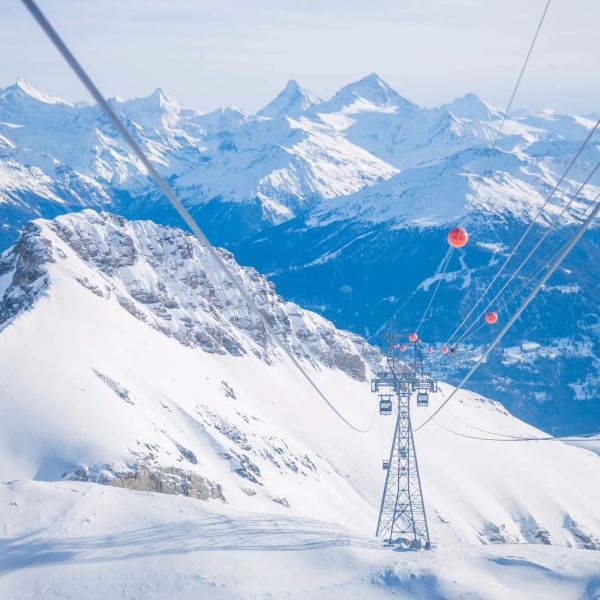
Crans-Montana 2027 World Championships President Resigns Ahead of Fraud Hearing
Less than four months out from the Crans-Montana 2027 World Championships, the man running the organising committee has stepped down. Claude-Alain Schmidhalter resigned as Swiss-Ski vice president and OC president after being indicted over a business dispute unrelated to skiing. He denies the allegations and faces court on October 27. Interim leaders are in place for the February 1-14 event.
9 Oct 2026
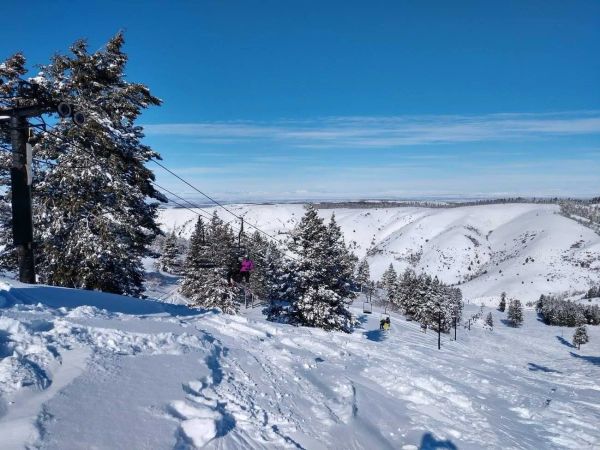
Kelly Canyon, Idaho, Adds Snowmaking, a Bigger Terrain Park and More Parking for 2026-27
Kelly Canyon had a rough 2025-26, and the Idaho resort has spent the summer making sure it doesn’t repeat. Snowmaking now reaches the top of Goldrush, the terrain park is doubling in size with a stereo system, lights and a snack shack, and the car park is getting bigger. Grooming is stepping up too. Target opening is December 4, conditions permitting.
9 Oct 2026
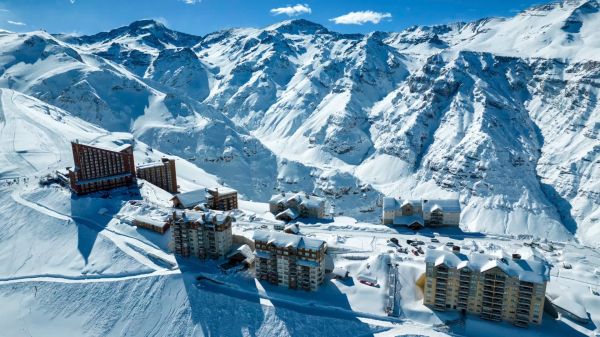
Valle Nevado Extends Season to November 8 After 108 cm in 48 Hours
Winter was meant to be winding down in Chile. Then Valle Nevado took 108 cm in 48 hours in early October, and the resort has pushed its closing date out to November 8 - its latest in 38 years of operation. That makes 143 days of skiing since opening day on June 19, with 690 cm banked for the season. Only part of the mountain is running while the storm settles, so check the mountain report before you plan a trip.
9 Oct 2026
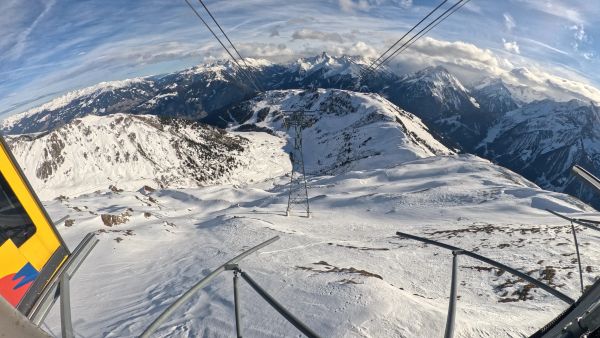
Alps Snow Forecast: Cold Front Brings Thursday Snow to the High Alps
The Alps look a lot more like winter today, for a day or so. A cold front is moving west to east, dropping up to 35 cm on high glaciers and peaks, with snow levels falling to around 1,500-1,800 m at times. Don’t plan a trip around it: mid-elevation snow will be thin and wet, every area is closed bar a limited Sölden glacier opening tomorrow, and warmer weather returns by Monday.
8 Oct 2026
California Ski Resort Opening Dates 2026-27: Mammoth Leads, Tahoe Follows
Mammoth Mountain is first up in California, targeting Friday 13 November after a dusting of September snow. Heavenly and Northstar follow on 20 November, Palisades Tahoe on Wednesday 25 November and Sugar Bowl on 27 November, with Kirkwood on 4 December and June Mountain on 19 December. Plenty of smaller areas have no date yet. A super El Niño favours the Sierra, but a warmer storm track is the catch.
7 Oct 2026
Colorado Ski Resort Opening Dates 2026-27: A-Basin and Keystone Race to Be First
Arapahoe Basin, Keystone and Winter Park are all chasing an October start, though none has a firm date yet. The first dated openers are Breckenridge and Copper on Friday 6 November, then Vail on 13 November, with most of the rest bunched around US Thanksgiving. Hesperus did not open at all last season. A super El Niño offers hope but no guarantee, and forecasters say the southern mountains have the better odds.
5 Oct 2026
Dolomiti Superski 2026-27: Four New Gondolas, New Reservoirs and an €89 Peak Day Pass
Dolomiti Superski is spending around €100 million across its 12 areas before winter. Kronplatz gets a new 10-passenger gondola with a middle station, 3 Zinnen gets Helmissimo, and Val di Fassa swaps a chairlift for a gondola above Col Valvacin. New water-storage basins and upgraded snowmaking follow, and construction has started on the San Martino to Passo Rolle link. A peak adult day pass is €89.
4 Oct 2026
Sölden Snow Report
Snow Report
Updated 11 Oct 2026
3340m
summit
+0cm
new snow · last 24 hours
Partly Cloudy-3°C / 2°C · W 18km/h
Snowfall
24 hours
0cm
48 hours
0cm
7 days
14cm
Base depth
0cm
Season total
129cm
Total lifts31
Live open status isn’t available right now.
9 Oct 2026 - 2 May 2027
Hour by Hour
Next 47 hours· Updated Oct 12, 2026 at 6:02 AM
Scroll for the full outlook · Open-Meteo
7-Day Outlook
3,340 mUpdated Oct 12, 2026 at 6:02 AMOpen-Meteo
Days 1–7
0.8cm
Days 8–14
0.0cm
Mon, Oct 12
Overcast
Temp2° / -3°°C
Snow0.0cm(3%)
Wind18 km/h W
Live snow from the resort feed; forecast from Open-Meteo, via Supabase.
Understanding the Sölden snow report
Track current conditions at Sölden in Austria. This report covers snowfall totals, base and summit depth, and the forecast across 45 runs.
Snow measurements
Base depth, summit depth, and recent snowfall are the core numbers to watch. At Sölden, summit conditions (3340m) can differ noticeably from the base, so we break both out separately rather than showing a single average.
Weather conditions
Wind and temperature swings matter as much as fresh snowfall. Cold, calm conditions hold snow quality well, while wind-loading or a warm-up can change things quickly — especially given the elevation spread between Sölden's base and summit.
Data sources
Snowfall and depth figures for Sölden come from official mountain sources; weather and outlook data comes from independent forecasting services. The mountain is served by 31 lifts, including a 8-person chairlift and 7 quad chairlifts.
When to check
Conditions can change overnight, so mornings and late afternoons are the best times to check back on Sölden.