
Zell Am See
77km of pistes above Lake Zell with 1,240m vertical drop. 100% snowmaking, ALPIN CARD access to 408km across Austria's Salzburgerland.
Season 2026 - 2027
Opens
4 Dec 2026
Closes
18 Apr 2027
Days open
135
Annual snow
3m
The Overview
Michael Fulton
Melbourne-based skier and snowboarder with 50+ resorts across 5 continents. Specialises in Australian resorts and international resort comparisons.
The Schmittenhöhe rises directly above Lake Zell, offering 77 kilometres of piste terrain served by 27 lifts between 760 and 2,000 metres elevation. The 1,240-metre vertical drop delivers five distinct valley runs, including the challenging Trass descent with gradients reaching 70 percent over its four-kilometre length. Annual snowfall averages around three metres at summit level, whilst 100 percent snowmaking coverage across all 499 snow cannons ensures reliable conditions from early December through mid-April.
Terrain splits across 30 kilometres of blue runs, 28 kilometres of red runs, and 19 kilometres of black runs - a balance that suits intermediate cruisers while offering genuine challenge for advanced skiers. The Trass and Standard descents rank among Salzburg's most demanding black runs, dropping over 900 vertical metres through steep pitches and forest glades. Seven marked freeride routes extend the offering for powder seekers, whilst Schmidolin's Dragon Park and the Kidsslope at Glocknerwiese provide dedicated learning terrain for families.
The ski area wraps around three sides of the Schmittenhöhe peak, with 23 mountain restaurants and après-ski bars distributed across the slopes. Night skiing operates twice weekly on the 1.5-kilometre floodlit Ebenbergbahn sector above Zell am See town centre. Views from the summit platform extend across more than 30 peaks exceeding 3,000 metres in the Hohe Tauern range, including the Grossglockner and Kitzsteinhorn.
The Ski ALPIN CARD links Schmittenhöhe with the Kitzsteinhorn glacier and Skicircus Saalbach Hinterglemm Leogang Fieberbrunn, creating a combined network of 408 kilometres and 121 lifts. Epic Pass holders receive five days access across the alliance. Adult day tickets cost €56 during regular season and €66 at peak periods, with season passes priced at €889. The resort suits intermediate skiers seeking varied piste terrain with glacier-skiing options nearby.
1240m
Vertical
41
Runs
77 km
Piste
3m
Annual snow
Ski Alpin
Pass
The Terrain
41 runs across 77 km of piste
Zell am See's Schmittenhöhe rises above the lake with 41 runs and 77 kilometres of piste between 760 and 2,000 metres, a 1,240-metre vertical. Beginners take 39% of the terrain and intermediates 36%, but the 20% advanced and 5% expert share is higher than most resorts of this size. Except at the very top, the front side of the mountain is wooded and mostly wide, and a hooded six-seater on Sonnkogel opened 500 metres of good skiable vertical, so intermediates have plenty of room to cruise.
The Trass, piste 14, is the classic expert run, a descent of more than four kilometres with gradients up to 70%, and the Standard descent is another demanding black that drops over 900 vertical metres through steep pitches and forest. Seven marked freeride routes give powder skiers more options, and a gondola on the back of the mountain links to Saalbach-Hinterglemm for variety. Schmittenhöhe is a compact mountain that works well for a mixed group, though advanced skiers will want to add the Saalbach link for variety.
Terrain split
41
runs
41 runs across 4 grades
Beginner16 runs · 39%
Intermediate15 runs · 36%
Advanced8 runs · 20%
Expert2 runs · 5%
Time it right
When to visit Zell Am See
The 2025-26 winter season on the Schmittenhöhe runs from 5 December 2025 to 6 April 2026, spanning approximately four months of operation. The Ski ALPIN CARD alliance extends the skiing period considerably through the Kitzsteinhorn glacier, which operates from mid-October through late May. Main lifts typically open at 8:30am, with early-bird hours from 7:30am during peak weeks in March.
Annual snowfall averages around three metres at summit elevation, with February typically recording the deepest base at approximately 135 centimetres on upper slopes. The 100 percent snowmaking coverage across all 77 kilometres of piste ensures valley runs remain skiable throughout the season, compensating for the relatively low 760-metre base elevation. January averages 16 sunny days, making it the clearest month for views across the Hohe Tauern peaks.
January and February deliver the most reliable snow conditions, with snowfall occurring approximately three days per week during these months. Mid-week skiing from Tuesday to Thursday offers quieter slopes compared to weekend crowds when family groups concentrate on the mountain. Spring conditions emerge from mid-March, with morning groomers softening by early afternoon - ideal for those preferring softer snow on the south-facing aspects.
Ski'n'Brunch events run Thursday mornings from January through March, offering early access to freshly groomed slopes followed by breakfast at summit restaurants. The Schmitten Sound music festival brings live acts and DJs to mountain venues throughout winter. Culinary Ski Days from 5-8 March 2026 feature live cooking demonstrations and regional wine tastings at on-mountain locations.
Season 2026 - 2027
4 Dec 2026
Opens
18 Apr 2027
Closes
135
Days open
3 m
Annual snow
Getting there
Getting to Zell Am See, and where to stay
Zell am See occupies a peninsula extending into Lake Zell at 750 metres elevation in the Pinzgau region of Salzburgerland, Austria. The town sits at the junction of the Kitzbühel Alps to the north and the Hohe Tauern range to the south, with the Schmittenhöhe (1,965 metres) rising directly from the lakeside. Lake Zell stretches 3.8 kilometres long and 1.5 kilometres wide, reaching depths of 69 metres - one of Europe's cleanest alpine bathing lakes.
The district capital lies 80 kilometres south of Salzburg, 100 kilometres east of Innsbruck, and just 30 kilometres north of Austria's highest peak, the Grossglockner (3,798 metres). The neighbouring village of Kaprun sits 10 kilometres south, providing access to the Kitzsteinhorn glacier. Saalfelden, the region's largest town with 20,000 residents, lies 15 kilometres north along the Salzach valley corridor.
Road access follows the A10 Tauern motorway south from Salzburg, exiting at Bischofshofen and continuing via the B311 through St Johann im Pongau. An alternative route crosses Germany via Bad Reichenhall to Lofer, then south through Saalfelden - often faster during peak season traffic. Drive time from Salzburg is approximately 90 minutes; from Munich approximately 2.5 hours; from Innsbruck around two hours via Wörgl.
Salzburg W.A. Mozart Airport lies 76 kilometres north, with direct bus service (line 260) taking approximately 1 hour 45 minutes to Zell am See via Bad Reichenhall and Saalfelden. Zell am See's train station sits in the town centre, with hourly ÖBB services from Salzburg Hauptbahnhof taking 90 minutes. Overnight guests receive the Guest Mobility Ticket providing free public transport throughout Salzburgerland, including ski buses between Zell am See and Kaprun.
Where to stay
Search all stays →Hotels and lodges near Zell Am See, powered by Stay22.
Latest News
From the SnowStash desk

Europe Ski Resorts Open Now: What Is Skiable in Mid-October 2026
Europe’s ski season is open, technically. After a record-warm summer, glaciers in Austria, Switzerland and Italy are running a few pistes apiece, Sölden, Stubai and Kitzsteinhorn started late, Titlis has pushed back to 24 October, and Zermatt reopens a few lifts on 14 October after more than two months shut. Finland’s Levi and Ruka are skiing on stored snow. Here is what is open, and what you actually get at each.
14 Oct 2026

Zermatt Plans World Cup Downhill Return on the Gornergrat for 2028
Zermatt is having another crack at a World Cup downhill, and this time nobody has to cross a border. Around 13 million Swiss francs is going into rebuilding the Gornergrat piste, including a jump fed by a roughly 300-metre in-run across the roof of the Gornergrat Railway gallery, with the Matterhorn lined up behind it for the TV cameras. First men’s race is pencilled in for March 2028, pending FIS homologation.
14 Oct 2026

Mt. Rose Begins Snowmaking for the 2026-27 Season at Lake Tahoe
Lake Tahoe’s highest base elevation is paying off early: Mt. Rose has started making snow for 2026-27 after the first flurries and a cold snap. The Nevada resort is backing it with nearly US$2 million in upgrades, including a replacement snowmaking main line, a new PistenBully groomer and restraint bars on every lift. Opening day is yet to be confirmed, though Heavenly and Northstar are already eyeing 20 November.
13 Oct 2026

Utah Ski Resorts 2026-27: What’s New at Alta, Deer Valley, Powder Mountain and More
Utah is still building flat out. For 2026-27, Powder Mountain opens a steep new Skytrac chair into more than 1,000 acres of advanced terrain, Deer Valley adds 200 acres on Hail Peak, Sundance gets a new quad and Park City adds a gondola from its new parking structure. Snowmaking is expanding almost everywhere, Eagle Point stays closed after the Cottonwood Fire, and the 2034 Games are setting the pace. Here’s what’s new, resort by resort.
13 Oct 2026

Mt Hutt Invests NZ$12 Million in Base Area, Tripling Its Sun Deck
Mt Hutt is getting busier, and its base lodge is about to catch up. NZ$12 million goes into a heated sun deck roughly three times the current size (430 m² to 1,300 m²), plus a new toilet block, heated steps down to snow level, extra storage and a new food and beverage outlet. Building starts after the 2026 season, with everything due for winter 2027.
11 Oct 2026

Vermont Ski Resort Opening Dates 2026-27: Few Dates Set, Killington Waits on the Cold
Vermont's season is slow to take shape. Stratton is tentatively targeting 18 November and Sugarbush 21 November, while Pico has Friday 11 December on the calendar. Killington never sets a date and opens when the snowmaking allows, and Vail Resorts has yet to name days for Stowe, Okemo and Mount Snow. The forecasts disagree about snow, and the main El Niño worry for the Green Mountains is warmth.
9 Oct 2026

Crans-Montana 2027 World Championships President Resigns Ahead of Fraud Hearing
Less than four months out from the Crans-Montana 2027 World Championships, the man running the organising committee has stepped down. Claude-Alain Schmidhalter resigned as Swiss-Ski vice president and OC president after being indicted over a business dispute unrelated to skiing. He denies the allegations and faces court on October 27. Interim leaders are in place for the February 1-14 event.
9 Oct 2026
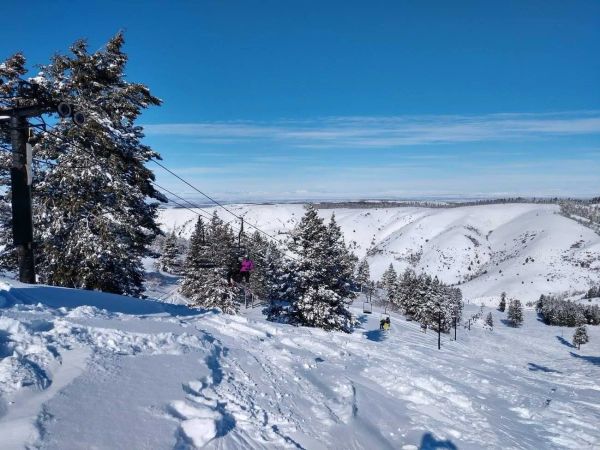
Kelly Canyon, Idaho, Adds Snowmaking, a Bigger Terrain Park and More Parking for 2026-27
Kelly Canyon had a rough 2025-26, and the Idaho resort has spent the summer making sure it doesn’t repeat. Snowmaking now reaches the top of Goldrush, the terrain park is doubling in size with a stereo system, lights and a snack shack, and the car park is getting bigger. Grooming is stepping up too. Target opening is December 4, conditions permitting.
9 Oct 2026