
The Overview
Michael Fulton
Melbourne-based skier and snowboarder with 50+ resorts across 5 continents. Specialises in Australian resorts and international resort comparisons.
Alpe d'Huez Grand Domaine is one of the largest ski areas in the French Alps, delivering 250km of marked pistes across five linked resorts — Alpe d'Huez, Auris-en-Oisans, Oz-en-Oisans, Vaujany and Villard-Reculas — spread across 10,000 hectares of skiable terrain in the Grandes Rousses massif of the Isère. The ski area spans elevations from 1,125m at the base to 3,330m at the Pic Blanc summit, producing a skiable vertical of 2,205m — one of the largest continuous vertical drops in the Alps.
The 159 runs break down as 28% beginner, 52% intermediate, 15% advanced and 5% expert, a profile that reflects Alpe d'Huez's reputation as one of the finest intermediate destinations in France, though the 17 black runs and over 50km of expert terrain ensure serious skiers are equally well served.
The resort's defining run is the Sarenne — a 16km black piste descending from the Pic Blanc glacier at 3,330m to the Gorges de Sarenne at 1,510m, widely regarded as the longest black run in Europe and covering nearly 1,830m of vertical in a single unbroken descent.
The Tunnel piste is equally iconic: a 200m cave bored directly through the mountainside that deposits skiers onto one of the steepest mogul fields in France at a 35° gradient. Alpe d'Huez has been a recognised ski destination since the 1920s and hosted bobsleigh events at the 1968 Winter Olympics, but its parallel fame as a Tour de France summit finish — first used in 1952 with Fausto Coppi and climbed regularly since 1976 — has embedded the mountain's identity in both snow sports and cycling culture in equal measure.
2205m
Vertical
159
Runs
250 km
Piste
4m
Annual snow
The Terrain
159 runs across 250 km of piste
Alpe d'Huez packs 250 kilometres of piste and 159 runs into the Grandes Rousses, dropping 2,205 metres from the 3,330 metre summit to the 1,125 metre valley floor. Sanity grades the terrain at 28% beginner, 52% intermediate, 15% advanced and 5% expert, so reds and blues carry most of the skiing while a genuine black and expert minority sits above them. Sunny, south-facing slopes above the village make for easy cruising, and a heavy lift system of gondolas, six-packs and T-bars keeps queues moving across the wider domain.
The Sarenne is the signature descent, a 16 kilometre black from the Pic Blanc that eases off to a gentle finish. Beside it, a tunnel through the ridge leads to a steep mogul field that rewards strong legs. Lac Blanc is a handy mid-mountain launch point, and the Signal de l'Homme side has quieter reds toward Villard-Reculas that suit intermediates wanting space. Beginners are well looked after near the village, while freeriders can find off-piste lines under the Pic Blanc glacier with a guide. Confident intermediates who like long vertical will get the most from it.
Terrain split
159
runs
159 runs across 4 grades
Beginner45 runs · 28%
Intermediate83 runs · 52%
Advanced24 runs · 15%
Expert8 runs · 5%
Time it right
When to visit Alpe d'Huez
Alpe d'Huez operates from mid-November through to late April, with the 2025/26 season running 10 November to 20 April — one of the earlier opening dates in the French Alps, made possible by the Pic Blanc glacier and high-altitude snowmaking infrastructure that secures coverage from the summit down from the first weeks of the season.
The resort records an average annual snowfall of around 3.8 metres, but its elevation profile and 1,071-gun snowmaking network provide consistent coverage across the full 250km domain even in low-natural-snowfall years. The current 2025/26 season has accumulated a total of 781cm with a base depth of 350cm as of early March, reflecting a strong winter in the Isère.
Alpe d'Huez is widely known as the "Island in the Sun" — a nickname rooted in the south-facing orientation of the main resort village, which averages approximately 300 sunny days per year, more than almost any other major French ski resort. This characteristic creates a distinctive seasonal rhythm: cold, firm snow on high-altitude north-facing aspects contrasting with warm, spring-condition grooming on the lower south-facing village slopes, often simultaneously.
The Sarenne glacier at Pic Blanc maintains cold, reliable snow throughout the season regardless of conditions at lower elevations, making December through April consistently productive for skiers who know how to track the mountain's aspect changes across the day. Spring skiing at Alpe d'Huez is particularly well regarded, with long daylight hours, warm base temperatures and deep upper-mountain snowpack converging through March and April.
Season 2026 - 2027
5 Dec 2026
Opens
18 Apr 2027
Closes
134
Days open
4 m
Annual snow
Getting there
Getting to Alpe d'Huez, and where to stay
Alpe d'Huez sits in the commune of Huez in the Isère department of the Auvergne-Rhône-Alpes region, 59km east of Grenoble in the central French Western Alps. The resort is accessed from the Romanche Valley via the D211 road, which climbs 1,000m in elevation across 13.8km through the famous 21 hairpin bends — the same road used by the Tour de France for its legendary Alpe d'Huez summit stages.
Grenoble itself is around one hour by road and served by regular train connections from Paris Lyon on the TGV in around two and a quarter hours, making Alpe d'Huez one of the more accessible major ski resorts in the Alps by public transport for international visitors arriving through Paris. Grenoble Airport handles limited direct flights from some UK and European destinations, while Lyon Saint-Exupéry is approximately two hours by road and offers significantly broader international connections.
The five villages that make up the Grand Domaine each offer distinct characters — the main Alpe d'Huez village is a purpose-built resort with a lively après-ski scene anchored by La Folie Douce and a dense concentration of ski-in accommodation, restaurants and bars.
Vaujany, by contrast, is a traditional mountain village of around 600 residents that grew wealthy from hydroelectric power revenues and invested heavily in a gondola and cable car infrastructure that gives it disproportionately strong lift access relative to its size. The 6-day Grand Domaine pass includes two free days at Les 2 Alpes, which is visible directly across the Romanche Valley from the Auris sector and reachable by road in around 30 minutes — an arrangement that effectively extends the week's skiing beyond the already substantial 250km home domain.
Where to stay
Search all stays →Hotels and lodges near Alpe d'Huez, powered by Stay22.
Latest News
From the SnowStash desk
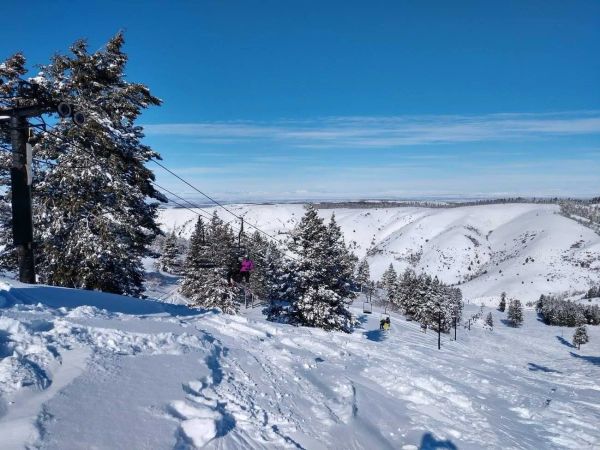
Kelly Canyon, Idaho, Adds Snowmaking, a Bigger Terrain Park and More Parking for 2026-27
Kelly Canyon had a rough 2025-26, and the Idaho resort has spent the summer making sure it doesn’t repeat. Snowmaking now reaches the top of Goldrush, the terrain park is doubling in size with a stereo system, lights and a snack shack, and the car park is getting bigger. Grooming is stepping up too. Target opening is December 4, conditions permitting.
9 Oct 2026
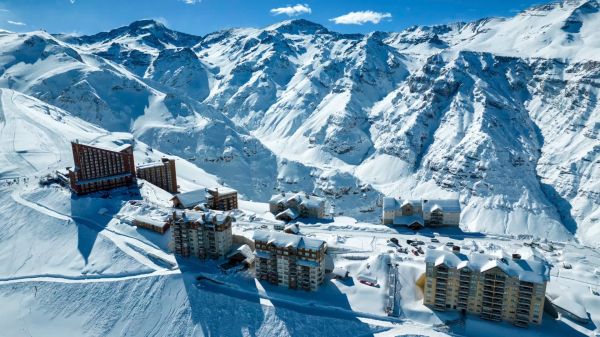
Valle Nevado Extends Season to November 8 After 108 cm in 48 Hours
Winter was meant to be winding down in Chile. Then Valle Nevado took 108 cm in 48 hours in early October, and the resort has pushed its closing date out to November 8 - its latest in 38 years of operation. That makes 143 days of skiing since opening day on June 19, with 690 cm banked for the season. Only part of the mountain is running while the storm settles, so check the mountain report before you plan a trip.
9 Oct 2026
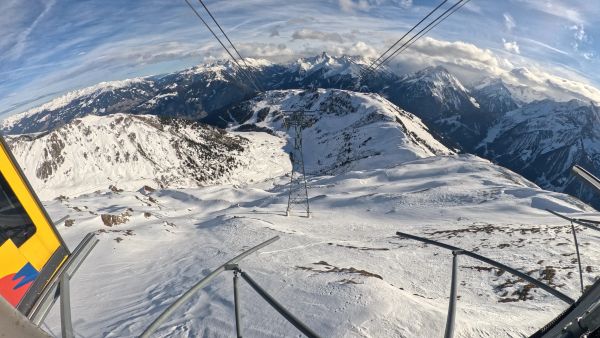
Alps Snow Forecast: Cold Front Brings Thursday Snow to the High Alps
The Alps look a lot more like winter today, for a day or so. A cold front is moving west to east, dropping up to 35 cm on high glaciers and peaks, with snow levels falling to around 1,500-1,800 m at times. Don’t plan a trip around it: mid-elevation snow will be thin and wet, every area is closed bar a limited Sölden glacier opening tomorrow, and warmer weather returns by Monday.
8 Oct 2026
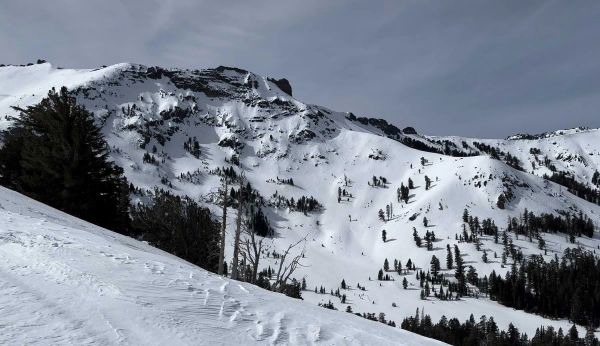
California Ski Resort Opening Dates 2026-27: Mammoth Leads, Tahoe Follows
Mammoth Mountain is first up in California, targeting Friday 13 November after a dusting of September snow. Heavenly and Northstar follow on 20 November, Palisades Tahoe on Wednesday 25 November and Sugar Bowl on 27 November, with Kirkwood on 4 December and June Mountain on 19 December. Plenty of smaller areas have no date yet. A super El Niño favours the Sierra, but a warmer storm track is the catch.
7 Oct 2026
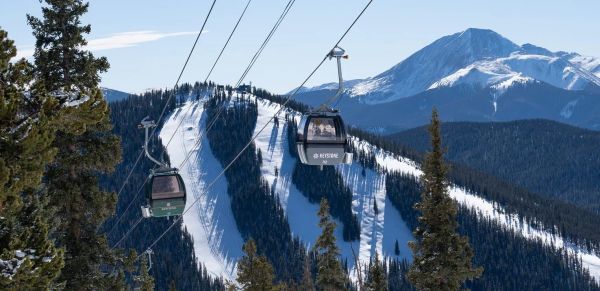
Colorado Ski Resort Opening Dates 2026-27: A-Basin and Keystone Race to Be First
Arapahoe Basin, Keystone and Winter Park are all chasing an October start, though none has a firm date yet. The first dated openers are Breckenridge and Copper on Friday 6 November, then Vail on 13 November, with most of the rest bunched around US Thanksgiving. Hesperus did not open at all last season. A super El Niño offers hope but no guarantee, and forecasters say the southern mountains have the better odds.
5 Oct 2026
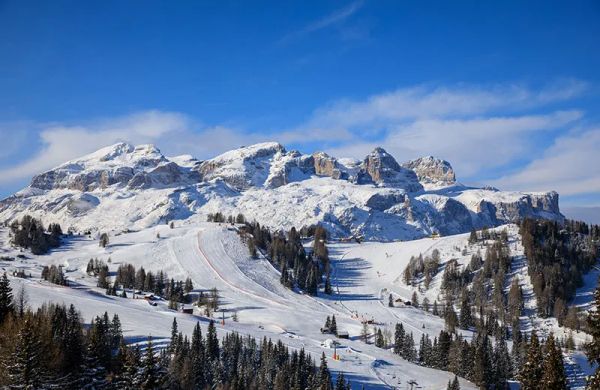
Dolomiti Superski 2026-27: Four New Gondolas, New Reservoirs and an €89 Peak Day Pass
Dolomiti Superski is spending around €100 million across its 12 areas before winter. Kronplatz gets a new 10-passenger gondola with a middle station, 3 Zinnen gets Helmissimo, and Val di Fassa swaps a chairlift for a gondola above Col Valvacin. New water-storage basins and upgraded snowmaking follow, and construction has started on the San Martino to Passo Rolle link. A peak adult day pass is €89.
4 Oct 2026
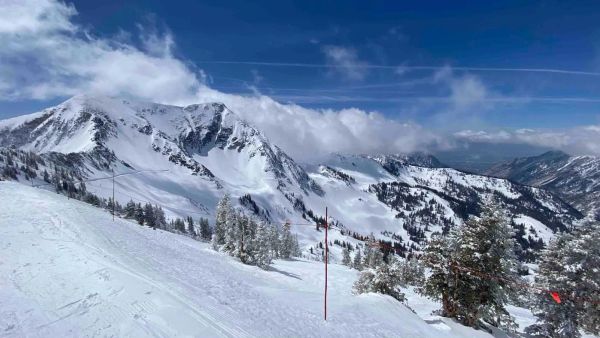
Utah Ski Resort Opening Dates 2026-27: Brian Head First, Eagle Point Out
Brian Head is targeting 6 November, though last year it aimed for 7 November and did not open until the 25th. Park City, Alta and Solitude are pencilled in for 20 November, Snowbird and Snowbasin for 27 November, and Deer Valley for 5 December. Eagle Point will stay closed after the Cottonwood Fire. A super El Niño is forecast, but the big snow is not expected until January.
4 Oct 2026
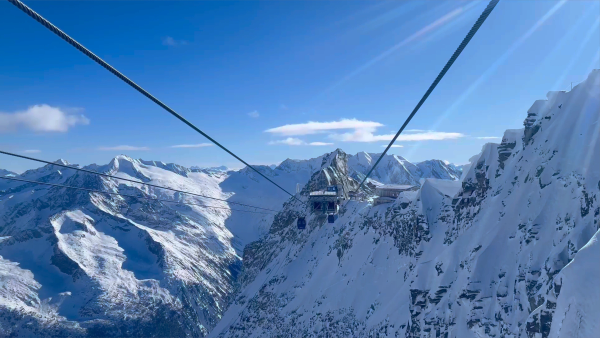
Hintertux Glacier Opens for 2026-27 With 12 Kilometres of Piste
Hintertux became Austria's second glacier to open for 2026-27 on Friday 2 October, after the Pitztal Glacier. Twelve kilometres of piste are running around the Olperer and Gefrorene Wand, served by one gondola and two drag lifts, with the Betterpark also open. Lifts officially run 8:15 am to 4:30 pm, but skiing stops at 2 pm for now.
4 Oct 2026