
The Overview
Michael Fulton
Melbourne-based skier and snowboarder with 50+ resorts across 5 continents. Specialises in Australian resorts and international resort comparisons.
La Clusaz spans 1,050 to 2,485 metres across 125 kilometres of piste spread over five interlinked massifs in the Aravis range. The ski area serves 88 runs with 49 lifts, delivering a 1,435-metre vertical drop from Col de Balme to the village base. Terrain splits 53% beginner, 33% intermediate and 14% advanced, with annual snowfall averaging 3.7 metres supplemented by 213 snow cannons across 46 kilometres. The resort shares the broader Massif des Aravis with Le Grand-Bornand via bus connection, extending the combined area to 220 kilometres for Aravis pass holders.
The five sectors—Beauregard, Manigod, Étale, Aiguille and Balme—each offer distinct character. Beauregard's sunny plateau at 1,647 metres hosts nursery slopes and blue cruisers, whilst Manigod links via gentle blues through the Croix Fry sector. Étale provides quieter mid-range reds above the village, and Aiguille serves mixed blues and reds accessed by the Crêt du Merle chairlift. Balme holds the steepest terrain, including black runs Vraille and Lapiaz, with extensive off-piste combes attracting freeriders to slopes that shaped world champion Candide Thovex.
The village sits at 1,100 metres around a historic church square, retaining Savoyard chalet architecture and a year-round population. La Clusaz's proximity to Annecy and Geneva draws weekend crowds, particularly Saturdays, though weekday skiing remains manageable. On-mountain dining focuses on traditional Savoyard fare—reblochon features prominently—with restaurants including Altitude 1647 at Beauregard summit and Chez Arthur at Crêt du Merle. The aquatic centre reopened winter 2025-26 with renovated pools offering Aravis views.
La Clusaz suits intermediate skiers seeking varied terrain and authentic village atmosphere within an hour of Geneva. The 2025-26 season runs 13 December to 26 April across 138 days. Free resort buses connect sectors and link to Le Grand-Bornand 8 kilometres away. A points-based beginner pass covers multiple lifts beyond nursery areas. The resort holds Family Plus certification and stages events including Défi Foly waterslide competition in April and Christmas spectacles through early January.
1435m
Vertical
88
Runs
125 km
Piste
7m
Annual snow
The Terrain
88 runs across 125 km of piste
La Clusaz spreads 125 kilometres of piste and 88 runs across the Aravis massif, falling 1,435 metres from 2,485 metres to the old village at 1,050 metres. More than half the terrain is beginner at 53%, with 33% intermediate and 14% advanced, and no expert runs listed. The area is divided into five linked sectors, and there are plenty of lifts, with 27 T-bars, seven quads, six gondolas and a tram. Much of the skiing runs through trees, which helps when visibility drops, and a lower base means snow quality depends on the season.
Beauregard offers gentle, wooded skiing on a sunny plateau, while Etale is usually quieter and slightly tougher. The Balme sector reaches the top of the area and holds the steeper blacks, natural gullies and a big off-piste zone that local freeriders know well. The Combe du Fernuy is a popular black-red line that leads across to Balme. Beginners will find lots of practice terrain, and intermediates can link sectors without fuss. Strong skiers should hire a guide for the freeride lines. La Clusaz suits families and groups of mixed ability who want a proper Savoyard village feel.
Terrain split
88
runs
88 runs across 4 grades
Beginner47 runs · 53%
Intermediate29 runs · 33%
Advanced12 runs · 14%
Expert0 runs · 0%
Time it right
When to visit La Clusaz
The 2025-26 season opened 13 December 2025 and closes 26 April 2026, spanning 138 operating days. Typical seasons run late December through late April, with staged openings depending on early-season snowfall. Highest sectors including Balme often open first for pre-Christmas skiing, whilst lower elevations and Manigod require deeper base depths. Full area operation generally achieves stability by Christmas week, maintaining 80-90% terrain availability through March.
Annual snowfall averages 3.7 metres at mid-mountain elevations around 1,860 metres, with north-facing Balme and Aiguille sectors holding snow better than south-facing Beauregard. The resort's 1,050-metre base elevation ranks relatively low for modern French resorts, creating vulnerability during warm spells in December and late March. Snow cannons cover 46 kilometres—roughly 37% of piste length—concentrated on lower sections and key links. Pisteurs maintain surfaces aggressively to compensate for modest natural totals, achieving 120-day average seasons despite elevation constraints.
January and February deliver optimal powder conditions, with December's second week historically the snowiest period averaging 44 centimetres. March offers longer daylight and softer snow, though freeze-thaw cycles increase on sun-exposed slopes. Late March through April suit spring skiing enthusiasts accepting variable conditions—mornings harden overnight, afternoons turn slushy. Early December and January offer quieter slopes outside French school holidays. February half-term and Christmas week bring peak crowds.
The season finale on 26 April 2026 features celebrations on Balme massif organised by pisteurs and local teams. Défi Foly waterslide competition across Lac des Confins runs mid-April, drawing national crowds. Christmas Pestacles programming entertains families 24 December through 2 January. January hosts Bélier Blanc night ski-touring races and Open Air Disco Dayz in the village square. No regular night skiing operates, though Thursday paret sled sessions ran historically between January and March.
Season 2026 - 2027
28 Nov 2026
Opens
25 Apr 2027
Closes
148
Days open
7 m
Annual snow
Getting there
Getting to La Clusaz, and where to stay
La Clusaz occupies a basin in the Aravis Valley at 1,100 metres elevation in Haute-Savoie, southeastern France. The commune sits 32 kilometres east of Annecy within the Aravis mountain range, which forms a natural barrier between Lake Annecy and the Val d'Arly towards Megève. The jagged limestone Aravis peaks create dramatic backdrops, with the village clustered around a historic church at the valley floor. Surrounding slopes hold traditional wooden chalets and small hamlets extending towards Col des Aravis pass and the Confins valley hosting Nordic trails.
Annecy lies 32 kilometres west—a 30-minute drive—serving as the nearest city with TGV rail connections to Paris, Lyon and Geneva. The lakeside town of 125,000 provides cultural diversions and airport access. Thônes, 15 kilometres northwest, offers closer services as the valley's market town. Saint-Jean-de-Sixt sits 3 kilometres away, functioning as gateway accommodation between La Clusaz and Le Grand-Bornand. The resort draws weekend crowds from Geneva 69 kilometres north and attracts Savoyard locals for its authentic character and reblochon cheese heritage.
From Geneva, take Autoroute Blanche A40 to exit 16 Bonneville, then follow signs 20 kilometres to Stations des Aravis via scenic valley roads. From Annecy, exit A41 at Annecy Nord and drive 30 kilometres through Thônes towards Aravis resorts. Peak Saturday traffic creates bottlenecks approaching the village. From Lyon 150 kilometres south, A41 northbound connects at Annecy. Parking includes three covered areas: 430 spaces at village entrance, 330 central spaces (1.8-metre height limit) and 85 spaces upper village.
Geneva Airport sits 69 kilometres away with transfers taking 50 minutes to 1 hour 15 minutes depending on traffic. Chambéry Airport lies 77 kilometres distant, Lyon Saint-Exupéry 150 kilometres. Annecy's domestic airport serves Paris flights 37 kilometres away. Annecy train station offers TGV services with 45-minute onward transfers. Altibus and Aravis Shuttle run regular bus services from Annecy to La Clusaz taking 50 minutes. Léman Express trains link Geneva to Annecy, connecting to resort buses.
Where to stay
Search all stays →Hotels and lodges near La Clusaz, powered by Stay22.
Latest News
From the SnowStash desk

Vermont Ski Resort Opening Dates 2026-27: Few Dates Set, Killington Waits on the Cold
Vermont's season is slow to take shape. Stratton is tentatively targeting 18 November and Sugarbush 21 November, while Pico has Friday 11 December on the calendar. Killington never sets a date and opens when the snowmaking allows, and Vail Resorts has yet to name days for Stowe, Okemo and Mount Snow. The forecasts disagree about snow, and the main El Niño worry for the Green Mountains is warmth.
9 Oct 2026

Crans-Montana 2027 World Championships President Resigns Ahead of Fraud Hearing
Less than four months out from the Crans-Montana 2027 World Championships, the man running the organising committee has stepped down. Claude-Alain Schmidhalter resigned as Swiss-Ski vice president and OC president after being indicted over a business dispute unrelated to skiing. He denies the allegations and faces court on October 27. Interim leaders are in place for the February 1-14 event.
9 Oct 2026

Kelly Canyon, Idaho, Adds Snowmaking, a Bigger Terrain Park and More Parking for 2026-27
Kelly Canyon had a rough 2025-26, and the Idaho resort has spent the summer making sure it doesn’t repeat. Snowmaking now reaches the top of Goldrush, the terrain park is doubling in size with a stereo system, lights and a snack shack, and the car park is getting bigger. Grooming is stepping up too. Target opening is December 4, conditions permitting.
9 Oct 2026

Valle Nevado Extends Season to November 8 After 108 cm in 48 Hours
Winter was meant to be winding down in Chile. Then Valle Nevado took 108 cm in 48 hours in early October, and the resort has pushed its closing date out to November 8 - its latest in 38 years of operation. That makes 143 days of skiing since opening day on June 19, with 690 cm banked for the season. Only part of the mountain is running while the storm settles, so check the mountain report before you plan a trip.
9 Oct 2026

Alps Snow Forecast: Cold Front Brings Thursday Snow to the High Alps
The Alps look a lot more like winter today, for a day or so. A cold front is moving west to east, dropping up to 35 cm on high glaciers and peaks, with snow levels falling to around 1,500-1,800 m at times. Don’t plan a trip around it: mid-elevation snow will be thin and wet, every area is closed bar a limited Sölden glacier opening tomorrow, and warmer weather returns by Monday.
8 Oct 2026

California Ski Resort Opening Dates 2026-27: Mammoth Leads, Tahoe Follows
Mammoth Mountain is first up in California, targeting Friday 13 November after a dusting of September snow. Heavenly and Northstar follow on 20 November, Palisades Tahoe on Wednesday 25 November and Sugar Bowl on 27 November, with Kirkwood on 4 December and June Mountain on 19 December. Plenty of smaller areas have no date yet. A super El Niño favours the Sierra, but a warmer storm track is the catch.
7 Oct 2026

Colorado Ski Resort Opening Dates 2026-27: A-Basin and Keystone Race to Be First
Arapahoe Basin, Keystone and Winter Park are all chasing an October start, though none has a firm date yet. The first dated openers are Breckenridge and Copper on Friday 6 November, then Vail on 13 November, with most of the rest bunched around US Thanksgiving. Hesperus did not open at all last season. A super El Niño offers hope but no guarantee, and forecasters say the southern mountains have the better odds.
5 Oct 2026
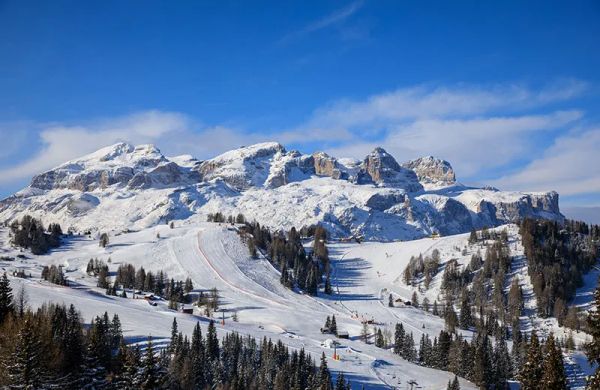
Dolomiti Superski 2026-27: Four New Gondolas, New Reservoirs and an €89 Peak Day Pass
Dolomiti Superski is spending around €100 million across its 12 areas before winter. Kronplatz gets a new 10-passenger gondola with a middle station, 3 Zinnen gets Helmissimo, and Val di Fassa swaps a chairlift for a gondola above Col Valvacin. New water-storage basins and upgraded snowmaking follow, and construction has started on the San Martino to Passo Rolle link. A peak adult day pass is €89.
4 Oct 2026
La Clusaz Snow Report
Snow Report
Updated 9 Oct 2026
2485m
summit
+0cm
new snow · last 24 hours
Clear4°C / 14°C · SE 5km/h
Snowfall
24 hours
0cm
48 hours
24cm
7 days
24cm
Base depth
0cm
Season total
24cm
Total lifts49
Live open status isn’t available right now.
28 Nov 2026 - 25 Apr 2027
Hour by Hour
Next 45 hours· Updated Oct 12, 2026 at 6:02 PM
Scroll for the full outlook · Open-Meteo
7-Day Outlook
2,485 mUpdated Oct 12, 2026 at 6:02 PMOpen-Meteo
Days 1–7
0.0cm
Days 8–14
0.0cm
Mon, Oct 12
Overcast
Temp14° / 4°°C
Snow0.0cm
Wind5 km/h SE
Live snow from the resort feed; forecast from Open-Meteo, via Supabase.
Understanding the La Clusaz snow report
Track current conditions at La Clusaz in France. This report covers snowfall totals, base and summit depth, and the forecast across 88 runs.
Snow measurements
Base depth, summit depth, and recent snowfall are the core numbers to watch. At La Clusaz, summit conditions (2485m) can differ noticeably from the base, so we break both out separately rather than showing a single average.
Weather conditions
Snow quality tracks closely with temperature and wind. We surface both alongside the snowfall data so you can judge whether conditions at La Clusaz are holding up or starting to soften.
Data sources
Snowfall and depth figures for La Clusaz come from official mountain sources; weather and outlook data comes from independent forecasting services. The mountain is served by 49 lifts, including an aerial tram and 7 quad chairlifts.
When to check
Conditions can change overnight, so mornings and late afternoons are the best times to check back on La Clusaz.