
Morzine
Morzine: 120km local trails, 22 lifts, 1,050m vertical. Traditional village accessing Portes du Soleil's 650km across France-Switzerland.
Season 2026 - 2027
Opens
28 Nov 2026
Closes
18 Apr 2027
Days open
141
Annual snow
7m
The Overview
Michael Fulton
Melbourne-based skier and snowboarder with 50+ resorts across 5 continents. Specialises in Australian resorts and international resort comparisons.
Morzine spans 950 to 2,000 metres elevation across 120 kilometres of trails and 69 marked runs within its local sector, with a vertical drop of 1,050 metres. The terrain breaks down as 52 per cent beginner, 38 per cent intermediate, 8 per cent advanced and 2 per cent expert across the Morzine-Les Gets partnership, which shares 48 lifts between the two villages. Annual snowfall averages 930 centimetres at the village's 1,000-metre base elevation, supplemented by 322 snow cannons covering 130 kilometres of piste. Morzine functions as the gateway to the Portes du Soleil, one of the world's two largest ski areas alongside Les Trois Vallées, with a single pass unlocking 650 kilometres of skiing across 12 resorts in France and Switzerland.
The local Morzine-Les Gets area offers tree-lined skiing across beginner and intermediate terrain suited to families and progression-focused skiers. Le Pléney features wide red runs including Rénard, Fouine and Abeille, plus the Olympique black and mogulled Aigle Noir. The Chamossière sector reaches 2,002 metres and includes the Les Creux black run, whilst Nyon's steep reds and off-piste access through the trees provide options when weather closes higher terrain. The longest run in the area measures 11 kilometres from top to valley, descending through varied pitch and aspect.
The village sits at the intersection of three distinct ski zones—Pléney and Les Gets to one side, Nyon and Chamossière opposite, and the Super Morzine gondola linking directly to Avoriaz and the broader Portes du Soleil circuit. Traditional wooden chalets line the river gorge, and the compact centre contains independent shops, restaurants and a weekly market. The lower elevation means spring conditions arrive earlier than at purpose-built altitude stations, but north-facing aspects and dense tree cover preserve snow through variable spells. Two gondolas depart from opposite sides of town, connected by a free shuttle train.
A Morzine-Les Gets day pass costs €35 to €49 depending on season, whilst the full Portes du Soleil pass runs €45 to €55 and grants access to Avoriaz, Châtel, Champéry, Les Crosets, Morgins and the remaining interconnected villages. Season passes start at €699 for the entire domain. The 2025-26 season runs from 6 December 2025 to 20 April 2026, with pre-opening weekends possible in late November. Morzine suits families seeking a traditional alpine base with varied terrain, intermediates wanting mileage across an enormous ski circus, and groups mixing abilities who value village atmosphere over purely high-altitude snow security.
1050m
Vertical
69
Runs
120 km
Piste
7m
Annual snow
The Terrain
69 runs across 120 km of piste
Morzine's local area totals 120 kilometres of piste across 69 runs, from the 950-metre village to 2,000 metres, a vertical of 1,050 metres. The split is 52% beginner, 38% intermediate, 8% advanced and 2% expert, so this is largely a green-and-blue skier's mountain with enough reds to graduate onto. The skiing is low and wooded, which gives shelter in poor light but less snow security late in the season. Lifts leave from both sides of town, towards Pléney on one flank and Nyon on the other, with six-packs and quads working the mid-mountain.
Pléney is the family side, with broad tree-lined runs above the village and a link across to Les Gets. Over the valley, Nyon and Chamossière are the highest and steepest sectors, with the Pas de l'Aigle viewpoint at 2,019 metres, steep reds back towards the valley and a freeride zone between the two peaks. The Chamois red weaves through the trees and joins the Liève blue on the way to the Nyon lift. Les Gets adds more woodland cruising. Morzine suits families, progressing intermediates and mixed groups, and advanced skiers will want the wider Portes du Soleil for variety.
Terrain split
69
runs
69 runs across 4 grades
Beginner36 runs · 52%
Intermediate26 runs · 38%
Advanced6 runs · 8%
Expert1 run · 2%
Time it right
When to visit Morzine
The 2025-26 season operates from 6 December 2025 to 20 April 2026, with pre-opening weekends scheduled from 14 to 19 December subject to snow cover. Typical seasons span mid-December through late April, though the 1,000-metre base elevation makes Morzine one of the lower French Alpine resorts and vulnerable to warm spells. Avoriaz at 1,800 metres and the Swiss sectors above 2,000 metres provide snow-sure alternatives when cover thins at valley level. Lift and piste opening varies through early and late season depending on conditions, with reduced terrain accessible during ramp-up and wind-down periods.
Morzine records an average of 930 centimetres of annual snowfall, benefiting from its position near the northern edge of the Alps where north-westerly moisture-laden winds deliver consistent precipitation. Avoriaz averages 750 centimetres per season and ranks among France's snowiest resorts due to high elevation and exposure to incoming weather systems. The Portes du Soleil's proximity to Lake Geneva and Mont Blanc creates a microclimate that accumulates snow naturally despite the relatively modest altitude of valley villages. Snowmaking covers 130 kilometres of piste across 322 cannons, concentrated on lower runs and key return routes to maintain coverage during marginal conditions or busy weekends.
January and February deliver peak powder conditions with the coldest temperatures and most reliable base depths, averaging 147 to 231 centimetres at upper elevations. March sees the heaviest single-week snowfalls historically, with 40 centimetres possible during active storm cycles. December and early April offer quieter slopes and lower lift pass prices, though snow reliability decreases and spring temperatures accelerate afternoon slush formation. South-facing slopes soften quickly in strong sun, whilst north-facing tree runs on Pléney and through Les Gets preserve cold snow longer into spring. Weekends see greater crowds, particularly Saturdays during French school holidays, though Morzine-Les Gets offers discounted Saturday-only rates to balance load.
The Rock des Pistes festival in March brings live bands onto the slopes and evening concerts in resort, whilst summer hosts Crankworx mountain biking and the Pass'Portes du Soleil endurance event. Night skiing does not operate in Morzine, but the Prodains cable car runs until 21:00 for pedestrian access to Avoriaz. Avalanche risk reporting covers the Chablais sector through Météo France, with daily bulletins posted at main lift stations. The resort does not permit off-piste skiing outside marked free-ride zones, concentrating wear onto patrolled terrain and simplifying snow management.
Season 2026 - 2027
28 Nov 2026
Opens
18 Apr 2027
Closes
141
Days open
7 m
Annual snow
Getting there
Getting to Morzine, and where to stay
Morzine occupies the Vallée d'Aulps in the Haute-Savoie department of the Auvergne-Rhône-Alpes region, stretching 25 kilometres from La Vernaz in the northwest to the village at 1,000 metres elevation. The commune sits within the Chablais Prealps, bordered by Switzerland's Valais canton to the east and positioned roughly midway between Mont Blanc and Lake Geneva. The village spreads across a river gorge carved by the Dranse de Morzine, surrounded by partially wooded slopes rising to approximately 2,400 metres at surrounding peaks including Pointe de Nyon and the Col de Joux Plane pass at 1,691 metres. The slate-roofed chalets and traditional Savoyard architecture reflect the town's medieval origins as a grange of Aulps Abbey, seven kilometres away.
The nearest major towns include Thonon-les-Bains at 33 kilometres—a lakeside hub on Lake Geneva with a hospital, cinema and railway station—and Cluses at 29 kilometres, which hosts TGV services and functions as a regional transport interchange. Both lie approximately 35 to 40 minutes by road from Morzine. Geneva sits 60 kilometres northwest as the closest significant city with a population approaching 200,000 in the urban core. Annecy, the Haute-Savoie department capital, lies 90 kilometres southeast. The Swiss border runs just east of Morzine, with Champéry in Valais directly accessible via lifts and the Pas de Chavanette linking French and Swiss ski sectors without passport controls.
Road access follows the D902 Route des Grandes Alpes from multiple directions. From Geneva, the A40 Autoroute Blanche runs southeast to Junction 18 at Cluses-Scionzier, 30 kilometres from Morzine, or Junction 15 for the Vallée Verte route via Thonon. Driving time from Geneva Airport averages 90 minutes under normal conditions, though snow, traffic and Saturday changeover congestion extend transfers. The D902 continues through Morzine to Avoriaz via the D338, requiring snow chains or winter tyres during active weather. Public buses connect Morzine to Thonon and Cluses, with journey times around 45 to 55 minutes depending on stops.
Geneva Airport at 80 kilometres provides the primary international gateway, offering frequent flights across Europe and a direct 90-minute transfer time by road. Chambéry Airport sits 130 kilometres south with a 100-minute drive, whilst Lyon at 205 kilometres and Grenoble at 208 kilometres serve as more distant alternatives requiring over two hours' travel. No railway station operates in Morzine itself; the nearest rail access points are Thonon-les-Bains for regional services and Cluses for TGV connections, both approximately 30 kilometres away. Shared and private transfer services run regularly from Geneva, with public bus options via Thonon requiring connections and extended journey times but offering budget-friendly alternatives to direct shuttles.
Where to stay
Search all stays →Hotels and lodges near Morzine, powered by Stay22.
Latest News
From the SnowStash desk

Europe Ski Resorts Open Now: What Is Skiable in Mid-October 2026
Europe’s ski season is open, technically. After a record-warm summer, glaciers in Austria, Switzerland and Italy are running a few pistes apiece, Sölden, Stubai and Kitzsteinhorn started late, Titlis has pushed back to 24 October, and Zermatt reopens a few lifts on 14 October after more than two months shut. Finland’s Levi and Ruka are skiing on stored snow. Here is what is open, and what you actually get at each.
14 Oct 2026

Zermatt Plans World Cup Downhill Return on the Gornergrat for 2028
Zermatt is having another crack at a World Cup downhill, and this time nobody has to cross a border. Around 13 million Swiss francs is going into rebuilding the Gornergrat piste, including a jump fed by a roughly 300-metre in-run across the roof of the Gornergrat Railway gallery, with the Matterhorn lined up behind it for the TV cameras. First men’s race is pencilled in for March 2028, pending FIS homologation.
14 Oct 2026

Mt. Rose Begins Snowmaking for the 2026-27 Season at Lake Tahoe
Lake Tahoe’s highest base elevation is paying off early: Mt. Rose has started making snow for 2026-27 after the first flurries and a cold snap. The Nevada resort is backing it with nearly US$2 million in upgrades, including a replacement snowmaking main line, a new PistenBully groomer and restraint bars on every lift. Opening day is yet to be confirmed, though Heavenly and Northstar are already eyeing 20 November.
13 Oct 2026

Utah Ski Resorts 2026-27: What’s New at Alta, Deer Valley, Powder Mountain and More
Utah is still building flat out. For 2026-27, Powder Mountain opens a steep new Skytrac chair into more than 1,000 acres of advanced terrain, Deer Valley adds 200 acres on Hail Peak, Sundance gets a new quad and Park City adds a gondola from its new parking structure. Snowmaking is expanding almost everywhere, Eagle Point stays closed after the Cottonwood Fire, and the 2034 Games are setting the pace. Here’s what’s new, resort by resort.
13 Oct 2026

Mt Hutt Invests NZ$12 Million in Base Area, Tripling Its Sun Deck
Mt Hutt is getting busier, and its base lodge is about to catch up. NZ$12 million goes into a heated sun deck roughly three times the current size (430 m² to 1,300 m²), plus a new toilet block, heated steps down to snow level, extra storage and a new food and beverage outlet. Building starts after the 2026 season, with everything due for winter 2027.
11 Oct 2026

Vermont Ski Resort Opening Dates 2026-27: Few Dates Set, Killington Waits on the Cold
Vermont's season is slow to take shape. Stratton is tentatively targeting 18 November and Sugarbush 21 November, while Pico has Friday 11 December on the calendar. Killington never sets a date and opens when the snowmaking allows, and Vail Resorts has yet to name days for Stowe, Okemo and Mount Snow. The forecasts disagree about snow, and the main El Niño worry for the Green Mountains is warmth.
9 Oct 2026
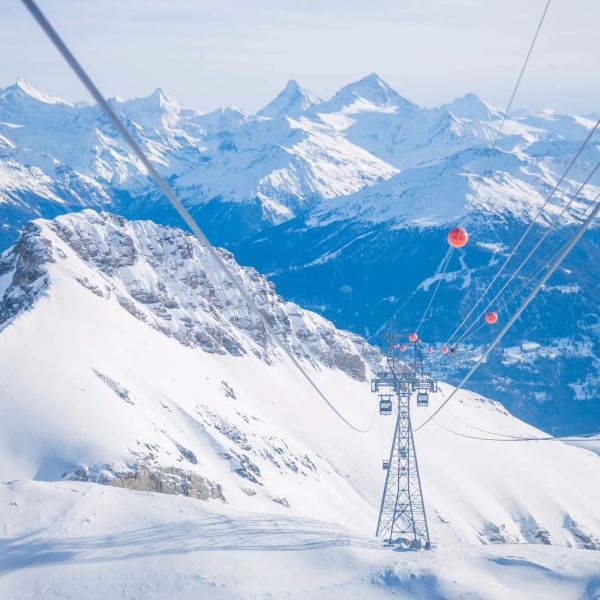
Crans-Montana 2027 World Championships President Resigns Ahead of Fraud Hearing
Less than four months out from the Crans-Montana 2027 World Championships, the man running the organising committee has stepped down. Claude-Alain Schmidhalter resigned as Swiss-Ski vice president and OC president after being indicted over a business dispute unrelated to skiing. He denies the allegations and faces court on October 27. Interim leaders are in place for the February 1-14 event.
9 Oct 2026
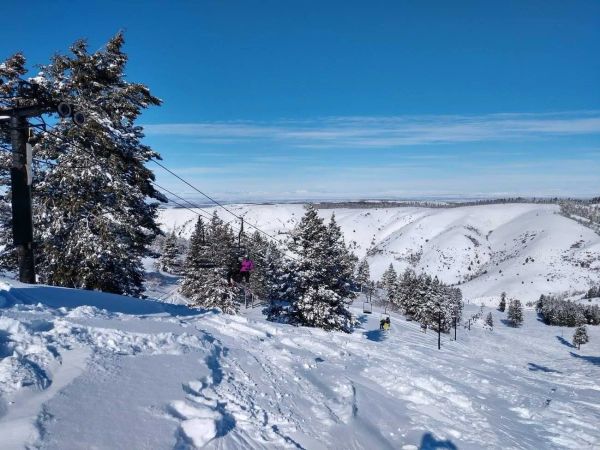
Kelly Canyon, Idaho, Adds Snowmaking, a Bigger Terrain Park and More Parking for 2026-27
Kelly Canyon had a rough 2025-26, and the Idaho resort has spent the summer making sure it doesn’t repeat. Snowmaking now reaches the top of Goldrush, the terrain park is doubling in size with a stereo system, lights and a snack shack, and the car park is getting bigger. Grooming is stepping up too. Target opening is December 4, conditions permitting.
9 Oct 2026
Morzine Lift Tickets
Morzine lift tickets & passes
Opening day for the winter 2026 - 2027 season is scheduled for Nov 28, 2026 (subject to change). Lift tickets at Morzine typically go on sale well before the start of the ski season.
Day passes start from €25, with peak rates up to €55.
11 pass options
Single-day passes
Adult 26–64
Adult Morzine-Les Gets Daily
€35up to €49 peak
Local area pass for Morzine-Les Gets with 120km of slopes. Perfect for families and beginners in France's traditional Alpine village with direct access from Pleney and Nyon.
Buy passAdult 26–64
Adult Portes du Soleil Daily
€45up to €55 peak
Full Portes du Soleil access to 600km of slopes across 12 Franco-Swiss resorts. World's largest cross-border ski area including Morzine, Avoriaz, Chatel, and Swiss stations.
Buy passChild 5–15
Child Portes du Soleil Daily
€38up to €47 peak
Children's access to Portes du Soleil ski area in France and Switzerland. Family skiing across 12 resorts with gentle learning slopes and mountain restaurants.
Buy passYouth 16–25
Youth Portes du Soleil Daily
€38up to €47 peak
Young person rates for Portes du Soleil featuring terrain parks and challenging off-piste. Explore 12 resorts across France and Switzerland with snowboard-friendly terrain.
Buy passChild 0–4
Child (Under 5)
Free
Free skiing for children under 5 at Morzine Portes du Soleil. Access to beginner areas and magic carpets in France's family-friendly international ski domain.
Buy passSenior 65–74
Senior Portes du Soleil Daily
€40up to €49 peak
Senior rates for Portes du Soleil cross-border skiing. Explore French and Swiss Alpine villages with discounted access to world's largest linked ski area.
Buy passSenior 75–99
Super Senior (75+)
Free
Free skiing for ages 75+ at Morzine Portes du Soleil. Complimentary access to 12 Franco-Swiss resorts with over 600km of interconnected slopes.
Buy passAdult 26–64
Première Glisse Beginner Pass
€25up to €30 peak
Beginner pass for Morzine Pléney or Nyon sectors. Perfect introduction to French Alpine skiing with dedicated learning slopes and gentle terrain.
Buy passMulti-day passes
Adult 26–64
6-Day Portes du Soleil
€235up to €285 peak
Six-day pass for Portes du Soleil with 20% upgrade option to full area during validity. Best value for exploring France and Switzerland's interconnected ski domain.
Buy passAdult 5–64
Family Pass Tribu (4+ People)
€200up to €240 peak
Group discount for 4+ people booking Portes du Soleil passes together. Same dates and duration required for family skiing across Franco-Swiss border.
Buy passSeason passes
Adult 26–64
Season Pass Portes du Soleil
€699
Unlimited access to Portes du Soleil all season with 15 days at partner resorts including Les 4 Vallées Verbier and Aletsch Arena. Franco-Swiss skiing freedom.
Buy passLift tickets FAQ
How much does a Morzine day pass cost?
Morzine day passes range from €25 to €55 depending on the date and advance booking.
Can I buy Morzine lift tickets online?
Yes, you can purchase tickets directly from the resort website or at the resort ticket office.
Are there discounts for multi-day passes?
Yes, multi-day packages typically offer significant savings compared to individual day passes. The per-day cost decreases with longer stays.
What is included with a Morzine lift ticket?
Full access to all lifts and trails at Morzine, including mountain safety and patrol services.
What is the difference between Morzine lift tickets and ski passes?
"Lift tickets" and "ski passes" refer to the same thing at Morzine - your access to the mountain's lifts and trails for your chosen duration.
When should I buy Morzine lift tickets for the best price?
Purchase tickets at least 7 days in advance for the best rates, and consider weekday visits for further savings over weekend rates.
Does Morzine offer group discounts on lift tickets?
Group discounts are typically available for parties of 10 or more. Contact Morzine directly for group booking information and rates.
How can I check current conditions before buying tickets?
Before purchasing, check the live snow report and mountain webcams to see current weather, snow conditions, and lift operations at Morzine.
More Morzine intelligence: snow report, webcams, resort overview.