
The Overview
Michael Fulton
Melbourne-based skier and snowboarder with 50+ resorts across 5 continents. Specialises in Australian resorts and international resort comparisons.
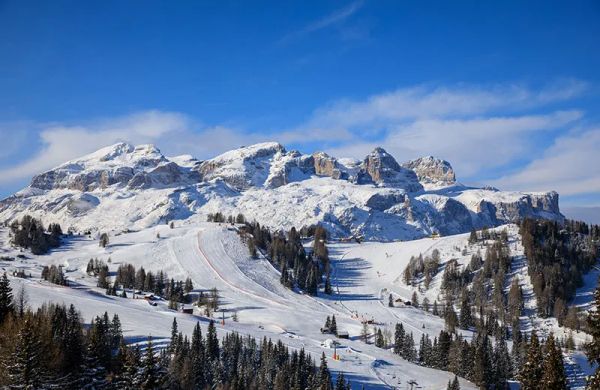
Arabba-Marmolada combines challenging terrain with spectacular Dolomite views, centred around the imposing Marmolada glacier—rising to 3,343 metres as the Dolomites' highest peak. The area delivers 63 kilometres of marked pistes with vertical drops exceeding 1,400 metres on north-facing slopes that maintain excellent snow quality.
Challenging black runs, including the demanding Fodoma descent, attract advanced skiers, while the resort's position on the Sella Ronda circuit provides access to over 500 kilometres of interconnected terrain. Arabba's remarkable scenery earned UNESCO World Heritage status, with distinctive pale limestone formations creating an extraordinary backdrop for technical skiing.
1823m
Vertical
43
Runs
63 km
Piste
4m
Annual snow
Dolomiti Superski Pass
Pass
Watch
See Arabba Marmolada in motion
The Terrain
43 runs across 63 km of piste
Arabba Marmolada has the biggest vertical in this batch, at 1,823 metres, from a 1,446-metre base up to a 3,269-metre summit on the Marmolada glacier. Sanity lists 43 runs over 63 kilometres, graded 37% beginner, 48% intermediate and 15% advanced, with no expert terrain. Despite that grading, the character is steeper than the numbers suggest, because many runs fall away on north-facing faces beneath Porta Vescovo and the Marmolada. Aerial trams, gondolas and a strong set of quad and six-seat chairs carry skiers up, and the area sits on the Sellaronda circuit.
The runs worth planning around are the black pistes above Arabba, including Fodoma, Sourasass and Variante Ornella, along with the Bellunese run from Punta Rocca on the Marmolada down to Malga Ciapela, a long glacier descent of many kilometres. Porta Vescovo gives reliable cold slopes and good cruising for intermediates. Off-piste lines exist beneath the lifts, but they need local knowledge and avalanche gear. The area suits strong intermediates, advanced skiers and anyone wanting big vertical and high-altitude skiing, and it is less suited to complete beginners.
Terrain split
43
runs
43 runs across 4 grades
Beginner16 runs · 37%
Intermediate21 runs · 48%
Advanced6 runs · 15%
Expert0 runs · 0%
Time it right
When to visit Arabba Marmolada
The Arabba winter season typically extends from early December through late April, with the high-altitude Marmolada glacier often operating into May. The area receives approximately 4 metres of annual snowfall, supplemented by extensive snowmaking on lower elevations. January and February deliver consistently cold temperatures, preserving snow quality on Arabba's predominantly north-facing slopes.
The high alpine terrain around Marmolada offers exceptional late-season skiing with stable spring snow conditions and extended daylight hours. The resort follows the Dolomiti Superski calendar, with operations beginning on northeastern slopes before expanding to fully connect with the Sella Ronda circuit by mid-December.
Season 2026 - 2027
28 Nov 2026
Opens
18 Apr 2027
Closes
141
Days open
4 m
Annual snow
Getting there
Getting to Arabba Marmolada, and where to stay
Situated in Veneto's Livinallongo del Col di Lana municipality, 100 kilometres north of Venice and 60 kilometres east of Bolzano, Arabba occupies a strategic position at the junction of four Dolomite valleys. The compact village centre sits at 1,600 metres elevation, featuring traditional Ladin architecture and mountain-focused facilities rather than extensive nightlife.
This authentic Alpine community maintains strong connections to regional culture through cuisine, language, and seasonal festivals. The resort's central location on the Sella Ronda circuit provides outstanding accessibility to neighbouring valleys, while its position beneath the Marmolada's north face ensures excellent snow preservation throughout winter.
Where to stay
Search all stays →Hotels and lodges near Arabba Marmolada, powered by Stay22.
Latest News
From the SnowStash desk

Vermont Ski Resort Opening Dates 2026-27: Few Dates Set, Killington Waits on the Cold
Vermont's season is slow to take shape. Stratton is tentatively targeting 18 November and Sugarbush 21 November, while Pico has Friday 11 December on the calendar. Killington never sets a date and opens when the snowmaking allows, and Vail Resorts has yet to name days for Stowe, Okemo and Mount Snow. The forecasts disagree about snow, and the main El Niño worry for the Green Mountains is warmth.
9 Oct 2026

Crans-Montana 2027 World Championships President Resigns Ahead of Fraud Hearing
Less than four months out from the Crans-Montana 2027 World Championships, the man running the organising committee has stepped down. Claude-Alain Schmidhalter resigned as Swiss-Ski vice president and OC president after being indicted over a business dispute unrelated to skiing. He denies the allegations and faces court on October 27. Interim leaders are in place for the February 1-14 event.
9 Oct 2026

Kelly Canyon, Idaho, Adds Snowmaking, a Bigger Terrain Park and More Parking for 2026-27
Kelly Canyon had a rough 2025-26, and the Idaho resort has spent the summer making sure it doesn’t repeat. Snowmaking now reaches the top of Goldrush, the terrain park is doubling in size with a stereo system, lights and a snack shack, and the car park is getting bigger. Grooming is stepping up too. Target opening is December 4, conditions permitting.
9 Oct 2026

Valle Nevado Extends Season to November 8 After 108 cm in 48 Hours
Winter was meant to be winding down in Chile. Then Valle Nevado took 108 cm in 48 hours in early October, and the resort has pushed its closing date out to November 8 - its latest in 38 years of operation. That makes 143 days of skiing since opening day on June 19, with 690 cm banked for the season. Only part of the mountain is running while the storm settles, so check the mountain report before you plan a trip.
9 Oct 2026

Alps Snow Forecast: Cold Front Brings Thursday Snow to the High Alps
The Alps look a lot more like winter today, for a day or so. A cold front is moving west to east, dropping up to 35 cm on high glaciers and peaks, with snow levels falling to around 1,500-1,800 m at times. Don’t plan a trip around it: mid-elevation snow will be thin and wet, every area is closed bar a limited Sölden glacier opening tomorrow, and warmer weather returns by Monday.
8 Oct 2026

California Ski Resort Opening Dates 2026-27: Mammoth Leads, Tahoe Follows
Mammoth Mountain is first up in California, targeting Friday 13 November after a dusting of September snow. Heavenly and Northstar follow on 20 November, Palisades Tahoe on Wednesday 25 November and Sugar Bowl on 27 November, with Kirkwood on 4 December and June Mountain on 19 December. Plenty of smaller areas have no date yet. A super El Niño favours the Sierra, but a warmer storm track is the catch.
7 Oct 2026

Colorado Ski Resort Opening Dates 2026-27: A-Basin and Keystone Race to Be First
Arapahoe Basin, Keystone and Winter Park are all chasing an October start, though none has a firm date yet. The first dated openers are Breckenridge and Copper on Friday 6 November, then Vail on 13 November, with most of the rest bunched around US Thanksgiving. Hesperus did not open at all last season. A super El Niño offers hope but no guarantee, and forecasters say the southern mountains have the better odds.
5 Oct 2026
Dolomiti Superski 2026-27: Four New Gondolas, New Reservoirs and an €89 Peak Day Pass
Dolomiti Superski is spending around €100 million across its 12 areas before winter. Kronplatz gets a new 10-passenger gondola with a middle station, 3 Zinnen gets Helmissimo, and Val di Fassa swaps a chairlift for a gondola above Col Valvacin. New water-storage basins and upgraded snowmaking follow, and construction has started on the San Martino to Passo Rolle link. A peak adult day pass is €89.
4 Oct 2026
Arabba Marmolada Lift System
Arabba's sophisticated lift network comprises 31 installations, highlighted by the Marmolada Cable Car rising in three stages to Punta Rocca at 3,265 metres—the highest lift-served point in the Dolomites. The system's strategic design emphasises access to challenging terrain with high-speed, detachable lifts covering key routes.
Continuous modernisation has introduced weather protection bubbles, heated seats on newer chairlifts, and expanded capacity at crucial junctions. The Porta Vescovo complex serves as a key hub, efficiently distributing skiers across the resort's varied sectors while providing essential connections to the broader Sella Ronda circuit.
29lifts across 9 types
4
Aerial Trams
4
Gondolas
1
8-Person Chair
5
6-Person Chairs
7
Quad Chairs
1
Triple Chair
3
Double Chairs
2
T-Bars
2
Surface Lifts
Arabba Marmolada lift system
Arabba Marmolada is served by 29 lifts, listed here by type. Check which lifts are turning against the live conditions before you plan your first laps - early lifts and high-speed chairs get you to the best snow fastest.
More Arabba Marmolada intelligence: trail map, snow report, webcams, resort overview.