
Boí Taüll
Ski the Pyrenees' highest resort at 2,751m. 45km of north-facing terrain in Catalonia's UNESCO-listed Vall de Boí with no crowds.
Season 2026 - 2027
Opens
5 Dec 2026
Closes
4 Apr 2027
Days open
120
Annual snow
4m
The Overview
Michael Fulton
Melbourne-based skier and snowboarder with 50+ resorts across 5 continents. Specialises in Australian resorts and international resort comparisons.
Boí Taüll holds a clear-cut claim that no other resort in the range can match — it is the highest ski resort in the Pyrenees, with a base elevation of 2,035m at Pla de les Vaques and a summit at 2,751m on Puig Falcó, making it also the highest lift-served point in the entire Catalan Pyrenees. Opened in 1988, the resort occupies the Mulleres Valley in the Vall de Boí in the Alta Ribagorça region of Lleida, offering 45km of marked pistes across 43 runs on exclusively north-facing terrain that guarantees cold, preserved snow throughout the season.
The terrain breakdown sits at 21% beginner, 48% intermediate and 31% advanced, with the majority of runs above 2,250m providing a consistently high-altitude skiing environment with virtually no low-elevation snow compromise regardless of the time of season.
The north-facing orientation combined with the high base elevation produces one of the most reliable snowpacks in Spain, with quality cold snow maintained across the full ski day even on clear, high-pressure afternoons when south-facing resorts experience significant surface deterioration. The mountain borders the Aigüestortes i Estany de Sant Maurici National Park — Catalonia's only national park — which forms an undeveloped wilderness backdrop to the ski area and contributes to the uncrowded, remote character of the resort.
Boí Taüll's bowl-shaped layout funnels all runs back to the single Pla de Vaques base, keeping the operation compact and logistics simple, with a ski school of over 90 instructors and all services consolidated at the valley station.
716m
Vertical
43
Runs
45 km
Piste
4m
Annual snow
The Terrain
43 runs across 45 km of piste
Boí Taüll is the highest ski area in the Pyrenees, with its pistes running from 2,035 metres up to 2,751 metres on Puig Falcó. The 45 kilometres of groomed slopes over 43 runs are compact rather than sprawling, and the grading leans towards the middle: 48% intermediate, 31% advanced and 21% beginner, with no expert-rated pistes. Slopes face north, which keeps the snow cold and firm well into the afternoon, and the 716-metre vertical is enough for leg-burning laps. Everything funnels back to Pla de les Vaques, so the mountain is easy to read and hard to get lost on.
The Puig Falcó chair takes you to the top of the mountain, where the views open out and the more committing reds and blacks begin. Intermediates can cruise the mid-mountain, while the advanced share gives confident skiers steeper pistes without the weekend crowds of larger Catalan resorts. Beginners have a dedicated learning area near the base. Off-piste is possible beyond the groomed runs, but access and conditions vary, so check locally first. Families, mixed-ability groups and anyone chasing reliable snow at altitude in a quiet corner of Catalonia will find it a good fit.
Terrain split
43
runs
43 runs across 4 grades
Beginner9 runs · 21%
Intermediate21 runs · 48%
Advanced13 runs · 31%
Expert0 runs · 0%
Time it right
When to visit Boí Taüll
Boí Taüll operates from early December through to mid-April, with the 2025/26 season running 5 December to 19 April. The resort's average annual snowfall of 3.6 metres is supplemented significantly by its altitude advantage — with the base already above 2,000m, natural snowfall at Boí Taüll falls as cold, dry powder rather than the wetter coastal-influenced snow that affects lower Pyrenean resorts, and it accumulates efficiently on the north-facing slopes where solar radiation throughout the day is minimal.
Snow coverage is typically strongest in December and holds well through to April due to the sustained cold at high altitude, and the resort's position near the French border draws in periodic heavy snowfall events from Atlantic weather systems tracking northeast across the range.
The Aigüestortes i Estany de Sant Maurici National Park that borders the ski area's upper perimeter creates a protected environment largely free from wind disruption, and the bowl-shaped mountain topography concentrates and preserves snowfall deposits within the Mulleres Valley ski area.
The off-piste opportunities extending beyond the marked piste network into the surrounding valleys — supported by a dedicated freeride map and a free shuttle bus that provides access to off-piste entry points — make fresh snowfall days at Boí Taüll particularly compelling for powder-oriented skiers.
The resort is also a certified UNESCO Starlight destination, recognised for exceptional night-sky visibility due to its remote location and complete absence of light pollution — a designation that reflects the degree of isolation that also keeps the slopes uncrowded.
Season 2026 - 2027
5 Dec 2026
Opens
4 Apr 2027
Closes
120
Days open
4 m
Annual snow
Getting there
Getting to Boí Taüll, and where to stay
Boí Taüll is located in the Vall de Boí, a high narrow valley in the Alta Ribagorça comarca of the province of Lleida in Catalonia, approximately 120km north of Lleida and around three to three and a half hours by road from Barcelona via the C-16 through the Cadí Tunnel. The valley sits in one of the most culturally significant areas of the Catalan Pyrenees — the Romanesque churches of the Vall de Boí were designated a UNESCO World Heritage Site in 2000, and the valley's nine 11th and 12th-century Lombard Romanesque churches, including Sant Climent de Taüll and Santa Maria de Taüll, represent the densest concentration of Romanesque architecture in Europe.
The combination of world-class skiing and UNESCO-listed medieval heritage within the same narrow valley is genuinely singular, offering visitors an itinerary that covers both powder turns and 12th-century frescoes within the same afternoon.
The nearest major airport is Lleida-Alguaire, approximately 140km from the resort, though most international visitors arrive via Barcelona El Prat, which is accessible to the valley in around three hours by car. The valley villages of Boí, Taüll, Erill la Vall and Barruera provide accommodation ranging from simple mountain refugis to comfortable hotels, with local Catalan mountain cuisine built around hearty valley traditions — xai a l'ast (spit-roasted lamb), charcuterie and robust stews.
The Caldes de Boí thermal spa complex, located within the valley at the entrance to the national park, adds a further dimension to a stay, with 37 mineral-water springs of varying temperatures and two four-star hotels operating as a traditional mountain wellness destination. The resort also sits adjacent to Aigüestortes i Estany de Sant Maurici National Park, the only national park in Catalonia and a significant summer hiking and mountaineering destination.
Where to stay
Search all stays →Hotels and lodges near Boí Taüll, powered by Stay22.
Latest News
From the SnowStash desk

Europe Ski Resorts Open Now: What Is Skiable in Mid-October 2026
Europe’s ski season is open, technically. After a record-warm summer, glaciers in Austria, Switzerland and Italy are running a few pistes apiece, Sölden, Stubai and Kitzsteinhorn started late, Titlis has pushed back to 24 October, and Zermatt reopens a few lifts on 14 October after more than two months shut. Finland’s Levi and Ruka are skiing on stored snow. Here is what is open, and what you actually get at each.
14 Oct 2026

Zermatt Plans World Cup Downhill Return on the Gornergrat for 2028
Zermatt is having another crack at a World Cup downhill, and this time nobody has to cross a border. Around 13 million Swiss francs is going into rebuilding the Gornergrat piste, including a jump fed by a roughly 300-metre in-run across the roof of the Gornergrat Railway gallery, with the Matterhorn lined up behind it for the TV cameras. First men’s race is pencilled in for March 2028, pending FIS homologation.
14 Oct 2026

Mt. Rose Begins Snowmaking for the 2026-27 Season at Lake Tahoe
Lake Tahoe’s highest base elevation is paying off early: Mt. Rose has started making snow for 2026-27 after the first flurries and a cold snap. The Nevada resort is backing it with nearly US$2 million in upgrades, including a replacement snowmaking main line, a new PistenBully groomer and restraint bars on every lift. Opening day is yet to be confirmed, though Heavenly and Northstar are already eyeing 20 November.
13 Oct 2026

Utah Ski Resorts 2026-27: What’s New at Alta, Deer Valley, Powder Mountain and More
Utah is still building flat out. For 2026-27, Powder Mountain opens a steep new Skytrac chair into more than 1,000 acres of advanced terrain, Deer Valley adds 200 acres on Hail Peak, Sundance gets a new quad and Park City adds a gondola from its new parking structure. Snowmaking is expanding almost everywhere, Eagle Point stays closed after the Cottonwood Fire, and the 2034 Games are setting the pace. Here’s what’s new, resort by resort.
13 Oct 2026

Mt Hutt Invests NZ$12 Million in Base Area, Tripling Its Sun Deck
Mt Hutt is getting busier, and its base lodge is about to catch up. NZ$12 million goes into a heated sun deck roughly three times the current size (430 m² to 1,300 m²), plus a new toilet block, heated steps down to snow level, extra storage and a new food and beverage outlet. Building starts after the 2026 season, with everything due for winter 2027.
11 Oct 2026

Vermont Ski Resort Opening Dates 2026-27: Few Dates Set, Killington Waits on the Cold
Vermont's season is slow to take shape. Stratton is tentatively targeting 18 November and Sugarbush 21 November, while Pico has Friday 11 December on the calendar. Killington never sets a date and opens when the snowmaking allows, and Vail Resorts has yet to name days for Stowe, Okemo and Mount Snow. The forecasts disagree about snow, and the main El Niño worry for the Green Mountains is warmth.
9 Oct 2026
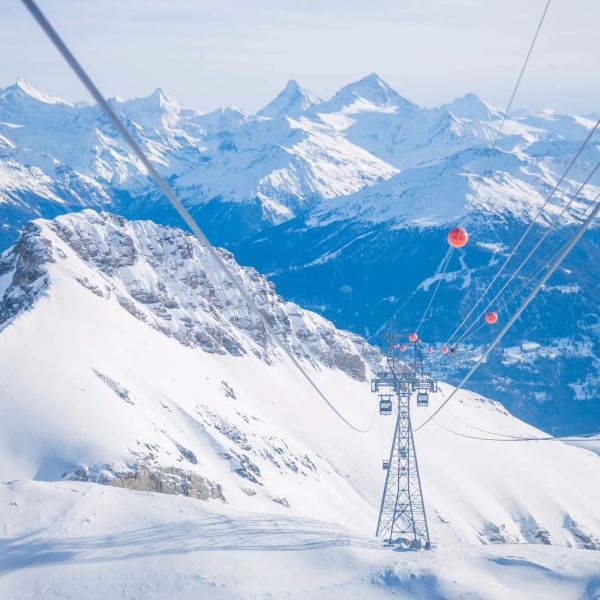
Crans-Montana 2027 World Championships President Resigns Ahead of Fraud Hearing
Less than four months out from the Crans-Montana 2027 World Championships, the man running the organising committee has stepped down. Claude-Alain Schmidhalter resigned as Swiss-Ski vice president and OC president after being indicted over a business dispute unrelated to skiing. He denies the allegations and faces court on October 27. Interim leaders are in place for the February 1-14 event.
9 Oct 2026
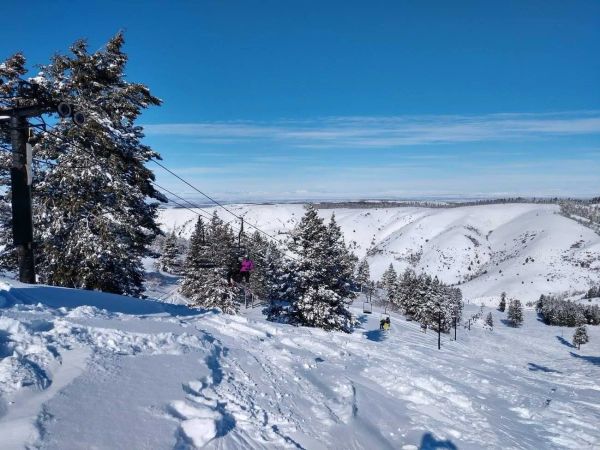
Kelly Canyon, Idaho, Adds Snowmaking, a Bigger Terrain Park and More Parking for 2026-27
Kelly Canyon had a rough 2025-26, and the Idaho resort has spent the summer making sure it doesn’t repeat. Snowmaking now reaches the top of Goldrush, the terrain park is doubling in size with a stereo system, lights and a snack shack, and the car park is getting bigger. Grooming is stepping up too. Target opening is December 4, conditions permitting.
9 Oct 2026
Boí Taüll Lift System
Boí Taüll's lift network comprises 11 installations serving the Mulleres Valley, including four quad chairlifts, one triple chair, three surface lifts and three T-bars across the upper mountain. From the Pla de Vaques base at 2,035m, the chairlift network fans out across the mountain face, with the Puig Falcó chair reaching the 2,751m summit — the highest chairlift in the Catalan Pyrenees.
The compact lift layout reflects the resort's single-valley configuration, with all installations converging at the base and the upper mountain accessed through a logical progression of chairs that distribute skiers efficiently across the north-facing terrain above 2,250m.
Queue times at Boí Taüll are consistently among the shortest of any ski resort in the Spanish Pyrenees, a direct result of the resort's relatively small visitor numbers compared to its terrain capacity. The absence of crowds is one of the resort's defining characteristics — skiers accustomed to weekend bottlenecks at larger Pyrenean stations routinely find the Boí Taüll lift system operating at well below capacity even on peak days.
A free ski bus service picks up from points in the Vall de Moró and Vall de Ginebrel at hourly intervals, providing resort access for visitors staying in the valley villages below and extending the effective catchment of the mountain beyond the immediate base area.
11lifts across 4 types
4
Quad Chairs
1
Triple Chair
3
T-Bars
3
Surface Lifts
Boí Taüll lift system
Boí Taüll is served by 11 lifts, listed here by type. Check which lifts are turning against the live conditions before you plan your first laps - early lifts and high-speed chairs get you to the best snow fastest.
More Boí Taüll intelligence: trail map, snow report, webcams, resort overview.