
Aletsch Arena
104km skiing across 3 car-free villages. 1,024m vertical, UNESCO glacier views, 32 lifts. South-facing Valais plateau.
Season 2026 - 2027
Opens
5 Dec 2026
Closes
3 Apr 2027
Days open
119
Annual snow
4m
The Overview
Michael Fulton
Melbourne-based skier and snowboarder with 50+ resorts across 5 continents. Specialises in Australian resorts and international resort comparisons.
The Aletsch Arena connects three car-free villages - Riederalp, Bettmeralp, and Fiescheralp - across 104 kilometres of pistes spanning 1,845 to 2,869 metres elevation with 1,024 metres of vertical drop. The ski area operates 32 lifts serving 97 runs, distributed 40% beginner, 48% intermediate, and 12% advanced terrain, with all skiing positioned above 2,000 metres for reliable snow conditions. The resort sits within the UNESCO Swiss Alps Jungfrau-Aletsch World Heritage Site, offering direct views of the Great Aletsch Glacier, the largest glacier in the Alps at 23 kilometres long, and 40 surrounding four-thousand-metre peaks including the Matterhorn.
Terrain spreads across the three plateau villages with varied character - Riederalp and Bettmeralp deliver gentle blues and cruising reds suited to families and early intermediates, whilst Fiescheralp provides steeper terrain and access to the 2,869-metre Eggishorn summit with its signature black run. The ski area includes 15 kilometres of marked freeride routes, three snow parks, and the Glacier Panorama Tour, a signposted circuit linking viewpoints at Moosfluh (2,333 metres), Bettmerhorn (2,647 metres), Hohfluh (2,227 metres), and Eggishorn. More than 70% of pistes feature snowmaking coverage with over 250 snow cannons supporting natural snowfall that averages 4.3 metres annually.
The car-free plateau creates a relaxed, family-oriented atmosphere with ski-in/ski-out access throughout all three villages, accessible only via cable car from valley stations at Mörel, Betten, and Fiesch. The resort attracts fewer crowds than major Valais neighbours, maintains uncrowded pistes, and offers approximately 300 days of sunshine yearly on south-facing slopes. Night skiing operates on Tuesdays at Blausee chairlift and Riederalp training lifts, with floodlit runs until 21:00.
For 2025/2026, the new AlpsPass season pass (CHF 949 for adults, CHF 299 for youth, CHF 199 for children in advance sale) replaces the Aletsch-only pass and grants unlimited access to Aletsch Arena, Jungfrau Ski Region, Engelberg-Titlis, and Adelboden-Lenk, plus bonus days at Davos Klosters, Arosa Lenzerheide, LAAX, Portes du Soleil, and 4 Vallées. The 2025/2026 season runs 30 November to 21 April, with day passes priced dynamically from CHF 53 to CHF 83. The resort suits families, intermediate cruisers, and skiers prioritising scenic beauty and value over extensive challenging terrain.
1024m
Vertical
97
Runs
104 km
Piste
4m
Annual snow
The Terrain
97 runs across 104 km of piste
Three car-free villages share a sunny Valais terrace at Aletsch Arena, where open, treeless slopes run beneath 104 kilometres of piste and 97 runs. The skiing covers 1,024 metres of vertical between 1,845 and 2,869 metres, graded 40% beginner, 48% intermediate and 12% advanced, with no expert pistes. Because everything sits high and above the treeline, visibility is good and the slopes feel wide and uncluttered. Snow holds up well at this altitude, and the terrain is built around easy cruising and scenery rather than technical challenge, with a lift network that moves people around the plateau without fuss.
The viewpoints at Moosfluh, Hohfluh, Bettmerhorn and Eggishorn look straight onto the Great Aletsch Glacier, the longest ice stream in the Alps, and the Glacier Panorama routes between them are the signature way to cover the area. Black runs sit at Eggishorn and Bettmerhorn, and Eggishorn also has short, steep freeride variants for those carrying avalanche gear and local advice. Riederalp and Bettmeralp are easygoing for families and early intermediates. Experts will find the slopes tame after a day or two and may want a bigger, steeper neighbour for variety.
Terrain split
97
runs
97 runs across 4 grades
Beginner39 runs · 40%
Intermediate47 runs · 48%
Advanced12 runs · 12%
Expert0 runs · 0%
Time it right
When to visit Aletsch Arena
The 2025/2026 season operates from 30 November 2025 to 21 April 2026, delivering a nearly five-month window typical of high-altitude Swiss resorts, with potential extensions into October and May when snow conditions permit. All terrain sits above 1,845 metres with most skiing concentrated above 2,000 metres, providing natural snow security throughout the December-to-April core period. The south-facing orientation captures exceptional sunshine - approximately 300 days annually - whilst higher elevations and north-facing aspects preserve snow quality.
Annual snowfall averages 4.3 metres with natural accumulation supplemented by extensive snowmaking across more than 70% of pistes using over 250 cannons, ensuring coverage reliability from early season through spring. March typically delivers peak snow depth, averaging 168 centimetres at summit elevation and 104 centimetres at base. The elevated plateau position creates consistent conditions less affected by valley inversions, and the resort reports 65 sunny days on average per season. Current season statistics show 194 centimetres base depth, 66 centimetres in the past seven days, and 382 centimetres season total as of 21 May 2026.
January through March represents optimal skiing with excellent snow coverage, quieter slopes outside school holiday weeks, and reliable weather patterns. January particularly offers insider value with lower crowds than festive periods and February half-term holidays whilst maintaining excellent conditions. December and early April provide reliable skiing with longer daylight in spring, though March historically delivers the deepest snowpack. The resort advises booking ski passes early for dynamic pricing advantages, with prices ranging CHF 53 to CHF 83 for single-day tickets depending on booking timing.
The events calendar includes the Aletsch Half-Marathon running through the UNESCO World Heritage landscape, various family-oriented programmes, and weekly night skiing on Tuesdays at Blausee and Riederalp sectors until 21:00. The Glacier Panorama Tour and Gletschi Tour provide structured ski circuits throughout winter. The resort offers "Ski for free" promotions every Saturday for children and teens under 16, and First Track Bettmerhorn early-morning sessions on freshly groomed pistes. No major terrain park or competition events feature prominently in the calendar.
Season 2026 - 2027
5 Dec 2026
Opens
3 Apr 2027
Closes
119
Days open
4 m
Annual snow
Getting there
Getting to Aletsch Arena , and where to stay
Aletsch Arena occupies a south-facing plateau high above the Rhône Valley in Valais canton, southern Switzerland, with base villages at 1,845 to 2,212 metres elevation. The resort sits within the UNESCO Swiss Alps Jungfrau-Aletsch World Heritage Site, immediately adjacent to the Great Aletsch Glacier flowing 23 kilometres from the Jungfrau massif. The three car-free villages - Riederalp, Bettmeralp, and Fiescheralp - perch on the sunny terrace above the valley floor, surrounded by 40 four-thousand-metre peaks including views extending to the Matterhorn, Eiger, Mönch, and Jungfrau.
The nearest valley towns are Mörel, Betten, and Fiesch (all below 700 metres elevation) in the Goms district of eastern Valais, accessible via direct rail from the regional hub of Brig 15 to 25 minutes west. Brig serves as the primary transport interchange, positioned at the junction of the Simplon Pass route to Italy and the Lötschberg corridor to Bern. The valley communities offer parking, accommodation alternatives, and direct cable car access to the plateau villages via short seven-to-ten-minute ascents.
Road access follows the A9/E62 motorway running the length of the upper Rhône Valley from Geneva and Lausanne in the west or via the Simplon Pass from Milan in the south. From Zurich, the 160-kilometre journey requires three to three-and-a-half hours via the Furka car-loading train from Andermatt, as no through road crosses the Alps at this latitude. From Bern, the journey extends to nearly two-and-a-half hours via the Lötschberg car-loading train from Kandersteg. Geneva lies approximately 210 kilometres distant via the A9, requiring two-and-a-half hours' drive.
Zurich Airport sits 135 kilometres northeast with three-hour train connections via Bern, whilst Geneva Airport lies 210 kilometres west with direct trains to Brig taking two hours 40 minutes. Milan Malpensa Airport in Italy offers an alternative 156 kilometres south, approximately two hours' drive via the Simplon Pass. Hourly Swiss Federal Railways services connect Geneva and Zurich airports directly to Brig, where local trains continue to Mörel, Betten, or Fiesch stations adjacent to cable car valley terminals. The integrated Fiesch transport hub opened 2019/2020 combines train, bus, and gondola access in a single barrier-free facility.
Where to stay
Search all stays →Hotels and lodges near Aletsch Arena , powered by Stay22.
Latest News
From the SnowStash desk

Vermont Ski Resort Opening Dates 2026-27: Few Dates Set, Killington Waits on the Cold
Vermont's season is slow to take shape. Stratton is tentatively targeting 18 November and Sugarbush 21 November, while Pico has Friday 11 December on the calendar. Killington never sets a date and opens when the snowmaking allows, and Vail Resorts has yet to name days for Stowe, Okemo and Mount Snow. The forecasts disagree about snow, and the main El Niño worry for the Green Mountains is warmth.
9 Oct 2026
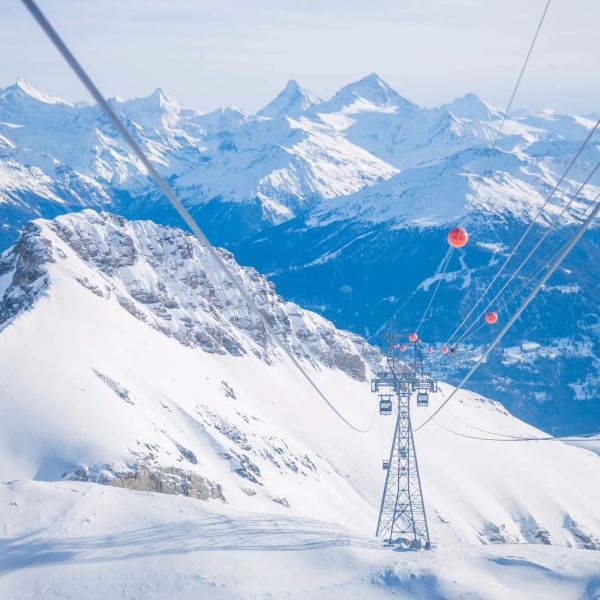
Crans-Montana 2027 World Championships President Resigns Ahead of Fraud Hearing
Less than four months out from the Crans-Montana 2027 World Championships, the man running the organising committee has stepped down. Claude-Alain Schmidhalter resigned as Swiss-Ski vice president and OC president after being indicted over a business dispute unrelated to skiing. He denies the allegations and faces court on October 27. Interim leaders are in place for the February 1-14 event.
9 Oct 2026
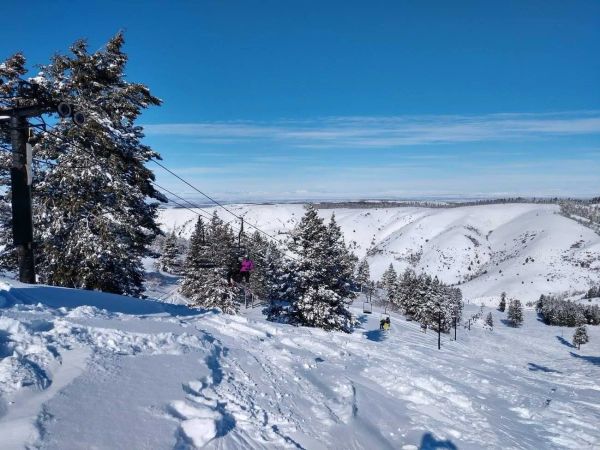
Kelly Canyon, Idaho, Adds Snowmaking, a Bigger Terrain Park and More Parking for 2026-27
Kelly Canyon had a rough 2025-26, and the Idaho resort has spent the summer making sure it doesn’t repeat. Snowmaking now reaches the top of Goldrush, the terrain park is doubling in size with a stereo system, lights and a snack shack, and the car park is getting bigger. Grooming is stepping up too. Target opening is December 4, conditions permitting.
9 Oct 2026
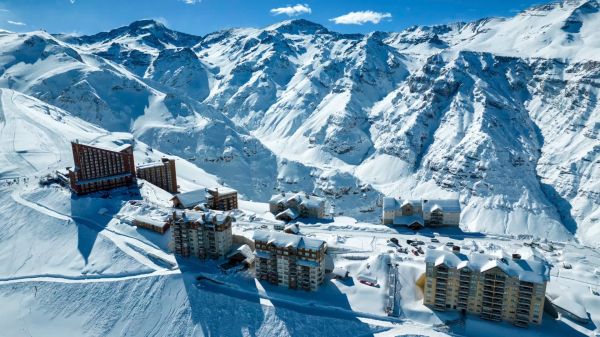
Valle Nevado Extends Season to November 8 After 108 cm in 48 Hours
Winter was meant to be winding down in Chile. Then Valle Nevado took 108 cm in 48 hours in early October, and the resort has pushed its closing date out to November 8 - its latest in 38 years of operation. That makes 143 days of skiing since opening day on June 19, with 690 cm banked for the season. Only part of the mountain is running while the storm settles, so check the mountain report before you plan a trip.
9 Oct 2026
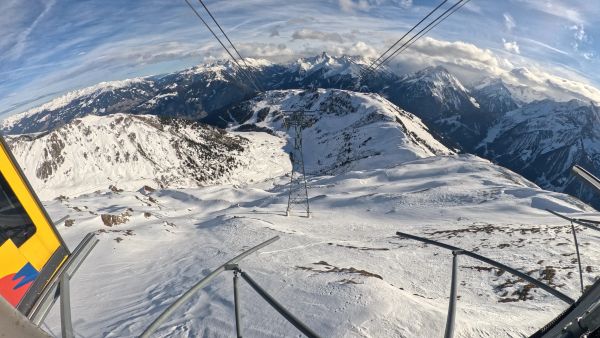
Alps Snow Forecast: Cold Front Brings Thursday Snow to the High Alps
The Alps look a lot more like winter today, for a day or so. A cold front is moving west to east, dropping up to 35 cm on high glaciers and peaks, with snow levels falling to around 1,500-1,800 m at times. Don’t plan a trip around it: mid-elevation snow will be thin and wet, every area is closed bar a limited Sölden glacier opening tomorrow, and warmer weather returns by Monday.
8 Oct 2026
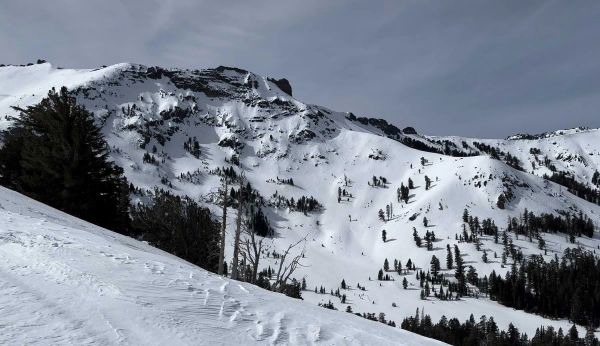
California Ski Resort Opening Dates 2026-27: Mammoth Leads, Tahoe Follows
Mammoth Mountain is first up in California, targeting Friday 13 November after a dusting of September snow. Heavenly and Northstar follow on 20 November, Palisades Tahoe on Wednesday 25 November and Sugar Bowl on 27 November, with Kirkwood on 4 December and June Mountain on 19 December. Plenty of smaller areas have no date yet. A super El Niño favours the Sierra, but a warmer storm track is the catch.
7 Oct 2026
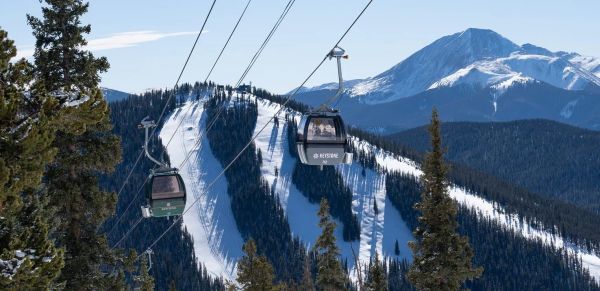
Colorado Ski Resort Opening Dates 2026-27: A-Basin and Keystone Race to Be First
Arapahoe Basin, Keystone and Winter Park are all chasing an October start, though none has a firm date yet. The first dated openers are Breckenridge and Copper on Friday 6 November, then Vail on 13 November, with most of the rest bunched around US Thanksgiving. Hesperus did not open at all last season. A super El Niño offers hope but no guarantee, and forecasters say the southern mountains have the better odds.
5 Oct 2026
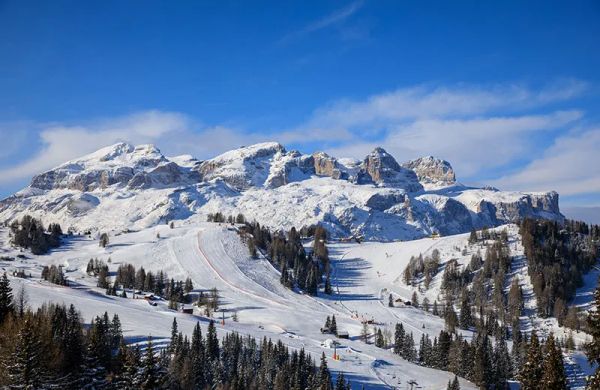
Dolomiti Superski 2026-27: Four New Gondolas, New Reservoirs and an €89 Peak Day Pass
Dolomiti Superski is spending around €100 million across its 12 areas before winter. Kronplatz gets a new 10-passenger gondola with a middle station, 3 Zinnen gets Helmissimo, and Val di Fassa swaps a chairlift for a gondola above Col Valvacin. New water-storage basins and upgraded snowmaking follow, and construction has started on the San Martino to Passo Rolle link. A peak adult day pass is €89.
4 Oct 2026
Aletsch Arena Snow Report
Snow Report
Updated 9 Oct 2026
2869m
summit
+1cm
new snow · last 24 hours
Clear3°C / 8°C · SW 10km/h
Snowfall
24 hours
1cm
48 hours
18cm
7 days
19cm
Base depth
0cm
Season total
34cm
Total lifts32
Live open status isn’t available right now.
5 Dec 2026 - 3 Apr 2027
Hour by Hour
Next 41 hours· Updated Oct 12, 2026 at 6:02 PM
Scroll for the full outlook · Open-Meteo
7-Day Outlook
2,869 mUpdated Oct 12, 2026 at 6:02 PMOpen-Meteo
Days 1–7
0.0cm
Days 8–14
0.0cm
Tue, Oct 13
Slight Rain Showers
Temp8° / 3°°C
Snow0.0cm(3%)
Wind10 km/h SW
Live snow from the resort feed; forecast from Open-Meteo, via Supabase.
Understanding the Aletsch Arena snow report
See what's happening on the mountain at Aletsch Arena right now — snowfall, snow depth, and weather data to help you plan your day in Switzerland.
Snow measurements
Base depth, summit depth, and recent snowfall are the core numbers to watch. At Aletsch Arena , summit conditions (2869m) can differ noticeably from the base, so we break both out separately rather than showing a single average.
Weather conditions
Snow quality tracks closely with temperature and wind. We surface both alongside the snowfall data so you can judge whether conditions at Aletsch Arena are holding up or starting to soften.
Data sources
We pull Aletsch Arena 's conditions from on-the-ground mountain reporting, then layer in forecast data so you get a fuller picture than either source alone. The mountain is served by 32 lifts, including 5 aerial trams and 2 8-person chairlifts.
When to check
The biggest swings usually happen right after a storm. Check Aletsch Arena 's report in the morning for the freshest numbers, and again in the afternoon as conditions evolve.