
Blatten Belalp
1,796m vertical drop, 38.5km of pistes facing the Aletsch Glacier. Magic Pass access, uncrowded slopes, Switzerland.
Season 2026 - 2027
Opens
12 Dec 2026
Closes
11 Apr 2027
Days open
120
Annual snow
4m
The Overview
Michael Fulton
Melbourne-based skier and snowboarder with 50+ resorts across 5 continents. Specialises in Australian resorts and international resort comparisons.
Blatten Belalp spans 1,322 to 3,118 metres across the Upper Valais, delivering 1,796 metres of vertical drop and 38.5 kilometres of piste across 31 marked runs. The terrain splits 39 per cent beginner, 31 per cent intermediate, and 30 per cent advanced, with south-facing slopes positioned directly opposite the Aletsch Glacier, a 23-kilometre ice flow forming the centrepiece of the UNESCO World Heritage Site. Annual snowfall averages 4.3 metres, whilst the resort's inclusion in the Magic Pass network grants access to over 90 ski areas across Switzerland, France and Italy from May 2025.
The ski area divides between gentle rolling terrain above 2,000 metres suited to families and the Hohstock sector at 3,118 metres, accessed via a uniquely engineered T-bar that changes direction twice and remains the last of its kind in Switzerland. The Hohstock T-bar, opened in 1982, climbs 459 vertical metres from Hohbiel at 2,654 metres and accesses black pistes including the Hülsen, which forms the race course for the annual Hexenabfahrt in January. A 150-metre ski tunnel built in 1984 cuts through the mountain massif to the Tunnel Westseite run and freeride zones on the Unterbäch side.
The car-free hamlet of Belalp at 2,094 metres offers ski-in ski-out accommodation without road traffic, creating a quieter atmosphere than larger Valais resorts. Hexenland, positioned at the gondola top station, provides a free 40,000-square-metre beginner area with themed witch features and four conveyor lifts, earning recognition as best children's area from Skiresort.de in 2023. Views from the slopes extend to the Matterhorn, Dom, and Weisshorn, with 14 four-thousand-metre peaks visible from the summit, whilst a 9.9-kilometre toboggan run descends from Belalp to Blatten.
Magic Pass inclusion from May 2025 positions Belalp within a network covering major Swiss resorts including Saas-Fee, Grimentz-Zinal and Glacier 3000. The 2025-26 season runs 14 December to 6 April, typical for the region's elevation and snow reliability. Day passes range from 55 to 75 Swiss francs depending on booking timing and season, with the resort's dynamic pricing rewarding advance purchase. The resort suits families seeking uncrowded intermediate terrain, beginners using Hexenland facilities, and powder seekers accessing Hohstock freeride zones on storm days.
1796m
Vertical
31
Runs
38.5 km
Piste
4m
Annual snow
The Terrain
31 runs across 38.5 km of piste
Few ski areas pack as much drop into so little piste as Blatten Belalp, which climbs from 1,322 to 3,118 metres for 1,796 metres of vertical on just 38.5 kilometres of piste across 31 runs. The grading reflects that vertical: 39% beginner, 31% intermediate and a notable 30% advanced, with no expert pistes. Lower and mid-mountain slopes are rolling and forgiving, but the upper sector gets properly steep. The south-facing slopes look directly across to the Aletsch Glacier, which makes an impressive backdrop, and the quieter, car-free feel of Belalp suits skiers who dislike crowds.
The Hohstock T-bar is the feature skiers remember, a 1982 lift that changes direction twice on its way towards the summit and serves black pistes such as the Hülsen, the course for the January Hexenabfahrt race. A 150-metre ski tunnel built in 1984 leads to the Tunnel Westseite run and freeride terrain on the Unterbäch side, where guidance and avalanche kit are essential. The Sparrhorn chairlift opens the long groomed runs, and the Hexenland beginner area at the gondola top suits young children. Strong skiers, families and anyone chasing steeper lines will find plenty to like.
Terrain split
31
runs
31 runs across 4 grades
Beginner12 runs · 39%
Intermediate10 runs · 31%
Advanced9 runs · 30%
Expert0 runs · 0%
Time it right
When to visit Blatten Belalp
The 2025-26 season operates 14 December 2025 to 6 April 2026, spanning 114 days across the core winter period. Opening dates align with early December snowfall typical of elevations above 2,000 metres in the Upper Valais, whilst April closure reflects spring conditions and declining visitor numbers rather than snow scarcity. The resort opened its first cableway in 1953, initially for summer transport, with winter operations expanding through subsequent decades as tourism infrastructure developed on the car-free Belalp plateau.
Annual snowfall averages 4.3 metres, with the 2025-26 season recording 382 centimetres through mid-May and 66 centimetres in the most recent seven-day period. Base depth reached 207 centimetres in spring 2026, demonstrating the accumulation potential at altitudes where most terrain sits above 2,000 metres. The south and southwest-facing slope orientation receives abundant sunshine during clear periods, creating excellent visibility for the glacier panorama, whilst cold air flowing off the Aletsch ice sheet helps preserve snow quality despite the solar exposure. Modern snowmaking supplements natural precipitation on key sectors connecting high-mountain terrain to village returns.
January through March delivers the most consistent conditions, with January hosting the Belalp Hexe witch race festival, a week-long event culminating in the 12-kilometre Hexenabfahrt from Hohstock to Blatten on the third Saturday. First held in 1983 and inspired by Mürren's Inferno race, the Hexenabfahrt forms part of the Super Three cup alongside Saas-Fee's Mittelallalin descent. February and early March offer reliable powder potential without January's event crowds, whilst late March and April provide corn snow conditions under extended daylight hours, though the Hohstock T-bar may close earlier due to scree exposure.
Nine lifts and 30 trails operated during the 2025-26 season's mid-winter peak, with the upper Hohstock and Sparrhorngrat T-bars opening dependent on accumulated snowpack over scree fields. Night skiing does not feature in the programme, with lift operations concluding at standard afternoon closing times. The Mini-Maxi race for children precedes the main Hexenabfahrt by one week, whilst Witch's Night events on race-week Friday and Saturday evenings feature live music and traditional Valais fare, drawing participants and spectators to fondue chalets and mountain restaurants throughout the car-free village.
Season 2026 - 2027
12 Dec 2026
Opens
11 Apr 2027
Closes
120
Days open
4 m
Annual snow
Getting there
Getting to Blatten Belalp, and where to stay
Blatten Belalp occupies natural terraces above the Rhône Valley in the Upper Valais, 10 kilometres north of the transport hub of Brig in southwestern Switzerland. The base village of Blatten bei Naters sits at 1,322 metres, with the car-free hamlet of Belalp positioned at 2,094 metres directly facing the Aletsch Glacier, the Alps' longest ice flow at 23 kilometres and centrepiece of the UNESCO World Heritage Jungfrau-Aletsch protected area. The location places Belalp approximately 220 kilometres from Bern and 9 kilometres from central Brig, where main rail lines and the Simplon road corridor converge.
Brig functions as the primary gateway town, offering full services including supermarkets, railway connections and the World Nature Forum explaining the Aletsch region's glacial geography. Naters, immediately adjacent to Brig, provides the municipal connection to Blatten. The traditional mountain villages retain Valais timber architecture, with Belalp's car-free status maintained since the 1950s when the first aerial cableway established access. The surrounding landscape features working alpine agriculture alongside glacial formations, creating authentic mountain character within Switzerland's most significant protected natural environment covering the Aletsch, Fiescher and Aar glaciers.
Road access follows the A9 motorway through the Rhône Valley to Brig, where Route 19 branches north through Naters to Blatten's valley station. The drive from Brig takes 15 minutes covering 10 kilometres, with parking available at the gondola base including a heated garage charging 1 Swiss franc per hour with a 12-franc daily maximum. From Geneva, the 187-kilometre drive via the A9 requires approximately 2 hours 15 minutes, whilst Zurich sits 200 kilometres distant with driving times near 2 hours 40 minutes via the A2 and Furka or Grimsel passes when open, or 3 hours via Bern when passes close.
Geneva Airport lies 210 kilometres southwest with direct trains to Brig requiring 2 hours 37 minutes, departing hourly via Lausanne and Sion. Zurich Airport sits 230 kilometres northeast, with trains reaching Brig in 2 hours 28 minutes via Bern or Lucerne. Both airports offer frequent Swiss Federal Railways services, with Brig's station positioned as a major Simplon line junction. From Brig station, PostBus route 624 operates to Blatten bei Naters in 20 minutes, connecting with the gondola or aerial tram to Belalp. Sion Airport, 60 kilometres west, provides the closest air access but handles limited scheduled services compared to Geneva and Zurich's international connections.
Where to stay
Search all stays →Hotels and lodges near Blatten Belalp, powered by Stay22.
Latest News
From the SnowStash desk
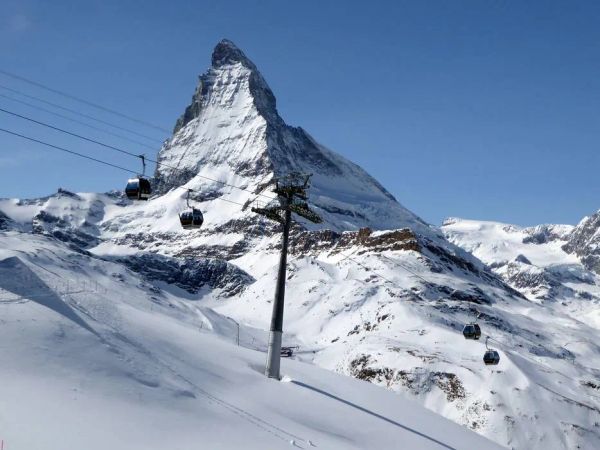
Zermatt Plans World Cup Downhill Return on the Gornergrat for 2028
Zermatt is having another crack at a World Cup downhill, and this time nobody has to cross a border. Around 13 million Swiss francs is going into rebuilding the Gornergrat piste, including a jump fed by a roughly 300-metre in-run across the roof of the Gornergrat Railway gallery, with the Matterhorn lined up behind it for the TV cameras. First men’s race is pencilled in for March 2028, pending FIS homologation.
14 Oct 2026
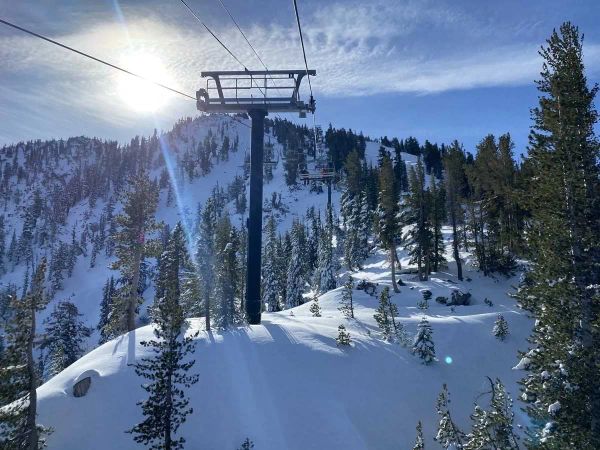
Mt. Rose Begins Snowmaking for the 2026-27 Season at Lake Tahoe
Lake Tahoe’s highest base elevation is paying off early: Mt. Rose has started making snow for 2026-27 after the first flurries and a cold snap. The Nevada resort is backing it with nearly US$2 million in upgrades, including a replacement snowmaking main line, a new PistenBully groomer and restraint bars on every lift. Opening day is yet to be confirmed, though Heavenly and Northstar are already eyeing 20 November.
13 Oct 2026
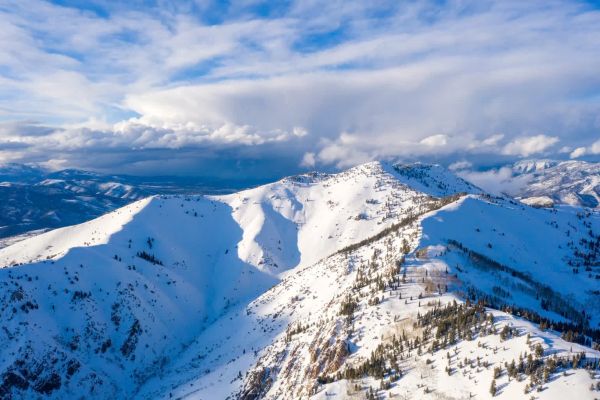
Utah Ski Resorts 2026-27: What’s New at Alta, Deer Valley, Powder Mountain and More
Utah is still building flat out. For 2026-27, Powder Mountain opens a steep new Skytrac chair into more than 1,000 acres of advanced terrain, Deer Valley adds 200 acres on Hail Peak, Sundance gets a new quad and Park City adds a gondola from its new parking structure. Snowmaking is expanding almost everywhere, Eagle Point stays closed after the Cottonwood Fire, and the 2034 Games are setting the pace. Here’s what’s new, resort by resort.
13 Oct 2026
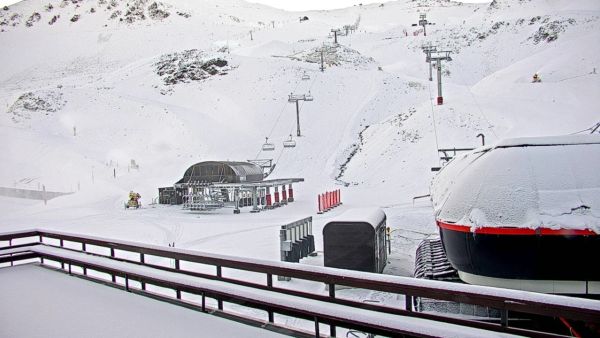
Mt Hutt Invests NZ$12 Million in Base Area, Tripling Its Sun Deck
Mt Hutt is getting busier, and its base lodge is about to catch up. NZ$12 million goes into a heated sun deck roughly three times the current size (430 m² to 1,300 m²), plus a new toilet block, heated steps down to snow level, extra storage and a new food and beverage outlet. Building starts after the 2026 season, with everything due for winter 2027.
11 Oct 2026

Vermont Ski Resort Opening Dates 2026-27: Few Dates Set, Killington Waits on the Cold
Vermont's season is slow to take shape. Stratton is tentatively targeting 18 November and Sugarbush 21 November, while Pico has Friday 11 December on the calendar. Killington never sets a date and opens when the snowmaking allows, and Vail Resorts has yet to name days for Stowe, Okemo and Mount Snow. The forecasts disagree about snow, and the main El Niño worry for the Green Mountains is warmth.
9 Oct 2026
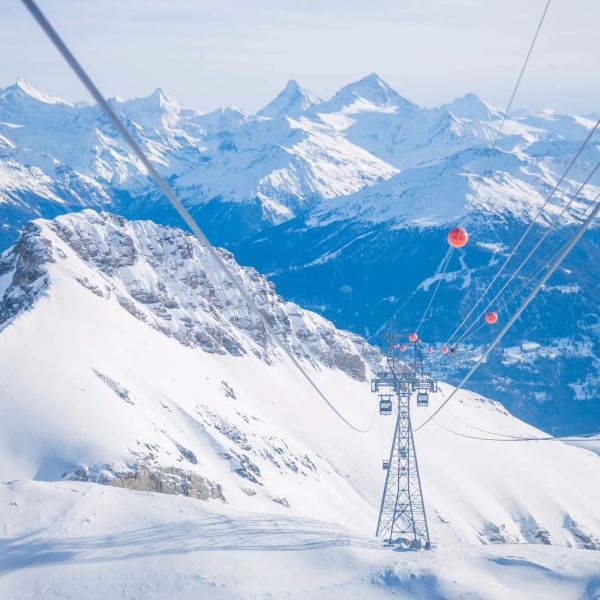
Crans-Montana 2027 World Championships President Resigns Ahead of Fraud Hearing
Less than four months out from the Crans-Montana 2027 World Championships, the man running the organising committee has stepped down. Claude-Alain Schmidhalter resigned as Swiss-Ski vice president and OC president after being indicted over a business dispute unrelated to skiing. He denies the allegations and faces court on October 27. Interim leaders are in place for the February 1-14 event.
9 Oct 2026
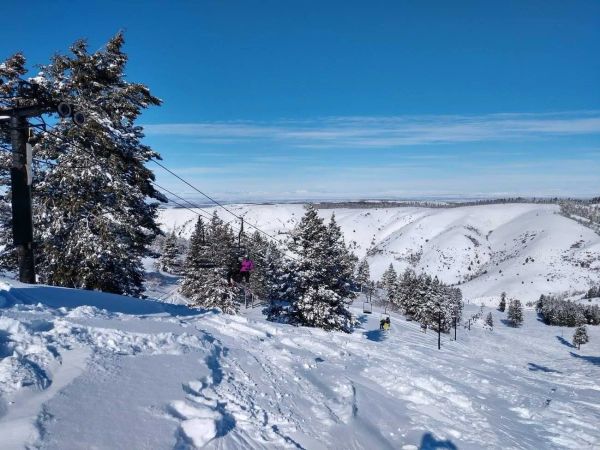
Kelly Canyon, Idaho, Adds Snowmaking, a Bigger Terrain Park and More Parking for 2026-27
Kelly Canyon had a rough 2025-26, and the Idaho resort has spent the summer making sure it doesn’t repeat. Snowmaking now reaches the top of Goldrush, the terrain park is doubling in size with a stereo system, lights and a snack shack, and the car park is getting bigger. Grooming is stepping up too. Target opening is December 4, conditions permitting.
9 Oct 2026
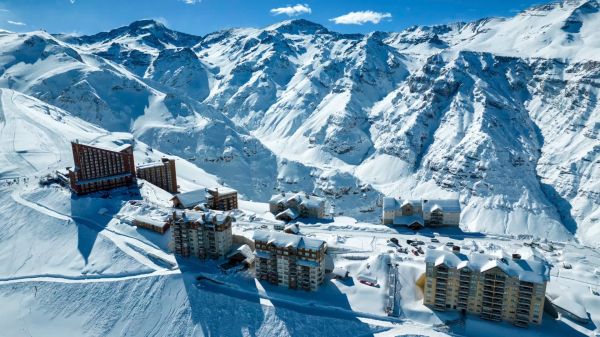
Valle Nevado Extends Season to November 8 After 108 cm in 48 Hours
Winter was meant to be winding down in Chile. Then Valle Nevado took 108 cm in 48 hours in early October, and the resort has pushed its closing date out to November 8 - its latest in 38 years of operation. That makes 143 days of skiing since opening day on June 19, with 690 cm banked for the season. Only part of the mountain is running while the storm settles, so check the mountain report before you plan a trip.
9 Oct 2026
Blatten Belalp Lift System
Fourteen lifts service the terrain, comprising one 70-person aerial tram, one eight-person gondola, one six-person high-speed chairlift with bubbles, two quad chairlifts, and four T-bars, supplemented by four surface lifts in beginner zones. The aerial tram and gondola both depart from Blatten at 1,322 metres, with the gondola reaching Chiematte at 2,047 metres and the tram accessing Belalp at 2,094 metres. The gondola, manufactured by Doppelmayr with 1,892 metres of cable length, moves 2,000 passengers hourly, whilst the tram adds 740 per hour capacity over its 1,767-metre span.
The Sparrhorn six-seat detachable chairlift with weather protection bubbles forms the system's backbone, manufactured by Garaventa with 2,326 metres of cable and 2,400-passenger hourly capacity. This lift climbs from Bruchegg to 2,680 metres, positioning skiers for the Sparrhorngrat T-bar to 2,880 metres or the Hohstock T-bar to 3,118 metres. Two quad chairlifts serve mid-mountain sectors at Schönbiel and Hohbiel, with the shorter fixed-grip quad at 585 metres and the detachable Garaventa model stretching 1,201 metres with 2,000-passenger hourly capacity.
The Hohstock T-bar, opened in 1982 and spanning 1,518 metres with two directional changes, represents unique Swiss lift engineering, winding from Hohbiel at 2,654 metres to just below the 3,226-metre Hohstock summit. Spring snow farming on sections of the lift track enables earlier seasonal opening across the scree-based upper terrain. The Färrich platter lift connects Aletschbord to Belalp, whilst Hexenland's beginner area employs four conveyor belts of varying lengths alongside a dedicated T-bar, eliminating lift anxiety for first-timers.
Infrastructure investment focuses on maintaining rather than expanding the lift network, preserving the uncrowded character that distinguishes Belalp from larger Valais destinations. The system efficiently moves visitors from valley to summit in two stages via the gondola and Sparrhorn chair, with typical base-to-summit transit under 25 minutes. Lift capacity remains appropriately scaled to overnight accommodation rather than day-visitor volume, preventing the queuing common at more commercialised resorts whilst maintaining comfortable uphill flow during peak January and February periods.
14lifts across 7 types
1
Aerial Tram
1
Gondola
1
8-Person Chair
1
6-Person Chair
2
Quad Chairs
4
T-Bars
4
Surface Lifts
Blatten Belalp lift system
Blatten Belalp is served by 14 lifts, listed here by type. Check which lifts are turning against the live conditions before you plan your first laps - early lifts and high-speed chairs get you to the best snow fastest.
More Blatten Belalp intelligence: trail map, snow report, webcams, resort overview.