
Chäserrugg - Unterwasser (Toggenburg)
50km of skiing across 1362m vertical in eastern Switzerland. Award-winning Herzog & de Meuron summit building at 2262m.
Season 2026 - 2027
Opens
28 Nov 2026
Closes
11 Apr 2027
Days open
134
Annual snow
4m
The Overview
Michael Fulton
Melbourne-based skier and snowboarder with 50+ resorts across 5 continents. Specialises in Australian resorts and international resort comparisons.
Chäserrugg – Unterwasser operates between 900 and 2262 metres across 1362 vertical metres in eastern Switzerland's Toggenburg region. The resort distributes 50 kilometres of piste across 23 marked runs serving the linked villages of Unterwasser, Alt St Johann and Wildhaus. Terrain breaks down as 16 per cent beginner, 80 per cent intermediate and 4 per cent advanced, with 2 kilometres of additional ski routes for freeriders. Annual snowfall averages 4.3 metres, supplemented by snowmaking coverage across key sectors.
Intermediate skiers dominate the clientele, drawn to the area's cruising terrain spread beneath the seven-peaked Churfirsten massif. The Chäserrugg East Run descends 5 kilometres through largely untouched terrain from the 2262-metre summit to Espel pavilion. Valley runs to both Unterwasser and Alt St Johann provide genuine top-to-bottom skiing across the full vertical. A funpark operates for freestylers below the Chäserrugg summit, whilst practice slopes at Iltios and Alt St Johann cater to families.
The resort distinguishes itself through architecture rather than extreme terrain, with six Herzog & de Meuron structures integrated since 2015. The award-winning timber summit building at 2262 metres exemplifies the collaboration between Swiss design and mountain infrastructure. Toggenburg received Landscape of the Year 2021 recognition for infrastructure renewal that emphasises landscape preservation over commercial visual pollution. The area maintains agricultural traditions alongside tourism, creating an atmosphere closer to working mountain communities than purpose-built resorts.
Chäserrugg operates independently without major pass affiliations, though the Chäserrugg Pass covers summer and winter access across the network. The 2025-26 season runs 30 November to 6 April with typical mid-November to mid-April operations. Night skiing operates Fridays 18:30 to 21:30 from late December through February at Alt St Johann-Sellamatt. The resort suits intermediate skiers seeking uncrowded terrain, families prioritising manageable scale, and visitors valuing architectural merit alongside skiing.
1362m
Vertical
23
Runs
50 km
Piste
4m
Annual snow
The Terrain
23 runs across 50 km of piste
Beneath the seven peaks of the Churfirsten range, Chäserrugg - Unterwasser is an intermediate skier's mountain in the Toggenburg valley. Piste length is 50 kilometres across 23 runs, with 1,362 metres of vertical between 900 and 2,262 metres. Grading is heavily centred: 80% intermediate, 16% beginner and only 4% advanced, with no expert pistes. Because the base sits at just 900 metres, the top-to-bottom runs finish well down in the valley, giving a long and satisfying descent for a relatively modest area, and a compact lift network makes it easy to find your way around.
Skiers looking for distance should try the east descent from Chäserrugg, one of the longer runs here at close to 8 kilometres, passing through Stöfeli and Iltios on the way to the valley. Alp Sellamatt and Alt St Johann form a separate side with a forested run down to the village. The steepest pitch is the short Sureboden slope, and a small fun park suits freestylers. Beyond the groomed slopes there are about 2 kilometres of ski routes, so freeriding is limited. A solid choice for relaxed intermediates and families rather than anyone chasing steeps.
Terrain split
23
runs
23 runs across 4 grades
Beginner4 runs · 16%
Intermediate18 runs · 80%
Advanced1 run · 4%
Expert0 runs · 0%
Time it right
When to visit Chäserrugg - Unterwasser (Toggenburg)
The 2025-26 season operates 30 November 2025 to 6 April 2026, closing 12 April for an 18-day maintenance period before summer operations commence 1 May. Typical season length extends late November through mid-April, delivering approximately four and a half months of skiing. Lift operations run 08:30 to 16:30 daily, with earlier 08:15 starts during weekends and holiday periods. The resort benefits from north-facing valley orientation despite its position as Switzerland's most northerly major ski area.
Annual snowfall averages 4.3 metres, with eastern Switzerland's snow belt delivering reliable winter storms throughout the season. Elevation advantage between 900 and 2262 metres ensures snowpack longevity even during marginal periods at lower altitudes. Snowmaking covers 10 kilometres of piste with 24 cannons, concentrating on key runs and valley approaches. Current season data shows 190-centimetre base depth with 185 centimetres accumulated season total, reflecting above-average early-season conditions for the 2025-26 winter.
January through March delivers most consistent powder conditions, whilst spring skiing extends into April with reliable coverage on higher aspects. December and early January suit visitors avoiding peak crowds, though snowpack depth may vary year to year. North-facing slopes preserve powder longer than southern exposures, allowing strategic terrain selection throughout the day. The Chäserrugg massif's varied aspects create microclimates where skiers can follow optimal conditions between sun-warmed southern runs and powder-preserving northern bowls.
Friday night skiing operates 18:30 to 21:30 from late December through February end on the 3-kilometre floodlit Alt St Johann-Sellamatt run. March events include NostalSki vintage equipment races and live music at Espel Pavilion on Saturday afternoons. August brings Federal Day sunrise celebrations with 05:00 first lifts and 23:30 final descents. The traditional Stöfeli alpine service in August features yodelling and alphorn performances at 1662 metres, accessible via special gondola operations.
Season 2026 - 2027
28 Nov 2026
Opens
11 Apr 2027
Closes
134
Days open
4 m
Annual snow
Getting there
Getting to Chäserrugg - Unterwasser (Toggenburg), and where to stay
Chäserrugg – Unterwasser occupies the upper Toggenburg valley in canton St Gallen, eastern Switzerland, between the Säntis massif and the seven-peaked Churfirsten range. Base villages sit at 900 to 911 metres elevation, with Unterwasser and Alt St Johann separated by approximately 300 metres and Wildhaus positioned 1.2 kilometres west. The Thur river drains the valley, which forms part of the broader Obertoggenburg region characterised by working farms and traditional wooden architecture. The easternmost Churfirsten peak, Chäserrugg itself, rises to 2262 metres with dramatic southern cliffs plunging toward Walensee.
Wildhaus lies 5 kilometres from Alt St Johann along the valley floor, connected by PostBus services included with lift passes. Nesslau municipality encompasses both Unterwasser and Alt St Johann within a merged administrative unit created in 2013. The area maintains authentic Toggenburg culture, with Wildhaus notable as reformer Ulrich Zwingli's birthplace in 1484. Traditional mountain restaurants like Berggasthaus Stöfeli and facilities at Iltios serve regional specialities alongside standard mountain fare.
Road access follows Route 16 through the Toggenburg valley from Wattwil, continuing southwest from St Gallen. Driving time from Zurich measures approximately 1 hour 15 minutes covering 95 kilometres via the A1 motorway to Wattwil, then secondary roads through the valley. From Basel, expect 2 hours over 179 kilometres. St Gallen lies roughly one hour northeast, providing the nearest major city access. Free parking operates at Unterwasser valley station.
Zurich Airport sits 90 kilometres distant with 90-minute transfer times by road. St Gallen-Altenrhein Airport lies 20 kilometres from St Gallen city, roughly 50 kilometres from the resort. Train connections reach Nesslau-Neu St Johann station via the S2 service on the Bodensee-Toggenburg railway from St Gallen, with PostBus route 790 continuing to Unterwasser valley station in approximately 10 minutes. Total journey from Zurich by public transport requires roughly 2 hours with changes at Wattwil. The Voralpen-Express offers scenic routing from St Gallen via Rapperswil, though transfers remain necessary for final valley access.
Where to stay
Search all stays →Hotels and lodges near Chäserrugg - Unterwasser (Toggenburg), powered by Stay22.
Latest News
From the SnowStash desk

Utah Ski Resorts 2026-27: What’s New at Alta, Deer Valley, Powder Mountain and More
Utah is still building flat out. For 2026-27, Powder Mountain opens a steep new Skytrac chair into more than 1,000 acres of advanced terrain, Deer Valley adds 200 acres on Hail Peak, Sundance gets a new quad and Park City adds a gondola from its new parking structure. Snowmaking is expanding almost everywhere, Eagle Point stays closed after the Cottonwood Fire, and the 2034 Games are setting the pace. Here’s what’s new, resort by resort.
13 Oct 2026

Vermont Ski Resort Opening Dates 2026-27: Few Dates Set, Killington Waits on the Cold
Vermont's season is slow to take shape. Stratton is tentatively targeting 18 November and Sugarbush 21 November, while Pico has Friday 11 December on the calendar. Killington never sets a date and opens when the snowmaking allows, and Vail Resorts has yet to name days for Stowe, Okemo and Mount Snow. The forecasts disagree about snow, and the main El Niño worry for the Green Mountains is warmth.
9 Oct 2026
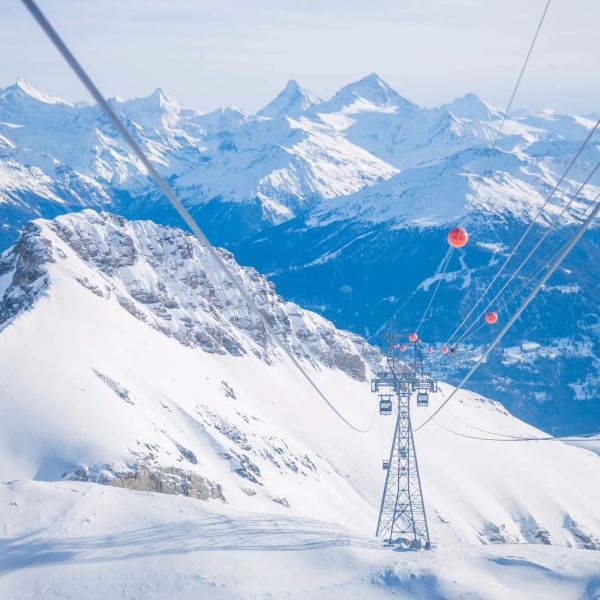
Crans-Montana 2027 World Championships President Resigns Ahead of Fraud Hearing
Less than four months out from the Crans-Montana 2027 World Championships, the man running the organising committee has stepped down. Claude-Alain Schmidhalter resigned as Swiss-Ski vice president and OC president after being indicted over a business dispute unrelated to skiing. He denies the allegations and faces court on October 27. Interim leaders are in place for the February 1-14 event.
9 Oct 2026
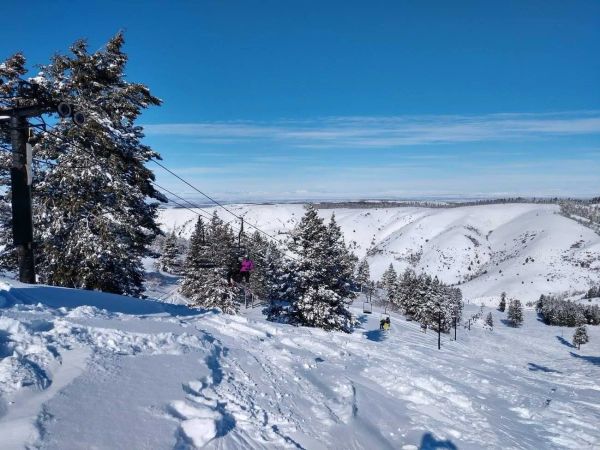
Kelly Canyon, Idaho, Adds Snowmaking, a Bigger Terrain Park and More Parking for 2026-27
Kelly Canyon had a rough 2025-26, and the Idaho resort has spent the summer making sure it doesn’t repeat. Snowmaking now reaches the top of Goldrush, the terrain park is doubling in size with a stereo system, lights and a snack shack, and the car park is getting bigger. Grooming is stepping up too. Target opening is December 4, conditions permitting.
9 Oct 2026
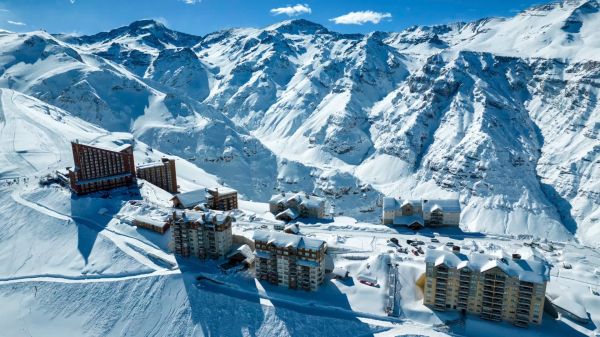
Valle Nevado Extends Season to November 8 After 108 cm in 48 Hours
Winter was meant to be winding down in Chile. Then Valle Nevado took 108 cm in 48 hours in early October, and the resort has pushed its closing date out to November 8 - its latest in 38 years of operation. That makes 143 days of skiing since opening day on June 19, with 690 cm banked for the season. Only part of the mountain is running while the storm settles, so check the mountain report before you plan a trip.
9 Oct 2026
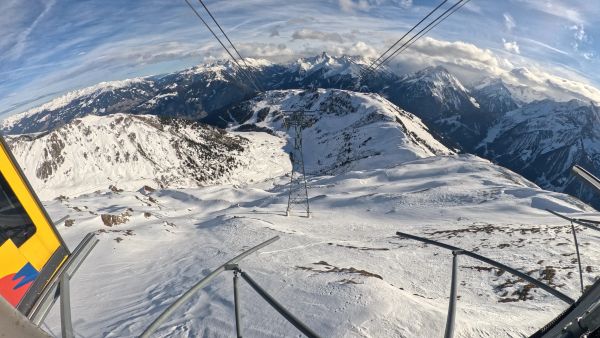
Alps Snow Forecast: Cold Front Brings Thursday Snow to the High Alps
The Alps look a lot more like winter today, for a day or so. A cold front is moving west to east, dropping up to 35 cm on high glaciers and peaks, with snow levels falling to around 1,500-1,800 m at times. Don’t plan a trip around it: mid-elevation snow will be thin and wet, every area is closed bar a limited Sölden glacier opening tomorrow, and warmer weather returns by Monday.
8 Oct 2026
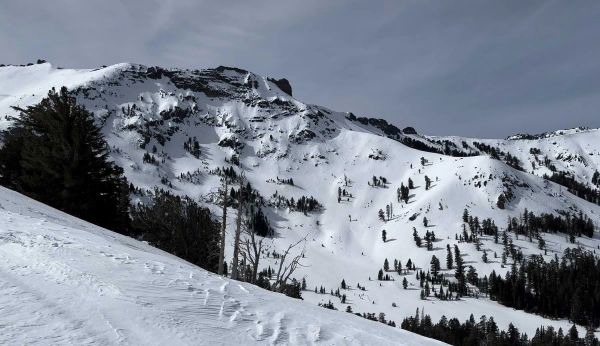
California Ski Resort Opening Dates 2026-27: Mammoth Leads, Tahoe Follows
Mammoth Mountain is first up in California, targeting Friday 13 November after a dusting of September snow. Heavenly and Northstar follow on 20 November, Palisades Tahoe on Wednesday 25 November and Sugar Bowl on 27 November, with Kirkwood on 4 December and June Mountain on 19 December. Plenty of smaller areas have no date yet. A super El Niño favours the Sierra, but a warmer storm track is the catch.
7 Oct 2026
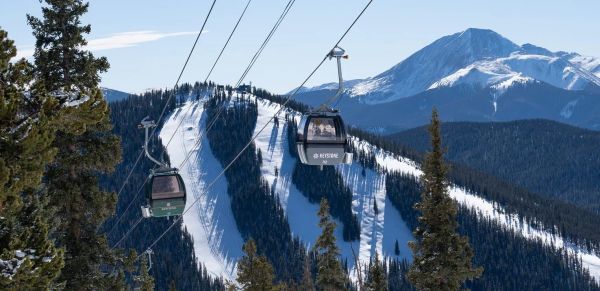
Colorado Ski Resort Opening Dates 2026-27: A-Basin and Keystone Race to Be First
Arapahoe Basin, Keystone and Winter Park are all chasing an October start, though none has a firm date yet. The first dated openers are Breckenridge and Copper on Friday 6 November, then Vail on 13 November, with most of the rest bunched around US Thanksgiving. Hesperus did not open at all last season. A super El Niño offers hope but no guarantee, and forecasters say the southern mountains have the better odds.
5 Oct 2026
Chäserrugg - Unterwasser (Toggenburg) Lift System
Six lifts serve the Chäserrugg – Unterwasser network, comprising one aerial tramway, one gondola, one quad chairlift and three T-bars. The headline installation is the 80-person Iltios-Chäserrugg cable car, completing the 6.3-kilometre summit ascent in roughly six minutes. From Unterwasser at 911 metres, a 100-capacity funicular climbs to Iltios at 1339 metres in 5.5 minutes, establishing the primary base-to-mid-mountain link.
The 10-person Espel-Stöfeli-Chäserrugg gondola opened in 2015-16 season, replacing ageing drag lifts and reducing bottlenecks at Iltios. This three-station installation runs from Espel base at 1262 metres via Stöfeli middle station at 1681 metres to a ridge terminus at 2071 metres, followed by a T-bar to access the summit proper. A combined 4-person chairlift and 4-person gondola installation links Alt St Johann at 900 metres to Alp Sellamatt at 1401 metres in 9 minutes. The Ruestel quad chair operates exclusively in winter, accessing intermediate terrain at 1728 metres.
Base-to-summit flow follows two primary axes: Unterwasser funicular to Iltios, then cable car to Chäserrugg, or the Espel gondola route via Stöfeli. From Alt St Johann, the combined lift reaches Sellamatt, connecting via piste to the broader network. All Herzog & de Meuron lift stations employ corrugated Eternit cladding and barn-inspired forms, deliberately avoiding standard ski-area aesthetics. Red gondola cabins coordinate across the Unterwasser-Iltios-Chäserrugg axis, maintaining visual consistency throughout the system.
The cable car received new cabins in summer 2023, maintaining the 1970s infrastructure with updated rolling stock. Total uphill capacity reaches approximately 13,000 persons per hour across the network. Infrastructure investment prioritises landscape integration over capacity maximisation, reflected in the Stöfeli middle station's soil-covered concrete roof and minimal visual footprint. The modest lift count and strategic placement preserve the area's character whilst eliminating significant bottlenecks during normal operations.
6lifts across 4 types
1
Aerial Tram
1
Gondola
1
Quad Chair
3
T-Bars
Chäserrugg - Unterwasser (Toggenburg) lift system
Chäserrugg - Unterwasser (Toggenburg) is served by 6 lifts, listed here by type. Check which lifts are turning against the live conditions before you plan your first laps - early lifts and high-speed chairs get you to the best snow fastest.
More Chäserrugg - Unterwasser (Toggenburg) intelligence: trail map, snow report, webcams, resort overview.