
Flumserberg
Flumserberg: 65km pistes, 1,557m vertical, 20 lifts. Eastern Switzerland's largest ski area between Zurich and Chur.
Season 2026 - 2027
Opens
16 Nov 2026
Closes
29 Mar 2027
Days open
133
Annual snow
4m
The Overview
Michael Fulton
Melbourne-based skier and snowboarder with 50+ resorts across 5 continents. Specialises in Australian resorts and international resort comparisons.
Flumserberg operates across 65 kilometres of pistes spanning 1,557 vertical metres from 665 metres at Unterterzen to 2,222 metres at Leist. The resort serves 43 marked runs distributed as 22% beginner, 62% intermediate and 16% advanced terrain across multiple interconnected sectors above Lake Walensee. Switzerland's first permanently maintained skicross course anchors the resort's specialist offerings alongside dedicated terrain parks and racing facilities. Annual snowfall averages 320 centimetres with snowmaking covering 9 kilometres across 65% of pistes.
The terrain divides into distinct sectors reached via four gondolas and multiple chairlifts connecting Tannenboden, Maschgenkamm, Prodkamm and Prodalp zones. Lower slopes between Tannenboden and Mittenwald provide gentle beginner terrain whilst runs below Leist challenge advanced skiers on steeper pitches. Intermediate cruisers dominate Panüöl, Maschgenkamm and Prodkamm sectors where wide pistes suit progression and family skiing. The ungroomed 10-kilometre Terza route from Leist to Oberterzen drops the full 1,557-metre vertical for experienced skiers seeking sustained descents.
Flumserberg functions as Zurich's primary day-trip destination 60 kilometres from the city with efficient rail connections to Unterterzen station. Weekdays see quieter slopes whilst Sundays draw urban crowds to wide groomed pistes and efficient lift networks. On-mountain dining spans simple huts to larger restaurants at Maschgenkamm, Chrüz and Prodalp offering 200-400 seat capacities with lake-view terraces. Friday night skiing operates from 18:30 to 21:30 on the illuminated 2-kilometre Chrüz run through the Flumserberg Galaxie light installation.
The resort forms part of the Heidiland region without multi-resort pass coverage, operating standalone lift tickets and a CHF 649 season pass valid December through early April. Eastern Switzerland's largest ski area between Zurich and Chur suits families, intermediates and Zurich residents seeking accessible weekend skiing without transfers. The 2025-26 season runs 6 December to 6 April with adult day tickets CHF 70 weekdays and CHF 74 weekends.
1557m
Vertical
43
Runs
65 km
Piste
4m
Annual snow
The Terrain
43 runs across 65 km of piste
Flumserberg stacks 43 runs and 65 kilometres of piste onto a long slope above Walensee, falling 1,557 metres from the 2,222-metre Leist summit to 665 metres. Intermediates own the mountain at 62%, with 22% beginner and 16% advanced, and nothing classed as expert. The network is built around detachable lifts: four gondolas, four eight-seat chairs, four quads, three six-seaters, a double chair and four T-bars. Prodkamm's eight-seater, built in 2011, was the first of its kind in Switzerland. Lower slopes start well below the treeline, so snowmaking supports the valley runs.
The BergJet gondola, opened in 2019 with Porsche Design Studio cabins, lifts skiers from Tannenboden to Maschgenkamm at 2,020 metres, and a short descent leads to the six-seat chair for Leist. Prodkamm has wide, open pistes, while the ungroomed Terza route, about 10 kilometres to Oberterzen, is reserved for very good skiers. Friday night skiing runs on the lit Chrüz piste, and Switzerland's first permanent skicross course is here. The real strength is volume for intermediates, families and day-trippers who want a large area within reach of Zurich. Lifts can queue at weekends.
Terrain split
43
runs
43 runs across 4 grades
Beginner9 runs · 22%
Intermediate27 runs · 62%
Advanced7 runs · 16%
Expert0 runs · 0%
Time it right
When to visit Flumserberg
The 2025-26 season operates 6 December 2025 through 6 April 2026 spanning four months across typical early December to early April windows. Operations historically commence mid to late November when snowmaking permits with closures mid-April depending on snow retention at the 665-2,222 metre elevation band. The resort markets itself amongst eastern Switzerland's more snow-reliable operations due to topography and comprehensive snowmaking infrastructure covering majority terrain. Current season data shows 183 centimetres total snowfall with 35 centimetres base depth as of reporting dates.
Flumserberg receives 320 centimetres average annual snowfall across its mid-elevation range between 1,200-2,200 metres capturing precipitation from systems moving across Lake Walensee. The northern exposure aids snow preservation whilst the mid-elevation positioning catches moisture from both low and high cloud systems that higher resorts miss according to regular visitors. Snowmaking across 9 kilometres using 35 cannons supplements natural snowfall particularly early and late season on lower runs to Tannenboden bases. Average snow depth reaches 90 centimetres at summit and 56 centimetres at base during February peak conditions.
January through March delivers optimal conditions with the second week of January historically the snowiest period averaging 54 centimetres weekly accumulation and 3.4 snowy days. February provides the deepest snowpack and most reliable conditions whilst December and April require snow management on lower slopes. Spring skiing extends through March with good coverage whilst April sees variable conditions dependent on seasonal patterns. The resort attracts fewer crowds mid-week during January and February when Zurich residents focus on weekends.
Friday night skiing from 18:30 to 21:30 features the 2-kilometre Chrüz illuminated run through the Flumserberg Galaxie light installation reaching Bergrestaurant Chrüz for the Skichilbi event. The season calendar includes standard Swiss school holiday peaks in February half-term and Easter periods when advance booking proves essential. No major competition events define the calendar though the resort's skicross course hosts training and club racing throughout winter months for specialist discipline athletes.
Season 2026 - 2027
16 Nov 2026
Opens
29 Mar 2027
Closes
133
Days open
4 m
Annual snow
Getting there
Getting to Flumserberg, and where to stay
Flumserberg occupies the southern slopes above Lake Walensee in Canton St. Gallen with mid-mountain villages Tannenboden at 1,400 metres and Tannenheim at 1,280 metres plus lakeside access at Unterterzen at 425 metres elevation. The ski area rises to 2,222 metres at Leist summit overlooking the fjord-like Walensee with views extending across six Swiss cantons on clear days to the Churfirsten range opposite. The resort sits within the Heidiland tourism region of eastern Switzerland where agriculture and tourism coexist across traditional villages maintaining authentic Alpine character without purpose-built resort development.
Unterterzen and Flums serve as nearest valley towns with Unterterzen providing direct rail and gondola access whilst Flums lies 8 kilometres from mid-mountain bases. Walenstadt sits 5 kilometres east along the lakeshead with Sargans 15 kilometres southeast as the regional rail hub. Zurich lies 60 kilometres west as the primary visitor source with St. Gallen 50 kilometres northeast. The location between Switzerland's largest city and the Graubünden Alps creates the resort's identity as Zurich's nearest substantial ski area with under 90-minute public transport access.
Motorway A3 connecting Zurich to Chur provides direct access via exit 49 Flums with a 9-kilometre winding mountain road climbing 20 minutes to Tannenboden and Tannenheim bases. From Zurich the drive covers approximately 96 kilometres in 75 minutes via A3 southeast whilst the Murg and Walenstadt exits at kilometre markers 47 and 48 access Unterterzen 5 kilometres from motorway. The route from Lake Constance and German border at Lindau reaches Flumserberg in 60 minutes via Rheintal motorway and A3 junction. Parking costs CHF 8 daily at mountain bases in pay-and-display tarmac lots.
Zurich Airport lies 84 kilometres northwest with 90-minute connections comprising direct IR35 Aare Linth trains to Unterterzen station in 58 minutes without changes. The SeeJet gondola departs directly opposite Unterterzen station reaching Tannenboden in 20 minutes making rail access seamless for day visitors and weekend travellers. St. Gallen-Altenrhein Airport serves as the closest regional facility 45 kilometres northeast though Zurich handles majority international arrivals. PostBus services connect Sargans and Flums rail stations to Tannenheim and Tannenboden for those accessing via mountain road whilst Snow'n'Rail combined tickets offer rail and lift pass discounts during January-February periods.
Where to stay
Search all stays →Hotels and lodges near Flumserberg, powered by Stay22.
Latest News
From the SnowStash desk

Vermont Ski Resort Opening Dates 2026-27: Few Dates Set, Killington Waits on the Cold
Vermont's season is slow to take shape. Stratton is tentatively targeting 18 November and Sugarbush 21 November, while Pico has Friday 11 December on the calendar. Killington never sets a date and opens when the snowmaking allows, and Vail Resorts has yet to name days for Stowe, Okemo and Mount Snow. The forecasts disagree about snow, and the main El Niño worry for the Green Mountains is warmth.
9 Oct 2026
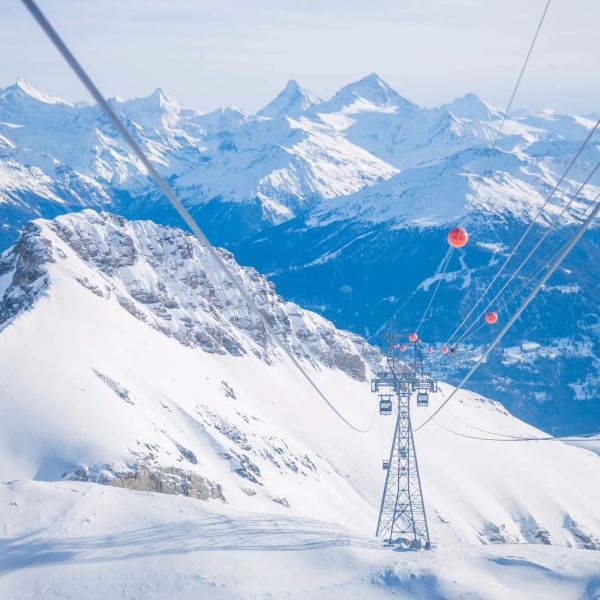
Crans-Montana 2027 World Championships President Resigns Ahead of Fraud Hearing
Less than four months out from the Crans-Montana 2027 World Championships, the man running the organising committee has stepped down. Claude-Alain Schmidhalter resigned as Swiss-Ski vice president and OC president after being indicted over a business dispute unrelated to skiing. He denies the allegations and faces court on October 27. Interim leaders are in place for the February 1-14 event.
9 Oct 2026
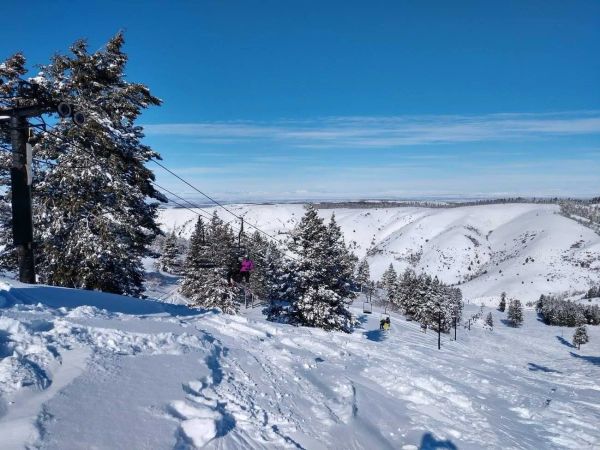
Kelly Canyon, Idaho, Adds Snowmaking, a Bigger Terrain Park and More Parking for 2026-27
Kelly Canyon had a rough 2025-26, and the Idaho resort has spent the summer making sure it doesn’t repeat. Snowmaking now reaches the top of Goldrush, the terrain park is doubling in size with a stereo system, lights and a snack shack, and the car park is getting bigger. Grooming is stepping up too. Target opening is December 4, conditions permitting.
9 Oct 2026
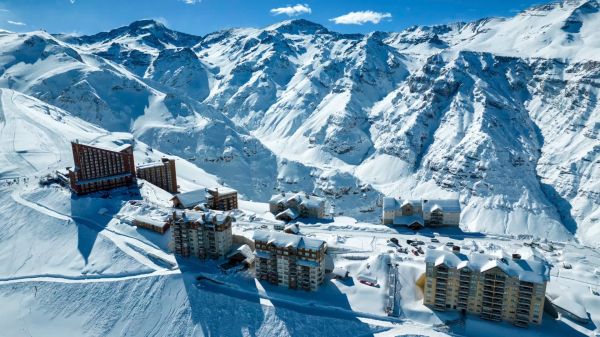
Valle Nevado Extends Season to November 8 After 108 cm in 48 Hours
Winter was meant to be winding down in Chile. Then Valle Nevado took 108 cm in 48 hours in early October, and the resort has pushed its closing date out to November 8 - its latest in 38 years of operation. That makes 143 days of skiing since opening day on June 19, with 690 cm banked for the season. Only part of the mountain is running while the storm settles, so check the mountain report before you plan a trip.
9 Oct 2026
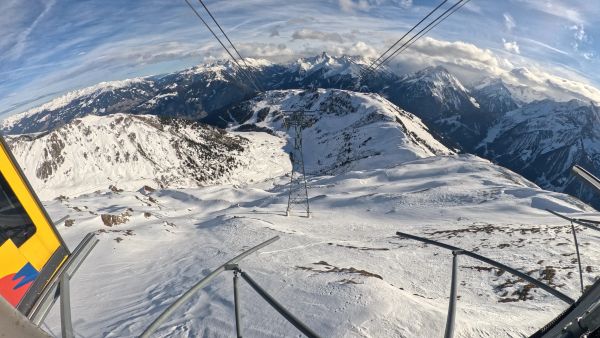
Alps Snow Forecast: Cold Front Brings Thursday Snow to the High Alps
The Alps look a lot more like winter today, for a day or so. A cold front is moving west to east, dropping up to 35 cm on high glaciers and peaks, with snow levels falling to around 1,500-1,800 m at times. Don’t plan a trip around it: mid-elevation snow will be thin and wet, every area is closed bar a limited Sölden glacier opening tomorrow, and warmer weather returns by Monday.
8 Oct 2026
California Ski Resort Opening Dates 2026-27: Mammoth Leads, Tahoe Follows
Mammoth Mountain is first up in California, targeting Friday 13 November after a dusting of September snow. Heavenly and Northstar follow on 20 November, Palisades Tahoe on Wednesday 25 November and Sugar Bowl on 27 November, with Kirkwood on 4 December and June Mountain on 19 December. Plenty of smaller areas have no date yet. A super El Niño favours the Sierra, but a warmer storm track is the catch.
7 Oct 2026
Colorado Ski Resort Opening Dates 2026-27: A-Basin and Keystone Race to Be First
Arapahoe Basin, Keystone and Winter Park are all chasing an October start, though none has a firm date yet. The first dated openers are Breckenridge and Copper on Friday 6 November, then Vail on 13 November, with most of the rest bunched around US Thanksgiving. Hesperus did not open at all last season. A super El Niño offers hope but no guarantee, and forecasters say the southern mountains have the better odds.
5 Oct 2026
Dolomiti Superski 2026-27: Four New Gondolas, New Reservoirs and an €89 Peak Day Pass
Dolomiti Superski is spending around €100 million across its 12 areas before winter. Kronplatz gets a new 10-passenger gondola with a middle station, 3 Zinnen gets Helmissimo, and Val di Fassa swaps a chairlift for a gondola above Col Valvacin. New water-storage basins and upgraded snowmaking follow, and construction has started on the San Martino to Passo Rolle link. A peak adult day pass is €89.
4 Oct 2026
Flumserberg Lift System
Twenty lifts serve Flumserberg comprising 4 gondolas, 4 eight-seat chairlifts, 4 quad chairlifts, 3 six-seat chairlifts, 1 double chairlift and 4 T-bars generating 21,125 passengers per hour capacity. The infrastructure concentrates modern detachable chairlifts across intermediate terrain with surface lifts serving beginner zones at Tannenboden and Mittenwald. Four gondola installations provide base-to-summit access and inter-sector connections across the elongated ski area. T-bars function primarily as return lifts from Plattis and within the learner areas.
The BergJet gondola installed in 2019 represents the resort's flagship lift connecting Tannenboden at 1,400 metres to Maschgenkamm at 2,020 metres across 3,223 metres of cable in 8-seat Porsche Design Studio cabins. This Bartholet installation transports 2,400 people hourly replacing a 53-year-old quad gondola and serves as the primary summit access from mid-mountain. The Prodkamm eight-seat chairlift built in 2011 was Switzerland's first detachable eight-seater moving 4,000 people hourly across 1,726 metres vertical whilst the 12-person Prodalp-Express gondola anchors another sector. Six-seat chairs at Leist, Panüöl and Seeben provide high-speed access to advanced and intermediate terrain.
Base access operates via the SeeJet 8-seat gondola rising 975 vertical metres from Unterterzen station at 425 metres directly to Tannenboden in 20 minutes or road access to Tannenboden and Tannenheim mid-mountain bases at 1,280-1,400 metres elevation. From Tannenboden the BergJet continues to Maschgenkamm whilst the Prodalp-Express and various chairlifts spread across Prodkamm, Chrüz and Seeben sectors. The system operates 08:00 to 16:30 with most lifts weather-protected via bubbles on chairlifts enabling reliable operations.
Infrastructure investments focused on replacing aged installations with the 2019 BergJet gondola and continued modernisation of chairlifts with weather protection. The resort claims capacity advantages during peak periods though weekend demand from Zurich tests infrastructure particularly at SeeJet base access from Unterterzen. Upper lifts generally move skiers efficiently across the spread-out terrain with minimal bottlenecks mid-week whilst the extensive eight-seat chair network provides comfortable uphill transport across primary sectors.
20lifts across 6 types
4
Gondolas
4
8-Person Chairs
3
6-Person Chairs
4
Quad Chairs
1
Double Chair
4
T-Bars
Flumserberg lift system
Flumserberg is served by 20 lifts, listed here by type. Check which lifts are turning against the live conditions before you plan your first laps - early lifts and high-speed chairs get you to the best snow fastest.
More Flumserberg intelligence: trail map, snow report, webcams, resort overview.