
Grächen
44km of piste spanning 1619-2864m in the sunny Mattertal. Family-friendly resort with fairy tale gondola access, Switzerland.
Season 2026 - 2027
Opens
12 Dec 2026
Closes
4 Apr 2027
Days open
113
Annual snow
4m
The Overview
Michael Fulton
Melbourne-based skier and snowboarder with 50+ resorts across 5 continents. Specialises in Australian resorts and international resort comparisons.
Grächen operates across a 1245-metre vertical drop from 1619 to 2864 metres, offering 44 kilometres of piste spread across 12 marked runs in the Mattertal valley. The terrain distribution strongly favours intermediates with 75 per cent red runs, alongside 20 per cent blue and just 5 per cent black, with the sole black piste descending to the Bärgji lift. The village sits at 1620 metres on a sun-drenched plateau, benefiting from an average 4.3 metres of annual snowfall and 300 days of sunshine per year. Adult day passes cost CHF 63, with children under six skiing free and season passes available from CHF 850 for families.
The ski area centres on Hannigalp at 2114 metres, accessed via an 8-person fairy tale gondola installed in 2011, with 10 themed cabins narrating Brothers Grimm stories during the seven-minute ascent. From Hannigalp, lifts fan out to the Seetalhorn summit at 2864 metres, whilst the longest run stretches five kilometres back to the village with consistent 1250-metre descents. A Family Park anchors the beginner zones with magic carpets and learning lifts, complemented by a ski movie slope and toboggan runs totalling three kilometres. The car-free village core retains traditional Valais wooden chalets, with on-mountain facilities including the Hannigalp restaurant featuring SiSu Cloudland indoor play area and free daycare.
Grächen ranks amongst Switzerland's top family resorts, certified 'Families Welcome' with comprehensive childcare infrastructure and dedicated beginner zones at the Talentschmiede learning area. The uncrowded pistes suit progression skiing, though advanced riders find limited challenge beyond the single black and off-piste exploration. Mountain restaurants at Stafel and Hannigalp provide refuelling stops, whilst the village offers après-ski at Bar 4 and Restaurant Walliserkanne. Spring skiing extends into late March with reliable south-facing snow preservation, and night skiing operates on select dates through the season.
The resort operates independently without multi-area pass inclusion, focusing on self-contained terrain ideal for families and intermediate skiers seeking a quieter Swiss experience. The 2025-26 season runs from 14 December to 30 March, with typical mid-December to mid-April operations in standard years. Proximity to Zermatt (20 kilometres down-valley) allows day trips to the Matterhorn, whilst the famous Europaweg hiking trail connects both resorts via a 35-kilometre mountain traverse. Grächen suits families prioritising safety, sunshine, and manageable terrain over extensive mileage or expert challenges.
1245m
Vertical
12
Runs
44 km
Piste
4m
Annual snow
The Terrain
12 runs across 44 km of piste
Grächen is built almost entirely around the red run. Of its 12 runs and 44 kilometres of piste, 75% are intermediate, 20% are beginner and only 5% are advanced, with no expert terrain at all. The slopes fall 1,245 metres from the 2,864-metre Seetalhorn to a village base at 1,619 metres. Five quad chairs, an eight-seat chair and five T-bars fan out from the gondola, and the village sits on a sunny plateau, which gives the area a gentle, relaxed feel that suits cruising. Four magic carpets and a snowmaking line also keep the village-level slopes dependable.
The fairy-tale gondola lifts skiers to Hannigalp at 2,114 metres, with ten themed cabins that play Brothers Grimm stories on the seven-minute ride. Drag lifts including Härdera serve the beginner slopes, and a family park adds magic carpets for learners. Above, the Seetalhorn sector is a demanding area of red pistes, and the single black is a roughly 2-kilometre run down to the Bärgji hut. Experts will tire of it quickly, but families, progressing intermediates and anyone wanting a calm, uncrowded week on groomed reds will find it hard to fault.
Terrain split
12
runs
12 runs across 4 grades
Beginner2 runs · 20%
Intermediate9 runs · 75%
Advanced1 run · 5%
Expert0 runs · 0%
Time it right
When to visit Grächen
The 2025-26 season opened on 14 December 2025 and closes on 30 March 2026, spanning approximately 15 weeks of operation. Typical seasons run mid-December through mid-April depending on snow conditions, with the high village elevation at 1620 metres supporting reliable early-season coverage. The resort averages 4.3 metres of annual snowfall, distributed primarily between December and March, with February historically delivering peak accumulation at 47 centimetres per month. Current season totals through May 2026 reached 378 centimetres, maintaining an 80-centimetre mid-mountain base depth and strong coverage across all elevations.
Grächen benefits from its position in the driest Alpine region, sheltered by Bernese and Valais peaks that block Atlantic and Mediterranean weather systems whilst channelling föhn winds that preserve snow quality. The predominantly south-facing slopes receive abundant sunshine during the 300 annual sun days, though higher elevations above 2400 metres maintain powder longer in shaded pockets. March offers optimal spring skiing conditions with 101-centimetre average summit depths and 41 centimetres at base, combining warm temperatures with preserved snow on north-facing aspects. The resort's sunny reputation occasionally means rapid afternoon softening, favouring morning ski sessions.
January through mid-March represents prime powder season, with early February averaging 4.2 snowy days per week and 42-centimetre weekly accumulations during active cycles. December and April bookend the season with lighter snowfall averaging 20 centimetres and 10 centimetres respectively, requiring snowmaking support on lower trails. The south-facing exposure and moderate elevation cap limit deep winter cold, making Grächen comfortable for families but occasionally challenging for snow preservation during warm spells. Late-season skiing extends reliably into late March, with the home run to the village typically operating throughout given the 1620-metre base elevation.
The season opening weekend features live music on the Schnööbar terrace and ski testing opportunities, whilst the Snowspring Open-Air festival closes the season on Easter Sunday with concerts on the village square. Night skiing operates on select winter dates, and the resort hosts family-oriented events throughout the calendar rather than major competitions. Quieter periods include January outside school holidays and early March, offering uncrowded pistes and shorter lift queues. The resort publishes detailed snow reports and operates four webcams at Hannigalp, Seetalhorn, Furggen, and the village centre, providing real-time conditions monitoring.
Season 2026 - 2027
12 Dec 2026
Opens
4 Apr 2027
Closes
113
Days open
4 m
Annual snow
Getting there
Getting to Grächen, and where to stay
Grächen occupies a broad south-facing terrace at 1620 metres above the Mattertal (Matter Valley) in the canton of Valais, Switzerland. The village sits directly above the valley floor settlement of St Niklaus, positioned 20 kilometres north of Zermatt in a region encompassing 29 four-thousand-metre peaks including the Weisshorn (4357 metres) and Matterhorn (4478 metres). The largely car-free village core preserves traditional wooden Valais architecture, with modern lift infrastructure connecting to the surrounding Hannigalp and Seetalhorn ski zones. The municipality falls within the Visp district, part of the German-speaking Upper Valais region despite proximity to French-speaking lower valley areas.
The nearest valley town is St Niklaus three kilometres below, serving as the main transport interchange with the Matterhorn Gotthard Bahn railway. Visp lies 20 kilometres north at the junction of the Mattertal and Rhône valleys, functioning as the primary regional hub with mainline rail connections and major road access. Stalden and Saas-Fee represent nearby ski destinations, whilst Zermatt dominates the southern valley terminus. Bern sits approximately 125 kilometres northeast, accessible via the A9 motorway and cantonal routes. The Mattertal's dramatic topography features deep gorges, high alpine meadows, and Europe's highest vineyard at Visperterminen near the valley entrance.
Road access follows the well-maintained valley road from Visp, departing the A9 autoroute that runs along Lake Geneva from Lausanne through Montreux, Martigny, and Sion. From Visp, drivers follow Saas-Fee signage before branching to Grächen via St Niklaus, with the final ascent comprising a winding mountain road opened to public traffic in 1953. Driving times include approximately 2 hours 45 minutes from Geneva (224 kilometres), 2 hours 15 minutes from Sion (120 kilometres), and similar durations from Italian border crossings. The A9 motorway provides the primary east-west corridor, with the Simplon Pass offering summer access from Italy.
Geneva Airport lies 224 kilometres west (2 hours 45 minutes driving), serving as the principal international gateway with direct trains to Visp requiring 2 hours 28 minutes. Zurich Airport sits 224 kilometres northeast with comparable transfer times. Sion Airport operates 70 minutes away for private and charter flights, whilst Milan Malpensa (93 kilometres) and Bern (125 kilometres) airports provide alternative access within three hours. Rail passengers take Swiss Federal Railways to Visp, then transfer to the narrow-gauge Matterhorn Gotthard Bahn for the 20-minute journey to St Niklaus, followed by Postauto buses climbing to Grächen village centre in 20 minutes. Direct buses occasionally run from Visp, eliminating the St Niklaus change. The Snow'n'Rail scheme offers discounted combined rail and lift passes for six-day bookings.
Where to stay
Search all stays →Hotels and lodges near Grächen, powered by Stay22.
Latest News
From the SnowStash desk
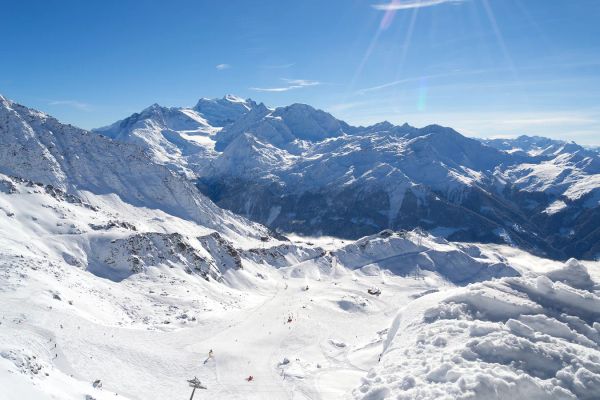
Alps Snow Forecast: Up to 64 cm Headed for the High Glaciers as the Snow Line Drops
The Alps are about to swap mild, sunny October weather for something far more wintry. A cold front arrives Tuesday, and SnowStash forecasts have Monterosa Ski out in front with 64 cm over 14 days, ahead of Blatten Belalp (55 cm) and Verbier (43 cm). The snow line should fall below 2000 metres by Wednesday night, and glaciers across Switzerland, Italy and Austria are in line for the best of it. The wind will have a say too.
20 Oct 2026
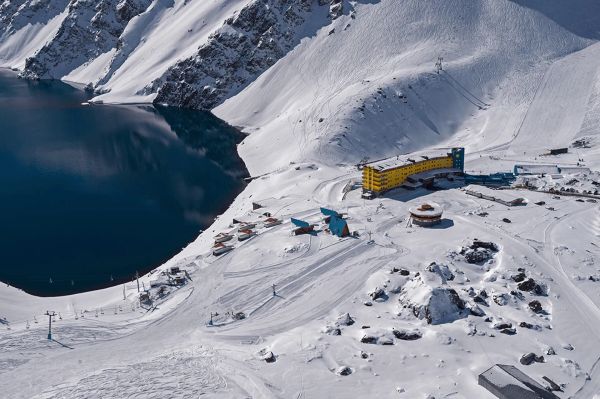
Four Dead After Avalanche Near Ski Portillo in Chile
A large avalanche struck near Laguna del Inca adjacent to Ski Portillo on Saturday afternoon, killing four people and injuring four others. The group were day visitors mountaineering in the backcountry after reportedly being warned about elevated avalanche risk by resort staff.
18 Oct 2026
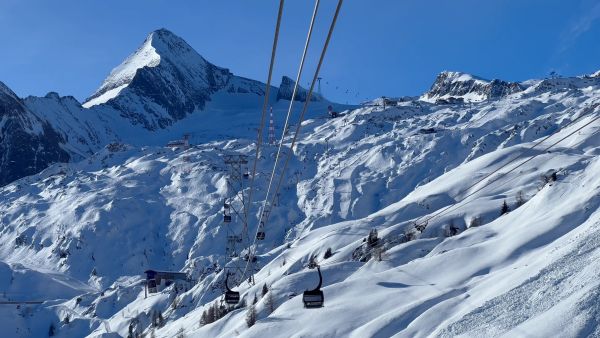
Europe Ski Resorts Open Now: What Is Skiable in Mid-October 2026
Europe’s ski season is open, technically. After a record-warm summer, glaciers in Austria, Switzerland and Italy are running a few pistes apiece, Sölden, Stubai and Kitzsteinhorn started late, Titlis has pushed back to 24 October, and Zermatt reopens a few lifts on 14 October after more than two months shut. Finland’s Levi and Ruka are skiing on stored snow. Here is what is open, and what you actually get at each.
14 Oct 2026

Zermatt Plans World Cup Downhill Return on the Gornergrat for 2028
Zermatt is having another crack at a World Cup downhill, and this time nobody has to cross a border. Around 13 million Swiss francs is going into rebuilding the Gornergrat piste, including a jump fed by a roughly 300-metre in-run across the roof of the Gornergrat Railway gallery, with the Matterhorn lined up behind it for the TV cameras. First men’s race is pencilled in for March 2028, pending FIS homologation.
14 Oct 2026

Mt. Rose Begins Snowmaking for the 2026-27 Season at Lake Tahoe
Lake Tahoe’s highest base elevation is paying off early: Mt. Rose has started making snow for 2026-27 after the first flurries and a cold snap. The Nevada resort is backing it with nearly US$2 million in upgrades, including a replacement snowmaking main line, a new PistenBully groomer and restraint bars on every lift. Opening day is yet to be confirmed, though Heavenly and Northstar are already eyeing 20 November.
13 Oct 2026

Utah Ski Resorts 2026-27: What’s New at Alta, Deer Valley, Powder Mountain and More
Utah is still building flat out. For 2026-27, Powder Mountain opens a steep new Skytrac chair into more than 1,000 acres of advanced terrain, Deer Valley adds 200 acres on Hail Peak, Sundance gets a new quad and Park City adds a gondola from its new parking structure. Snowmaking is expanding almost everywhere, Eagle Point stays closed after the Cottonwood Fire, and the 2034 Games are setting the pace. Here’s what’s new, resort by resort.
13 Oct 2026

Mt Hutt Invests NZ$12 Million in Base Area, Tripling Its Sun Deck
Mt Hutt is getting busier, and its base lodge is about to catch up. NZ$12 million goes into a heated sun deck roughly three times the current size (430 m² to 1,300 m²), plus a new toilet block, heated steps down to snow level, extra storage and a new food and beverage outlet. Building starts after the 2026 season, with everything due for winter 2027.
11 Oct 2026

Vermont Ski Resort Opening Dates 2026-27: Few Dates Set, Killington Waits on the Cold
Vermont's season is slow to take shape. Stratton is tentatively targeting 18 November and Sugarbush 21 November, while Pico has Friday 11 December on the calendar. Killington never sets a date and opens when the snowmaking allows, and Vail Resorts has yet to name days for Stowe, Okemo and Mount Snow. The forecasts disagree about snow, and the main El Niño worry for the Green Mountains is warmth.
9 Oct 2026