
Klewenalp Stockhütte
40km of piste above Lake Lucerne. 1,199-1,938m elevation, 15 lifts, CHF 58 day pass. Family terrain in Nidwalden, Switzerland.
Season 2026 - 2027
Opens
19 Dec 2026
Closes
21 Mar 2027
Days open
92
Annual snow
4m
The Overview
Michael Fulton
Melbourne-based skier and snowboarder with 50+ resorts across 5 continents. Specialises in Australian resorts and international resort comparisons.
Klewenalp Stockhütte operates across 40 kilometres of piste between 1,199 and 1,938 metres elevation, with 739 metres of vertical drop spread over 17 marked runs in the Canton of Nidwalden. The terrain splits 38 per cent beginner and 63 per cent intermediate, creating a family-focused profile above the southern shore of Lake Lucerne. Annual snowfall averages 4.3 metres, with north and east-facing slopes preserving snow quality through the season. Day tickets cost CHF 58, and the resort participates in the Schneepass Zentralschweiz covering 15 central Swiss areas for CHF 695.
The ski area divides between two access points: Klewenalp reached via aerial tramway from Beckenried, and Stockhütte served by gondola from Emmetten. Slopes favour progression, with wide intermediate cruisers dominating the Klewenalp sector and gentler terrain around Stockhütte. The Klewenstock summit at 1,938 metres anchors the upper area, whilst the 9-kilometre toboggan run claims status as central Switzerland's longest. Off-piste possibilities exist between prepared runs when conditions allow.
The dual-village base creates a relaxed atmosphere distinct from purpose-built resorts, with Beckenried sitting lakeside at 435 metres and Emmetten perched higher at 780 metres. Mountain restaurants include Alpstubli, Tannibüel and the PanoramaBar, all capitalising on panoramic views across Lake Lucerne to the Rigi massif opposite. Crowds remain moderate outside peak weekends, and the 44-kilometre cross-country network adds winter variety beyond alpine skiing.
Access via Swiss Travel Pass includes Klewenalp's cable car at no surcharge, positioning the resort within easy day-trip range of Lucerne and Zurich. The 2025-26 season ran 14 December to 22 March, typical for this elevation band. The terrain suits intermediates seeking mileage without intimidation, families requiring varied progression zones, and skiers prioritising lake views over vertical extremes or expert challenge.
739m
Vertical
17
Runs
40 km
Piste
4m
Annual snow
The Terrain
17 runs across 40 km of piste
Klewenalp Stockhütte covers 17 runs and 40 kilometres of piste above Lake Lucerne, falling 739 metres from 1,938 metres down to 1,199 metres. The grading is dominated by beginner and intermediate runs, with next to nothing steeper, which points to a gentle, cruising-focused profile. The area is split between two access points: an 80-person aerial tram from Beckenried serves Klewenalp, while a six-person gondola from Emmetten serves Stockhütte. Chairs and seven T-bars link the sectors, and snow quality depends on the season at this modest elevation. The Beckenried tram dates to 1972.
The Wangiboden-Klewenstock quad chair is the main on-mountain lift, serving upper intermediate terrain beneath the 1,938-metre Klewenstock summit, and views reach across the lake to the Rigi. There are no famous named descents, so the appeal is easy mileage and scenery rather than challenge. A 9-kilometre toboggan run is billed as the longest in central Switzerland, and the area sits within the Schneepass Zentralschweiz. It suits families, beginners and intermediates who want a relaxed day within reach of Lucerne and Zurich. Day tripping suits it best.
Terrain split
17
runs
17 runs across 4 grades
Beginner6 runs · 38%
Intermediate11 runs · 63%
Advanced0 runs · -1%
Expert0 runs · 0%
Time it right
When to visit Klewenalp Stockhütte
The 2025-26 season opened 14 December 2025 and closed 22 March 2026, delivering 99 operating days typical for this mid-elevation central Swiss profile. Neighbouring resorts Stoos and Neusell occasionally open earlier following heavy November snowfall, as occurred in November 2024 when Klewenalp advanced its scheduled start. Season length remains dependent on natural accumulation at the 1,199-metre base elevation, with no artificial snowmaking limiting early or late-season extension of lower runs.
Annual snowfall averages 4.3 metres at mid-mountain elevations, with north and east-facing aspects preserving cover longer than sun-exposed sectors. The position above Lake Lucerne creates microclimate effects: winter inversions frequently leave the resort above valley fog, whilst the lake's thermal influence occasionally moderates extreme cold. Current base depth reached 80 centimetres in mid-season 2025-26, following 46 centimetres in the prior week and 335 centimetres season-total accumulation. Reliable coverage typically establishes by late December and holds through mid-March at upper elevations.
January through early March offers optimal timing, with consistent coverage, stable temperatures and fewer fog days than December. Weekends draw Zurich and Lucerne day-trippers; midweek visits encounter lighter crowds. Spring conditions arrive by late March when south-facing terrain softens, though shaded upper runs maintain quality longer. The resort's intermediate focus means powder gets tracked quickly on-piste after fresh snowfall, but off-piste stashes linger in less-travelled zones between marked runs.
No night skiing operates, and the events calendar remains modest compared to larger resorts, emphasising family programming over competitive racing or freestyle competitions. The Schneepass Zentralschweiz provides access during each member resort's operating window, meaning passholders can chase snow across the 15-area network as seasonal conditions shift between December and April across varying elevation bands.
Season 2026 - 2027
19 Dec 2026
Opens
21 Mar 2027
Closes
92
Days open
4 m
Annual snow
Getting there
Getting to Klewenalp Stockhütte, and where to stay
Klewenalp Stockhütte sits in the Canton of Nidwalden on Lake Lucerne's southern shore, with base access from Beckenried at 435 metres and Emmetten at 780 metres. The resort lies 20 kilometres south of Lucerne, 50 kilometres from Zurich, and occupies mountainous terrain rising directly from the lake through alpine pasture to the 1,938-metre Klewenstock summit. The panoramic position overlooks Vierwaldstättersee's Urnersee basin, with views north to the Rigi massif and across water to Vitznau and Weggis opposite.
Beckenried serves as the primary gateway, positioned where the A2 motorway's exit 35 provides direct access from the Basel-Gotthard route. The village sits immediately north of the 9.3-kilometre Seelisberg Tunnel, completed in 1980 as Switzerland's second-longest road tunnel. Emmetten occupies higher terrain reached via the winding Emmetten-Beckenried road. Both villages retain traditional Innerschweiz architecture and agricultural character rather than purpose-built resort infrastructure, with hotels, restaurants and services integrated into existing settlements dating centuries.
The A2 motorway links Basel 180 kilometres north and Chiasso 150 kilometres south, placing Klewenalp on the primary north-south axis through the St Gotthard. Drive time from Lucerne measures 20 minutes via the A2 southbound to exit Beckenried. From Zurich, the journey covers 72 kilometres in roughly 50 minutes via the A4 to Brunnen, then A2 southbound. Public transport requires rail to Stans, then bus 311 to Beckenried, totalling 35 minutes from Lucerne or 2.5 hours from Zurich including connections.
Zurich Airport lies 93 kilometres northeast, approximately 90 minutes by car or 2 hours 50 minutes by train-bus-gondola combination. Bern Airport sits 120 kilometres west. Rail passengers reach Stans station on the Lucerne-Engelberg line, connecting to Beckenried via AutoPostal bus 311 departing hourly. Lake Lucerne passenger ships stop at Beckenried's landing stage, offering scenic but slower connections from Lucerne requiring 1 hour 15 minutes. The Swiss Travel Pass covers both the Beckenried-Klewenalp tramway and Emmetten-Stockhütte gondola without surcharge.
Where to stay
Search all stays →Hotels and lodges near Klewenalp Stockhütte, powered by Stay22.
Latest News
From the SnowStash desk

Vermont Ski Resort Opening Dates 2026-27: Few Dates Set, Killington Waits on the Cold
Vermont's season is slow to take shape. Stratton is tentatively targeting 18 November and Sugarbush 21 November, while Pico has Friday 11 December on the calendar. Killington never sets a date and opens when the snowmaking allows, and Vail Resorts has yet to name days for Stowe, Okemo and Mount Snow. The forecasts disagree about snow, and the main El Niño worry for the Green Mountains is warmth.
9 Oct 2026
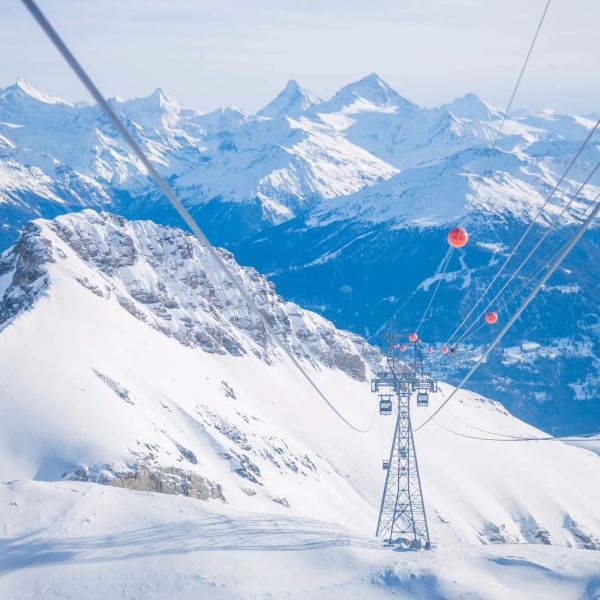
Crans-Montana 2027 World Championships President Resigns Ahead of Fraud Hearing
Less than four months out from the Crans-Montana 2027 World Championships, the man running the organising committee has stepped down. Claude-Alain Schmidhalter resigned as Swiss-Ski vice president and OC president after being indicted over a business dispute unrelated to skiing. He denies the allegations and faces court on October 27. Interim leaders are in place for the February 1-14 event.
9 Oct 2026
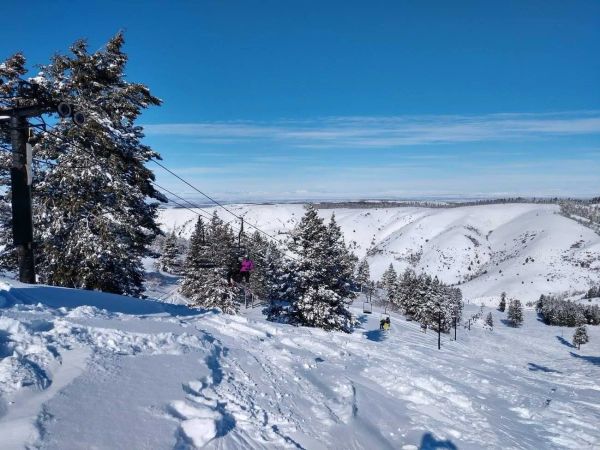
Kelly Canyon, Idaho, Adds Snowmaking, a Bigger Terrain Park and More Parking for 2026-27
Kelly Canyon had a rough 2025-26, and the Idaho resort has spent the summer making sure it doesn’t repeat. Snowmaking now reaches the top of Goldrush, the terrain park is doubling in size with a stereo system, lights and a snack shack, and the car park is getting bigger. Grooming is stepping up too. Target opening is December 4, conditions permitting.
9 Oct 2026
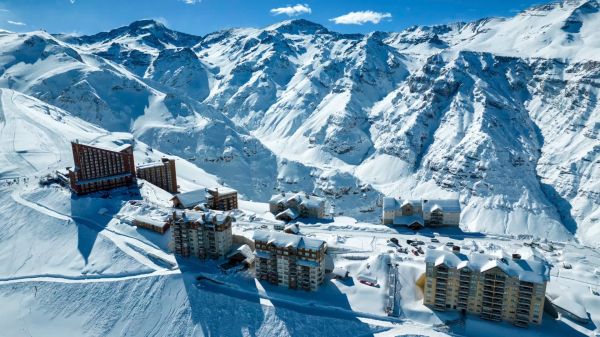
Valle Nevado Extends Season to November 8 After 108 cm in 48 Hours
Winter was meant to be winding down in Chile. Then Valle Nevado took 108 cm in 48 hours in early October, and the resort has pushed its closing date out to November 8 - its latest in 38 years of operation. That makes 143 days of skiing since opening day on June 19, with 690 cm banked for the season. Only part of the mountain is running while the storm settles, so check the mountain report before you plan a trip.
9 Oct 2026
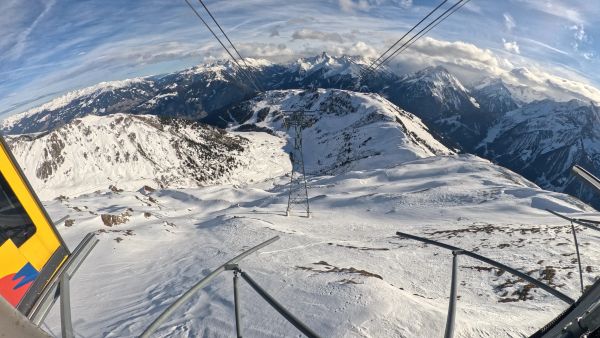
Alps Snow Forecast: Cold Front Brings Thursday Snow to the High Alps
The Alps look a lot more like winter today, for a day or so. A cold front is moving west to east, dropping up to 35 cm on high glaciers and peaks, with snow levels falling to around 1,500-1,800 m at times. Don’t plan a trip around it: mid-elevation snow will be thin and wet, every area is closed bar a limited Sölden glacier opening tomorrow, and warmer weather returns by Monday.
8 Oct 2026
California Ski Resort Opening Dates 2026-27: Mammoth Leads, Tahoe Follows
Mammoth Mountain is first up in California, targeting Friday 13 November after a dusting of September snow. Heavenly and Northstar follow on 20 November, Palisades Tahoe on Wednesday 25 November and Sugar Bowl on 27 November, with Kirkwood on 4 December and June Mountain on 19 December. Plenty of smaller areas have no date yet. A super El Niño favours the Sierra, but a warmer storm track is the catch.
7 Oct 2026
Colorado Ski Resort Opening Dates 2026-27: A-Basin and Keystone Race to Be First
Arapahoe Basin, Keystone and Winter Park are all chasing an October start, though none has a firm date yet. The first dated openers are Breckenridge and Copper on Friday 6 November, then Vail on 13 November, with most of the rest bunched around US Thanksgiving. Hesperus did not open at all last season. A super El Niño offers hope but no guarantee, and forecasters say the southern mountains have the better odds.
5 Oct 2026
Dolomiti Superski 2026-27: Four New Gondolas, New Reservoirs and an €89 Peak Day Pass
Dolomiti Superski is spending around €100 million across its 12 areas before winter. Kronplatz gets a new 10-passenger gondola with a middle station, 3 Zinnen gets Helmissimo, and Val di Fassa swaps a chairlift for a gondola above Col Valvacin. New water-storage basins and upgraded snowmaking follow, and construction has started on the San Martino to Passo Rolle link. A peak adult day pass is €89.
4 Oct 2026
Klewenalp Stockhütte Lift System
Fifteen lifts serve the combined Klewenalp Stockhütte terrain, comprising one aerial tramway, one gondola, one six-person chairlift, one quad chairlift, two double chairlifts and seven T-bars, plus two surface conveyors. The 80-person Beckenried-Klewenalp aerial tramway, built by Von Roll in 1972, climbs 1,150 metres in 10 minutes to reach the main Klewenalp sector at 1,600 metres. From Emmetten, a six-person Doppelmayr gondola installed in 2007 accesses Stockhütte at 1,286 metres, covering 1,454 metres with 1,200 persons-per-hour capacity.
The Doppelmayr four-person high-speed detachable chairlift Wangiboden-Klewenstock forms the headline on-mountain installation, spanning 1,483 metres with 1,775 hourly capacity to serve upper intermediate terrain. Two Bartholet BMF fixed-grip double chairs handle mid-mountain sectors: the 628-metre Herti lift and 487-metre Chäppelihütte installation, each moving 1,000 to 1,200 skiers hourly. A six-person chairlift Stafel-Chälen provides additional upper-mountain access. Surface lifts include the 1,199-metre Aengi T-bar and shorter drags serving beginner zones at both Klewenboden and Stockhütte.
Base-to-summit flow relies on the tramway or gondola launch, followed by chairlift connections across the linked sectors. The Klewenstock area anchors advanced terrain whilst the flatter zones around Klewenboden and Stockhütte concentrate learning areas. Connectivity between the two sectors requires traversing or using a combination of chairlifts, with the Junior and Twäregg lifts facilitating movement. The system handles daily traffic efficiently given the resort's moderate visitation patterns.
The lift infrastructure reflects incremental modernisation rather than wholesale replacement, with the 2007 Stockhütte gondola representing the newest major installation. No snowmaking covers lower trails to Beckenried or Emmetten, limiting full-mountain access to optimal snow years. The predominantly fixed-grip chair and T-bar network keeps uphill transport straightforward but dated compared to resorts emphasising high-speed detachable technology across all elevations.
15lifts across 7 types
1
Aerial Tram
1
Gondola
1
6-Person Chair
1
Quad Chair
2
Double Chairs
7
T-Bars
2
Surface Lifts
Klewenalp Stockhütte lift system
Klewenalp Stockhütte is served by 15 lifts, listed here by type. Check which lifts are turning against the live conditions before you plan your first laps - early lifts and high-speed chairs get you to the best snow fastest.
More Klewenalp Stockhütte intelligence: trail map, snow report, webcams, resort overview.