Akakura Onsen
17 runs, 550m vertical, 14m annual snowfall. Japan's first international resort with daily night skiing and hot spring access.

Season 2026 - 2027
Opens
12 Dec 2026
Closes
31 Mar 2027
Days open
109
Annual snow
12.9m
The Overview
Michael Fulton
Melbourne-based skier and snowboarder with 50+ resorts across 5 continents. Specialises in Australian resorts and international resort comparisons.
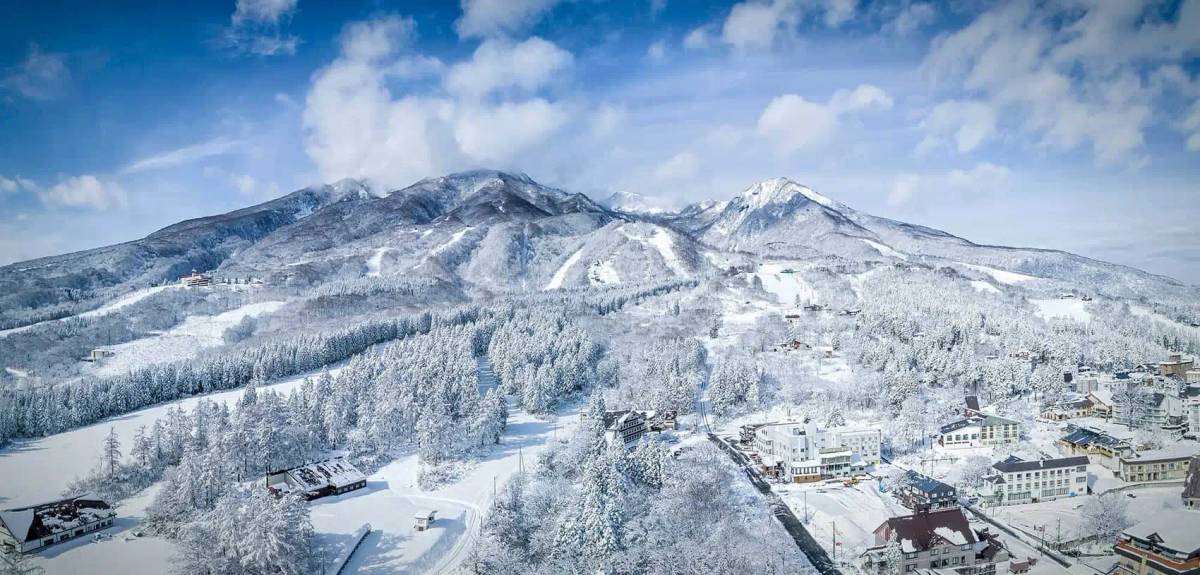
Akakura Onsen operates across 550 vertical metres between 650 and 1,200 metres elevation, delivering 17 runs across three distinct sectors named Yodel, Kumado and Ginrei. The resort opened in 1937 as Japan's first international ski area and receives 14 metres of annual snowfall drawn from Japan Sea storm systems. Terrain distribution favours progression skiers with 50 per cent beginner runs, 30 per cent intermediate and 20 per cent advanced, whilst the longest run extends 4 kilometres from summit to base.
The ski area connects seamlessly with neighbouring Akakura Kanko Resort, creating a combined network of 32 runs accessible on a joint lift pass. Wide groomed slopes dominate the lower mountain whilst steeper tree runs and the region's steepest groomed pitch occupy higher elevations. Natural snow conditions eliminate the need for snowmaking infrastructure, maintaining powder quality through mid-season storms.
Akakura Onsen village spreads across the base area with traditional ryokan, bars and restaurants preserving an established Japanese mountain character. The resort remains the only Myoko Kogen area offering daily night skiing from 5pm to 9pm on the Kumado sector. English-speaking ski schools and rental operators service international visitors without diluting the village's local atmosphere.
The resort forms part of the broader Myoko Kogen cluster alongside Ikenotaira and Suginohara, linked by shuttle buses running throughout the season. Combined lift passes unlock access to all four Myoko mountains plus Lotte Arai, Madarao and Tangram resorts. The ski area suits beginner and intermediate skiers seeking reliable snowfall, accessible terrain and hot spring access without crowds.
550m
Vertical
14
Runs
74 acres
Skiable
12.9m
Annual snow
The Terrain
14 runs across 74 acres skiable
Akakura Onsen is the gentler, village-side half of the Akakura pairing in Myoko, Niigata. At about 30 hectares it is the smaller of the two. It drops 550 metres from 1,200 metres to a 650-metre base, with 14 runs graded 50% beginner, 30% intermediate and 20% advanced and no expert terrain. Chairs run in a double-heavy lineup, so expect a relaxed pace. About 14 metres of snow falls each year, which gives even the lower slopes a deep winter cover. Among Myoko ski areas, Akakura Onsen is the easiest to settle into if you are still building confidence on snow.
The mountain is organised into three sectors, Yodel, Kumado and Ginrei, with the easier slopes sitting closest to the base. Wide groomed pistes make up most of it, but tree runs and softer snow off the sides give intermediates a way to try powder without committing to steep ground. Your lift ticket carries across to Akakura Kanko for more vertical when you are ready. Beginners, families and cautious intermediates will find the most to enjoy here, along with anyone who prefers a day finishing in an old onsen village, rather than at a purpose-built base. Experts will want the upper areas next door.
Terrain split
14
runs
14 runs across 4 grades
Beginner7 runs · 50%
Intermediate4 runs · 30%
Advanced3 runs · 20%
Expert0 runs · 0%
Time it right
When to visit Akakura Onsen
The 2025-2026 season operates from 13 December 2025 through 29 March 2026, spanning 107 days of lift-served skiing. Operating dates align with Myoko Suginohara and Ikenotaira whilst Akakura Kanko opens six days later on 19 December. Season length matches regional patterns with mid-December openings and late March closures standard across Niigata Prefecture resorts.
Myoko Kogen's location on Mount Myoko's eastern flank intercepts 13 to 15 metres of seasonal snowfall from Japan Sea moisture systems. Week two of January historically delivers peak accumulation with 70 centimetres falling across 5 snowy days. The resort operates without snowmaking relying entirely on natural precipitation, with base depths routinely exceeding 3 metres by February.
January through February provides optimal powder conditions with consecutive multi-day storm cycles depositing 40 to 90 centimetres between weather breaks. March transitions to spring snow with warmer temperatures and longer daylight though accumulation continues through mid-month. The easterly aspect and modest summit elevation mean lower runs soften earlier than higher Myoko resorts during sunny spells.
Daily night skiing distinguishes Akakura Onsen from other Myoko areas, with illuminated runs open every evening throughout the season. Slalom race events run in February and March with open entry. The resort's hot spring village hosts traditional winter festivals including the 15 January Dosojin fire ceremony.
Season 2026 - 2027
12 Dec 2026
Opens
31 Mar 2027
Closes
109
Days open
12.9 m
Annual snow
The record
Historical snowfall at Akakura Onsen
Daily snow reports at Akakura Onsen go back to 2012, 14 winters on the books. Open the record to compare winters, lifts and piste.
120 cm
Snowiest day
25 Jan 2026
1090 cm
This winter · 2025-26
so far
1293 cm
Typical winter
average of complete seasons
Winter totals
cm
Past wintersThis winter
Getting there
Getting to Akakura Onsen, and where to stay
Akakura Onsen sits in Myoko City within Niigata Prefecture's southern highlands, 8 minutes by road from Myoko Kogen Interchange on the Joshinetsu Expressway. The village occupies the base of Mount Myoko's eastern slopes at 650 metres elevation with the 2,454-metre volcanic peak rising above. Lake Nojiri spreads 15 minutes north whilst the Sea of Japan lies visible from upper slopes on clear days.
Myoko-Kogen Station on the Echigo Tokimeki Railway Myoko Haneuma Line provides the nearest rail access 15 minutes from the village by bus or taxi. The traditional hot spring town of Akakura Onsen anchors the Myoko Kogen resort cluster and contains the region's largest concentration of visitor accommodation, bars and restaurants. Myoko City centre sits 20 minutes east whilst Nagano City lies 45 kilometres south.
The Joshinetsu Expressway connects Tokyo 240 kilometres southeast via the Kan-Etsu and Nagano expressways in approximately 3.5 hours. Myoko Kogen Interchange exits directly onto Route 18 with 8 minutes driving to resort base areas. Road access from Kanazawa runs 90 kilometres north taking 90 minutes via the Hokuriku Expressway.
Narita Airport sits 340 kilometres distant with Nagano Snow Shuttle buses running directly to Akakura Onsen in 5.5 hours during winter. Haneda Airport lies 290 kilometres away with similar direct shuttle options. Rail connections require the Hokuriku Shinkansen to Nagano Station then the Kita-Shinano Line to Myoko-Kogen Station totalling 2.5 hours from Tokyo. Niigata Airport operates 160 kilometres northeast serving domestic and limited Asian routes.
Where to stay
Search all stays →Stays map loads when you scroll here
Hotels and lodges near Akakura Onsen, powered by Stay22.
Latest News
From the SnowStash desk
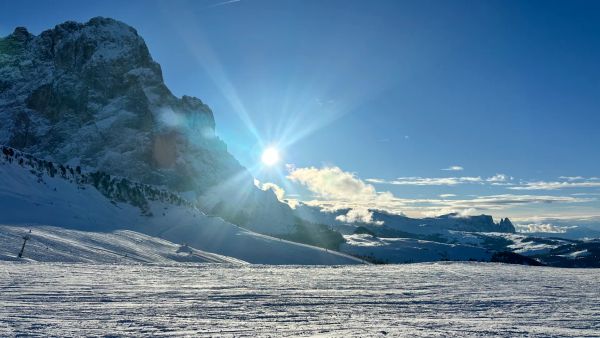
Val Gardena to Alpe di Siusi Lift Link Back in Play After Court Ruling
The Val Gardena-Alpe di Siusi lift link isn’t dead after all. A South Tyrol court has overturned Santa Cristina’s rejection of the new Monte Pana-Saltria link on procedural grounds, after the council skipped required public information sessions. Opponents want the missing sessions held and a fresh vote, and nothing has been approved. For now it’s still a bus between the two, but a plan first floated in 2017 is back in the conversation.
8 Nov 2026
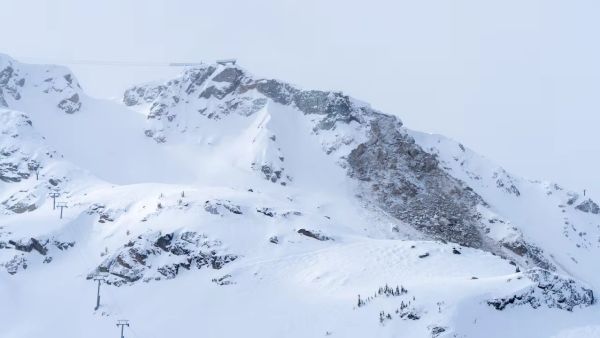
Whistler Blackcomb Rockslide Zone Stays Closed Through 2026-27 Season
A section of Whistler Peak terrain will stay closed all 2026-27 season, Vail Resorts has confirmed, with rockslide mitigation work continuing into summer 2027. Peak Express is still expected to run this winter, but locals are already arguing about what’s actually off limits, whether the Whistler Bowl is gone, and why the news landed after pass sales wound down. Here’s where things stand.
7 Nov 2026
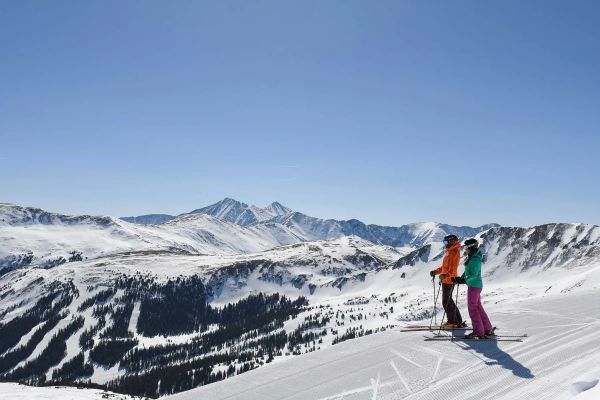
Loveland Ski Area Opens for 2026-27 and Marks 60 Years of Snowmaking
Loveland is open. The Colorado ski area started Chet’s Dream turning on Saturday 7 November to kick off 2026-27, with $60 adult lift tickets to mark 60 years of snowmaking. Expect three runs, nearly 1,000 vertical feet (about 300 metres) of top-to-bottom skiing, live music on the Basin Patio and no beginner terrain yet. Here’s what’s open, what it costs and when Loveland Valley follows.
7 Nov 2026
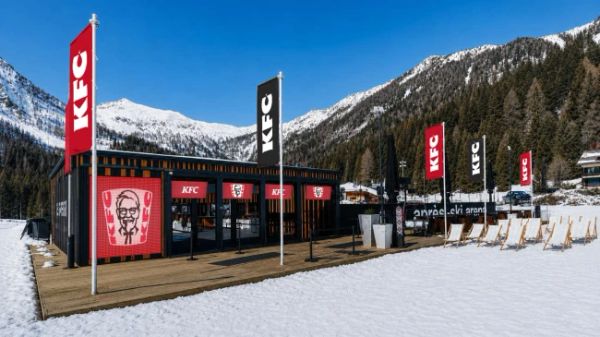
KFC Is Coming to the Slopes at Cortina and Madonna di Campiglio
Fried chicken is heading up the Dolomites. From 5 December KFC will run two restaurants on the slopes - one at 2,123 metres at Cortina, one at 1,700 metres at Madonna di Campiglio - and the polenta-and-canederli crowd has opinions. Local politicians, conservation groups and plenty of Facebook commenters are calling it a step too far, while others just want a cheaper lunch. Here’s what’s on the menu and what’s the fuss.
5 Nov 2026
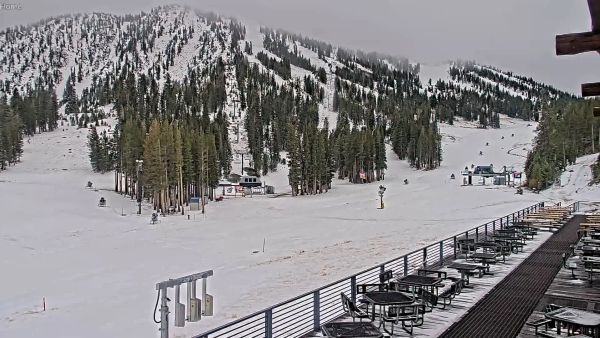
Mt Rose Aims to Open First in Tahoe on November 6
Mt Rose is going for the first-in-Tahoe title, with the Lakeview Express due to spin at 9 a.m. on Friday, November 6. One main lift, three runs and plenty of snowmaking, sitting on the highest base elevation in the region at 8,260 ft. Here is what is open, what is not (sorry, tubing fans), and how the early North American openings are stacking up.
4 Nov 2026
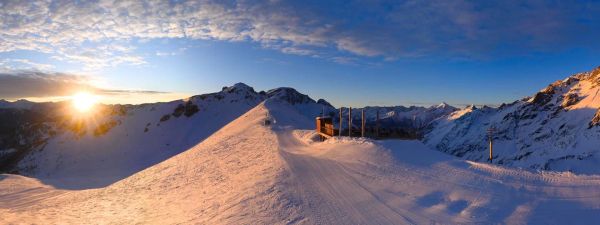
Europe Snow Forecast: Serre Chevalier Leads With 82 cm Over the Next 10 Days
Europe has had a quiet start to November, but our 10-day forecast has Serre Chevalier on 82 cm and Les 2 Alpes on 71 cm. Two pushes are lined up: a western Alps top-up from Friday, then a bigger, wider system on Thursday, November 12 and Friday, November 13 that reaches Italy and Switzerland. Full leaderboard inside.
4 Nov 2026
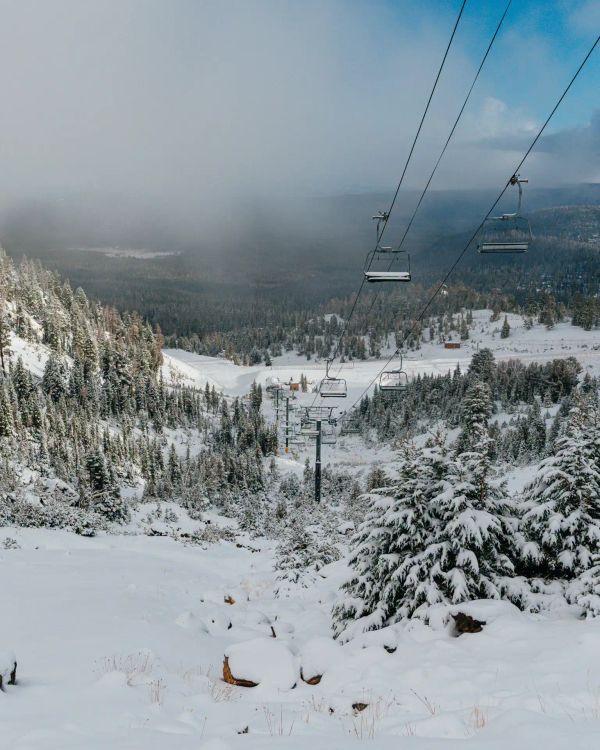
Mammoth Mountain Opens Early on November 5 With Up to 33 Inches of Snow in the Forecast
Mammoth just moved opening day forward to Thursday, November 5, eight days ahead of schedule. A snowy weekend and cold snowmaking nights did the work, and our forecast shows up to 33 inches more landing on November 13 and 14. Here is what opens, what the weather looks like and where Mammoth sits among the early Ikon Pass openers.
3 Nov 2026

Utah Snow Storm Builds Early-Season Base Ahead of November Openings
Rain down low, snow up high, and a snow report full of zeros that mostly means ‘not updated yet’. Utah’s first proper storm of 2026-27 is rolling through the Wasatch, Snowbird’s snow stake is closing in on 10 inches, and Brian Head is five days from opening day. Early November snow rarely looks like much, but it is the layer every November opening date is built on. Here is where it stands.
1 Nov 2026
Akakura Onsen Lift System
Fourteen lifts service the mountain comprising two quad chairs, four triple chairs and eight double chairs distributed across the Yodel, Kumado and Ginrei zones. No gondolas or surface lifts operate within the ski area boundary. The lift network provides multiple summit access points across the 1,200-metre elevation band.
Yodel Quad 2 anchors the central sector whilst Kumado Quad 1 serves the night skiing area on the resort's eastern flank. Triple chairs link mid-mountain terrain pods whilst double chairs provide beginner zone access and lower mountain connections. Lift capacity remains modest by international standards though queues rarely form outside Japanese holiday periods.
The three sectors connect through groomed traverse runs allowing skiers to circuit the mountain without downloading. Free shuttle buses link Akakura Onsen base areas with Akakura Kanko's gondola station 5 minutes away. Combined ticket holders can upload via either resort's lift system and ski between areas.
Lift infrastructure retains older fixed-grip technology with manual ticket checking at most terminals. Operating hours run 8.30am to 4.30pm daily with night operations extending Kumado sector lifts until 9pm. Saturday and pre-holiday sessions include fresh grooming before evening sessions commence.
14lifts across 3 types
2
Quad Chairs
4
Triple Chairs
8
Double Chairs
Akakura Onsen lift system
Akakura Onsen is served by 14 lifts, listed here by type. Check which lifts are turning against the live conditions before you plan your first laps - early lifts and high-speed chairs get you to the best snow fastest.
More Akakura Onsen intelligence: trail map, snow report, webcams, resort overview.