
The Overview
Michael Fulton
Melbourne-based skier and snowboarder with 50+ resorts across 5 continents. Specialises in Australian resorts and international resort comparisons.
Myoko Suginohara operates across 1,124 metres of vertical drop between 731 and 1,855 metres elevation, with 16 runs covering terrain suitable for all abilities. The resort claims Japan's longest continuous ski run at 8.5 kilometres from summit to base. Annual snowfall averages 13 to 15 metres, driven by storms crossing the Sea of Japan that collide with the mountain's high-elevation terrain. Myoko Suginohara joined the Ikon Pass network for the 2025-26 season, offering passholders access to one of nine ski areas in the broader Myoko Kogen region.
Terrain divides into two zones: the Suginohara Zone at lower elevations and the Mitahara Zone reaching the 1,855-metre summit. Beginner and intermediate runs account for 80 per cent of the resort's 16 marked trails, with wide groomers dominating the lower mountain. The upper Mitahara Zone holds steeper pitches and tree skiing between widely spaced birch and beech, offering off-piste options when fresh snow arrives. A terrain park operates on the lower mountain with jumps, boxes and rollers.
The base village of Suginosawa Onsen retains traditional Japanese character, with family-run lodges, onsen bathhouses and limited evening dining. Weekday lift queues rarely exceed two minutes, though the gondola may queue 10 to 30 minutes on weekends and public holidays. The resort offers free lift access for children under 13 and discounted tickets for seniors aged 55 and above. On-mountain restaurants serve regional specialities including roast pork with ginger sauce and local soba noodles.
Myoko Suginohara operates as part of the Mt Myoko All Mountain Pass system, which grants access to Akakura Onsen, Akakura Kanko and Ikenotaira resorts within the Myoko Kogen area. The 2025-26 season runs from 5 December 2025 to 29 March 2026. The resort suits intermediate cruisers seeking long fall-line runs, families with mixed abilities benefiting from free children's passes, and advanced riders looking for accessible tree skiing and sidecountry terrain between storm cycles.
1124m
Vertical
16
Runs
222 acres
Skiable
15m
Annual snow
The Terrain
16 runs across 222 acres skiable
Myoko Suginohara packs 1,124 metres of vertical into just 16 runs, falling from 1,855 metres at the top to a 731-metre base on a modest 90 hectares. The grading is 40% beginner, 40% intermediate and 20% advanced, so it is a mountain for cruising rather than tackling steeps. A gondola, two quad chairs and two double chairs make up the lift system. The standout is the Dynamic Course, a groomed run of about 8.5 kilometres that is often described as the longest in Japan. Skiers who enjoy sustained rhythm turns will appreciate how much descent each lap delivers.
The Dynamic Course runs from the summit to the base with views over Lake Nojiri, and it is wide enough, at up to 300 metres in places, to let skiers choose their own line. Allow time for the gondola ride, which takes around 15 minutes each way, so the day is made of fewer, longer laps. Most runs sit in the beginner and intermediate range, which suits families, mixed-ability groups and confident novices keen to log kilometres. Advanced skiers will find the steeper pitches limited and off-piste is not the drawcard here. Treat it as a high-vertical groomer for relaxed, steady skiing.
Terrain split
16
runs
16 runs across 4 grades
Beginner6 runs · 40%
Intermediate6 runs · 40%
Advanced3 runs · 20%
Expert0 runs · 0%
Time it right
When to visit Myoko Suginohara
The 2025-26 season spans 5 December 2025 to 29 March 2026, delivering approximately 115 operating days across mid-December to late March. Myoko Kogen typically opens lifts in early December following initial snowpack establishment, with full terrain access by mid-month. Spring operations extend into late March, when lower elevation runs transition to corn snow and upper mountain terrain holds winter conditions. Lifts operate from 8.30am to 4.30pm on weekdays and 8am to 4.30pm on weekends and holidays.
Annual snowfall averages between 13 and 15 metres, placing Myoko Suginohara among Japan's snowiest ski areas. The resort's 1,855-metre summit elevation exceeds both Hakuba Happo One and Nozawa Onsen, providing a 600-metre elevation advantage over coastal lowlands where storms originate. Moisture-laden systems from the Sea of Japan collide with the mountain, producing frequent dumps of light, dry powder. Snowmaking equipment supplements natural snowfall on lower runs, though the resort relies predominantly on natural accumulation given the region's consistent storm cycles.
January and February deliver peak powder conditions, with the second week of January historically recording the heaviest snowfall averaging 74 centimetres across a typical week. Early season conditions in December offer uncrowded slopes with developing base depths, whilst March provides longer daylight hours and stable spring snow on sun-exposed aspects. Visibility during active storms can limit upper mountain skiing, pushing traffic into tree zones where spatial reference remains clearer. Weekday visits avoid domestic crowds that concentrate on weekends and Japanese public holidays.
The resort does not operate night skiing or floodlit terrain. Snowmobile tours operate as an additional activity during winter months. Children under 13 ski free throughout the season, making school holiday periods particularly busy with Japanese families. No major international competitions or festivals anchor the calendar, though local events occasionally take place at the base area. The season's timing aligns with other Myoko Kogen resorts, allowing multi-resort exploration under the Mt Myoko All Mountain Pass.
Season 2026 - 2027
19 Dec 2026
Opens
28 Mar 2027
Closes
99
Days open
15 m
Annual snow
Getting there
Getting to Myoko Suginohara, and where to stay
Myoko Suginohara sits in southwestern Niigata Prefecture on the eastern slopes of 2,454-metre Mount Myoko, part of the Myoko-Togakushi Renzan National Park. The resort occupies a north-south ridgeline within the broader Myoko Kogen highland plateau, which stretches between 600 and 1,300 metres elevation. The base village of Suginosawa Onsen lies at 731 metres, approximately 5 kilometres south of the larger Akakura Onsen village. Niigata Prefecture borders Nagano Prefecture immediately to the south, placing Myoko Kogen at the intersection of two major snow belts.
Myoko-Kogen Station, the nearest rail hub, sits 10 to 15 minutes by taxi from the resort base, serving the Shinano Railway Kita-Shinano Line. Nagano city lies 30 kilometres to the south, connected by a 40-minute train journey on the Shinano Railway. The larger city of Joetsu sits 20 kilometres north. The Myoko region merged from the historic city of Arai and surrounding mountain towns in 2005, creating the modern municipality of Myoko City with a population near 31,000 spread across 445 square kilometres.
The Joshinetsu Expressway provides primary road access, with the Myoko Kogen Interchange located 5 minutes from Suginohara's base area. From Tokyo, the drive covers approximately 285 kilometres and requires 3.5 hours via the expressway through mountainous terrain. From Nagano city, the journey north takes one hour by car on Route 18 and connecting mountain roads. Overnight highway buses operate from Tokyo, arriving at Myoko Kogen in approximately 4.5 to 5 hours depending on road conditions and stops.
Tokyo Narita Airport sits 280 kilometres southeast, whilst Tokyo Haneda Airport lies slightly closer at 260 kilometres. Both airports connect to Myoko Kogen via Hokuriku Shinkansen to Nagano Station, followed by the Shinano Railway to Myoko-Kogen Station, totalling 3 to 5 hours including transfers. Niigata Airport, 160 kilometres northeast, offers domestic and limited international flights, with onward bus or car travel required. Direct airport shuttle buses operate from both Tokyo airports to Myoko Kogen, eliminating transfers and delivering passengers to resort doorsteps in approximately 5 hours. Train travellers use JR East services to Nagano, then switch to the Echigo Tokimeki Railway for the final leg to Myoko-Kogen Station.
Where to stay
Search all stays →Hotels and lodges near Myoko Suginohara, powered by Stay22.
Latest News
From the SnowStash desk

Utah Ski Resorts 2026-27: What’s New at Alta, Deer Valley, Powder Mountain and More
Utah is still building flat out. For 2026-27, Powder Mountain opens a steep new Skytrac chair into more than 1,000 acres of advanced terrain, Deer Valley adds 200 acres on Hail Peak, Sundance gets a new quad and Park City adds a gondola from its new parking structure. Snowmaking is expanding almost everywhere, Eagle Point stays closed after the Cottonwood Fire, and the 2034 Games are setting the pace. Here’s what’s new, resort by resort.
13 Oct 2026

Vermont Ski Resort Opening Dates 2026-27: Few Dates Set, Killington Waits on the Cold
Vermont's season is slow to take shape. Stratton is tentatively targeting 18 November and Sugarbush 21 November, while Pico has Friday 11 December on the calendar. Killington never sets a date and opens when the snowmaking allows, and Vail Resorts has yet to name days for Stowe, Okemo and Mount Snow. The forecasts disagree about snow, and the main El Niño worry for the Green Mountains is warmth.
9 Oct 2026
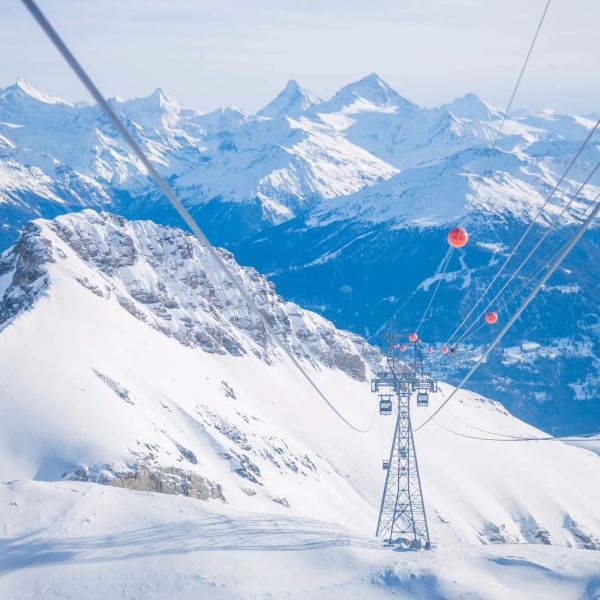
Crans-Montana 2027 World Championships President Resigns Ahead of Fraud Hearing
Less than four months out from the Crans-Montana 2027 World Championships, the man running the organising committee has stepped down. Claude-Alain Schmidhalter resigned as Swiss-Ski vice president and OC president after being indicted over a business dispute unrelated to skiing. He denies the allegations and faces court on October 27. Interim leaders are in place for the February 1-14 event.
9 Oct 2026
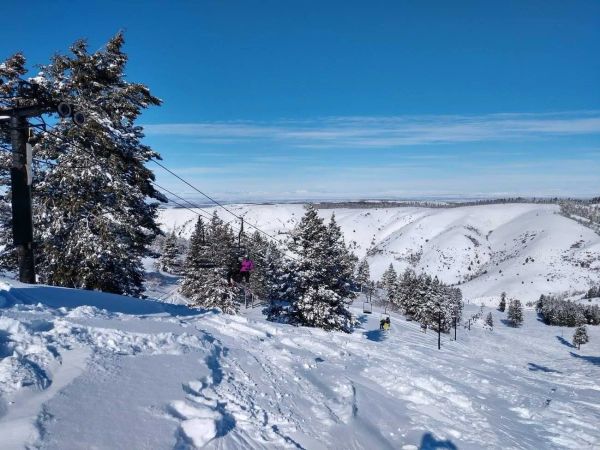
Kelly Canyon, Idaho, Adds Snowmaking, a Bigger Terrain Park and More Parking for 2026-27
Kelly Canyon had a rough 2025-26, and the Idaho resort has spent the summer making sure it doesn’t repeat. Snowmaking now reaches the top of Goldrush, the terrain park is doubling in size with a stereo system, lights and a snack shack, and the car park is getting bigger. Grooming is stepping up too. Target opening is December 4, conditions permitting.
9 Oct 2026
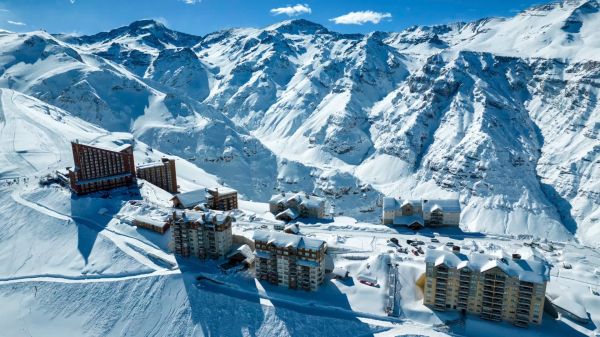
Valle Nevado Extends Season to November 8 After 108 cm in 48 Hours
Winter was meant to be winding down in Chile. Then Valle Nevado took 108 cm in 48 hours in early October, and the resort has pushed its closing date out to November 8 - its latest in 38 years of operation. That makes 143 days of skiing since opening day on June 19, with 690 cm banked for the season. Only part of the mountain is running while the storm settles, so check the mountain report before you plan a trip.
9 Oct 2026
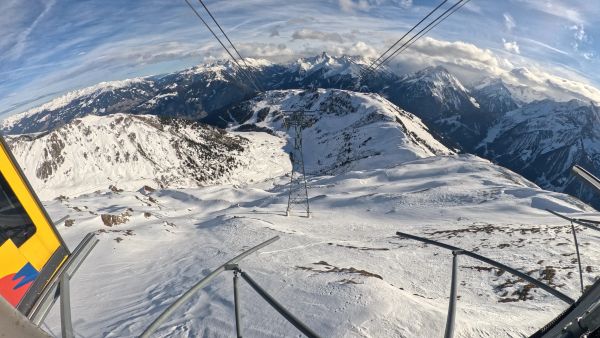
Alps Snow Forecast: Cold Front Brings Thursday Snow to the High Alps
The Alps look a lot more like winter today, for a day or so. A cold front is moving west to east, dropping up to 35 cm on high glaciers and peaks, with snow levels falling to around 1,500-1,800 m at times. Don’t plan a trip around it: mid-elevation snow will be thin and wet, every area is closed bar a limited Sölden glacier opening tomorrow, and warmer weather returns by Monday.
8 Oct 2026
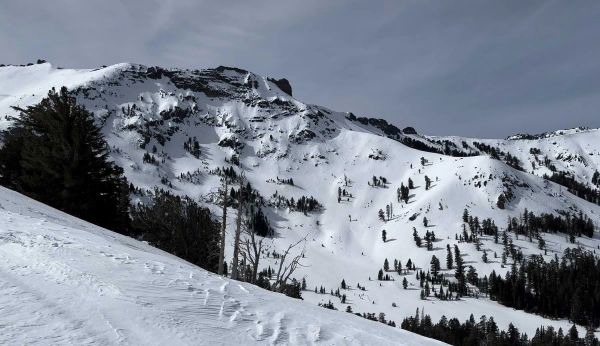
California Ski Resort Opening Dates 2026-27: Mammoth Leads, Tahoe Follows
Mammoth Mountain is first up in California, targeting Friday 13 November after a dusting of September snow. Heavenly and Northstar follow on 20 November, Palisades Tahoe on Wednesday 25 November and Sugar Bowl on 27 November, with Kirkwood on 4 December and June Mountain on 19 December. Plenty of smaller areas have no date yet. A super El Niño favours the Sierra, but a warmer storm track is the catch.
7 Oct 2026
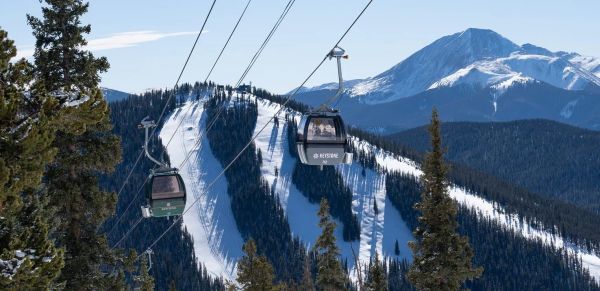
Colorado Ski Resort Opening Dates 2026-27: A-Basin and Keystone Race to Be First
Arapahoe Basin, Keystone and Winter Park are all chasing an October start, though none has a firm date yet. The first dated openers are Breckenridge and Copper on Friday 6 November, then Vail on 13 November, with most of the rest bunched around US Thanksgiving. Hesperus did not open at all last season. A super El Niño offers hope but no guarantee, and forecasters say the southern mountains have the better odds.
5 Oct 2026
Myoko Suginohara Snow Report
Snow Report
Awaiting live data
1855m
summit
+0cm
new snow · last 24 hours
-°C / -°C · - -
Snowfall
24 hours
0cm
48 hours
0cm
7 days
0cm
Base depth
-
Season total
-
Total lifts5
Live open status isn’t available right now.
19 Dec 2026 - 28 Mar 2027
Hour by Hour
Next 42 hours· Updated Oct 13, 2026 at 5:02 PM
Scroll for the full outlook · Open-Meteo
7-Day Outlook
1,855 mUpdated Oct 13, 2026 at 5:02 PMOpen-Meteo
Days 1–7
0.0cm
Days 8–14
0.0cm
Tue, Oct 13
Partly Cloudy
Temp16° / 8°°C
Snow0.0cm
Wind8 km/h S
Live snow from the resort feed; forecast from Open-Meteo, via Supabase.
Understanding the Myoko Suginohara snow report
Track current conditions at Myoko Suginohara in Chubu. This report covers snowfall totals, base and summit depth, and the forecast across 16 runs.
Snow measurements
Base depth, summit depth, and recent snowfall are the core numbers to watch. At Myoko Suginohara, summit conditions (1855m) can differ noticeably from the base, so we break both out separately rather than showing a single average.
Weather conditions
Snow quality tracks closely with temperature and wind. We surface both alongside the snowfall data so you can judge whether conditions at Myoko Suginohara are holding up or starting to soften.
Data sources
Myoko Suginohara snow data is collected through a combination of on-mountain reports and weather forecasting services, giving you both official resort updates and independent forecast data in one place. The mountain is served by 5 lifts, including 2 quad chairlifts and a gondola.
When to check
Conditions can change overnight, so mornings and late afternoons are the best times to check back on Myoko Suginohara.