
Hakodate Nanae
689m vertical, 15 runs, Japan's longest 3,319m gondola. Beginner-focused terrain near Hakodate with Mount Komagatake views.
Season 2026 - 2027
Opens
12 Dec 2026
Closes
31 Mar 2027
Days open
109
Annual snow
7m
The Overview
Michael Fulton
Melbourne-based skier and snowboarder with 50+ resorts across 5 continents. Specialises in Australian resorts and international resort comparisons.
Hakodate Nanae Snow Park operates across 689 metres of vertical drop between 261 and 950 metres elevation, with 15 runs covering 11.8 kilometres of terrain. The resort tilts heavily toward learners, with 68 per cent beginner runs, 24 per cent intermediate and 8 per cent advanced. Northeast-facing slopes preserve snow quality despite the modest summit elevation, whilst the 3,319-metre gondola claims the title of Japan's longest. Annual snowfall averages 7 metres, lower than Hokkaido's west-coast zones but sufficient for a December-to-March season.
The Shirakaba Trail stretches 4 kilometres from summit to base, providing continuous fall-line skiing through forested sections. Wide groomers dominate the beginner zones near the base, whilst the two intermediate runs higher up offer limited challenge for progressing skiers. A single advanced run reaches a maximum gradient of 29 degrees. Conservative off-piste policy keeps most tree skiing behind ropes, though select gladed areas near the quad chairlift remain accessible.
Peak Café sits at the gondola's upper terminal, offering table service and panoramic views across Mount Komagatake and Lake Onuma. Base facilities include a ramen bar opposite the gondola station, rental shop, ski school conducted in Japanese, and free parking for 2,000 vehicles. Crowds remain light throughout the season. Night skiing operates Friday to Sunday from late December through early March, with lifts running until 21:00 on designated evenings.
The resort operates independently without multi-resort pass connections. Adult day tickets cost 4,800 yen on regular days and 5,200 yen at peak times, with children in elementary school and under skiing free. Season passes retail for 48,000 yen. The 2025-2026 season runs 5 December to 29 March. Hakodate Nanae suits beginners seeking affordable lift access, families requiring gentle terrain, and intermediate skiers willing to lap long groomed runs rather than chase varied piste.
689m
Vertical
15
Runs
99 acres
Skiable
7m
Annual snow
The Terrain
15 runs across 99 acres skiable
Hakodate Nanae is the southern outlier of Hokkaido skiing, a compact 40-hectare area rising from 261 metres to 950 metres on the slopes above Hakodate for 689 vertical metres. Learners are well looked after, with 68% of the 15 runs graded beginner, 24% intermediate and 8% advanced, and nothing rated expert. A gondola, a quad and a double chair keep the network simple, and the northeast-facing slopes help preserve snow despite the modest summit height. It is a sensible choice for a ski trip that includes Hakodate, particularly for families and first-timers working out how skiing in Japan feels.
The headline run is the Shirakaba Trail, a four-kilometre descent from summit to base that threads through forest and gives beginners a genuinely long top-to-bottom run. Wide groomers dominate the lower slopes, and the few intermediate pitches higher up are mild enough for confident learners to try. Advanced skiers get a single steeper run, so they will tire of it within a day. Off-piste policy is conservative, and most tree terrain is roped off. The gondola ride alone is worth the ticket for the views across to Mount Komagatake, and night sessions run on selected evenings.
Terrain split
15
runs
15 runs across 4 grades
Beginner10 runs · 68%
Intermediate4 runs · 24%
Advanced1 run · 8%
Expert0 runs · 0%
Time it right
When to visit Hakodate Nanae
The 2025-2026 season opens 5 December and closes 29 March, spanning 115 days. Operations run 09:00 to 17:00 daily, with night skiing from 17:00 to 21:00 on Fridays through Sundays between 27 December and 1 March. Opening and closing dates shift based on snowfall, with early-season and late-season coverage less reliable than midwinter. The resort typically operates from early or mid-December to early April in standard years.
Annual snowfall averages 7 metres, distributed across a season shorter than Niseko or Kiroro receive. Northeast and north aspects help preserve snow quality despite the top elevation sitting below 1,000 metres. Southern Hokkaido receives less frequent storm cycles than the island's west coast, but cold temperatures maintain dry powder through midwinter. Snowmaking coverage data remains unavailable, though natural snow drives operations.
February delivers peak snowfall, with week three of the month historically recording the highest accumulation. January through mid-March offers the most consistent base depths and coldest temperatures. Early December and late March bring variable conditions, requiring confirmation before travel. Weekdays see lighter crowds than weekends, particularly outside Japanese school holiday periods. Spring skiing extends into late March when temperatures cooperate.
No major on-snow events feature on the published calendar beyond night skiing sessions. The resort markets itself for family outings rather than competitive or festival programming. Kids' facilities include a sledging area near the base restaurant and a supervised play room. Summer operations continue with gondola sightseeing, hiking trails, and the Peak Café remaining open for non-skiing visitors seeking mountain views.
Season 2026 - 2027
12 Dec 2026
Opens
31 Mar 2027
Closes
109
Days open
7 m
Annual snow
Getting there
Getting to Hakodate Nanae, and where to stay
Hakodate Nanae Snow Park occupies forested slopes in Nanae Town, Kameda District, on Hokkaido's Oshima Peninsula in southern Hokkaido. The base sits at 261 metres elevation in the Higashi-Onuma area, 2 kilometres off Prefecture Road 43. Onuma Quasi-National Park borders the resort, with Mount Komagatake's 1,131-metre volcanic cone dominating views to the west. The resort lies 37 kilometres north of Hakodate city and 19 kilometres from Shin Hakodate Hokuto Station.
Hakodate, a port city of 250,000 residents, serves as the primary gateway, offering hotels, restaurants, and historic architecture from its 19th-century trading-port past. Onuma Koen village sits 9 kilometres west of the resort near the national park's lake district. Nanae Town centre lies 16 kilometres south of the base area. The Hakodate Onuma Tsuruga Resort, a five-star property, operates 9 kilometres from the ski area.
From central Hakodate, drive north on Route 5 toward Sapporo, then branch onto Prefecture Roads 338 and 43 following resort signage for a 50-minute journey. From the Hokkaido Expressway, exit at Onuma Koen IC, turn onto Route 5, then follow Prefecture Road 338 and 43 for a total of 15 minutes. Free parking accommodates 2,000 vehicles in 24-hour lots at the base.
Hakodate Airport lies approximately 50 kilometres south, roughly one hour by road. Shin Hakodate Hokuto Station on the Hokkaido Shinkansen sits 18 kilometres southwest, offering bullet-train connections to Honshu. Free shuttle buses depart Shin Hakodate Hokuto at 09:05 and 11:40, taking 40 minutes to reach the resort. JR Hakodate Main Line serves Onuma Station (8.5 kilometres away) and Onuma Koen Station (8.9 kilometres away), both connected by free shuttle. Nagareyama Onsen Station sits less than 4 kilometres from the base.
Where to stay
Search all stays →Hotels and lodges near Hakodate Nanae, powered by Stay22.
Latest News
From the SnowStash desk

Europe Ski Resorts Open Now: What Is Skiable in Mid-October 2026
Europe’s ski season is open, technically. After a record-warm summer, glaciers in Austria, Switzerland and Italy are running a few pistes apiece, Sölden, Stubai and Kitzsteinhorn started late, Titlis has pushed back to 24 October, and Zermatt reopens a few lifts on 14 October after more than two months shut. Finland’s Levi and Ruka are skiing on stored snow. Here is what is open, and what you actually get at each.
14 Oct 2026

Zermatt Plans World Cup Downhill Return on the Gornergrat for 2028
Zermatt is having another crack at a World Cup downhill, and this time nobody has to cross a border. Around 13 million Swiss francs is going into rebuilding the Gornergrat piste, including a jump fed by a roughly 300-metre in-run across the roof of the Gornergrat Railway gallery, with the Matterhorn lined up behind it for the TV cameras. First men’s race is pencilled in for March 2028, pending FIS homologation.
14 Oct 2026

Mt. Rose Begins Snowmaking for the 2026-27 Season at Lake Tahoe
Lake Tahoe’s highest base elevation is paying off early: Mt. Rose has started making snow for 2026-27 after the first flurries and a cold snap. The Nevada resort is backing it with nearly US$2 million in upgrades, including a replacement snowmaking main line, a new PistenBully groomer and restraint bars on every lift. Opening day is yet to be confirmed, though Heavenly and Northstar are already eyeing 20 November.
13 Oct 2026

Utah Ski Resorts 2026-27: What’s New at Alta, Deer Valley, Powder Mountain and More
Utah is still building flat out. For 2026-27, Powder Mountain opens a steep new Skytrac chair into more than 1,000 acres of advanced terrain, Deer Valley adds 200 acres on Hail Peak, Sundance gets a new quad and Park City adds a gondola from its new parking structure. Snowmaking is expanding almost everywhere, Eagle Point stays closed after the Cottonwood Fire, and the 2034 Games are setting the pace. Here’s what’s new, resort by resort.
13 Oct 2026

Mt Hutt Invests NZ$12 Million in Base Area, Tripling Its Sun Deck
Mt Hutt is getting busier, and its base lodge is about to catch up. NZ$12 million goes into a heated sun deck roughly three times the current size (430 m² to 1,300 m²), plus a new toilet block, heated steps down to snow level, extra storage and a new food and beverage outlet. Building starts after the 2026 season, with everything due for winter 2027.
11 Oct 2026

Vermont Ski Resort Opening Dates 2026-27: Few Dates Set, Killington Waits on the Cold
Vermont's season is slow to take shape. Stratton is tentatively targeting 18 November and Sugarbush 21 November, while Pico has Friday 11 December on the calendar. Killington never sets a date and opens when the snowmaking allows, and Vail Resorts has yet to name days for Stowe, Okemo and Mount Snow. The forecasts disagree about snow, and the main El Niño worry for the Green Mountains is warmth.
9 Oct 2026
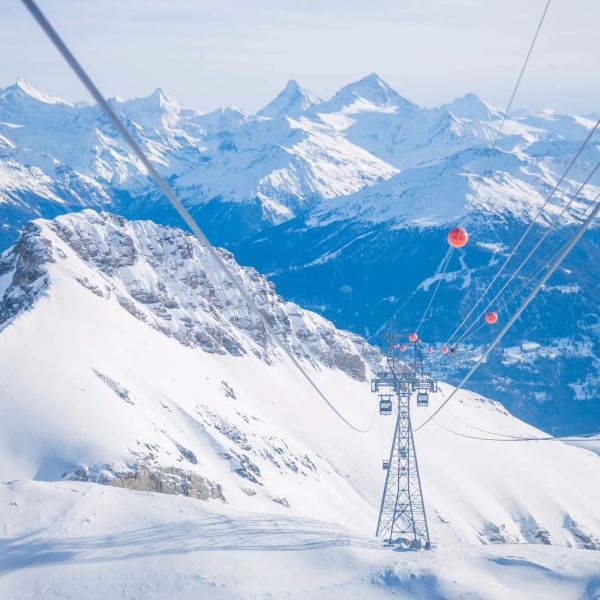
Crans-Montana 2027 World Championships President Resigns Ahead of Fraud Hearing
Less than four months out from the Crans-Montana 2027 World Championships, the man running the organising committee has stepped down. Claude-Alain Schmidhalter resigned as Swiss-Ski vice president and OC president after being indicted over a business dispute unrelated to skiing. He denies the allegations and faces court on October 27. Interim leaders are in place for the February 1-14 event.
9 Oct 2026
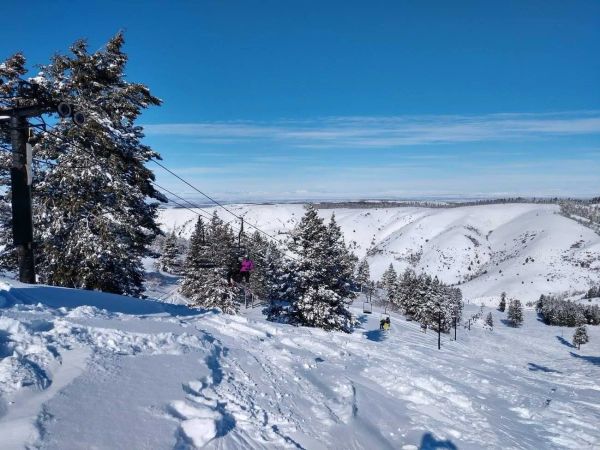
Kelly Canyon, Idaho, Adds Snowmaking, a Bigger Terrain Park and More Parking for 2026-27
Kelly Canyon had a rough 2025-26, and the Idaho resort has spent the summer making sure it doesn’t repeat. Snowmaking now reaches the top of Goldrush, the terrain park is doubling in size with a stereo system, lights and a snack shack, and the car park is getting bigger. Grooming is stepping up too. Target opening is December 4, conditions permitting.
9 Oct 2026