
The Overview
Michael Fulton
Melbourne-based skier and snowboarder with 50+ resorts across 5 continents. Specialises in Australian resorts and international resort comparisons.
Tazawako spans 100 hectares across 13 runs on Mount Kuromori in Akita Prefecture, with 608 metres of vertical drop from a 1,186-metre summit to a 578-metre base. The terrain splits evenly across ability levels, with 30 per cent each for beginners, intermediates and advanced skiers, plus 10 per cent expert terrain. The resort receives 11 metres of annual snowfall and averages around 8 to 9 metres per season, benefiting from its inland Tohoku location where reduced moisture produces dry, light powder.
The largest ski area in Akita Prefecture operates as a locals' mountain with minimal international traffic, particularly midweek when lift queues disappear entirely. The 1,600-metre Shirakaba Course offers the longest top-to-bottom intermediate run, whilst advanced terrain centres on the Kuromoriyama Champion Course and Mizusawa Champion Course, both featuring gradients between 32 and 38 degrees. FIS Freestyle Ski World Cup mogul events have been held here regularly since the 2014/15 season, with competitions running through 2020.
The compact ski area overlooks Lake Tazawa, Japan's deepest lake at 423 metres, which remains unfrozen throughout winter. Six lifts include two covered quad chairs that provide shelter during storms, alongside four double chairs that access tree runs and ungroomed powder zones. The Ginrei mid-mountain restaurant offers lake views from 882 metres elevation. Base facilities cluster around the Shirakaba day lodge, with rental shops, ski school, cafeteria and a small terrain park.
Tazawako operates independently without pass affiliations, typically running from early December through early April depending on conditions. The resort suits powder hunters willing to explore off-piste trees, intermediate cruisers seeking uncrowded groomers, and families requiring manageable terrain with gentle learning zones. Access via Akita Shinkansen reaches Tazawako Station in under three hours from Tokyo, followed by a 30-minute bus ride to the slopes.
608m
Vertical
13
Runs
74 acres
Skiable
11m
Annual snow
The Terrain
13 runs across 74 acres skiable
Tazawako is unusual among Tohoku resorts for how evenly it grades its terrain, with 30% beginner, 30% intermediate, 30% advanced and 10% expert across 13 runs on Mount Kuromori. The vertical is 608 metres, from a base at 578 metres to the 1,186-metre summit, and Akita's weather brings consistent, heavy snow through the season. Four double chairs and two quads handle the traffic, and hooded quads shelter skiers when storms roll in off the Sea of Japan. The result is a mountain that feels more serious than its size suggests, with real steep pitches lying close to the lifts.
The steepest terrain is found on the Kuromori Champion and Mizusawa Champion courses, both pitched between about 32 and 38 degrees, while the Ginrei course at the far side reaches roughly 34 degrees and is reached by a single chair that closes early on weekdays. The Shirakaba course gives intermediates a 1,600-metre run from the top. Tazawako, at only 30 hectares, suits advanced skiers wanting steeps in a quiet corner, and its easy green slopes still cater for learners. Night skiing is not offered, so plan for full days and a hot spring evening on nearby Lake Tazawa instead.
Terrain split
13
runs
13 runs across 4 grades
Beginner4 runs · 30%
Intermediate4 runs · 30%
Advanced4 runs · 30%
Expert1 run · 10%
Time it right
When to visit Tazawako
The 2025-2026 season runs from 5 December 2025 through 29 March 2026, delivering approximately 16 weeks of operations subject to snowfall patterns. Typical season lengths extend from early December into early April, with opening and closing dates shifting by one to two weeks depending on annual conditions. Historical opening dates have ranged from mid-December to 20 December, whilst spring closures land between late March and early April.
Akita Prefecture's inland position produces 8 to 9 metres of average annual snowfall, with Tazawako recording 11 metres in stronger seasons and benefiting from reduced moisture content that creates dry, fluffy snow. The base elevation of 578 metres provides moderate snow security, supplemented by the resort's heavy snowfall zone designation. Snowmaking infrastructure appears limited, with operations relying primarily on natural accumulation. Peak snowfall occurs during January and February, when weekly totals of 50 to 60 centimetres are common.
January through February offers optimal powder conditions, with inland storm patterns delivering consistent snowfall and cold temperatures preserving snow quality through midwinter. Early December and late March see spring-like conditions at base elevations, though upper mountain terrain typically holds coverage through closure. Weekdays remain quieter than weekends, when local traffic increases from nearby cities including Morioka, Akita and Semboku.
The resort hosts no major event calendar beyond its history of FIS Freestyle Ski World Cup mogul competitions, which ran regularly from 2015 through 2020 but have since relocated. Night skiing does not operate. Guided backcountry tours and cat skiing to Mount Akita-Komagatake run from early February through mid-April, accessing terrain above the resort boundary at extra cost.
Season 2025-2026
5 Dec 2025
Opens
29 Mar 2026
Closes
114
Days open
11 m
Annual snow
Getting there
Getting to Tazawako, and where to stay
Tazawako sits in eastern Akita Prefecture within Semboku City, straddling the border between Akita and Iwate prefectures on northern Honshu. The resort occupies the western flank of Mount Kuromori, approximately 7.5 kilometres northeast of Lake Tazawa's shoreline and 11 kilometres northeast of Semboku's city centre. Mount Akita-Komagatake rises to the east at 1,637 metres, whilst Mount Hachimantai defines the northern horizon. The base village sits at 578 metres elevation in the Mizusawa Onsen area.
Semboku City has 24,000 residents and serves as the nearest population centre, located 11 kilometres southwest via Route 194. Kakunodate, a historic samurai town, lies 19 kilometres south and connects via the Akita Shinkansen. Morioka sits 44 kilometres east in Iwate Prefecture, whilst Akita City is positioned 70 kilometres west. The resort operates 9 minutes' drive from Tazawako Station, which connects to the shinkansen network. Nyuto Onsen, a collection of traditional hot spring inns, lies 7 kilometres west and dates back over 300 years.
Road access from Tokyo follows the Tohoku Expressway north to Morioka Interchange, then Route 46 west towards Akita before turning onto Route 341 south and Route 194 east, totalling 49 kilometres and approximately 60 minutes from the motorway exit. The full drive from Tokyo spans roughly 600 kilometres and 7 to 8 hours. Local roads receive heavy snow throughout winter, requiring snow tyres or chains. Rental cars are available at major stations and airports.
Akita Airport sits 70 kilometres west with 90-minute drive times, offering domestic connections to Tokyo Haneda plus seasonal routes. The Akita Airport Liner provides shared taxi service directly to Tazawako and surrounding onsen areas via advance booking. Iwate Hanamaki Airport lies approximately 80 kilometres east. The Akita Shinkansen reaches Tazawako Station from Tokyo Station in under 3 hours, with onward bus connections operating on a 30-minute schedule to the resort base.
Where to stay
Search all stays →Hotels and lodges near Tazawako, powered by Stay22.
Latest News
From the SnowStash desk

Vermont Ski Resort Opening Dates 2026-27: Few Dates Set, Killington Waits on the Cold
Vermont's season is slow to take shape. Stratton is tentatively targeting 18 November and Sugarbush 21 November, while Pico has Friday 11 December on the calendar. Killington never sets a date and opens when the snowmaking allows, and Vail Resorts has yet to name days for Stowe, Okemo and Mount Snow. The forecasts disagree about snow, and the main El Niño worry for the Green Mountains is warmth.
9 Oct 2026
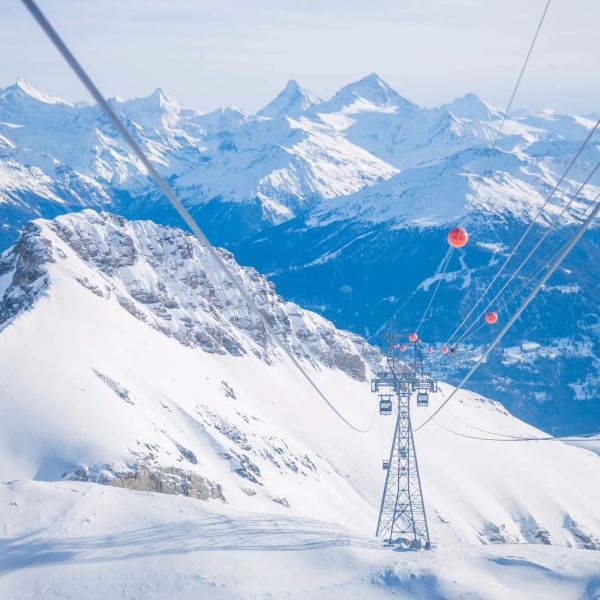
Crans-Montana 2027 World Championships President Resigns Ahead of Fraud Hearing
Less than four months out from the Crans-Montana 2027 World Championships, the man running the organising committee has stepped down. Claude-Alain Schmidhalter resigned as Swiss-Ski vice president and OC president after being indicted over a business dispute unrelated to skiing. He denies the allegations and faces court on October 27. Interim leaders are in place for the February 1-14 event.
9 Oct 2026
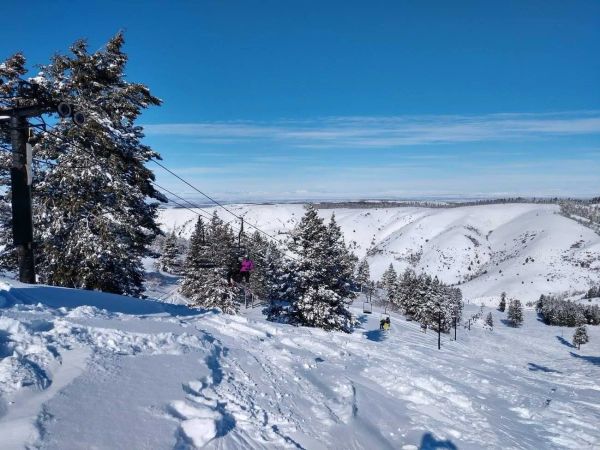
Kelly Canyon, Idaho, Adds Snowmaking, a Bigger Terrain Park and More Parking for 2026-27
Kelly Canyon had a rough 2025-26, and the Idaho resort has spent the summer making sure it doesn’t repeat. Snowmaking now reaches the top of Goldrush, the terrain park is doubling in size with a stereo system, lights and a snack shack, and the car park is getting bigger. Grooming is stepping up too. Target opening is December 4, conditions permitting.
9 Oct 2026
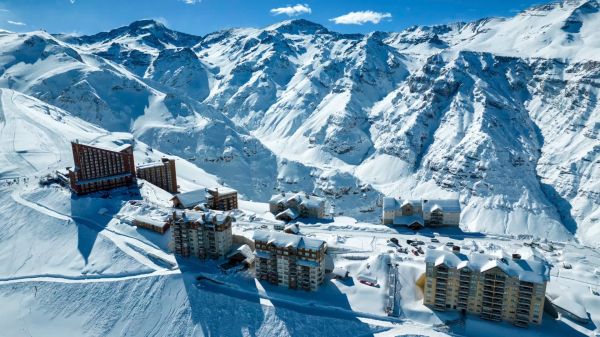
Valle Nevado Extends Season to November 8 After 108 cm in 48 Hours
Winter was meant to be winding down in Chile. Then Valle Nevado took 108 cm in 48 hours in early October, and the resort has pushed its closing date out to November 8 - its latest in 38 years of operation. That makes 143 days of skiing since opening day on June 19, with 690 cm banked for the season. Only part of the mountain is running while the storm settles, so check the mountain report before you plan a trip.
9 Oct 2026
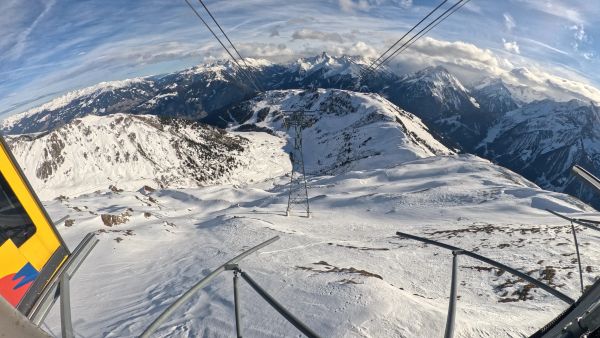
Alps Snow Forecast: Cold Front Brings Thursday Snow to the High Alps
The Alps look a lot more like winter today, for a day or so. A cold front is moving west to east, dropping up to 35 cm on high glaciers and peaks, with snow levels falling to around 1,500-1,800 m at times. Don’t plan a trip around it: mid-elevation snow will be thin and wet, every area is closed bar a limited Sölden glacier opening tomorrow, and warmer weather returns by Monday.
8 Oct 2026
California Ski Resort Opening Dates 2026-27: Mammoth Leads, Tahoe Follows
Mammoth Mountain is first up in California, targeting Friday 13 November after a dusting of September snow. Heavenly and Northstar follow on 20 November, Palisades Tahoe on Wednesday 25 November and Sugar Bowl on 27 November, with Kirkwood on 4 December and June Mountain on 19 December. Plenty of smaller areas have no date yet. A super El Niño favours the Sierra, but a warmer storm track is the catch.
7 Oct 2026
Colorado Ski Resort Opening Dates 2026-27: A-Basin and Keystone Race to Be First
Arapahoe Basin, Keystone and Winter Park are all chasing an October start, though none has a firm date yet. The first dated openers are Breckenridge and Copper on Friday 6 November, then Vail on 13 November, with most of the rest bunched around US Thanksgiving. Hesperus did not open at all last season. A super El Niño offers hope but no guarantee, and forecasters say the southern mountains have the better odds.
5 Oct 2026
Dolomiti Superski 2026-27: Four New Gondolas, New Reservoirs and an €89 Peak Day Pass
Dolomiti Superski is spending around €100 million across its 12 areas before winter. Kronplatz gets a new 10-passenger gondola with a middle station, 3 Zinnen gets Helmissimo, and Val di Fassa swaps a chairlift for a gondola above Col Valvacin. New water-storage basins and upgraded snowmaking follow, and construction has started on the San Martino to Passo Rolle link. A peak adult day pass is €89.
4 Oct 2026
Tazawako Lift System
Six lifts serve the mountain with a mix of two quad chairs and four double chairs, all operating as fixed-grip installations rather than detachable high-speed systems. Two of the quad chairs feature protective hoods, designated as the Kamoshika Quad and another covered quad that provide essential wind protection during Akita's frequent storm cycles. The remaining four double chairs include slower two-seat lifts that fan across the mountain's flanks, accessing steeper fall-line terrain and tree zones.
The primary uphill corridor follows the covered quad chairs from the 578-metre base area, delivering skiers to upper elevations around 1,100 metres before a final double chair accesses the 1,186-metre summit. The Kuromori Course area on the far skier's right relies on a standalone double chair servicing advanced terrain with 33-degree pitches. The opposite boundary features another double chair reaching the Mizusawa Champion Course, which hosts FIS mogul competitions on its 38-degree gradient and 1,000-metre vertical descent.
Lift-served terrain connects efficiently despite the slower chair speeds, with typical ride times of 8 to 12 minutes on the main quads. The Kamoshika Quad provides mid-mountain access to beginner zones and the children's play area without requiring a summit ascent. Double chairs serve specific terrain pods rather than functioning as primary upload capacity, keeping advanced runs and tree skiing separate from family traffic.
Uphill capacity remains modest by international standards, but the limited visitor numbers mean queues rarely form outside Japanese holiday periods. The resort reports no recent lift infrastructure investments, with the existing system dating from earlier decades. Two hooded quads handle the majority of powder-chasing traffic, whilst patrol maintains a relatively relaxed approach to marked boundaries, allowing experienced skiers to access sidecountry terrain from lift-top positions.
6lifts across 2 types
2
Quad Chairs
4
Double Chairs
Tazawako lift system
Tazawako is served by 6 lifts, listed here by type. Check which lifts are turning against the live conditions before you plan your first laps - early lifts and high-speed chairs get you to the best snow fastest.
More Tazawako intelligence: trail map, snow report, webcams, resort overview.