Awakino
Awakino: 430m vertical, 3 rope tows, 60% advanced terrain. NZ$60 day pass. Volunteer-run club field in Canterbury's St Marys Range.

Season 2026
Opens
4 July 2026
Closes
27 Sept 2026
Days open
85
Annual snow
2.5m
The Overview
Michael Fulton
Melbourne-based skier and snowboarder with 50+ resorts across 5 continents. Specialises in Australian resorts and international resort comparisons.
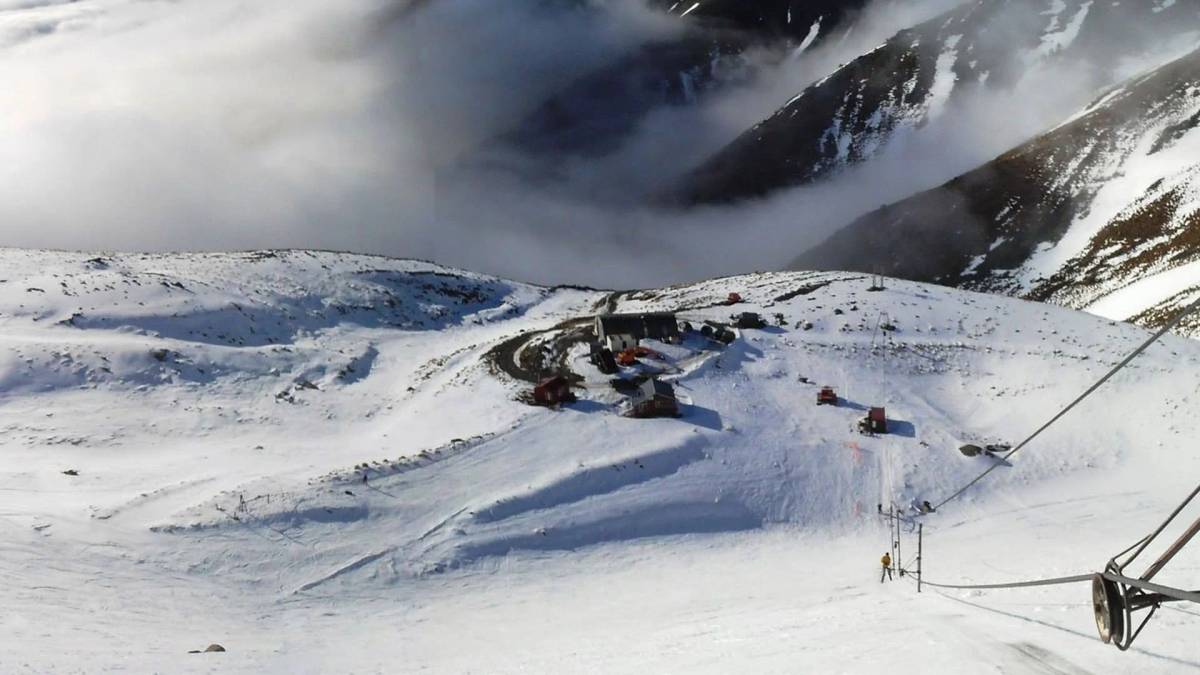
Awakino operates between 1,450 and 1,880 metres elevation across 100 hectares of skiable terrain in the St Marys Range. The field offers 22 runs with 430 metres of vertical drop, distributed as 10% beginner, 30% intermediate and 60% advanced terrain across 5 kilometres of slopes. Run by the Waitaki Ski Club since the late 1940s, the field receives approximately 2.5 metres of annual snowfall, with easterly exposure sheltering it from prevailing westerly systems whilst capturing southerly dumps. Adult day passes cost NZ$60, amongst the lowest in New Zealand.
Glacier Basin forms the advanced skiing heart of the field, featuring steep gullies and rock towers accessed from the ridge tows. Named runs include Arthur's Run and the old access tow gully, which provide ski access to the lodge below the main field. Intermediate terrain spreads across varied aspects, whilst learner slopes occupy the gentler base area serviced by a dedicated 70-metre rope tow. The north-facing valley orientation provides multiple aspects within a compact area, allowing riders to find variable snow conditions across a single session.
This volunteer-operated club field typically sees fewer than 20 skiers on a busy day, operating weekends and select long weekends from July through October. The historic 40-bunk lodge sits at 1,100 metres on the access road, 300 metres below base facilities, featuring coal burners, generated electricity, hot showers and an outdoor spa. No mobile coverage reaches the lodge. The 1980s Kassbohrer groomer fires up occasionally, but most terrain remains ungroomed. A WWII Nissan hangar serves as the base building, with a functioning red telephone box nearby.
Awakino operates independently without pass affiliations, requiring direct booking through the Waitaki Ski Club. Extensive ski touring extends onto the surrounding St Marys Range, with Te Kohurau peak at 2,010 metres accessible via skins or snowmobile for NZ$10 vehicle access. The field suits intermediate to advanced riders seeking uncrowded powder, backcountry access and authentic club skiing, though weekend-only operations and volunteer staffing demand flexible planning. Members contribute work hours in exchange for skiing access, maintaining the field's no-budget, self-reliant ethos established over seven decades.
430m
Vertical
22
Runs
124 acres
Skiable
2.5m
Annual snow
The Terrain
22 runs across 124 acres skiable
Awakino is a volunteer-run club field high in the St Marys Range of North Otago, covering about 50 hectares of open, easterly-facing slopes. Skiing drops 430 metres, from 1,880 to 1,450 metres, across 22 runs, and Sanity lists 10% beginner, 30% intermediate and 60% advanced. That weighting suits confident skiers, though the compact size keeps everything within reach. Three rope tows do the lifting, with a learner tow for first turns. The field opens on selected weekends rather than daily, and the last stretch of access road needs four-wheel drive or a ride from the lower car park.
The main tow and ridge tow feed Glacier Basin and the steeper gullies and rocky pockets above it, while mellower slopes spread around the base. Two side gullies, Arthurs Run and the old access tow gully, let skiers glide back toward the lodge on good snow. Beyond the ropes, ski touring climbs toward Te Kohurau on the surrounding range. Facilities are deliberately minimal, and crowds are tiny. Awakino suits self-reliant intermediate and advanced skiers who enjoy rope tows, quiet slopes and a genuine club atmosphere, and who will plan around its limited operating days.
Terrain split
22
runs
22 runs across 4 grades
Beginner2 runs · 10%
Intermediate7 runs · 30%
Advanced13 runs · 60%
Expert0 runs · 0%
Time it right
When to visit Awakino
The 2026 season operates from 4 July through 27 September, with the field typically open most weekends when snow conditions and volunteer availability align. Total season length spans approximately 12 weeks, though midweek and long weekend openings occur when conditions permit and advance bookings justify operations. The volunteer-run model means operational dates respond to group bookings rather than fixed daily schedules, requiring advance coordination through the club. Historical records show most weekend operations running July through October in typical seasons.
The St Marys Range receives most snowfall from southerly and south-easterly systems moving up the coast, with the field's easterly exposure capturing these storms whilst remaining sheltered during westerly flow. Annual snowfall averages 2.5 metres at the 1,600-metre mid-mountain elevation. Awakino remains known for deep wind-blown powder that accumulates in gullies and basins, often staying untracked for days due to minimal visitor numbers. The field prioritises natural snow over grooming, with the vintage Kassbohrer fired up only occasionally for key runs.
July and August deliver peak snowfall and most consistent base depths, with mid-winter southerly dumps producing the chalky powder conditions the field's devotees seek. Early season skiing from late June depends on elevation and aspect, whilst September brings spring corn as temperatures rise. Week four of May historically records the snowiest period with typically 2.4 snowy days and 16 centimetres of accumulation. The relatively isolated eastern position means weather forecasts and avalanche information remain limited compared to commercial fields, requiring backcountry awareness from all visitors.
No night skiing, terrain parks or formal events programme operates at Awakino. Occasional ski lessons run by arrangement at NZ$60 per hour for up to two people, subject to instructor availability. The draw remains weekend lodge stays combining skiing with the communal experience of coal-fired meals, spa sessions overlooking the Waitaki Valley, and morning skin tracks into fresh powder. Advance booking proves essential, as operations depend on sufficient numbers to justify volunteer staffing and field opening.
Season 2026
4 July 2026
Opens
27 Sept 2026
Closes
85
Days open
2.5 m
Annual snow
Getting there
Getting to Awakino, and where to stay
The field sits high in the St Marys Range within the Waitaki District of Canterbury, South Island, though geographically positioned in North Otago near the Canterbury-Otago boundary. The base lodge occupies 1,100 metres elevation with the skiing area extending to 1,880 metres across an easterly-facing bowl. The St Marys Range forms part of the broader Oteake Conservation Park, with tussock-covered slopes giving way to rocky alpine tops. Views extend across the Waitaki Valley and Hakataramea Valley, with Aoraki Mount Cook visible on clear days.
Kurow township, 16 kilometres east in the Waitaki Valley, provides the nearest services and road access departure point. Oamaru sits 45 kilometres east via State Highway 83, offering more comprehensive services including supermarkets and accommodation. The Waitaki Ski Club, founded in 1938, originally operated near Dansey's Pass before relocating to Awakino after World War II when New Zealand Post facilities became available. The region's farming heritage persists, with the access road traversing active high-country stations where gates must be left as found.
Access follows State Highway 82 or 83 to Kurow, then Manse Road to Cattle Valley Road, turning left onto Awakino Skifield Road. The 4WD-only route climbs through farmland, crossing the Awakino River at a ford before hairpin switchbacks ascend to the lower carpark suitable for 2WD vehicles. The final 2 kilometres to the lodge demands 4WD, often requiring chains in winter conditions. The steep section known as the Awakino Test challenges vehicle capability, with club members available to shuttle visitors from the lower carpark by arrangement. Total drive time from the lower carpark to lodge spans 30 minutes walking or 10 minutes by 4WD.
Christchurch Airport lies 272 kilometres north, requiring 3.5 hours driving via State Highway 1 and State Highway 82 through Timaru and Oamaru. Queenstown Airport sits 216 kilometres southwest with 2.5 hours driving via State Highway 8 through Omarama and the Lindis Pass. Dunedin Airport provides a third option 142 kilometres south. Richard Pearse Airport at Timaru operates 98 kilometres north with limited domestic services. No regular public transport serves Kurow or the Waitaki Valley, making private vehicle essential for field access.
Where to stay
Search all stays →Stays map loads when you scroll here
Hotels and lodges near Awakino, powered by Stay22.
Latest News
From the SnowStash desk
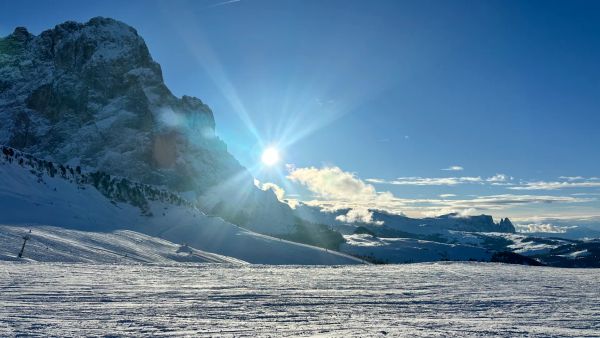
Val Gardena to Alpe di Siusi Lift Link Back in Play After Court Ruling
The Val Gardena-Alpe di Siusi lift link isn’t dead after all. A South Tyrol court has overturned Santa Cristina’s rejection of the new Monte Pana-Saltria link on procedural grounds, after the council skipped required public information sessions. Opponents want the missing sessions held and a fresh vote, and nothing has been approved. For now it’s still a bus between the two, but a plan first floated in 2017 is back in the conversation.
8 Nov 2026
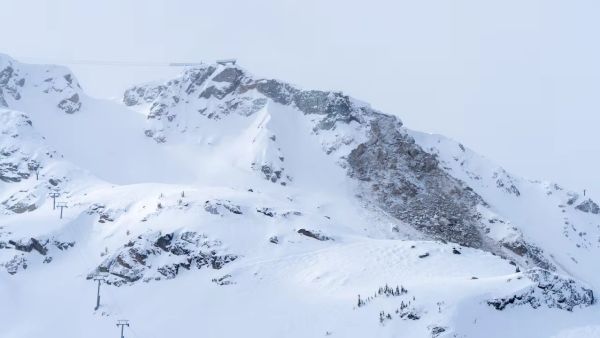
Whistler Blackcomb Rockslide Zone Stays Closed Through 2026-27 Season
A section of Whistler Peak terrain will stay closed all 2026-27 season, Vail Resorts has confirmed, with rockslide mitigation work continuing into summer 2027. Peak Express is still expected to run this winter, but locals are already arguing about what’s actually off limits, whether the Whistler Bowl is gone, and why the news landed after pass sales wound down. Here’s where things stand.
7 Nov 2026
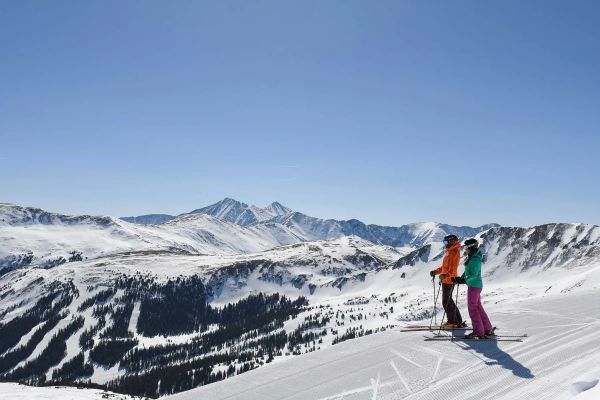
Loveland Ski Area Opens for 2026-27 and Marks 60 Years of Snowmaking
Loveland is open. The Colorado ski area started Chet’s Dream turning on Saturday 7 November to kick off 2026-27, with $60 adult lift tickets to mark 60 years of snowmaking. Expect three runs, nearly 1,000 vertical feet (about 300 metres) of top-to-bottom skiing, live music on the Basin Patio and no beginner terrain yet. Here’s what’s open, what it costs and when Loveland Valley follows.
7 Nov 2026
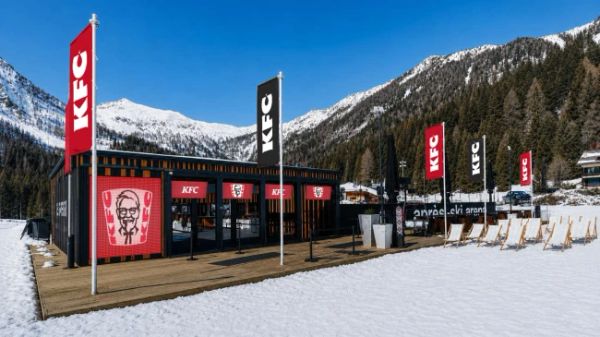
KFC Is Coming to the Slopes at Cortina and Madonna di Campiglio
Fried chicken is heading up the Dolomites. From 5 December KFC will run two restaurants on the slopes - one at 2,123 metres at Cortina, one at 1,700 metres at Madonna di Campiglio - and the polenta-and-canederli crowd has opinions. Local politicians, conservation groups and plenty of Facebook commenters are calling it a step too far, while others just want a cheaper lunch. Here’s what’s on the menu and what’s the fuss.
5 Nov 2026
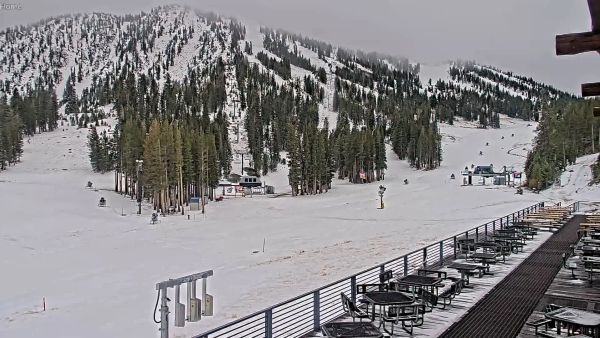
Mt Rose Aims to Open First in Tahoe on November 6
Mt Rose is going for the first-in-Tahoe title, with the Lakeview Express due to spin at 9 a.m. on Friday, November 6. One main lift, three runs and plenty of snowmaking, sitting on the highest base elevation in the region at 8,260 ft. Here is what is open, what is not (sorry, tubing fans), and how the early North American openings are stacking up.
4 Nov 2026
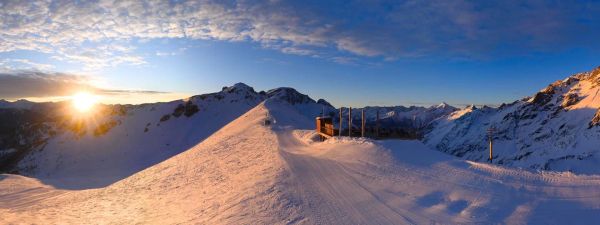
Europe Snow Forecast: Serre Chevalier Leads With 82 cm Over the Next 10 Days
Europe has had a quiet start to November, but our 10-day forecast has Serre Chevalier on 82 cm and Les 2 Alpes on 71 cm. Two pushes are lined up: a western Alps top-up from Friday, then a bigger, wider system on Thursday, November 12 and Friday, November 13 that reaches Italy and Switzerland. Full leaderboard inside.
4 Nov 2026
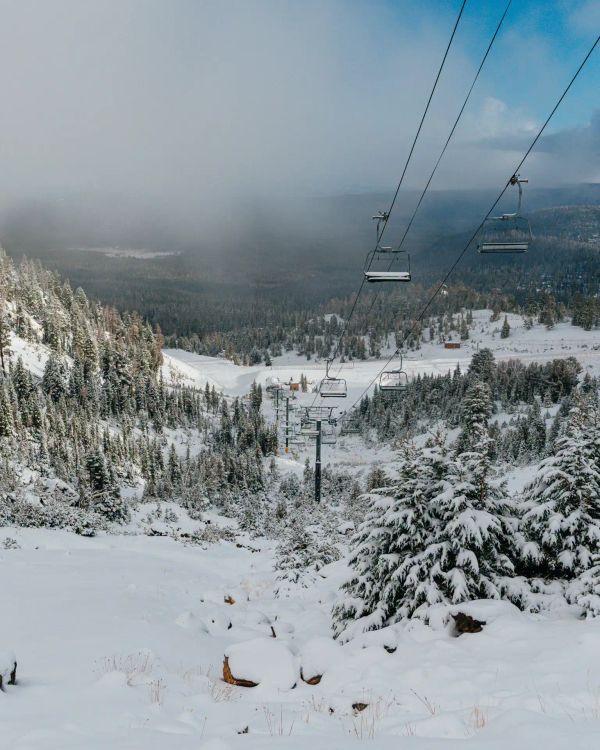
Mammoth Mountain Opens Early on November 5 With Up to 33 Inches of Snow in the Forecast
Mammoth just moved opening day forward to Thursday, November 5, eight days ahead of schedule. A snowy weekend and cold snowmaking nights did the work, and our forecast shows up to 33 inches more landing on November 13 and 14. Here is what opens, what the weather looks like and where Mammoth sits among the early Ikon Pass openers.
3 Nov 2026

Utah Snow Storm Builds Early-Season Base Ahead of November Openings
Rain down low, snow up high, and a snow report full of zeros that mostly means ‘not updated yet’. Utah’s first proper storm of 2026-27 is rolling through the Wasatch, Snowbird’s snow stake is closing in on 10 inches, and Brian Head is five days from opening day. Early November snow rarely looks like much, but it is the layer every November opening date is built on. Here is where it stands.
1 Nov 2026
Awakino Lift System
Three rope tows comprise the entire lift infrastructure, providing 1,500 passengers per hour capacity across 1.2 kilometres of combined tow length. The main tow spans 679 metres, the ridge tow measures 453 metres, and a learner tow covers 70 metres at the base area. All three operate as nutcracker rope tows, with the main tow famously powered by a tractor housed in a shipping container that has shuttled skiers uphill for decades. No chairlifts, gondolas or surface platters exist on the mountain.
The main tow ascends from the 1,450-metre base to access Glacier Basin and intermediate terrain across the north-facing bowl. The ridge tow extends from mid-mountain to 1,880 metres, opening access to advanced gullies and the touring terrain beyond field boundaries. Both tows operate as high-speed rope installations despite their basic mechanical systems, with queues virtually non-existent even on the field's busiest operating days. Free tow belt hire accompanies all lift passes, essential equipment for the nutcracker grip system.
Base-to-summit progression flows through the learner zone into the main tow catchment, then via the ridge tow to upper elevation terrain and backcountry access points. The compact vertical and proximity of tows allow rapid laps, with riders commonly accessing 20-plus runs across a full day. The sunny valley aspect and multiple terrain pockets accessible from the ridge create efficient flow despite minimal mechanical uplift. Traversing and short hikes extend the skiable area beyond tow-serviced terrain.
Lift infrastructure remains largely unchanged since establishment, with volunteers maintaining the tractor-powered systems and rope mechanisms through off-season work parties. No recent installations or technology upgrades have altered the field's character, by design rather than neglect. The simplicity proves remarkably reliable, with mechanical failures rare and repairs handled by club members with engineering skills. This minimal infrastructure approach keeps operating costs low, enabling the NZ$60 day pass whilst preserving the pioneering spirit that defines New Zealand's earliest club fields.
Awakino lift system
Awakino is served by 3 lifts, listed here by type. Check which lifts are turning against the live conditions before you plan your first laps - early lifts and high-speed chairs get you to the best snow fastest.
More Awakino intelligence: trail map, snow report, webcams, resort overview.