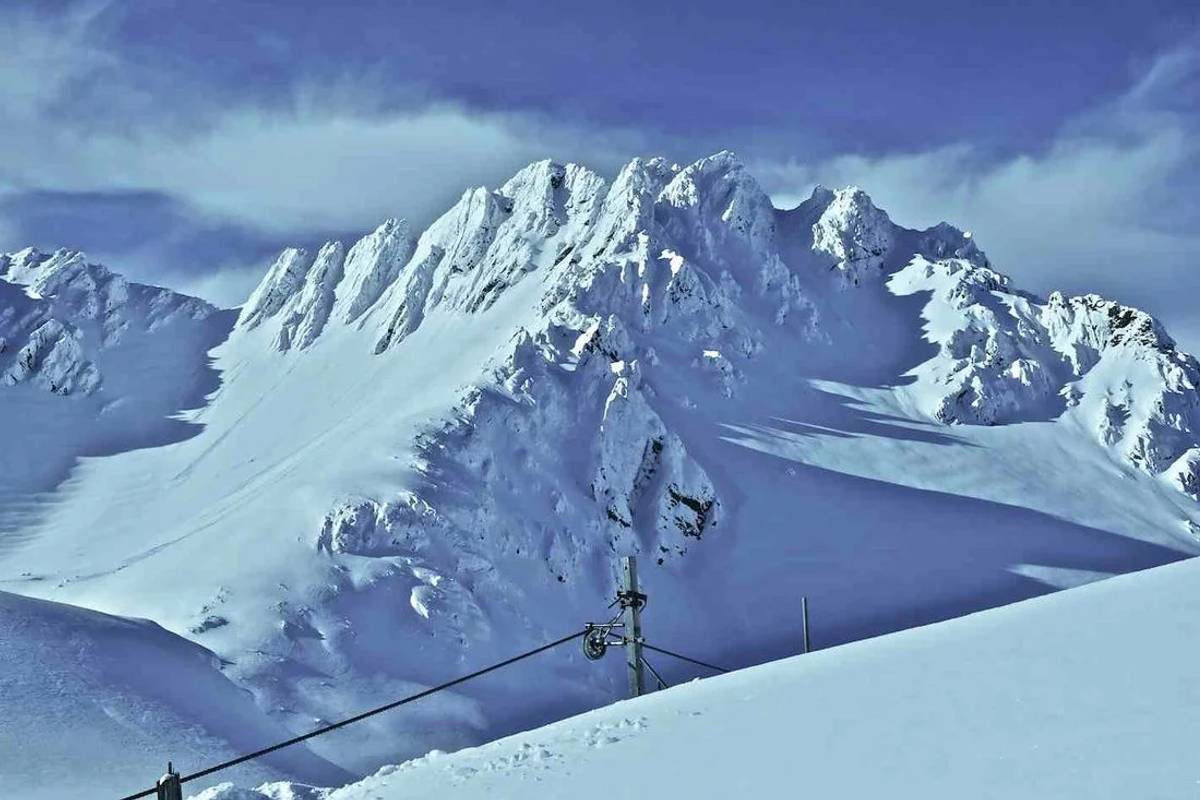
Mt Olympus
4.5m annual snowfall, 60 hectares, rope tows, groomer-free terrain. Club field 130km from Christchurch, New Zealand.

Season 2026
Opens
26 July 2026
Closes
27 Sept 2026
Days open
63
Annual snow
4m
The Overview
Michael Fulton
Melbourne-based skier and snowboarder with 50+ resorts across 5 continents. Specialises in Australian resorts and international resort comparisons.
Mt Olympus operates at elevations between 1430 and 1880 metres with 450 metres of vertical drop across 60 hectares of skiable terrain. The field offers 18 runs split 10 per cent beginner, 55 per cent intermediate and 35 per cent advanced, with a south-facing basin positioned to capture southerly powder dumps that deliver over 4.5 metres of snowfall annually. The 2096-metre Mt Olympus peak towers above the ski area, which sits in a high basin at the southern end of the Craigieburn Range. Bluffed ridges to the north, west and east shelter the mountain from prevailing westerly winds, helping it hold snow when other Canterbury fields get stripped.
The terrain unfolds across a groomer-free bowl of schist and shale that demands off-piste skills. Four rope tows service lift-accessed terrain, whilst short hikes from the top tow open routes to Little Alaska, The Sphinx, Ardi's Peak and the Back Ridge. The treeless basin suits confident intermediates who can read ungroomed snow, whilst advanced terrain includes steep chutes and couloirs that attract New Zealand's freeride community. Daily skier numbers rarely exceed 100, ensuring fresh tracks remain available hours after a snowfall.
Mt Olympus has operated as a club field under the Windwhistle Winter Sports Club since 1932, with volunteer members maintaining infrastructure and running operations. The Top Hut at 1640 metres offers ski-in ski-out accommodation for up to 52 guests, complete with communal dining, a drying room and the Far Canal Bar. Day trippers access the lodge via an access rope tow from the car park, whilst the field maintains a relaxed clubbie atmosphere where regulars share local knowledge. Night skiing runs on select dates when conditions permit.
Season passes for club members who contribute 10 or more work days cost NZ$200, whilst non-member daily passes run NZ$104 regular and NZ$120 peak. Children under 10 ski free, and the field operates independently without ties to multi-mountain pass networks. The 2026 season runs 26 July to 27 September, typical of club fields that open later than commercial areas. Mt Olympus suits backcountry-oriented skiers who value powder quality and solitude over grooming and high-speed lifts, with avalanche safety equipment compulsory for all hiking beyond patrolled terrain.
450m
Vertical
18
Runs
148 acres
Skiable
4m
Annual snow
The Terrain
18 runs across 148 acres skiable
Mt Olympus is a small club-style ski field in the Craigieburn Range of Canterbury, with about 60 hectares of skiable ground in a south-facing basin. The 450-metre vertical runs from 1,430 to 1,880 metres across 18 runs, split 10% beginner, 55% intermediate and 35% advanced. There is no expert category. Visitors should know that this is a remote mountain: the shingle access road is steep, narrow towards the top and needs chains and a capable 4WD in poor conditions. Once on snow, the reward is a quiet, natural-feeling field with few other people sharing it.
Surface lifts carry skiers high up the basin, and the upper slopes open into wide, rolling terrain with a choice of lines from the Main Tow and Top Tow areas. Intermediates make up more than half the mountain, so most competent skiers will find comfortable runs, while the advanced 35% covers the steeper pitches above and beside them. Beginners are a small group here, and rope-tow style lifts reward some prior experience. Mt Olympus suits adventurous intermediates and advanced skiers who value solitude and character over facilities and groomed convenience.
Terrain split
18
runs
18 runs across 4 grades
Beginner2 runs · 10%
Intermediate10 runs · 55%
Advanced6 runs · 35%
Expert0 runs · 0%
Time it right
When to visit Mt Olympus
The 2026 season opens 26 July and closes 27 September, spanning nine weeks within New Zealand's typical club field window. Mt Olympus missed the entire 2020 season due to COVID-19 restrictions and insufficient snow, the first closure since 1978, whilst access road damage in 2021 threatened a second consecutive lost season before community fundraising enabled repairs. Operating dates depend on snowpack development and road access rather than fixed commercial schedules, with the club announcing opening once conditions stabilise. Spring skiing often extends into October during high-snow years, thanks to the basin's south-facing aspect and snow retention.
Annual snowfall averages 4.5 metres, delivered primarily by southerly storms tracking from Antarctica that the basin's topography traps efficiently. The south-facing alignment captures powder that bypasses west-facing fields exposed to nor'west winds, whilst high ridges on three sides create a natural snow pocket. No snowmaking exists on the mountain, and grooming is entirely absent by philosophy rather than budget, making natural snowfall the sole determinant of surface quality. Base depths build steadily through July and August, with the field holding snow when exposed areas get stripped by wind.
Mid-winter months from late July through August deliver the most consistent powder, with storms rolling through every week during active patterns. September brings longer daylight and spring corn conditions as temperatures rise, particularly on sun-exposed slopes that soften by midday. Quieter periods occur midweek outside school holidays, when overnight guests and committed locals dominate the mountain. Peak powder days after major southerly dumps draw larger crowds, though 100 skiers still constitutes a busy day compared to commercial fields that host thousands.
Night skiing operates on select evenings when conditions and bookings align, requiring advance reservations through the club. The season calendar includes designated ski weeks targeting different demographics, from Wrinkle Free weeks for younger crowds to family-oriented programmes. No major competitions or festivals anchor the calendar, keeping the focus on pure skiing and lodge-based socialising. Weather variability remains high across all Canterbury fields, meaning no single week guarantees conditions, though February storms historically deliver the deepest accumulations before the season opens.
Season 2026
26 July 2026
Opens
27 Sept 2026
Closes
63
Days open
4 m
Annual snow
Getting there
Getting to Mt Olympus, and where to stay
Mt Olympus occupies a high basin at the southern terminus of the Craigieburn Range in Canterbury's Southern Alps, 130 kilometres west of Christchurch. The ski area sits within Glenthorne Station, a working high-country sheep property accessed via unsealed roads that climb through tussock-covered river valleys. The base of the Access Tow sits at 1430 metres, whilst the surrounding peaks - including the 2096-metre Mt Olympus summit - define a south-facing amphitheatre of schist and shale. Lake Coleridge lies to the east, with views extending across the Harper and Wilberforce river valleys to the west, and the Rakaia Gorge cutting through volcanic rock formations to the south.
Methven, 23 kilometres to the southeast, serves as the primary service town for the region's ski fields. The rural settlement of 1800 residents offers accommodation, restaurants, equipment rental and supermarkets, positioned 95 kilometres west of Christchurch at 320 metres elevation on the Canterbury Plains. Windwhistle, a scattered rural locality 52 kilometres from the Bottom Hut turnoff, marks the junction where Highway 77 branches toward Lake Coleridge and the club fields. The region around Methven supports intensive arable farming on volcanic soils, with the Southern Alps rising abruptly from flat plains to alpine peaks within 30 kilometres.
State Highway 77 runs west from Christchurch to Windwhistle, then continues as Homestead Road and Harper Road to the Mt Olympus access gate. The sealed road ends 11.5 kilometres before the Bottom Hut at 1050 metres, where a basic self-catering lodge accommodates eight when the Top Hut fills. The final 11.5-kilometre climb from Bottom Hut to the ski area car park requires high-clearance 4WD vehicles with chains, following a single-lane track that crosses private farmland. Black Diamond Safaris operates specialist club field transport for those without suitable vehicles or mountain driving experience.
Christchurch International Airport lies 130 kilometres east, a 90-minute drive under good conditions to the Bottom Hut turnoff. Rental vehicles must have adequate clearance and chain capability for the access road, though 2WD suffices for the sealed highway to the gate. No rail service reaches Methven or surrounding areas, making private vehicles or shuttle buses the only practical options. Queenstown sits 413 kilometres to the southwest, whilst Lake Tekapo lies 157 kilometres south, both requiring multi-hour drives that make Christchurch the logical gateway for international visitors targeting Canterbury club fields.
Where to stay
Search all stays →Stays map loads when you scroll here
Hotels and lodges near Mt Olympus, powered by Stay22.
Latest News
From the SnowStash desk
Val Gardena to Alpe di Siusi Lift Link Back in Play After Court Ruling
The Val Gardena-Alpe di Siusi lift link isn’t dead after all. A South Tyrol court has overturned Santa Cristina’s rejection of the new Monte Pana-Saltria link on procedural grounds, after the council skipped required public information sessions. Opponents want the missing sessions held and a fresh vote, and nothing has been approved. For now it’s still a bus between the two, but a plan first floated in 2017 is back in the conversation.
8 Nov 2026
Whistler Blackcomb Rockslide Zone Stays Closed Through 2026-27 Season
A section of Whistler Peak terrain will stay closed all 2026-27 season, Vail Resorts has confirmed, with rockslide mitigation work continuing into summer 2027. Peak Express is still expected to run this winter, but locals are already arguing about what’s actually off limits, whether the Whistler Bowl is gone, and why the news landed after pass sales wound down. Here’s where things stand.
7 Nov 2026
Loveland Ski Area Opens for 2026-27 and Marks 60 Years of Snowmaking
Loveland is open. The Colorado ski area started Chet’s Dream turning on Saturday 7 November to kick off 2026-27, with $60 adult lift tickets to mark 60 years of snowmaking. Expect three runs, nearly 1,000 vertical feet (about 300 metres) of top-to-bottom skiing, live music on the Basin Patio and no beginner terrain yet. Here’s what’s open, what it costs and when Loveland Valley follows.
7 Nov 2026
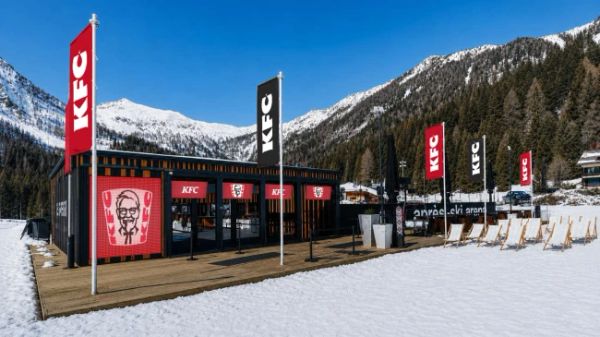
KFC Is Coming to the Slopes at Cortina and Madonna di Campiglio
Fried chicken is heading up the Dolomites. From 5 December KFC will run two restaurants on the slopes - one at 2,123 metres at Cortina, one at 1,700 metres at Madonna di Campiglio - and the polenta-and-canederli crowd has opinions. Local politicians, conservation groups and plenty of Facebook commenters are calling it a step too far, while others just want a cheaper lunch. Here’s what’s on the menu and what’s the fuss.
5 Nov 2026
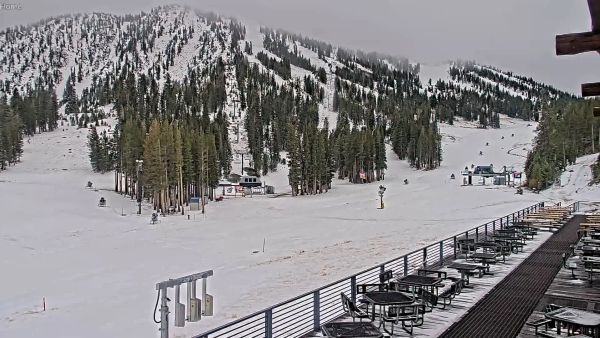
Mt Rose Aims to Open First in Tahoe on November 6
Mt Rose is going for the first-in-Tahoe title, with the Lakeview Express due to spin at 9 a.m. on Friday, November 6. One main lift, three runs and plenty of snowmaking, sitting on the highest base elevation in the region at 8,260 ft. Here is what is open, what is not (sorry, tubing fans), and how the early North American openings are stacking up.
4 Nov 2026
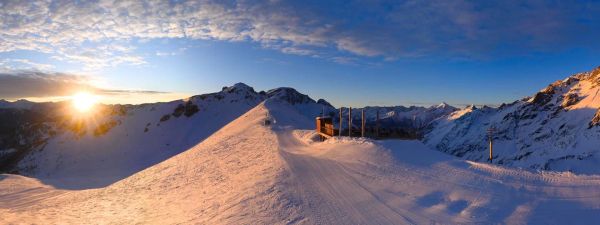
Europe Snow Forecast: Serre Chevalier Leads With 82 cm Over the Next 10 Days
Europe has had a quiet start to November, but our 10-day forecast has Serre Chevalier on 82 cm and Les 2 Alpes on 71 cm. Two pushes are lined up: a western Alps top-up from Friday, then a bigger, wider system on Thursday, November 12 and Friday, November 13 that reaches Italy and Switzerland. Full leaderboard inside.
4 Nov 2026
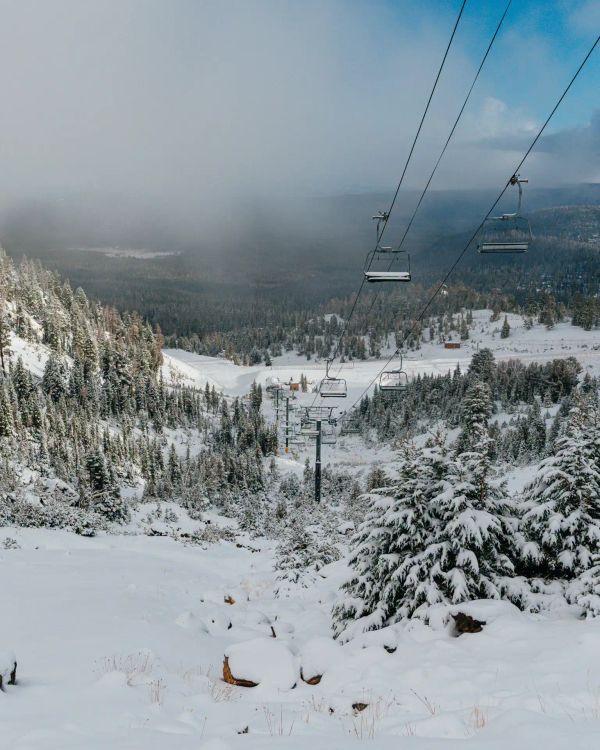
Mammoth Mountain Opens Early on November 5 With Up to 33 Inches of Snow in the Forecast
Mammoth just moved opening day forward to Thursday, November 5, eight days ahead of schedule. A snowy weekend and cold snowmaking nights did the work, and our forecast shows up to 33 inches more landing on November 13 and 14. Here is what opens, what the weather looks like and where Mammoth sits among the early Ikon Pass openers.
3 Nov 2026

Utah Snow Storm Builds Early-Season Base Ahead of November Openings
Rain down low, snow up high, and a snow report full of zeros that mostly means ‘not updated yet’. Utah’s first proper storm of 2026-27 is rolling through the Wasatch, Snowbird’s snow stake is closing in on 10 inches, and Brian Head is five days from opening day. Early November snow rarely looks like much, but it is the layer every November opening date is built on. Here is where it stands.
1 Nov 2026
Mt Olympus Lift Tickets
Mt Olympus lift tickets & passes
The 2026 season at Mt Olympus closed on Sept 27, 2026. Check back for next season's opening date and ticket pricing.
Day passes start from NZ$20, with peak rates up to NZ$120.
11 pass options
Single-day passes
Adult 18–64
Non-Member Adult Daily Pass
NZ$104up to NZ$120 peak
Daily access to Mt Olympus, New Zealand's legendary freeride destination. Experience 80 hectares of challenging terrain accessed by rope tows in a high south-facing basin. Features 4.5m annual snowfall, wide-open faces, steep chutes, and the highest hot tub in NZ at 1,640m elevation.
Buy passAdult 18–64
Affiliated Club Member Daily Pass
NZ$83up to NZ$95 peak
Discounted daily pass for members of affiliated clubs at Mt Olympus. Photo ID and proof of membership required. Access to legendary freeride terrain with rope tow systems and authentic club field culture.
Buy passYouth 18–25
Student Daily Pass
NZ$60up to NZ$75 peak
Student daily pass for Mt Olympus requiring valid student ID. Experience New Zealand's most challenging club field with advanced freeride terrain, spectacular alpine scenery, and authentic backcountry atmosphere.
Buy passAdult 18–64
Club Member Daily Pass (10+ Work Days)
NZ$28up to NZ$35 peak
Heavily discounted daily pass for Mt Olympus club members who have completed 10 or more work party days. Maximum discount for dedicated club volunteers accessing legendary freeride terrain and hot tub facilities.
Buy passAdult 18–64
Club Member Daily Pass (5 Work Days)
NZ$39up to NZ$50 peak
Discounted daily pass for Mt Olympus club members with 5 completed work party days. Good value for active club members accessing challenging freeride terrain and mountain facilities.
Buy passYouth 10–17
Junior Daily Pass (Under 18)
NZ$52up to NZ$65 peak
Junior daily pass for skiers under 18 at Mt Olympus. Young advanced skiers experience legendary freeride terrain under supervision. Suitable for experienced junior skiers due to challenging nature of terrain.
Buy passChild 6–9
Children Under 10 - Free
Free
Free skiing for children under 10 with full paying adult at Mt Olympus. Young children must be closely supervised due to advanced nature of terrain. Access to learners slope and mountain facilities.
Buy passAdult 18–64
Tarn Lift Pass
NZ$40up to NZ$50 peak
Limited access pass for Mt Olympus Tarn area only, available for day trips only. Cannot be purchased with accommodation. Basic access to specific terrain areas for those wanting a taste of Mt Olympus.
Buy passAdult 18–64
Learners Tow Only
NZ$20up to NZ$25 peak
Beginner access to Mt Olympus learners tow and gentle slopes only. Perfect for first-time skiers before progressing to the advanced terrain that Mt Olympus is famous for.
Buy passSeason passes
Adult 18–64
Club Member Season Pass (10+ Work Days)
NZ$200up to NZ$250 peak
Ultimate value season pass for Mt Olympus club members with 10+ work party days completed. Unlimited access to legendary freeride terrain, hot tub, accommodation bookings, and authentic club culture.
Buy passAdult 18–64
Non-Member Season Pass
NZ$990up to NZ$1,200 peak
Full season access to Mt Olympus for non-members. Unlimited skiing at New Zealand's most legendary freeride destination with 4.5m annual snowfall, challenging terrain, hot tub access, and booking priority for accommodation.
Buy passLift tickets FAQ
How much does a Mt Olympus day pass cost?
Mt Olympus day passes range from NZ$20 to NZ$120 depending on the date and advance booking.
Can I buy Mt Olympus lift tickets online?
Yes, you can purchase tickets directly from the resort website or at the resort ticket office.
Are there discounts for multi-day passes?
Yes, multi-day packages typically offer significant savings compared to individual day passes. The per-day cost decreases with longer stays.
What is included with a Mt Olympus lift ticket?
Full access to all lifts and trails at Mt Olympus, including mountain safety and patrol services.
What is the difference between Mt Olympus lift tickets and ski passes?
"Lift tickets" and "ski passes" refer to the same thing at Mt Olympus - your access to the mountain's lifts and trails for your chosen duration.
When should I buy Mt Olympus lift tickets for the best price?
Purchase tickets at least 7 days in advance for the best rates, and consider weekday visits for further savings over weekend rates.
Does Mt Olympus offer group discounts on lift tickets?
Group discounts are typically available for parties of 10 or more. Contact Mt Olympus directly for group booking information and rates.
How can I check current conditions before buying tickets?
Before purchasing, check the live snow report and mountain webcams to see current weather, snow conditions, and lift operations at Mt Olympus.
More Mt Olympus intelligence: snow report, webcams, resort overview.