Ohau
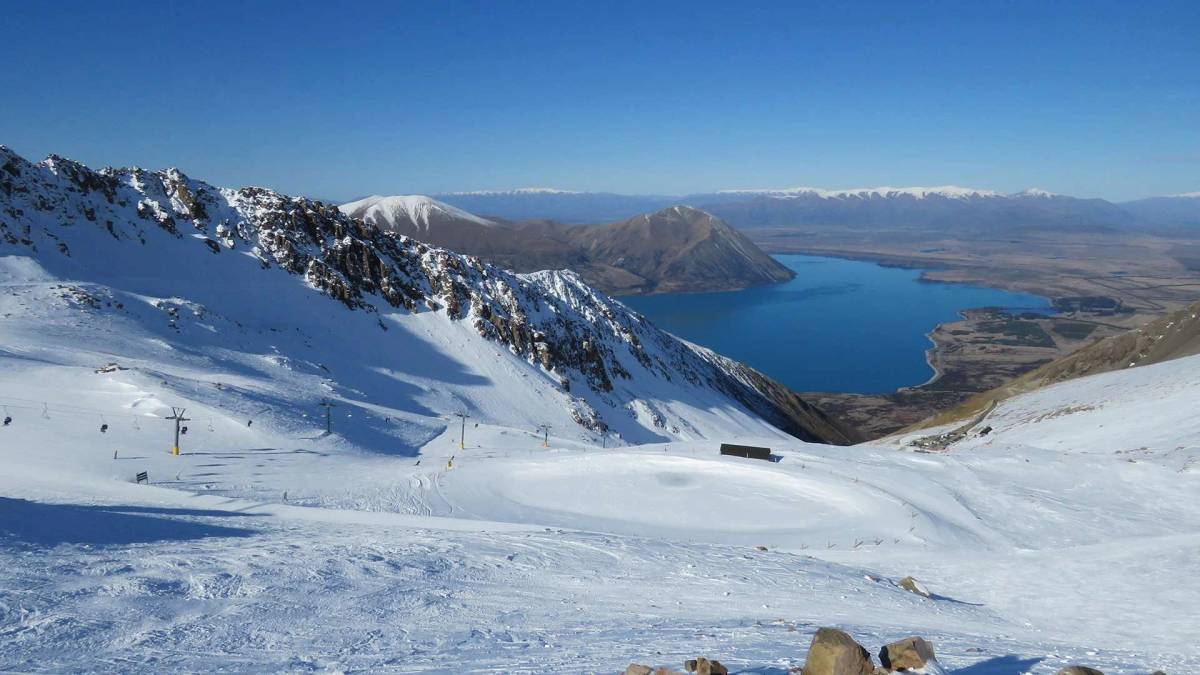
125 hectares, 400m vertical, 15 runs. Family-run field above Lake Ohau in New Zealand's South Island Mackenzie Basin.

Season 2026
Opens
20 June 2026
Closes
27 Sept 2026
Days open
99
Annual snow
2.3m
The Overview
Michael Fulton
Melbourne-based skier and snowboarder with 50+ resorts across 5 continents. Specialises in Australian resorts and international resort comparisons.
Ohau operates between 1425 and 1825 metres with 400 vertical metres across 125 hectares of skiable terrain. The field comprises 15 marked runs split 20 per cent beginner, 50 per cent intermediate and 30 per cent advanced, with no designated expert terrain. A 23-gun Techno Alpin snowmaking system covers the main Boulevard run, ensuring coverage from the June opening. The family-run operation has been managed by Mike and Louise Neilson since the mid-1980s, set in the Ohau Range between the Mackenzie Basin and the Main Divide.
The valley-contained layout favours off-piste riding over grooming, with only a handful of prepared runs. The Boulevard provides wide cruising from the chairlift summit to base, whilst Ridge Run demands a bootpack above the lift line to access untracked bowls. Advanced riders traverse to Escalator and the High Traverse for steeper pitches, or hike to the ridgeline for views across to Aoraki Mount Cook. Two small terrain parks service beginners and intermediates near the base and mid-mountain.
The day lodge sits steps from the car park, built from Oregon timber with a log burner, sun deck and the Avalunch Cafe. Lift queues rarely form and the skiable hectare-to-skier ratio keeps fresh snow accessible well into the afternoon. Lake Ohau Lodge, 20 minutes down the 9.6-kilometre access road, anchors the operation with 72 rooms, hot tubs, a bar and restaurant. The field's Māori name translates to windy place, though the turquoise lake views and Southern Alps panorama define the experience more than weather.
Ohau operates independently without pass affiliations, pricing adult day tickets from 135 to 160 New Zealand dollars depending on season. Lodge guests receive discounted rates and children under six ski free. The 2026 season runs 20 June to 27 September across 14 weeks. This suits families seeking uncrowded slopes, intermediates chasing consistent fall-line terrain, and advanced riders willing to hike for powder stashes beyond the single chairlift's reach.
400m
Vertical
15
Runs
309 acres
Skiable
2.3m
Annual snow
The Terrain
15 runs across 309 acres skiable
Ohau Snow Fields sits above Lake Ohau in the Mackenzie Basin, a treeless, wide-open mountain of about 125 hectares between 1,425 and 1,825 metres. Its 15 runs cover a 400-metre vertical, and the split favours the middle: 20% beginner, 50% intermediate and 30% advanced, with no expert terrain. Because nothing breaks the slopes, the whole mountain reads like one big natural amphitheatre, and the views run across to Aoraki Mount Cook and the Southern Alps. That openness also means weather and visibility shape the day more than at tree-lined fields, so conditions are worth checking before you drive up.
Intermediates have the largest share of the terrain, with broad bowls and rolling ridgelines that suit long, easy carving turns. Advanced skiers can traverse out along the Escalator and the High Traverse to reach steeper pitches, or climb to the ridge for extra vertical and a look across the valleys. Lifts are a mix of one chair and a T-bar, so the layout stays easy to understand. Ohau suits families, mid-level skiers and keen riders who like to earn their turns with a short hike, and it rewards anyone who prefers open skiing over groomed cruising.
Terrain split
15
runs
15 runs across 4 grades
Beginner3 runs · 20%
Intermediate8 runs · 50%
Advanced5 runs · 30%
Expert0 runs · 0%
Time it right
When to visit Ohau
The 2026 season opens 20 June and closes 27 September, spanning 14 weeks of operation. Most South Island fields target late June openings, though Ohau's elevation and snowmaking allow earlier access when natural cover permits. Historical seasons have run from late June through early October, with closures dependent on spring snow retention. The field typically operates daily once open, with occasional wind holds affecting the exposed upper mountain.
Ohau receives approximately 2.3 metres of natural snowfall annually, modest by New Zealand standards but augmented by reliable Main Divide weather systems. The 23-gun automated snowmaking system covers the Boulevard and main descents, crucial for June and early July when base depths build. The southeast-facing aspect preserves snow quality through midday sun, and the 1425-metre base elevation sits high enough to maintain coverage into September. Early season off-piste requires caution due to rock coverage until sufficient base accumulates.
July and August deliver peak powder conditions with the most consistent natural snowfall and coldest temperatures. September offers spring corn snow, longer daylight and fewer crowds as families return to school. Midweek visits from late June through early August provide the quietest slopes, whilst weekends draw day-trippers from Christchurch and Queenstown. The field rarely reaches capacity, making powder day timing less critical than at commercial resorts further south.
The events calendar remains low-key compared to larger fields, with occasional races and community days. No night skiing operates. Lodge guests can access the daily 9.15am shuttle up the access road, returning at day's end. The season pass program offers family and loyalty discounts for those buying before early June, and Lake Ohau Lodge accommodation packages bundle lift tickets at reduced rates throughout winter.
Season 2026
20 June 2026
Opens
27 Sept 2026
Closes
99
Days open
2.3 m
Annual snow
The record
Historical snowfall at Ohau
Daily snow reports at Ohau go back to 2025, 2 winters on the books. Open the record to compare winters, lifts and piste.
45 cm
Snowiest day
6 Sept 2025
253 cm
This winter · 2026
so far
210 cm
Typical winter
average of complete seasons
Winter totals
cm
Past wintersThis winter
Getting there
Getting to Ohau, and where to stay
Ohau sits in the Mackenzie High Country on the Ohau Range's eastern slopes, part of the Main Divide separating Canterbury and Otago. The field overlooks Lake Ohau's southwestern shore at 1425 metres base elevation, cradled between the Ohau Range west and Ben Ohau Range east. The glacial lake stretches below in vivid turquoise, fed by snowmelt from the surrounding peaks. Aoraki Mount Cook rises 99 kilometres northwest, visible from the ridgeline on clear days.
Twizel lies 42 kilometres north and Omarama 42 kilometres south, both 30 minutes from the Highway 8 turnoff to Lake Ohau Road. The sealed 23-kilometre approach road hugs the lakeshore before reaching Lake Ohau Lodge. From the lodge, a 9.6-kilometre unsealed alpine road climbs 15 minutes to the ski field car park, steep and narrow with no barriers but maintained throughout winter. The Mackenzie Basin's stark tussock landscape and International Dark Sky Reserve designation define the broader region.
Christchurch Airport sits 320 kilometres northeast, a 3.5 to 4-hour drive via State Highway 1 through Ashburton, then west on Highway 8 past Lake Tekapo. Queenstown Airport lies 220 kilometres southwest, roughly 3 hours via Highway 6 and 8 through Cromwell and the Lindis Pass. Dunedin Airport is 275 kilometres southeast, a 3-hour drive. No commercial airports operate closer than 90 minutes, making self-drive the primary access method.
InterCity operates one daily bus from Christchurch to the Lake Ohau turnoff on Highway 8, requiring pre-arranged pickup for the final 23 kilometres. No public transport serves the field directly. Most visitors drive rental vehicles or stay at Lake Ohau Lodge, which runs a morning shuttle to the field. Chains or four-wheel-drive capability may be required on the access road during storms, available for hire at the lodge.
Where to stay
Search all stays →Stays map loads when you scroll here
Hotels and lodges near Ohau, powered by Stay22.
Latest News
From the SnowStash desk
Mt Rose Aims to Open First in Tahoe on November 6
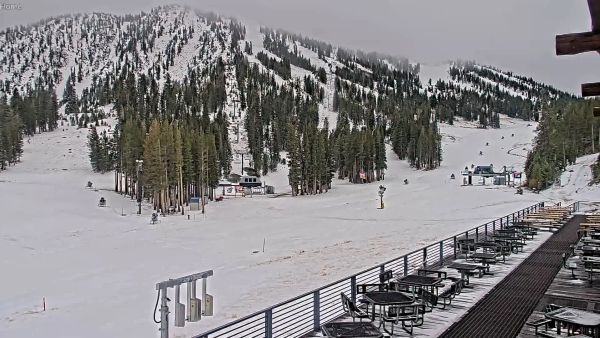
Mt Rose is going for the first-in-Tahoe title, with the Lakeview Express due to spin at 9 a.m. on Friday, November 6. One main lift, three runs and plenty of snowmaking, sitting on the highest base elevation in the region at 8,260 ft. Here is what is open, what is not (sorry, tubing fans), and how the early North American openings are stacking up.
4 Nov 2026
Europe Snow Forecast: Serre Chevalier Leads With 82 cm Over the Next 10 Days
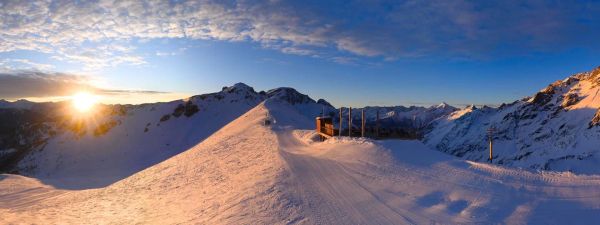
Europe has had a quiet start to November, but our 10-day forecast has Serre Chevalier on 82 cm and Les 2 Alpes on 71 cm. Two pushes are lined up: a western Alps top-up from Friday, then a bigger, wider system on Thursday, November 12 and Friday, November 13 that reaches Italy and Switzerland. Full leaderboard inside.
4 Nov 2026
Mammoth Mountain Opens Early on November 5 With Up to 33 Inches of Snow in the Forecast
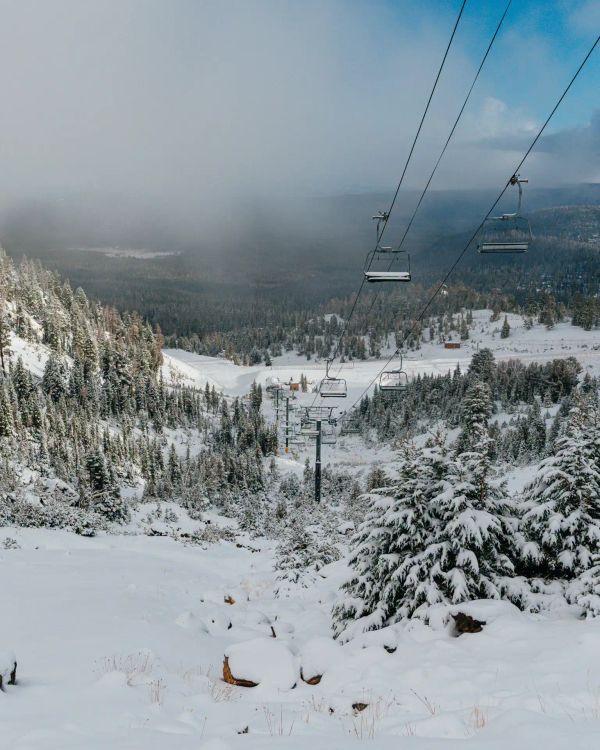
Mammoth just moved opening day forward to Thursday, November 5, eight days ahead of schedule. A snowy weekend and cold snowmaking nights did the work, and our forecast shows up to 33 inches more landing on November 13 and 14. Here is what opens, what the weather looks like and where Mammoth sits among the early Ikon Pass openers.
3 Nov 2026
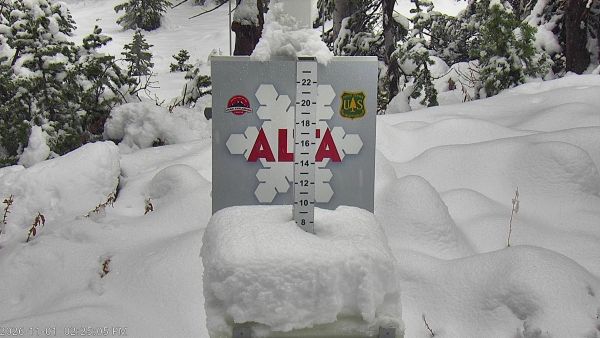
Utah Snow Storm Builds Early-Season Base Ahead of November Openings
Rain down low, snow up high, and a snow report full of zeros that mostly means ‘not updated yet’. Utah’s first proper storm of 2026-27 is rolling through the Wasatch, Snowbird’s snow stake is closing in on 10 inches, and Brian Head is five days from opening day. Early November snow rarely looks like much, but it is the layer every November opening date is built on. Here is where it stands.
1 Nov 2026
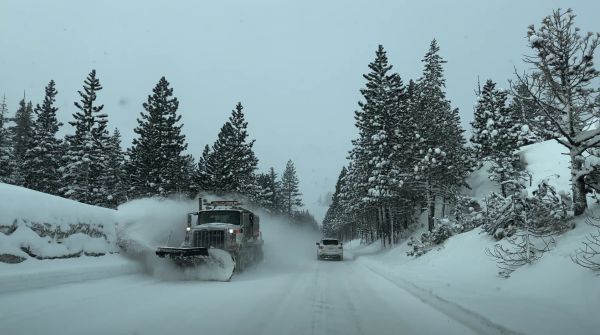
Sierra Nevada Halloween Storm: Dodge Ridge Forecast to Lead With 19 Inches
Halloween weekend brings a wet, windy storm to the Sierra Nevada. Our five-day forecast has Dodge Ridge on top with 19 in, followed by Bear Valley at 15 in and Mammoth Mountain at 12 in, with most of it landing on Saturday. A winter weather advisory covers the Tahoe Basin and Mono County until 7 AM Sunday, gusts could reach 47 mph and the freezing level swings between 4,900 and 8,700 ft, so some bases will see rain. A dry spell follows from Monday.
31 Oct 2026
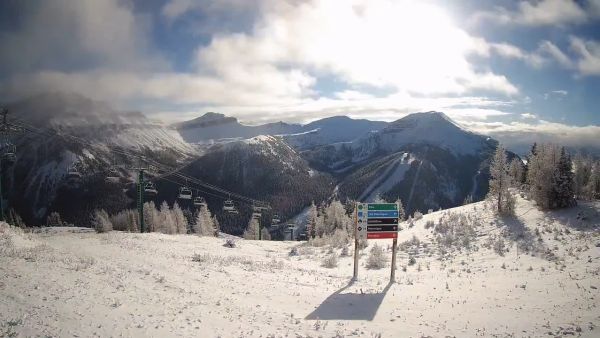
Lake Louise Opens Early on 1 November With Juniper Express and Easy Street
The Rockies get their first lift-served turns of the season early. Lake Louise opens Sunday 1 November, five days ahead of schedule, after a cold October and round-the-clock work from the snowmaking and mountain crews. Terrain is limited to Juniper Express Chair and Easy Street, with two small terrain parks and the beginner area for lessons. Opening-day tickets are over 60% off, with prices rising as more lifts open. First chair is at 9:30 am under the resort’s new lift hours.
31 Oct 2026
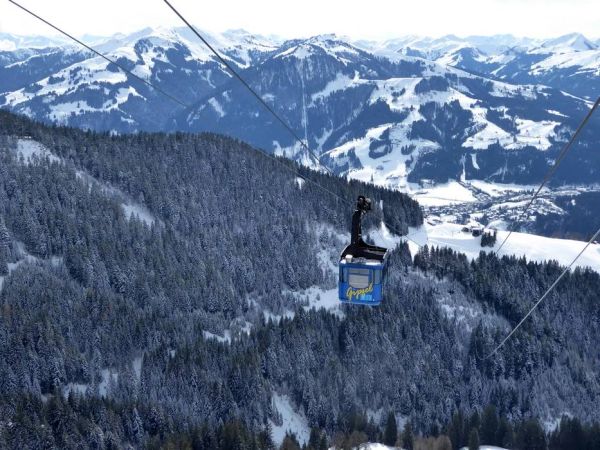
Kitzbüheler Horn Summit Cable Car to Be Replaced After 70 Years
A Tyrolean summit lift that has been carrying guests up the Kitzbüheler Horn since 1955 is on borrowed time. Its licence runs to 2045, but a new inspection rule has made refurbishment uneconomic, so Bergbahn AG Kitzbühel will spend around €15 million on a replacement on the same line. It should hold roughly 100 people and keep running in winds that would stop today’s lift. Building starts in autumn 2027, which makes this winter and next summer the last chances to ride the old one.
30 Oct 2026
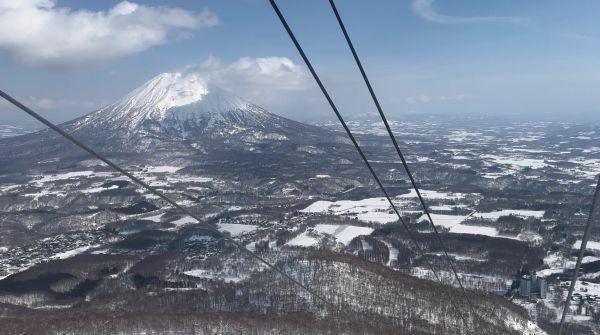
What’s New in Japan Skiing This Winter: Niseko Gondola, a Private Resort and a Bigger Ikon Pass
Niseko Village is replacing a lift from the early 1980s with an eight-person gondola, Tsugaike gets a six-person chairlift, Madarao joins the Ikon Pass and Togari opens Asia’s first private ski resort. Here’s what is actually new in Japan skiing for 2026/27, plus what is still a year or two away.
30 Oct 2026
Ohau Snow Report
Snow Report
Updated 3 Nov 2026
1825m
summit
+0cm
new snow · last 24 hours
Partly Cloudy4°C / 10°C · N 14km/h
Snowfall
24 hours
0cm
48 hours
0cm
7 days
0cm
Base depth
90cm
Season total
253cm
Typical winter 210cm
Total lifts2
Live open status isn’t available right now.
20 June 2026 - 27 Sept 2026
Hour by Hour
Next 29 hours· Updated Nov 4, 2026 at 6:02 PM
Scroll for the full outlook · Open-Meteo
7-Day Outlook
1,745 mUpdated Nov 4, 2026 at 6:02 PMOpen-Meteo
Days 1–7
0.0cm
Days 8–14
0.0cm
Thu, Nov 5
Light Drizzle
Temp10° / 4°°C
Snow0.0cm(20%)
Wind14 km/h N
Live snow from the resort feed; forecast from Open-Meteo, via Supabase.
Understanding the Ohau snow report
Planning a day at Ohau? Our snow report combines official mountain data with live weather so you know exactly what conditions look like right now, from the 1425m base to the 1825m summit.
Snow measurements
Snow depth at Ohau is tracked at both the base and summit, since the two elevations often see different totals — roughly a 400m difference here. We report fresh snowfall over the last 24 hours and 7 days alongside the running season total, in both metric and imperial units.
Weather conditions
Current weather conditions affect snow quality. Cold temperatures with low wind typically preserve snow quality, while warm temperatures or rain can impact conditions negatively — something worth watching closely at Ohau's 1425m base elevation, where temperatures run milder than the summit.
Data sources
Snowfall and depth figures for Ohau come from official mountain sources; weather and outlook data comes from independent forecasting services. The mountain is served by 2 lifts in total.
When to check
Snow reports are typically updated early morning and late afternoon. For the most current conditions, check back regularly, especially if a winter storm is approaching.