
Rainbow Ski Area
220m vertical, 15 runs, 5 T-bars in St Arnaud Range. Community-owned field adjacent Nelson Lakes National Park, South Island.
Season 2026
Opens
2 Aug 2026
Closes
20 Sept 2026
Days open
49
Annual snow
2m
The Overview
Michael Fulton
Melbourne-based skier and snowboarder with 50+ resorts across 5 continents. Specialises in Australian resorts and international resort comparisons.
Rainbow Ski Area operates across a 220-metre vertical drop from 1,540 to 1,760 metres, spanning 50 hectares with 15 marked runs. The terrain breakdown shows 25% beginner, 55% intermediate, and 20% advanced with no expert classification. The field averages 2 metres of annual snowfall supplemented by extensive snowmaking on key trails. Run by the community-owned Rainbow Sports Club since reopening in 2004, the area sits in a horseshoe-shaped basin in the St Arnaud Range adjacent to Nelson Lakes National Park.
Intermediate terrain dominates the skiable area with wide groomed runs through the basin's centre and steeper ungroomed lines along the basin's perimeter. Advanced skiers access powder runs and chutes off the West Bowl tow and East Face, which offer variable conditions and natural features when snow cover allows. The Learner's area includes dedicated progression zones with gentle gradients, whilst a terrain park near the base features rails, boxes, and jumps for all abilities. The longest run extends 1.5 kilometres from the summit ridge.
The compact base area centres on a day lodge with café, rental shop, repair services, and deck overlooking Lake Rotoiti. The field typically sees light crowds outside school holidays, with weekdays particularly quiet. No on-mountain accommodation exists, with all visitors accessing via the village of St Arnaud, 34 kilometres and 40 minutes away by sealed and gravel roads requiring chains. Views from the top T-bar extend across Nelson Lakes National Park's beech forests to Lake Rotoiti below.
Children under 7 ski free, with adult day passes priced at NZ$130 and learner-specific tickets from NZ$50 for youth. The 2026 season runs 2 August to 20 September, typical of the late-opening northern South Island fields. The resort suits families, beginners building skills on wide slopes, and intermediates seeking uncrowded groomed terrain. Limited vertical and modest snowfall make it less compelling for experts or powder chasers compared to larger Canterbury and Otago operations.
220m
Vertical
15
Runs
124 acres
Skiable
2m
Annual snow
The Terrain
15 runs across 124 acres skiable
Rainbow Ski Area is one of the smaller fields in the northern South Island, with around 50 hectares of beech-forest-fringed slopes between 1,540 and 1,760 metres. The 220-metre vertical is modest, and its 15 runs are mostly gentle to moderate: 25% beginner, 55% intermediate and 20% advanced, with nothing rated expert. Five T-bar-style surface lifts serve the entire mountain, so the layout stays simple and the lines of sight are short. It is a low-pressure mountain where the appeal lies in space, light crowds and the fact that everything sits within easy reach of a single base area.
Intermediate runs make up more than half of the terrain, and these are the best of the mountain: open, rolling pitches where skiers can link turns without much interruption. The advanced slopes are shorter and steeper but still brief, so experts will exhaust the mountain quickly. A small terrain park near the base gives freestyle skiers a place to practise. Rainbow suits families, learners progressing beyond the nursery and relaxed intermediates in the Nelson Lakes region who prefer a friendly, uncrowded day to chasing vertical. Visitors seeking big descents or long runs will find them elsewhere on the island.
Terrain split
15
runs
15 runs across 4 grades
Beginner4 runs · 25%
Intermediate8 runs · 55%
Advanced3 runs · 20%
Expert0 runs · 0%
Time it right
When to visit Rainbow Ski Area
The 2026 season operates 2 August to 20 September, a seven-week window typical for northern South Island fields at this elevation. Historical seasons run late June to early October depending on snow conditions, though recent variability has seen shortened windows. The 2025 season was cancelled entirely due to insufficient snowfall. Rainbow opens later than Canterbury fields further south, with August providing the most consistent cover.
The field averages 2 metres of annual snowfall, modest by New Zealand standards and supplemented by extensive snowmaking on main trails. The basin's south-to-southeast aspect at 1,540-1,760 metres preserves snow quality through mid-season but limits accumulation compared to higher-elevation operations. Westerly weather systems deliver the best snowfall, with 300 centimetres recorded in strong seasons and visibility improving on the east-facing slopes after fronts clear. Base depths fluctuate significantly with thin early-season cover common.
July and August deliver peak conditions when snowfall aligns with cold temperatures, whilst September sees spring softening and reduced operating hours. Mid-week visits from late July through mid-August offer optimal snow quality and minimal crowds, with school groups dominating weekday mornings. The field operates predominantly as a day-trip destination, with weekend visitor numbers from Nelson and Blenheim swelling compared to near-empty weekday slopes.
The Atomic Rainbow Masters race event runs annually in late August, comprising giant slalom and slalom races organised by the St Arnaud Ski Racing Foundation. An end-of-season Slush Cup in late September marks the close with pond-skimming attempts across slushy lower slopes. No night skiing operates. The club's limited snow reliability and short season make pre-trip snow report checking essential, with closures possible during warm spells.
Season 2026
2 Aug 2026
Opens
20 Sept 2026
Closes
49
Days open
2 m
Annual snow
Getting there
Getting to Rainbow Ski Area, and where to stay
Rainbow sits in the St Arnaud Range of the Southern Alps in Marlborough District, just across the regional boundary from Tasman on New Zealand's South Island. The base elevation of 1,540 metres places it above the beech forest treeline, with the basin opening east towards Nelson Lakes National Park and Lake Rotoiti. The nearest settlement is St Arnaud village (population approximately 100, with 400 holiday homes), located 34 kilometres northeast at the northern end of Lake Rotoiti within the national park.
Nelson, 122 kilometres northeast, serves as the primary regional centre with a population of 53,000 and known for arts, crafts, and access to Tasman Bay beaches. Blenheim sits 119 kilometres east with 26,500 residents, serving as gateway to the Marlborough wine region's Sauvignon Blanc vineyards. Picton, 144 kilometres northeast, connects the inter-island ferry from Wellington. Murchison lies 40 kilometres southeast, a small service town on the Buller River.
Access follows State Highway 63 between Blenheim and St Arnaud, turning onto Rainbow Valley Road (also called Wairau-Hanmer Springs Road). The sealed 12-kilometre section crosses five stream fords before reaching the Six Mile Creek car park. From there, a steep 9-kilometre gravel mountain road climbs through native beech forest to the field, requiring chains to be fitted or carried by all vehicles. The drive from St Arnaud takes 40-50 minutes including chain-fitting time. A shuttle service operates multiple daily trips from the bottom car park for those avoiding the mountain road.
Nelson Airport lies 85 kilometres away with 90-minute drive times, offering domestic connections to Auckland, Wellington, and Christchurch. Blenheim's smaller airport sits 100 kilometres distant. No direct bus services operate, with most visitors driving private vehicles or carpooling via community platforms. The Rainbow Road 4WD route from Hanmer Springs provides summer alternative access but closes in winter. Picton ferry terminal connects Wellington passengers 1 hour 40 minutes away, making Rainbow accessible for North Island visitors combining wine country and skiing.
Where to stay
Search all stays →Hotels and lodges near Rainbow Ski Area, powered by Stay22.
Latest News
From the SnowStash desk
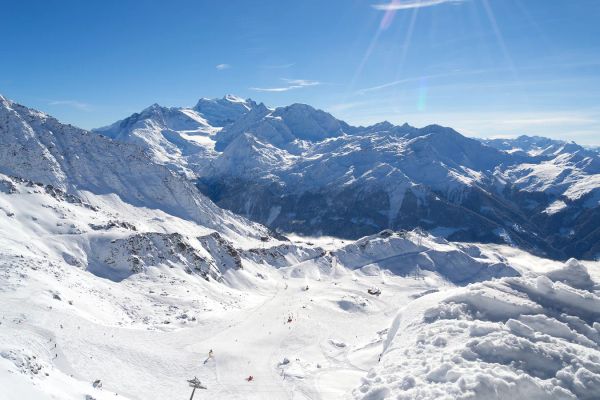
Alps Snow Forecast: Up to 64 cm Headed for the High Glaciers as the Snow Line Drops
The Alps are about to swap mild, sunny October weather for something far more wintry. A cold front arrives Tuesday, and SnowStash forecasts have Monterosa Ski out in front with 64 cm over 14 days, ahead of Blatten Belalp (55 cm) and Verbier (43 cm). The snow line should fall below 2000 metres by Wednesday night, and glaciers across Switzerland, Italy and Austria are in line for the best of it. The wind will have a say too.
20 Oct 2026
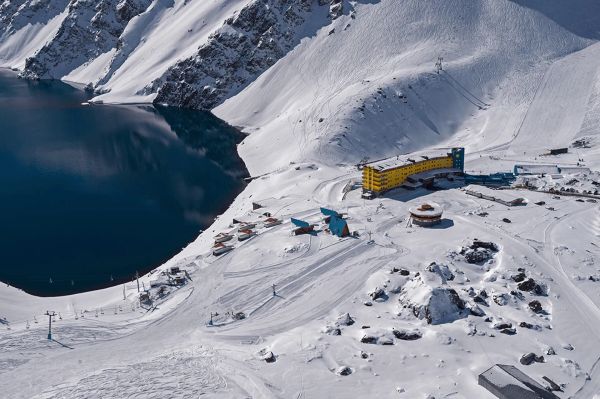
Four Dead After Avalanche Near Ski Portillo in Chile
A large avalanche struck near Laguna del Inca adjacent to Ski Portillo on Saturday afternoon, killing four people and injuring four others. The group were day visitors mountaineering in the backcountry after reportedly being warned about elevated avalanche risk by resort staff.
18 Oct 2026
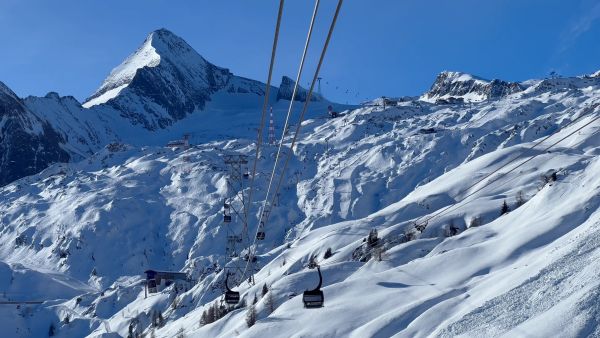
Europe Ski Resorts Open Now: What Is Skiable in Mid-October 2026
Europe’s ski season is open, technically. After a record-warm summer, glaciers in Austria, Switzerland and Italy are running a few pistes apiece, Sölden, Stubai and Kitzsteinhorn started late, Titlis has pushed back to 24 October, and Zermatt reopens a few lifts on 14 October after more than two months shut. Finland’s Levi and Ruka are skiing on stored snow. Here is what is open, and what you actually get at each.
14 Oct 2026
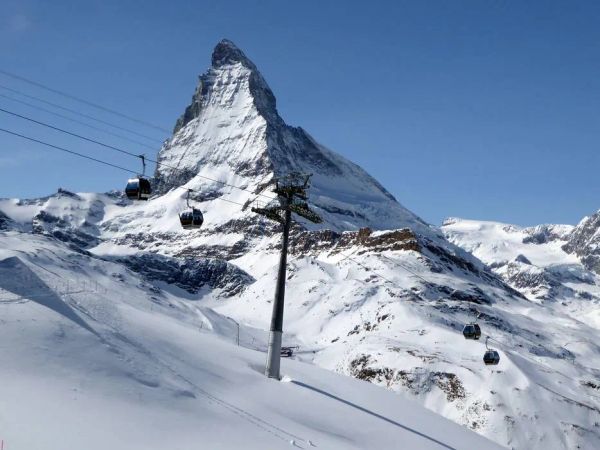
Zermatt Plans World Cup Downhill Return on the Gornergrat for 2028
Zermatt is having another crack at a World Cup downhill, and this time nobody has to cross a border. Around 13 million Swiss francs is going into rebuilding the Gornergrat piste, including a jump fed by a roughly 300-metre in-run across the roof of the Gornergrat Railway gallery, with the Matterhorn lined up behind it for the TV cameras. First men’s race is pencilled in for March 2028, pending FIS homologation.
14 Oct 2026
Mt. Rose Begins Snowmaking for the 2026-27 Season at Lake Tahoe
Lake Tahoe’s highest base elevation is paying off early: Mt. Rose has started making snow for 2026-27 after the first flurries and a cold snap. The Nevada resort is backing it with nearly US$2 million in upgrades, including a replacement snowmaking main line, a new PistenBully groomer and restraint bars on every lift. Opening day is yet to be confirmed, though Heavenly and Northstar are already eyeing 20 November.
13 Oct 2026
Utah Ski Resorts 2026-27: What’s New at Alta, Deer Valley, Powder Mountain and More
Utah is still building flat out. For 2026-27, Powder Mountain opens a steep new Skytrac chair into more than 1,000 acres of advanced terrain, Deer Valley adds 200 acres on Hail Peak, Sundance gets a new quad and Park City adds a gondola from its new parking structure. Snowmaking is expanding almost everywhere, Eagle Point stays closed after the Cottonwood Fire, and the 2034 Games are setting the pace. Here’s what’s new, resort by resort.
13 Oct 2026
Mt Hutt Invests NZ$12 Million in Base Area, Tripling Its Sun Deck
Mt Hutt is getting busier, and its base lodge is about to catch up. NZ$12 million goes into a heated sun deck roughly three times the current size (430 m² to 1,300 m²), plus a new toilet block, heated steps down to snow level, extra storage and a new food and beverage outlet. Building starts after the 2026 season, with everything due for winter 2027.
11 Oct 2026

Vermont Ski Resort Opening Dates 2026-27: Few Dates Set, Killington Waits on the Cold
Vermont's season is slow to take shape. Stratton is tentatively targeting 18 November and Sugarbush 21 November, while Pico has Friday 11 December on the calendar. Killington never sets a date and opens when the snowmaking allows, and Vail Resorts has yet to name days for Stowe, Okemo and Mount Snow. The forecasts disagree about snow, and the main El Niño worry for the Green Mountains is warmth.
9 Oct 2026