The Indy Pass has added 10 new partners for 2026-27, including its first heli-skiing operation and four Midwest areas. The expansion comes as the pass faces reported departures of three established Midwest resorts to Ikon, while passes go on sale for just one day due to unprecedented demand.
Indy Pass Sells Out Faster as Roster Hits 286 Operations
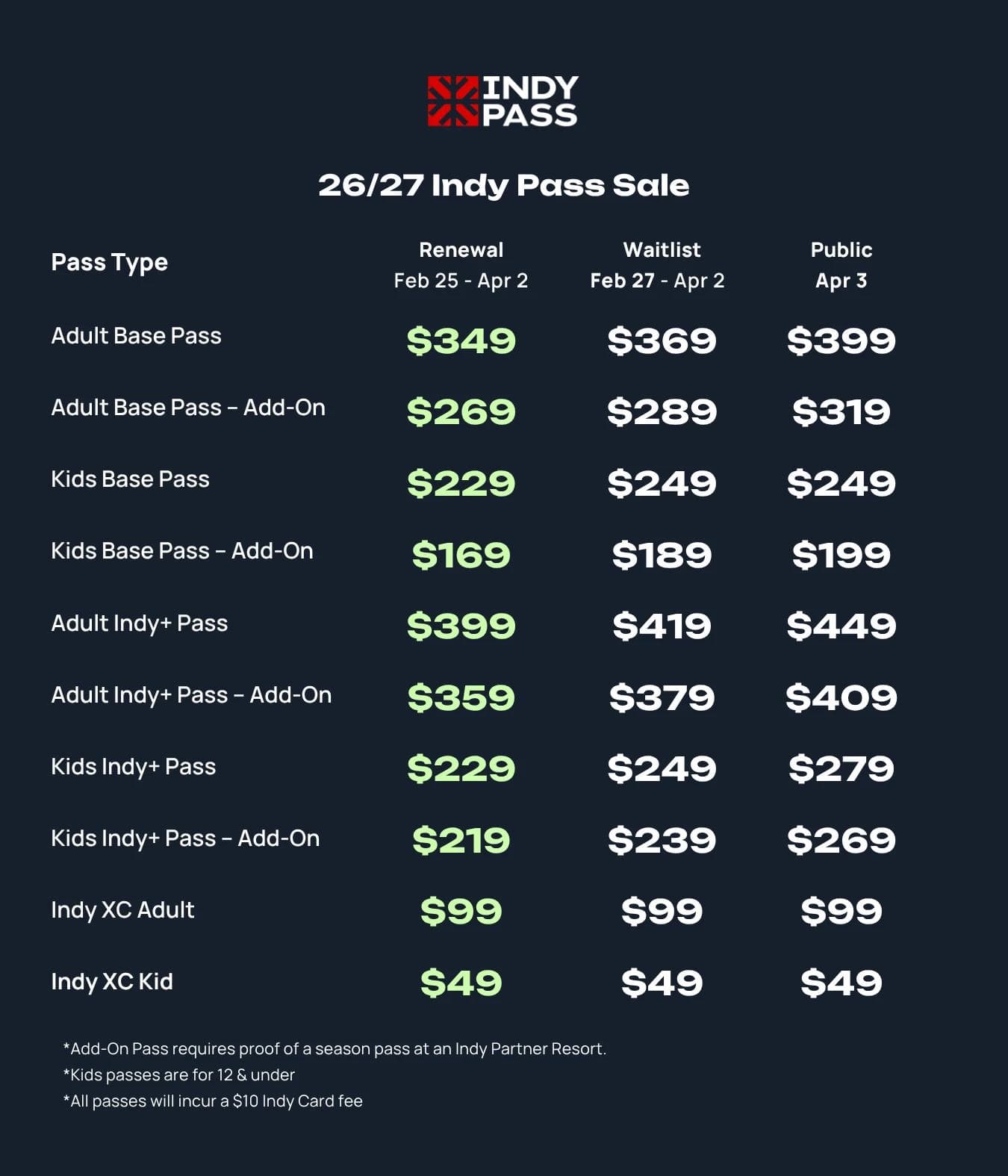
The Indy Pass will be available to the general public for exactly one day this year. After processing renewals and waitlist holders, remaining 2026-27 passes go on sale Friday 3 April at noon Eastern time, reflecting what director Erik Mogensen describes as rising demand for independent resort access. Last season's public sale window ran roughly 30 days - a significant contrast to this year's single-day release.
The announcement comes with 10 new partner additions, bringing the total network to at least 286 skiing operations for 2026-27. This follows 16 partners announced in February, with more expected this autumn as the pass works towards its stated 300-resort goal.
The 26-27 pricing structure for the Indy Pass.
The Heli-Skiing Addition
North Cascade Heli in Washington State becomes the first heli-skiing operation to partner with Indy Pass, though it's worth noting this provides discounts rather than the day passes offered at resort partners. The details of those discounts weren't specified in the announcement, which matters quite a bit when standard heli-skiing rates typically run several hundred dollars per day.
For any skiers and riders who've experienced heli-skiing or considering it, this addition provides another access point - assuming the discount structure makes it worthwhile.
The four new Midwest additions - Whitecap Mountains Resort and Paul Bunyan in Wisconsin, plus Camp 10 in Wisconsin and Coffee Mill in Minnesota - arrive as reports indicate Lutsen Mountains, Granite Peak, and Snowriver Mountain Resort are departing Indy for Ikon passes. None of this is officially confirmed by the departing resorts yet, but the timing of these announcements rarely coincides accidentally.
For context, Lutsen is Minnesota's largest resort by vertical drop at 360 metres. The new Midwest additions are considerably smaller operations, which aligns with Indy's positioning but represents a shift in the product offering for passholders in that region.
International Expansion Continues
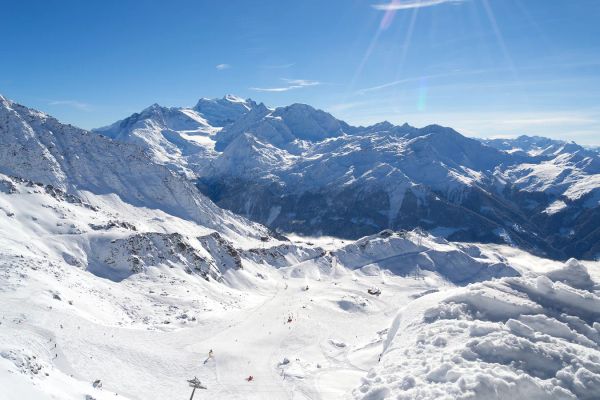
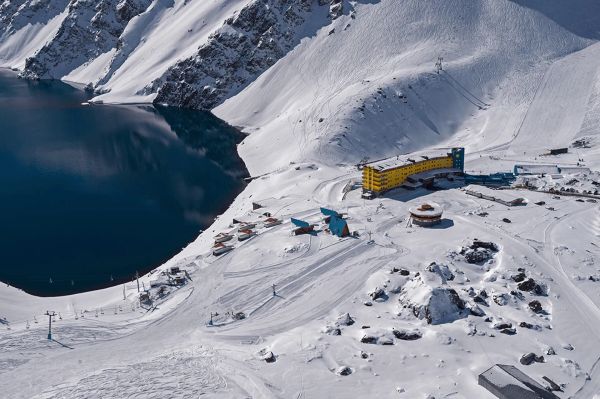
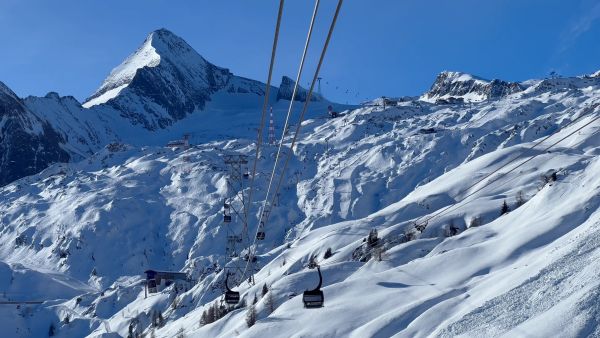
The 2026-27 additions include three international resorts: Domaine Skiable des Contamines in France, Pizol in Switzerland, and Onikoube in Japan. Combined with February's announcement of Levi in Finland and previous European and South American partners, Indy now enables year-round skiing access starting with Chile's Corralco in June and Austrian glacier skiing from September.
Three cross-country ski centres were also added - Spirit Mountain in Minnesota, plus Carters XC and Fort Kent Outdoor Center in Maine.
The Numbers Behind the Sales Rush
Indy continues capping total pass sales, ostensibly to maintain the low-crowd experience at independent resorts. The pass now includes an auto-renewal system where returning passholders secure guaranteed access at the lowest price point, while those who don't enrol forfeit their spot to waitlist members.
The zero-interest, no-bank payment plan remains available across three instalments, a genuine advantage over competitor passes that route financing through third-party lenders. Small detail, but relevant when you're deciding whether to commit funds in April for skiing eight months away.
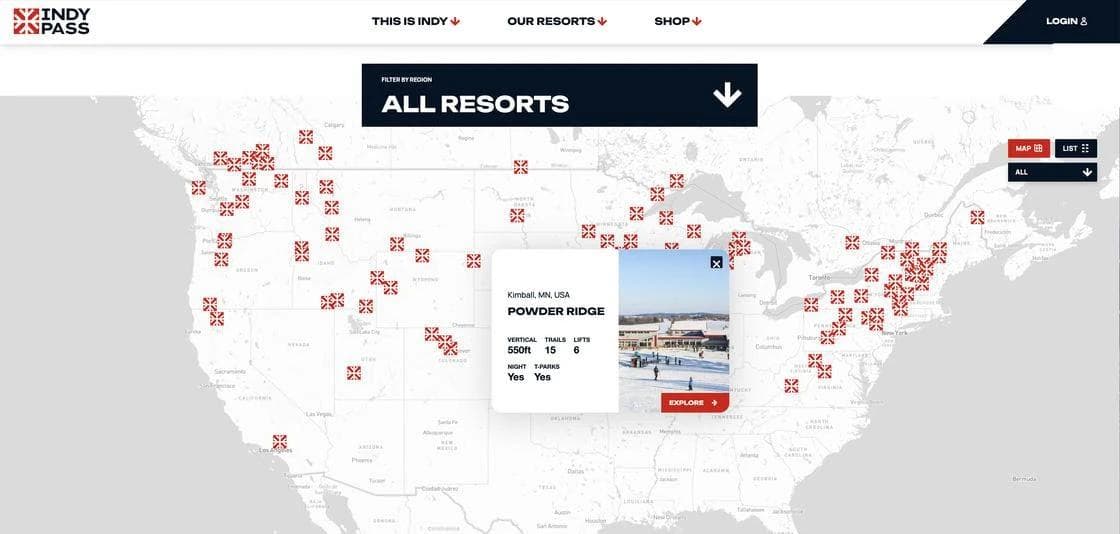
The map of where the Indy Pass is accepted in North America.
The 300-Resort Guarantee
Passholders can request refunds before 1 December 2026 if the partner count falls below 300 by 1 November 2026, or if their favourite resort from 2025-26 doesn't renew. It's essentially a satisfaction guarantee, though one suspects most purchasers won't track the exact resort count come November.
What the Roster Churn Actually Means
The rapid sellout signals genuine demand for alternatives to the major pass products, though it's worth questioning whether a one-day public sale window serves customers or just creates artificial urgency. Probably both.
The potential loss of established Midwest resorts to Ikon matters more than the heli-skiing addition for most passholders. Lutsen particularly represents the kind of destination resort that adds legitimacy to a pass product. Replacing it with smaller operations maintains geographic coverage but changes the value equation for serious skiers and riders in that region.
The 300-resort target seems achievable given current momentum, but the quality and appeal of those 300 operations varies considerably. A pass covering 300 small hills isn't equivalent to one covering 150 mid-sized resorts - something to consider when comparing pass products beyond simple resort counts.
Indy's positioning as the independent alternative to corporate mega-passes remains clear, though that independence increasingly comes with corporate-style scarcity marketing around sales windows. The product still offers genuine value for skiers and riders who prioritise resort diversity over repeated visits to flagship destinations, but the rapid expansion and evolving roster require closer attention than simply auto-renewing each season.