Resort Spotlight: Dodge Ridge - California's Family-First Alternative to Tahoe
Published Date:
Categories
When Tahoe resorts announce peak-day ticket prices north of $200, Dodge Ridge's $85 maximum starts looking less like a budget option and more like basic sanity. This family-owned area in the Stanislaus National Forest has operated since 1950 with a straightforward value proposition: decent vertical, genuine tree skiing, and none of the infrastructure theatre that defines modern mega-resorts.
The numbers suggest modest ambitions - 487 vertical metres isn't going to satisfy anyone chasing big-mountain credentials. But the terrain split and annual snowfall tell a more interesting story about what Dodge Ridge actually delivers.
Dodge Ridge Mountain Overview
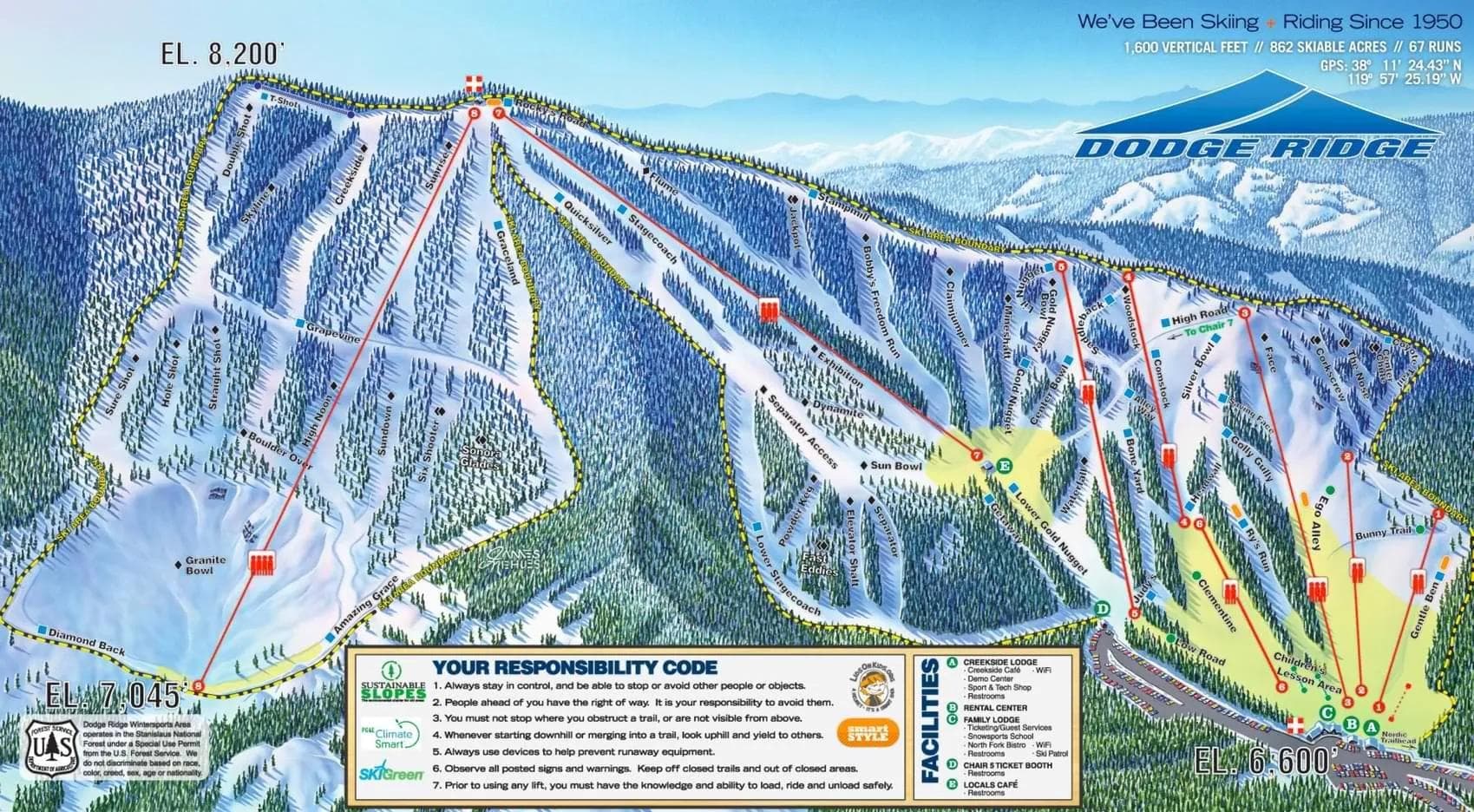
The resort sits between 2,012 and 2,499 metres, pulling 8.89 metres of snow annually - comparable to many mid-elevation Tahoe areas. Twelve lifts service 67 named runs split 20% beginner, 40% intermediate, 40% advanced. The absence of any expert classification is deliberate: this isn't a resort chasing Instagram edits or hucking competitions.
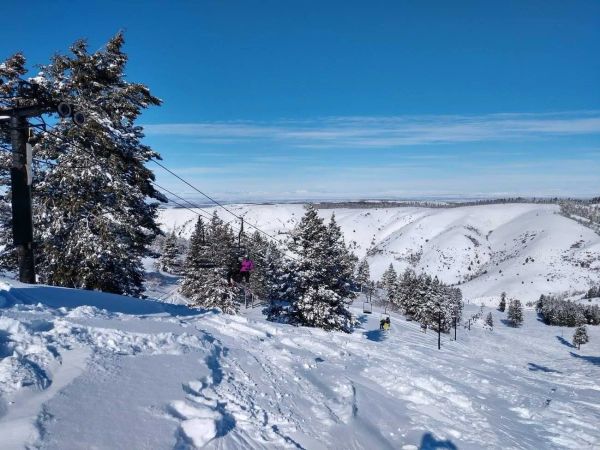
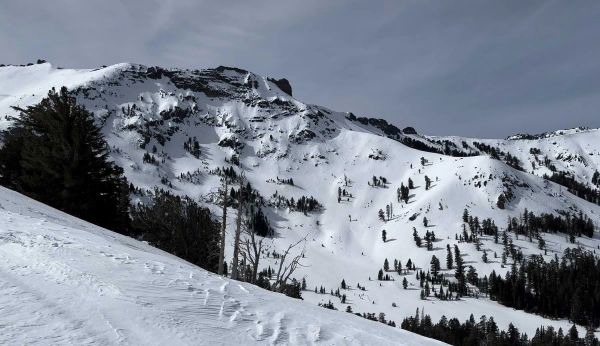
The advanced terrain leans heavily on natural features rather than manufactured steeps. Tree runs through the Stanislaus forest provide proper pitch variation and the kind of navigation challenges that separate genuine advanced skiers from groomer enthusiasts with aggressive equipment. The intermediate runs occupy the meat of the operation - proper blue cruisers rather than flattered greens, with enough variety to avoid the monotony that plagues single-aspect resorts.
Beginners get dedicated zones with proper progression terrain, not just bunny slopes feeding directly into intermediate panic. The vertical may be limited, but the run count of 67 spreads traffic better than many larger areas manage. Twelve lifts for this footprint suggests decent uphill capacity without the fixed-grip torture common at smaller operations.

Who is Dodge Ridge Best For
Families with mixed-ability groups will find the terrain distribution works better than the statistics suggest. The ability to split up for a few runs without creating 45-minute reunion logistics or forcing beginners onto terrain above their capability matters more than peak vertical when you're managing multiple skill levels.
Bay Area weekenders seeking Tahoe alternatives without the Friday evening parking lot experience have a legitimate option here. Two hours beats four hours in traffic, and the $65-85 day ticket range means you can ski twice for what one peak-day Heavenly ticket costs. Intermediate skiers and riders who prioritise actual skiing over resort amenities will find enough terrain variation to justify regular visits.
The resort explicitly doesn't cater to terrain park enthusiasts or anyone seeking cutting-edge lift infrastructure. Advanced skiers accustomed to sustained vertical or genuine expert terrain won't find enough here for a week-long trip. This is a day-trip or weekend operation, not a destination resort with après pretensions.
Dodge Ridge Snow and Season
The 8.89-metre average snowfall matches many Tahoe resorts at similar elevation, but mid-elevation California skiing carries inherent volatility. Rain events happen. The 2025-2026 season opened 27 December and runs through 15 March - a 78-day window that's realistic for this elevation band rather than optimistic.
Current season metrics show 436.88 cm total snowfall, though the zero base depth indicates either season-end conditions or data lag. The snow record suggests Dodge Ridge tracks closer to Tahoe patterns than Southern California resorts - legitimate winter snowfall rather than marginal conditions propped up by snowmaking theatre.
Mid-week skiing after fresh snow offers the best value proposition. Weekend crowds exist but nothing approaching Tahoe saturation. The shorter season means timing matters more than at higher-elevation areas - January through early March typically delivers the most consistent coverage.

Getting to Dodge Ridge
The resort sits off Highway 108 near Pinecrest, roughly 180 kilometres from San Francisco and 240 kilometres from Sacramento. The two-hour drive from the Bay Area beats Tahoe transit times significantly, particularly on powder weekends when Interstate 80 becomes a parking lot with snow.
Highway 108 requires chains or four-wheel drive during storms - standard California mountain highway protocols apply. The route avoids the worst Tahoe-corridor congestion but still sees weekend traffic. No public transport options exist; this is a drive-yourself operation. Accommodation options centre on Pinecrest and nearby Sonora rather than slopeside lodging.
Dodge Ridge Lift Tickets
Regular day tickets run $65 adult, $45 child, $55 senior. Peak days increase to $85 adult. The pricing remains substantially below Tahoe alternatives - a family of four pays $220-340 versus $400-800 at major Tahoe resorts. Online purchase through the resort website typically offers modest discounts over window rates.
Season passes provide value for anyone planning ten-plus days. The resort doesn't participate in multi-mountain pass programmes, which means no Ikon or Epic conflicts but also no reciprocal benefits. Midweek tickets sometimes see promotional pricing worth checking if your schedule allows flexibility.
The Verdict on Dodge Ridge
Dodge Ridge succeeds by ignoring modern resort marketing conventions - no claims about world-class anything, no manufactured village atmosphere, no pretence of competing with Tahoe's vertical. The 487-metre drop and 67-run spread deliver legitimate skiing at prices that acknowledge reality rather than aspirational branding. For families and Bay Area locals seeking accessible winter skiing without Tahoe's financial and logistical overhead, the value proposition holds. Full resort details, webcams, and trail maps are on the Snowstash resort page.
Full resort details, live webcams, and trail maps for Dodge Ridge on Snowstash →