SnowStash Logo
AustraliaCanadaEuropeJapanNew ZealandUnited StatesCompareNews
Sign InSign Up Free

Contact Us

hello@snowstash.com

Download Our App

Download on the App Store

Company

About UsCompare resortsWork With UsPrivacy PolicyMobile App

© 2026 Snowstash. All rights reserved.

    Back to News
    Resort Spotlight: Saas Fee - The Glacier Resort That Opens in July

    Resort Spotlight: Saas Fee - The Glacier Resort That Opens in July

    Published Date: June 22, 2026

    Michael Fulton

    Michael Fulton

    Melbourne-based skier and snowboarder with 50+ resorts across 5 continents. Specialises in Australian resorts and international resort comparisons.

    50+ resorts visited15 years skiing

    Categories

    Europe
    Saas Fee
    Resort Spotlight
    Switzerland

    Most ski resorts close in April and reopen in December. Saas Fee opens in July. The Fee Glacier operation runs through summer and autumn, offering 20 kilometres of prepared terrain when most of Europe is hiking. When the lower slopes open in late autumn, the resort expands to a full winter offering with terrain stretching from 1,800 to 3,573 metres. The trade-off for this year-round access is terrain that's predominantly intermediate and a village that's deliberately car-free, which creates logistical considerations alongside the environmental benefits.

    Saas Fee Mountain Overview

    The skiing divides into two distinct zones. The glacier area - accessible via the Metro Alpin funicular - operates from July through April and tops out at 3,573 metres. This is racing team territory in summer, with national ski teams training on consistent snow whilst the rest of Europe bakes. Come winter, the Längfluh and Plattjen sectors open, adding mid-mountain blues and reds down to the village.

    With 100 kilometres of marked runs across 48 trails, the terrain breakdown is 60% intermediate, 20% beginner, 15% advanced, and 5% expert. Those percentages tell the story - this is a cruising mountain. The vertical drop of 1,773 metres sounds impressive until you realise much of it is covered by lifts rather than continuous fall-line skiing. Most runs are wide, well-groomed motorways designed for intermediate skiers logging kilometres.

    Twenty-five lifts service the mountain, including the Metro Alpin - the world's highest underground funicular. It's an engineering achievement that deposits you at 3,500 metres, though the actual skiing from the top revolves around a handful of glacier runs that can feel repetitive by mid-week. The off-piste potential exists but requires a guide and proper glacier safety knowledge. The Fee Glacier has crevasses, and high altitude brings legitimate alpine hazards alongside the reliable snow.


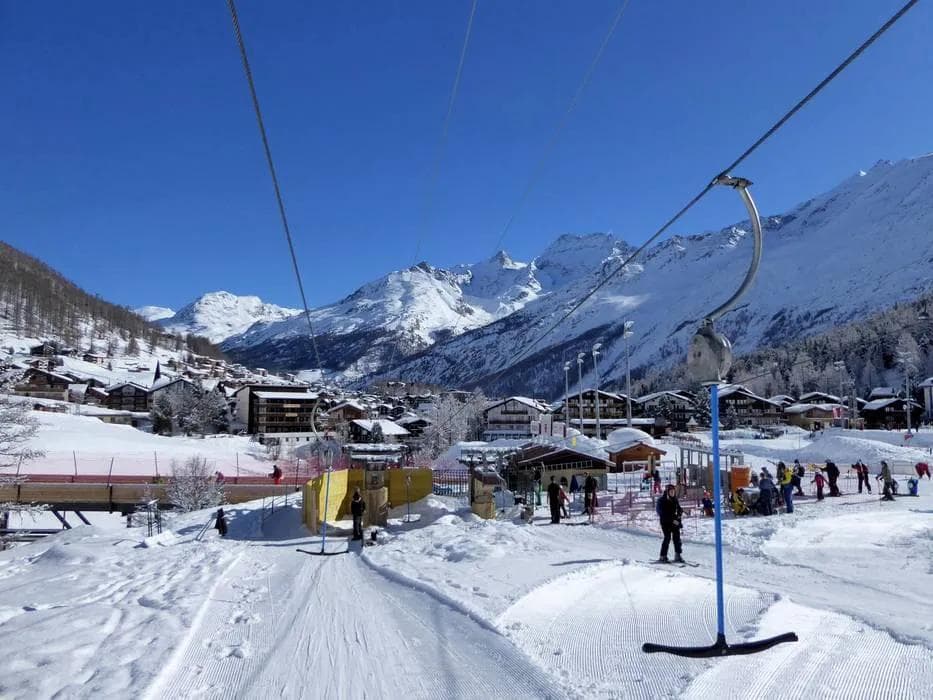
    Ski lift and mountain transportation at Saas Fee
    Ski lift infrastructure at Saas Fee providing access to mountain terrain and ski runs.

    Who is Saas Fee Best For

    Intermediate skiers who prioritise snow reliability over terrain variety will find Saas Fee delivers on its core promise. The grooming is Swiss-standard immaculate, and the altitude means snow conditions hold up even when lower resorts struggle. Families appreciate the car-free village - genuinely car-free, not the marketing version - though getting gear from accommodation to slopes involves electric taxis or dragging bags through pedestrian streets.

    Race programmes and ski academies use the summer glacier extensively, so if you're coaching or training seriously, the July-October window offers consistent pitch and good snow. For advanced skiers expecting challenging terrain variety, the 15% advanced figure is accurate but misleading - those runs aren't particularly demanding by Swiss standards. Expert skiers will find the 5% expert terrain covered quickly unless they're hiring guides for off-piste glacier routes.

    The resort doesn't suit those wanting lively après-ski or extensive village diversions. Saas Fee is quiet, deliberately so. If you want car-free peace at altitude with reliable snow, that's a feature. If you want bustling nightlife and endless off-mountain options, look elsewhere.

    Saas Fee Snow and Season

    The season runs from July 7th to April 26th - a ten-month operation that's rare in European skiing. Current base depth sits at 340 centimetres with 70 centimetres in the past week and 473 centimetres season total. Eight metres average annual snowfall puts it in the upper tier of Swiss resorts, though the glacier ensures coverage regardless of natural snowfall patterns.

    Summer skiing means different conditions than winter - softer snow, shorter days, limited terrain. The glacier runs are open, but you're skiing the same handful of pitches repeatedly. It serves a purpose for training and off-season snow access, but it's not a full resort experience. Winter transforms the offering once Längfluh and Plattjen open, though even then the terrain variety doesn't match larger Swiss destinations.

    The altitude brings cold temperatures and weather can close the upper mountain when storms move through. At 3,573 metres, you're above most European ski terrain, which means spectacular clear days and also means rapid weather deterioration when systems arrive.

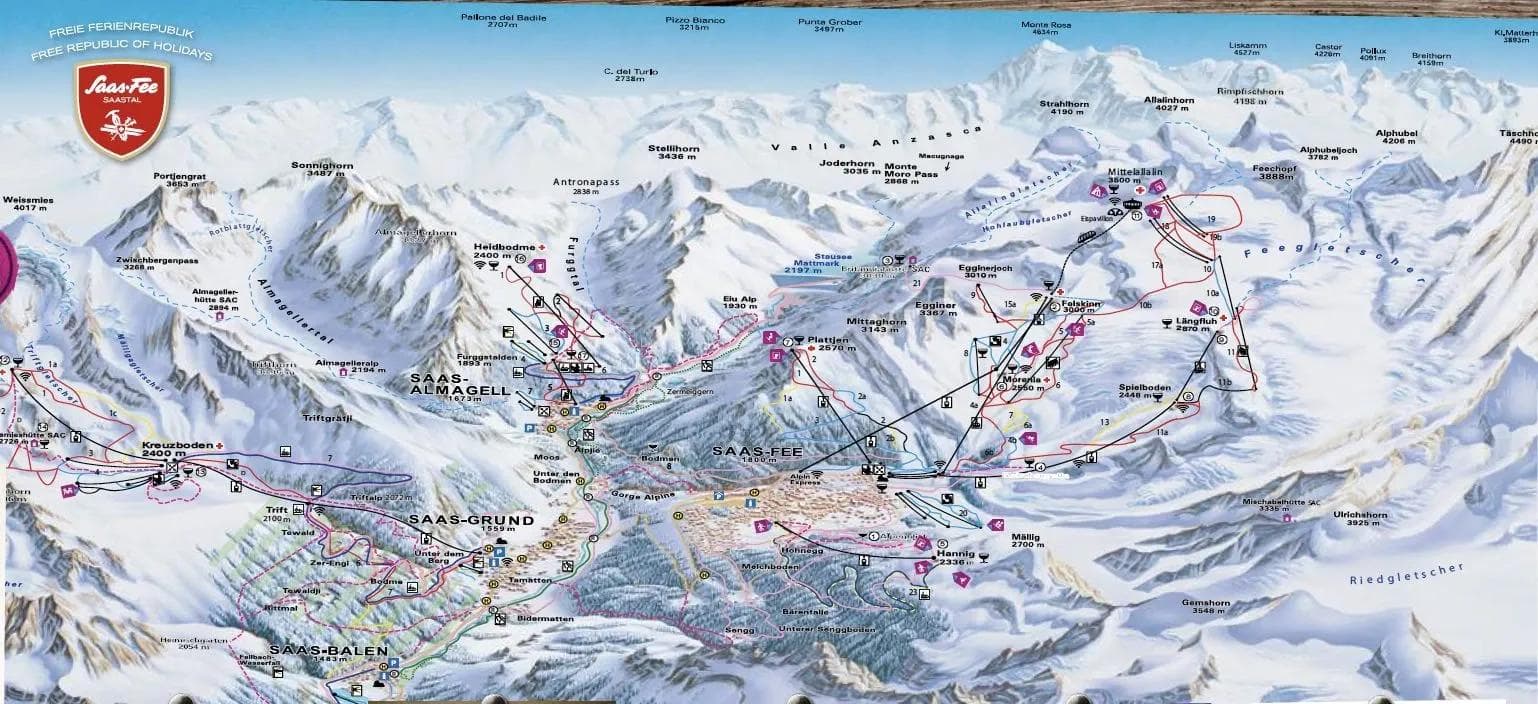
    The trail map at Saas Fee. © Saas Fee
    The trail map at Saas Fee. © Saas Fee

    Getting to Saas Fee

    The car-free designation is genuine, which means logistics require planning. You can drive to Saas Fee but must park at the village entrance - there's a multi-storey car park charging daily rates. From there, electric taxis shuttle guests to accommodations. If you're arriving with substantial luggage or equipment, factor in this transfer step.

    Geneva airport sits 230 kilometres away with a three-hour drive under good conditions. Zürich is 260 kilometres, roughly three and a half hours. Both routes involve alpine passes or tunnels that can complicate winter transfers. Visp is the nearest train station - 30 kilometres from Saas Fee - with postbus connections up the valley. The postbus is reliable and scenic but adds time to your door-to-door journey.

    Saas Fee Lift Tickets

    Pricing follows Swiss norms, meaning expensive by most standards. Day passes run approximately CHF 75-80 for adults in high season, with multi-day and season passes offering better per-day rates. The resort hasn't provided direct purchase links in their current data, so expect to arrange tickets through the resort website or at valley ticket offices. Summer glacier tickets cost less than winter full-area passes but still represent Swiss pricing.

    The Verdict on Saas Fee

    Saas Fee excels at what it promises - reliable high-altitude skiing in a car-free alpine village across an exceptionally long season. The glacier access is genuine, the snow record is strong, and the grooming meets Swiss standards. The terrain won't challenge experts or provide endless variety for advanced skiers, but intermediate cruisers with a week to spend will cover the mountain comfortably without repetition fatigue setting in too quickly. Full resort details, webcams, and trail maps are on the Snowstash resort page.

    Full resort details, live webcams, and trail maps for Saas Fee on Snowstash →

    Latest News

    Resort Spotlight: Arizona Snowbowl - The Desert's Unexpected Lift-Served Vertical

    Resort Spotlight: Arizona Snowbowl - The Desert's Unexpected Lift-Served Vertical

    Jun 21, 2026

    Resort Spotlight: Steamboat - Colorado's Champion Powder Machine Beyond the Front Range

    Resort Spotlight: Steamboat - Colorado's Champion Powder Machine Beyond the Front Range

    Jun 20, 2026

    German Man Used Forged Documents to Ski for Free at Multiple Tyrolean Resorts

    German Man Used Forged Documents to Ski for Free at Multiple Tyrolean Resorts

    Jun 20, 2026

    Vail Resorts Hires Defence Bankers as Billionaire Pushes to Buy Park City Mountain Resort

    Vail Resorts Hires Defence Bankers as Billionaire Pushes to Buy Park City Mountain Resort

    Jun 20, 2026

    Resort Spotlight: Tazawako - Japan's Deep North Delivers 11 Metres of Snow Without the Crowds

    Resort Spotlight: Tazawako - Japan's Deep North Delivers 11 Metres of Snow Without the Crowds

    Jun 19, 2026