Resort Spotlight: Hakuba Cortina - Hakuba's Tree Skiing Haven That Cruise Ship Crowds Miss
Published Date:
Categories
Hakuba Cortina occupies an interesting position in the valley pecking order. It receives the same legendary snowfall as its busier neighbours - 12 metres annually - but sees a fraction of the traffic that piles into Happo-One or Goryu. The resort's tree skiing reputation is well-earned, though the 530-metre vertical drop means you're cycling through runs rather than logging big descent numbers.
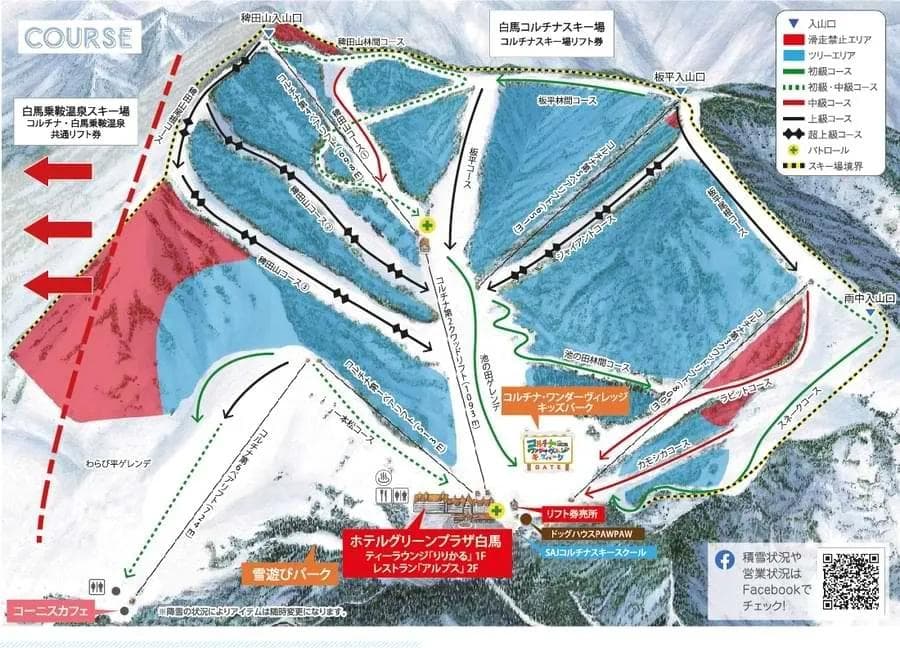
The base sits at 872 metres, which is low enough to occasionally complicate early and late season conditions despite the prodigious snowfall. Seven lifts service 16 runs across terrain that skews heavily beginner-friendly on paper.
Hakuba Cortina Mountain Overview
The headline figure is that 12-metre average snowfall, which translates to roughly 40 feet in old-money measurements. This season has delivered 741 centimetres to date with a 190-centimetre base, so the snow reliability marketing actually holds up here. The current base depth suggests decent coverage even with the modest elevation profile.
Sixteen runs spread across 40% beginner, 30% intermediate, and 15% each for advanced and expert terrain. Those percentages don't tell the full story - Cortina's appeal lies almost entirely in what happens between the marked trails. The tree skiing is legitimately world-class when conditions align, with natural spacing and pitch variation that rewards good technique without requiring ice-axe skills.
The seven lifts move people adequately rather than efficiently. No high-speed detachables, no gondolas - this is chairlift skiing where you zip your jacket and accept the pace. Weekday lift queues are negligible; weekends bring domestic crowds but nothing resembling the cattle-call operations at larger resorts.
Vertical drop is the limiting factor. Five hundred and thirty metres means 1,740 feet per run - respectable but not destination-defining. You'll ski more laps here than at resorts with twice the vertical, which matters if you prefer big descents over repeat runs.

Who is Hakuba Cortina Best For
Intermediate to advanced skiers who prioritise snow quality and tree skiing over groomer kilometres will find this setup ideal. The beginner terrain is genuinely beginner-friendly rather than euphemistically steep, making it workable for mixed-ability groups if everyone accepts the modest scale.
Expert skiers need to calibrate expectations. The 15% expert designation covers legitimate steep tree runs, but you'll exhaust the challenging terrain faster than at larger operations. This works well as part of a valley tour rather than a week-long commitment to one resort. Snowboarders face the usual Japan challenge of flat sections between lifts - entirely manageable but worth noting.
Anyone seeking modern lift infrastructure or extensive terrain will be disappointed. The appeal here is old-school skiing with exceptional snow rather than high-speed convenience.
Hakuba Cortina Snow & Season
That 12-metre annual average puts Cortina in the top tier globally for natural snowfall. The 741-centimetre seasonal total through March suggests a solid winter by even Hakuba standards. Four centimetres in the past week won't excite powder hunters, but the 190-centimetre base provides enough buffer for variable conditions.
The season runs early December through late March, though the 872-metre base elevation means early season can be marginal if temperatures don't cooperate. January through February represents the statistical sweet spot for both snow depth and consistency. March skiing can be excellent or slush-dependent based on temperature swings.
Japan's northwest coastal position delivers consistent storms but also means cloudy conditions when it's snowing. Visibility varies significantly day to day - the tree skiing becomes more valuable in flat light than wide-open bowl terrain would be.

Getting to Hakuba Cortina
Hakuba Cortina sits at the northern end of the Hakuba valley, roughly 280 kilometres from Tokyo. The standard approach routes through Nagano city, accessible via shinkansen from Tokyo in about 90 minutes. From Nagano station, bus services run to the valley, though Cortina's position at the valley's edge means additional connections compared to more central resorts.
Private shuttle services from Nagano or direct bus options from Tokyo remove some logistical friction, though expect three to four hours door-to-door from Tokyo depending on connections. The relative remoteness within the valley contributes to lighter crowds but requires more intentional planning than resorts on the main valley bus routes.
Hakuba Cortina Lift Tickets
Lift ticket pricing for Cortina runs lower than Hakuba's headline resorts, reflecting the smaller operation and older infrastructure. Day tickets typically cost ¥5,000-6,000 (roughly £30-35), though pricing fluctuates with season timing and purchase method. Multi-day tickets offer marginal savings rather than deep discounts.
The Hakuba Valley multi-resort pass includes Cortina alongside nine other areas, which makes sense if you're planning to sample different terrain across a week. Single-resort tickets work if you're specifically here for the tree skiing and snow quality rather than variety.
The Verdict on Hakuba Cortina
Hakuba Cortina delivers on its core promise - exceptional snow quality and excellent tree skiing - while making no pretence about modern amenities or extensive terrain. The modest vertical and dated lift system limit appeal for some skiers but contribute to the uncrowded conditions that define the experience. This works brilliantly as part of a valley exploration or for skiers who value powder quality over kilometre counts. Full resort details, webcams, and trail maps are on the Snowstash resort page.
Full resort details, live webcams, and trail maps for Hakuba Cortina on Snowstash →