SnowStash Logo
AustraliaCanadaEuropeJapanNew ZealandUnited StatesCompareNews
Sign InSign Up Free

Contact Us

hello@snowstash.com

Download Our App

Download on the App Store

Company

About UsCompare resortsWork With UsPrivacy PolicyMobile App

© 2026 Snowstash. All rights reserved.

    Back to News
    Resort Spotlight: Manganui - New Zealand's Most Affordable Mountain

    Resort Spotlight: Manganui - New Zealand's Most Affordable Mountain

    Published Date: July 15, 2026

    Michael Fulton

    Michael Fulton

    Melbourne-based skier and snowboarder with 50+ resorts across 5 continents. Specialises in Australian resorts and international resort comparisons.

    50+ resorts visited15 years skiing

    Categories

    Manganui
    Resort Spotlight
    Level Up Your Ski Day — Download SnowStash on the App Store

    Manganui sits at 1,260 metres on the northern slopes of Mt Taranaki, a volcano that dominates New Zealand's North Island west coast. At NZ$50 for an all-day adult ticket - roughly half what you'd pay at a South Island resort - it's worth understanding what that price point actually delivers.

    The mountain itself is small but not trivial: 420 metres of vertical spread across 17 named runs. The terrain breakdown tells an interesting story - 60% advanced, 35% intermediate, 5% beginner. This isn't a resort pretending to serve everyone equally. It knows what it is.

    Manganui Mountain Overview

    With four lifts serving 17 runs, the infrastructure is minimal but functional. The 420-metre vertical drop is comparable to many Eastern European resorts, though the comparison ends there. Mt Taranaki's volcanic terrain creates steep, exposed slopes that feel larger than the numbers suggest.

    The advanced terrain dominance is deliberate - this isn't terrain parks and groomed boulevards. It's a club field first, built by and for people who wanted to ski their local volcano. The 5% beginner allocation is effectively a learner area; you progress quickly or you don't come back.

    The mountain operates without snow-making. At 1,680 metres summit elevation, it relies entirely on natural accumulation. Average annual snowfall sits at 2.5 metres - adequate but not generous by New Zealand standards. The South Island's club fields typically see more.

    The 1,260-metre base elevation is unusually high for North Island skiing. Mt Ruapehu's commercial areas start lower but climb higher. Manganui's compressed elevation range means temperature swings matter. A warm front can affect the entire mountain simultaneously.
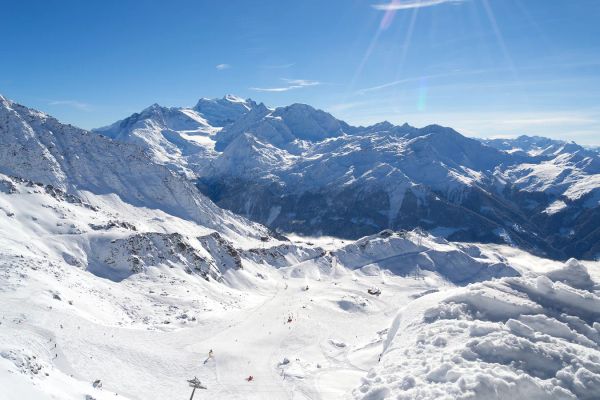
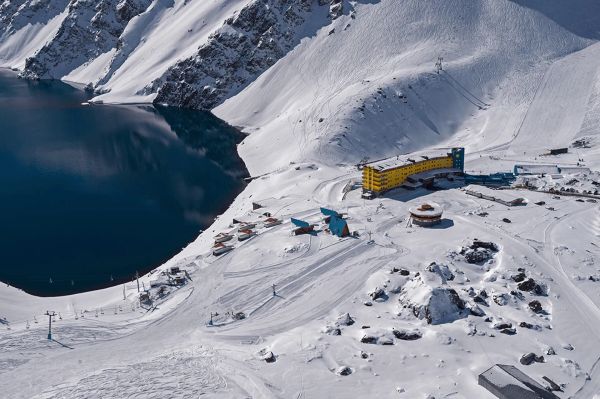
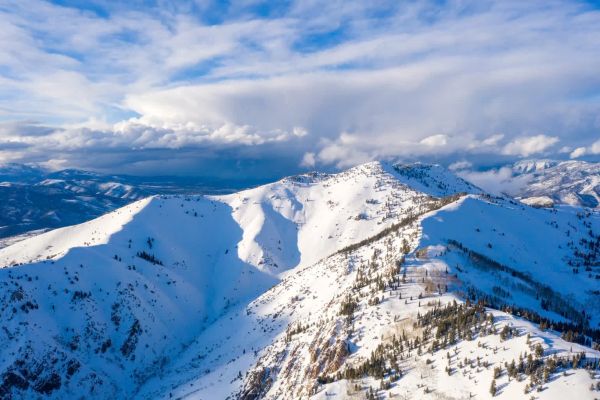
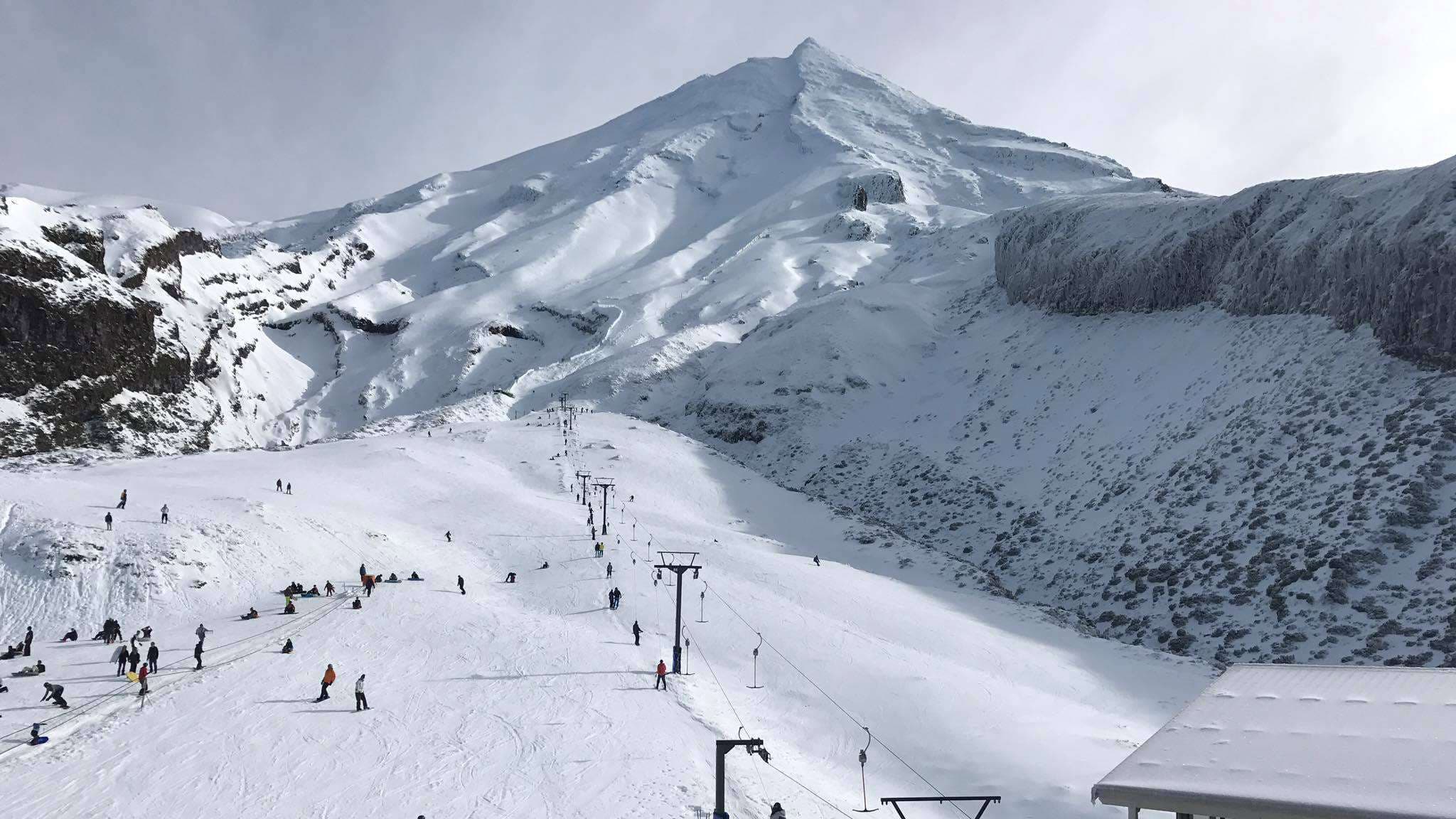
    Mountainous landforms and Mountain at Manganui ski resort
    Manganui ski resort featuring Mountainous landforms, Mountain, Snow.

    Who is Manganui Best For

    Local skiers and riders from Taranaki and Waikato regions who value cheap access over amenities. At NZ$50 per day, you can ski frequently without the financial commitment of South Island resorts. Junior tickets at NZ$35 make it genuinely accessible for families teaching children to ski.

    Intermediate to advanced skiers who don't need variety. Seventeen runs is a limited menu. If you require constant novelty or extensive terrain, you'll exhaust the mountain quickly. But if you're focused on improving technique or simply getting vertical, it's sufficient.

    Travellers should understand what they're visiting. This is a functioning club field, not a resort experience. There's no village, limited facilities, and a five-week operating window. It works as a day trip if you're already in the region. Building a ski trip around it would be optimistic.

    Manganui Snow and Season

    The 2026 season runs from 22 August to 27 September - five weeks. This is notably shorter than South Island resorts, which typically operate three to four months. The compressed season reflects Mt Taranaki's marginal snow reliability. When conditions align, the mountain opens. When they don't, it stays closed.

    The 2.5-metre annual snowfall average requires context. South Island club fields often exceed four metres. Commercial resorts with snow-making can operate in lean years. Manganui cannot. The volcanic terrain also affects snow quality - dark rock absorbs heat, accelerating melt on sunny days.

    The season dates place Manganui firmly in late winter. Early season and spring skiing don't exist here. You're skiing peak winter or you're not skiing at all. This timing reduces the risk of rain at elevation but doesn't eliminate it. The North Island's maritime climate means weather volatility.

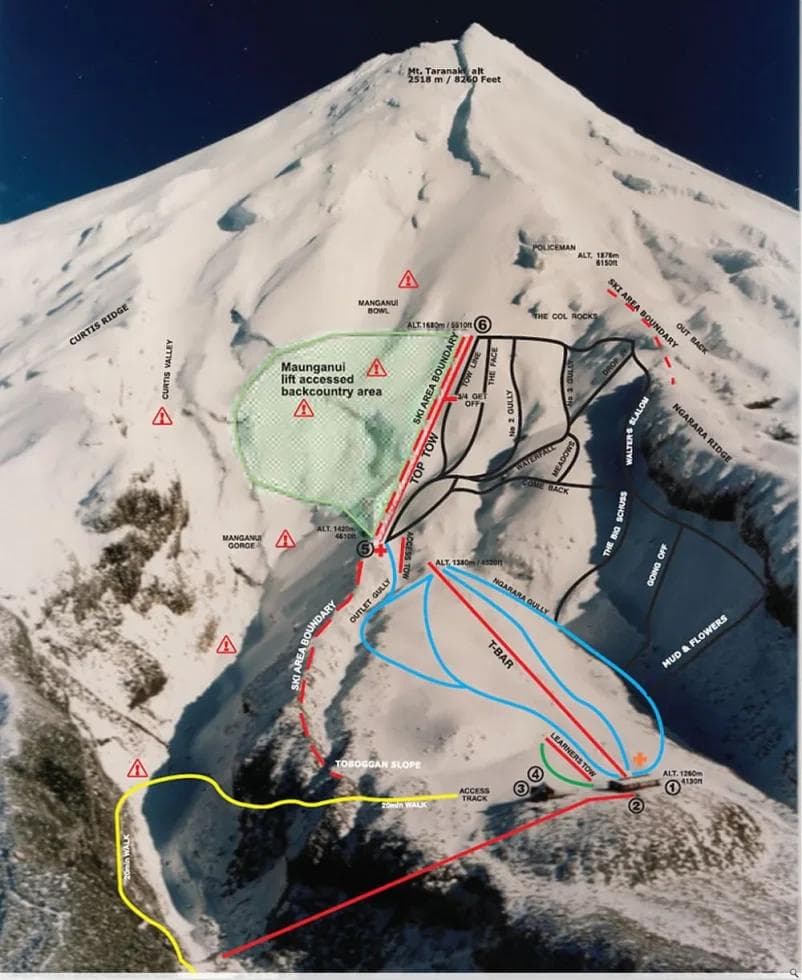
    The trail map at Manganui. © Manganui
    The trail map at Manganui. © Manganui

    Getting to Manganui

    The mountain is accessed via Stratford, approximately 40 kilometres from the ski area. The access road climbs through Egmont National Park - scenic but winding. In winter conditions, allow time. Four-wheel drive isn't mandated but chains may be required.

    New Plymouth, the nearest city, sits 50 kilometres from the mountain. It's the practical base for accommodation and supplies. Flying into New Plymouth Airport connects you to Auckland and Wellington but adds cost. Most visitors drive from elsewhere in the North Island.

    No shuttle services operate to Manganui. You need your own transport. The remoteness is part of the club field model - these mountains weren't designed for drop-in tourism. They serve local skiing communities who organise their own logistics.

    Manganui Lift Tickets

    Adult day tickets at NZ$50 and junior tickets at NZ$35 are the entire pricing structure. No peak pricing, no dynamic pricing, no advance purchase discounts. Children ski free. The simplicity is refreshing but reflects the basic operating model.

    Tickets are purchased on-mountain. There's no online booking system. You arrive, you pay, you ski. For frequent visitors, season passes exist through the Taranaki Alpine Club, but that requires membership.

    Compared to Whakapapa's NZ$139 adult day ticket or South Island resort pricing in the NZ$150-180 range, the value proposition is clear. You're paying substantially less for substantially less infrastructure. The question is whether that trade-off suits your skiing.

    The Verdict on Manganui

    Manganui delivers exactly what NZ$50 should deliver: functional access to 420 metres of vertical on a volcano, with minimal frills and a short season. If you live within two hours and ski regularly, the economics work. If you're travelling specifically for this mountain, you'll likely leave wishing you'd allocated those days to a larger area. Full resort details, webcams, and trail maps are on the Snowstash resort page.

    Full resort details, live webcams, and trail maps for Manganui on Snowstash →

    Latest News

    Resort Spotlight: Arber - Bavaria's Highest Resort Without the Alpine Crowds

    Resort Spotlight: Arber - Bavaria's Highest Resort Without the Alpine Crowds

    Jul 14, 2026

    Resort Spotlight: Sapporo Kokusai - The Pragmatic Powder Stop Near Sapporo

    Resort Spotlight: Sapporo Kokusai - The Pragmatic Powder Stop Near Sapporo

    Jul 13, 2026

    Resort Spotlight: Mont Sainte Anne - Eastern Canada's Vertical Heavyweight Gets the Fundamentals Right

    Resort Spotlight: Mont Sainte Anne - Eastern Canada's Vertical Heavyweight Gets the Fundamentals Right

    Jul 12, 2026

    Resort Spotlight: Savognin - Switzerland's Least Pretentious Ski Valley

    Resort Spotlight: Savognin - Switzerland's Least Pretentious Ski Valley

    Jul 11, 2026

    Resort Spotlight: Hindelang Oberjoch - Germany's Highest Village Offers Reliable Intermediate Terrain

    Resort Spotlight: Hindelang Oberjoch - Germany's Highest Village Offers Reliable Intermediate Terrain

    Jul 10, 2026