
Heavenly
4,800 acres across CA-NV border, 1,066m vertical, 97 runs. Epic Pass access at Lake Tahoe's highest resort.
Season 2026 - 2027
Opens
24 Nov 2026
Closes
4 Apr 2027
Days open
131
Annual snow
30ft
The Overview
Michael Fulton
Melbourne-based skier and snowboarder with 50+ resorts across 5 continents. Specialises in Australian resorts and international resort comparisons.
Heavenly spans 4,800 acres across the California-Nevada border at Lake Tahoe, with a summit elevation of 3,068 metres making it the highest resort in the basin. The 1,066-metre vertical drop feeds 97 runs spread between four base areas, whilst the ski area receives an average of 9.1 metres of snowfall annually and maintains extensive snowmaking across more than 60 per cent of terrain. The resort opened in 1955 and has been owned by Vail Resorts since 2002.
Terrain breaks down to 8 per cent beginner, 62 per cent intermediate, 25 per cent advanced and 5 per cent expert. Ridge Run and California Trail deliver panoramic Lake Tahoe views across long intermediate cruisers on the California side, whilst Mott Canyon on the Nevada side offers steep chutes and glades with over 490 metres of sustained vertical. The ski area's unique straddling of two states creates distinct characters - California slopes face the lake with wider groomers, Nevada terrain delivers steeper pitches and Carson Valley vistas.
The base village sits in South Lake Tahoe at Heavenly Village, where the 8-person gondola rises 900 metres from the casino corridor. On-mountain lodges include Tamarack at the gondola's upper terminal, California Lodge with the aerial tram, and East Peak Lodge on the Nevada side. Crowds concentrate at weekends and holidays, particularly on connector runs between states, though the sprawling footprint disperses traffic across multiple pods.
Epic Pass provides unlimited access, with the resort also honouring Epic Local Pass with holiday restrictions. The 2025-2026 season runs from 22 November through 5 April. Heavenly suits strong intermediates and groups mixing abilities, though beginners face isolated learning zones with limited progression routes between sectors and experts may find the double-black percentage modest for a resort of this scale.
3,497ft
Vertical
97
Runs
4,800 acres
Skiable
30ft
Annual snow
Epic
Pass
The Terrain
97 runs across 4,800 acres skiable
Heavenly is the big resort on the south shore of Lake Tahoe, with about 4,800 acres (1,943 hectares) straddling the California-Nevada line. From a 6,570 ft (2,002 m) base to a 10,070 ft (3,068 m) summit, the vertical is 3,500 ft (1,066 m) across 97 runs. Intermediate terrain takes up 62%, with 25% advanced, 8% beginner and 5% expert, so cruising skiers get the most from it. Twenty-seven lifts, including a gondola, serve the mountain, though crossing between sides takes planning. Size is the draw here, with Lake Tahoe views from the California side.
Ridge Run and Big Dipper offer long, scenic descents with views of Lake Tahoe, and the California side is home to well-groomed cruisers. The Nevada side faces Carson Valley, with more varied terrain and fewer crowds. Advanced skiers head for the steeper pitches of Mott Canyon and Killebrew Canyon, where chutes, tree skiing and natural features reward confident riders, and Mott Canyon's north-facing chutes hold snow longer after a storm. Milky Way Bowl gives wide-open skiing and deep snow after storms. Heavenly suits strong intermediates, mixed groups and anyone wanting a large area to explore across two states, plus evenings in the casinos at Stateline.
Terrain split
97
runs
97 runs across 4 grades
Beginner8 runs · 8%
Intermediate60 runs · 62%
Advanced24 runs · 25%
Expert5 runs · 5%
Time it right
When to visit Heavenly
The 2025-2026 season opens 22 November 2025 and closes 5 April 2026, delivering a 135-day operating window. Heavenly typically opens in the third or fourth week of November depending on snowmaking windows, with Thanksgiving weekend reliably seeing gondola and multiple base areas operational. The resort celebrated its 70th anniversary in the 2025-2026 season, having first opened as Heavenly Valley on 15 December 1955.
Annual snowfall averages 9.1 metres at upper elevations, with the 3,068-metre summit and extensive grooming fleet maintaining cover throughout winter. Snowmaking blankets approximately 60 per cent of terrain via over 200 snow guns, concentrated on lower and mid-mountain zones. The Tahoe basin's relatively moderate elevation for a major resort means rain can affect base areas during warm cycles, though upper mountain snow quality benefits from cold storms tracking across the Sierra crest.
January through March deliver peak powder reliability, with the first week of March historically the snowiest period averaging 43 centimetres across 3.3 snowy days. December and April offer thinner but often uncrowded conditions. Spring corn develops by late March on sun-exposed California faces. Base depths held at 104 centimetres mid-season 2025-2026, with 477 centimetres of cumulative snowfall recorded.
The resort hosts the Toyota Air and Après event in late February featuring professional athletes on a 14-metre jump constructed on World Cup terrain. A weekend DJ Cat programme runs December through March with guest DJs performing from a snowcat on weekends. Night operations are not offered, though the gondola operates for summer sightseeing from May, and tubing at Adventure Peak typically opens mid-December.
Season 2026 - 2027
24 Nov 2026
Opens
4 Apr 2027
Closes
131
Days open
30 ft
Annual snow
Getting there
Getting to Heavenly, and where to stay
Heavenly occupies the southeastern corner of Lake Tahoe in the Sierra Nevada, with the ridgeline summit forming the California-Nevada state border at 3,068 metres elevation. The resort sits directly above the town of South Lake Tahoe on the California side and Stateline, Nevada, where casino hotels cluster along the boundary. The Lake Tahoe Basin Management Unit oversees the permit area through the USDA Forest Service, with approximately one-third of the 4,800-acre permit currently developed for skiing.
South Lake Tahoe, population 21,330, provides the primary base with lodging concentrated along Highway 50 and around Heavenly Village at the gondola plaza. Stateline casinos including Harrah's and Harveys sit 500 metres from the gondola base. The California Lodge base lies 3.4 kilometres south along Ski Run Boulevard, whilst Nevada's Stagecoach Lodge sits 9 kilometres northeast via the winding Kingsbury Grade Road climbing 450 vertical metres from the lakeshore.
Highway 50 delivers all-weather access from Sacramento, 177 kilometres west via Echo Summit, a drive of two hours. From the San Francisco Bay Area, the journey covers 320 kilometres and takes approximately 3.5 hours via Interstate 80 to Truckee then Highway 89 south, or via Highway 50 through Placerville. Winter chain controls apply regularly on both routes during active storms.
Reno-Tahoe International Airport lies 88 kilometres northeast, a 75-minute drive via Highway 395 and Highway 50 through Carson City. Multiple shuttle operators including South Tahoe Airporter run hourly services taking 75 minutes. Sacramento International Airport sits 177 kilometres west with a two-hour transfer. Amtrak serves Reno with connecting shuttles to South Lake Tahoe. No passenger rail serves the immediate area, though the BlueGo bus system operates free routes between Heavenly Village, California Lodge, and both Nevada bases with service every 30 minutes during ski season.
Where to stay
Search all stays →Hotels and lodges near Heavenly, powered by Stay22.
Latest News
From the SnowStash desk
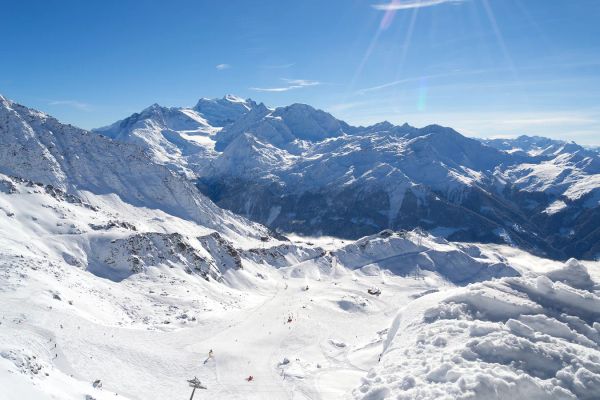
Alps Snow Forecast: Up to 64 cm Headed for the High Glaciers as the Snow Line Drops
The Alps are about to swap mild, sunny October weather for something far more wintry. A cold front arrives Tuesday, and SnowStash forecasts have Monterosa Ski out in front with 64 cm over 14 days, ahead of Blatten Belalp (55 cm) and Verbier (43 cm). The snow line should fall below 2000 metres by Wednesday night, and glaciers across Switzerland, Italy and Austria are in line for the best of it. The wind will have a say too.
20 Oct 2026
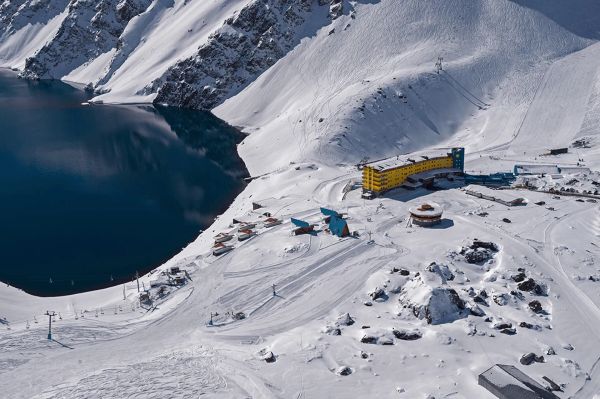
Four Dead After Avalanche Near Ski Portillo in Chile
A large avalanche struck near Laguna del Inca adjacent to Ski Portillo on Saturday afternoon, killing four people and injuring four others. The group were day visitors mountaineering in the backcountry after reportedly being warned about elevated avalanche risk by resort staff.
18 Oct 2026

Europe Ski Resorts Open Now: What Is Skiable in Mid-October 2026
Europe’s ski season is open, technically. After a record-warm summer, glaciers in Austria, Switzerland and Italy are running a few pistes apiece, Sölden, Stubai and Kitzsteinhorn started late, Titlis has pushed back to 24 October, and Zermatt reopens a few lifts on 14 October after more than two months shut. Finland’s Levi and Ruka are skiing on stored snow. Here is what is open, and what you actually get at each.
14 Oct 2026

Zermatt Plans World Cup Downhill Return on the Gornergrat for 2028
Zermatt is having another crack at a World Cup downhill, and this time nobody has to cross a border. Around 13 million Swiss francs is going into rebuilding the Gornergrat piste, including a jump fed by a roughly 300-metre in-run across the roof of the Gornergrat Railway gallery, with the Matterhorn lined up behind it for the TV cameras. First men’s race is pencilled in for March 2028, pending FIS homologation.
14 Oct 2026

Mt. Rose Begins Snowmaking for the 2026-27 Season at Lake Tahoe
Lake Tahoe’s highest base elevation is paying off early: Mt. Rose has started making snow for 2026-27 after the first flurries and a cold snap. The Nevada resort is backing it with nearly US$2 million in upgrades, including a replacement snowmaking main line, a new PistenBully groomer and restraint bars on every lift. Opening day is yet to be confirmed, though Heavenly and Northstar are already eyeing 20 November.
13 Oct 2026

Utah Ski Resorts 2026-27: What’s New at Alta, Deer Valley, Powder Mountain and More
Utah is still building flat out. For 2026-27, Powder Mountain opens a steep new Skytrac chair into more than 1,000 acres of advanced terrain, Deer Valley adds 200 acres on Hail Peak, Sundance gets a new quad and Park City adds a gondola from its new parking structure. Snowmaking is expanding almost everywhere, Eagle Point stays closed after the Cottonwood Fire, and the 2034 Games are setting the pace. Here’s what’s new, resort by resort.
13 Oct 2026

Mt Hutt Invests NZ$12 Million in Base Area, Tripling Its Sun Deck
Mt Hutt is getting busier, and its base lodge is about to catch up. NZ$12 million goes into a heated sun deck roughly three times the current size (430 m² to 1,300 m²), plus a new toilet block, heated steps down to snow level, extra storage and a new food and beverage outlet. Building starts after the 2026 season, with everything due for winter 2027.
11 Oct 2026

Vermont Ski Resort Opening Dates 2026-27: Few Dates Set, Killington Waits on the Cold
Vermont's season is slow to take shape. Stratton is tentatively targeting 18 November and Sugarbush 21 November, while Pico has Friday 11 December on the calendar. Killington never sets a date and opens when the snowmaking allows, and Vail Resorts has yet to name days for Stowe, Okemo and Mount Snow. The forecasts disagree about snow, and the main El Niño worry for the Green Mountains is warmth.
9 Oct 2026