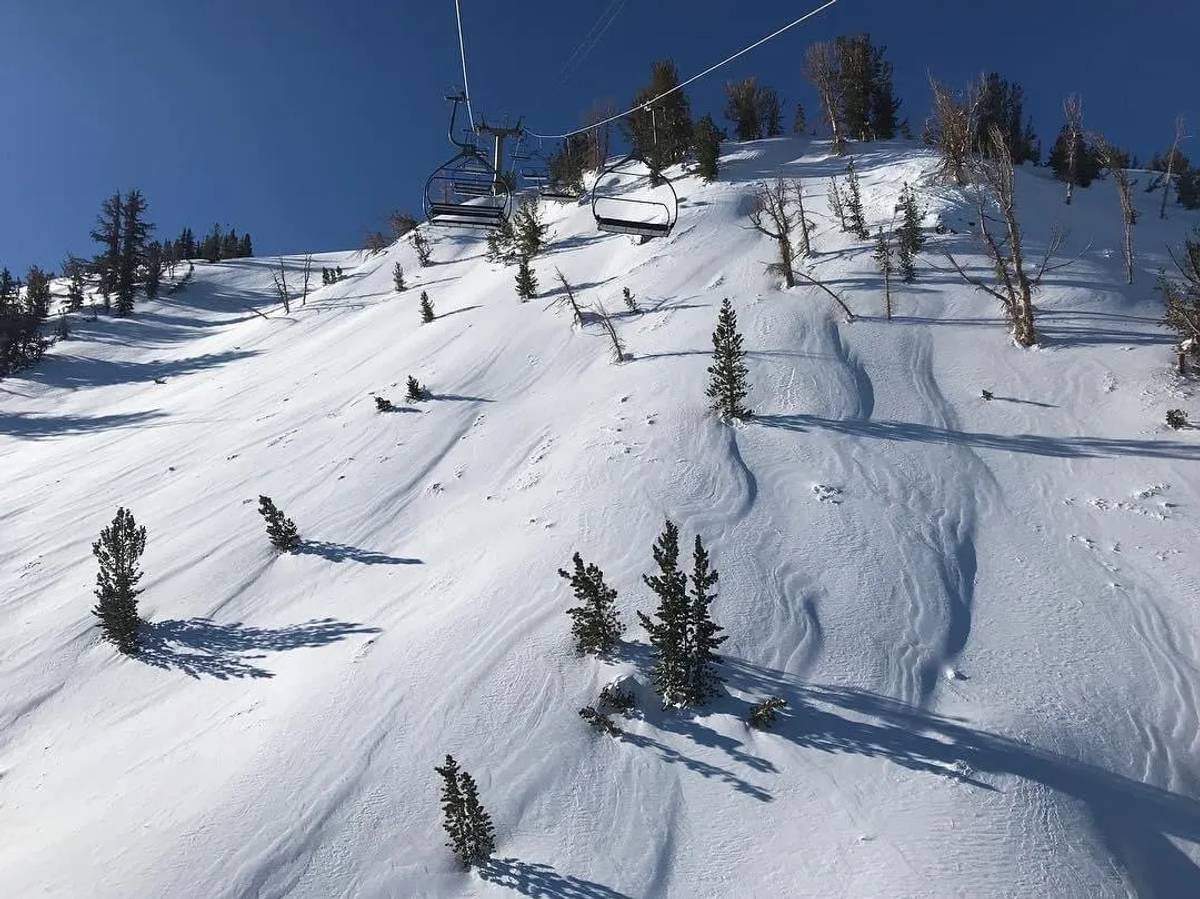
June Mountain
1,500 acres, 43 runs, 775m vertical. Ikon Pass access. Kids 12 & under ski free. Family-friendly California slopes.

Current Conditions→
Season 2026 - 2027
Opens
19 Dec 2026
Closes
4 Apr 2027
Days open
106
Annual snow
250in
The Overview
Michael Fulton
Melbourne-based skier and snowboarder with 50+ resorts across 5 continents. Specialises in Australian resorts and international resort comparisons.
June Mountain spreads across 1,500 acres between 2,300 and 3,075 metres in California's Eastern Sierra, delivering 775 metres of vertical drop across 43 runs. The ski area spans two peaks, June Mountain at 3,075 metres and Rainbow Mountain at 3,062 metres, with terrain split 16% beginner, 40% intermediate, 28% advanced and 16% expert. Snow reliability averages 635 centimetres annually, enhanced by targeted snowmaking, whilst the north-facing aspect on June Mountain summit terrain holds quality through spring. Kids aged 12 and under ski free when accompanied by a paying adult.
The resort splits terrain naturally by ability, with beginner zones concentrated around the mid-mountain Chalet and more challenging runs fanning from the upper lifts. Silverado, stretching 3.2 kilometres, ranks as the longest groomer, whilst expert terrain concentrates off the J7 Express Quad accessing double-black chutes and tree skiing. The mountain's relatively modest traffic means fresh tracks often persist midweek even hours after snowfall. Rainbow Summit terrain tends flatter and more mellow than the steeper June Mountain face.
June Mountain operates with a distinctly low-key atmosphere, lacking the crowds and infrastructure intensity found 32 kilometres south at Mammoth Mountain. The mid-mountain Chalet serves as the social and operational centre, a vintage timber lodge dating to 1961 with basic cafeteria fare and roaring fireplaces. Minimal lift queues define the experience even on holiday weekends. The June Lake village, population 600, sits 3.5 kilometres from the base area via State Route 158.
Full Ikon Pass holders receive unlimited access whilst Ikon Base Pass users face three blackout periods: 26-30 December, 16-17 January and 13-14 February. The 2025-26 season ran from 20 December to 12 April. The resort suits families seeking uncrowded slopes, intermediates after confidence-building mileage, and advanced skiers willing to trade resort scale for immediate backcountry access off the ridge.
2,543ft
Vertical
43
Runs
1,500 acres
Skiable
250in
Annual snow
Ikon
Pass
The Terrain
43 runs across 1,500 acres skiable
June Mountain is an Eastern Sierra ski area of about 1,500 acres (607 hectares) with 2,540 ft (775 m) of vertical, from a 7,550 ft (2,300 m) base to a 10,090 ft (3,075 m) summit. Of its 43 runs, 40% are intermediate, 28% advanced, 16% expert and 16% beginner, so there is real steep terrain on a smaller mountain. Two lifts, J6 and J2, rise from the mid-mountain chalet. June Mountain carries Ikon Pass access, which is why many visitors treat it as an alternative to nearby Mammoth.
The mountain has a June Mountain side and a Rainbow Summit side. The J7 Express quad accesses expert terrain, including double black diamond chutes and tree skiing, while the J6 high-speed quad serves Rainbow Summit, which has only beginner and intermediate terrain. Silverado is the longest groomer on the mountain at about 2 miles, anchoring the intermediate cruising. The mid-mountain Chalet, a vintage timber lodge dating to 1961 with fireplaces and basic cafeteria fare, is the social centre and the base for the J6 and J2 lifts. June Mountain suits families, intermediates building mileage and advanced skiers who want a smaller mountain than nearby Mammoth.
Terrain split
43
runs
43 runs across 4 grades
Beginner7 runs · 16%
Intermediate17 runs · 40%
Advanced12 runs · 28%
Expert7 runs · 16%
Time it right
When to visit June Mountain
June Mountain's 2025-26 season opened 20 December 2025 and closed 12 April 2026, spanning 114 days. Typical operations run mid-December through mid-April snow permitting, with the schedule dependent on early-season storms and spring melt rates. The resort historically operates Thursday through Monday during lean periods, expanding to daily service during holidays and strong snow years. Children 12 and under ski free all season with no blackout dates.
The Eastern Sierra averages 635 centimetres of annual snowfall, with the high-elevation terrain between 2,300 and 3,075 metres preserving coverage well into spring. North-facing runs off the June Mountain summit hold powder longer than Rainbow Mountain's sunnier aspects. Snowmaking covers beginner and lower-intermediate zones, critical for early-season operations before natural snow accumulates. Base depths through February and March typically exceed 120 centimetres.
Peak powder conditions align with the region's storm cycles from January through March, with February historically delivering the deepest snowpack. Spring transforms the mountain by late March as temperatures climb; corn snow and bluebird weather dominate April. Midweek visits from late January through February offer the best combination of snow quality and minimal crowds. Presidents' Day weekend sees the heaviest traffic, though queues remain modest by California standards.
Closing weekend on 12 April 2026 featured live music, a barbecue and beer tastings at the Chalet, with lifts spinning until 4pm. The resort markets spring skiing aggressively with discounted lift ticket offers, and Ikon Pass access begins in early April for the following season. June Mountain historically participates in regional ski mountaineering events and hosted the 2006 California Winter Games snowsports competitions.
Season 2026 - 2027
19 Dec 2026
Opens
4 Apr 2027
Closes
106
Days open
250 in
Annual snow
The record
Historical snowfall at June Mountain
Daily snow reports at June Mountain go back to 2025, 2 winters on the books. Open the record to compare winters, lifts and piste.
45 in
Snowiest day
25 Dec 2025
52 in
This winter · 2026-27
so far
149 in
Typical winter
average of complete seasons
Winter totals
in
Past wintersThis winter
Getting there
Getting to June Mountain, and where to stay
June Mountain sits in the Eastern Sierra Nevada at 2,300 metres base elevation, 3.5 kilometres west of June Lake village along State Route 158. The resort occupies a dramatic east-facing escarpment beneath the crest of the Sierra, with the Ansel Adams Wilderness directly west and Mono Basin stretching east. Yosemite National Park's southeastern boundary lies 40 kilometres northwest, accessible only in summer when Tioga Pass opens. The intimate June Lake community of roughly 600 year-round residents clusters around four alpine lakes on the 26-kilometre scenic loop.
Lee Vining sits 26 kilometres north on US Highway 395, Mammoth Lakes 32 kilometres south. June Lake village offers limited lodging, dining and retail compared to Mammoth but maintains authentic mountain-town character with cabins, small motels and a handful of restaurants. The Double Eagle Resort and June Lake Brewing anchor local après options. Most visitors base in Mammoth Lakes and drive north, though staying in June Lake itself delivers ski-in proximity and quieter evenings.
US Highway 395 provides the sole year-round access, running north-south along the Sierra's eastern flank. From Los Angeles, drivers take Interstate 5 north to State Route 14, then US 395 north for approximately 395 miles and six hours. From San Francisco, winter routing follows Interstate 80 to State Route 50 to Kingsbury Grade, then US 395 south for roughly 300 miles and five hours; summer allows the Tioga Pass route through Yosemite via State Route 120. From Las Vegas, US 95 north connects to State Route 266 and 168, joining US 395 north for 330 miles total.
Mammoth Yosemite Airport sits 16 kilometres south of June Lake village with seasonal service from Los Angeles, San Francisco, San Jose and Portland via Alaska Airlines and United. Reno-Tahoe International Airport, 240 kilometres north, serves as the primary year-round gateway with major carrier service; the drive takes three hours via US 395 south. Eastern Sierra Transit Authority operates bus service between Reno and Mammoth Lakes with a stop at June Lake Junction, running select weekdays with ski-friendly luggage capacity.
Where to stay
Search all stays →Stays map loads when you scroll here
Hotels and lodges near June Mountain, powered by Stay22.
Latest News
From the SnowStash desk
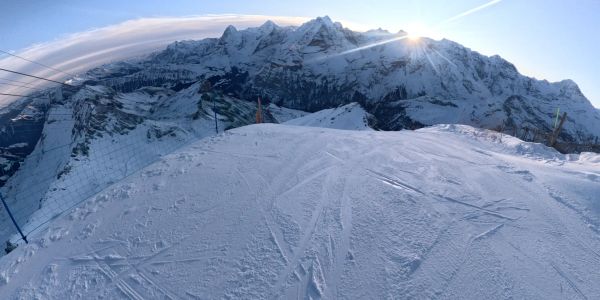
Swiss Avalanche Danger Hits Level 4 From Valais to Glarus
Level 4 of 5 avalanche danger is forecast for Monday 23 November from the Valais Alps to the Glarus Alps, and the SLF says to skip ski touring for now. Engelberg, Leukerbad and the Wildhorn are all on the list, while snow on the Bernina pass sent cars sliding off the road and shut it for two hours on Sunday. Early-season snow is welcome, but it is also what is loading the slopes. Here is where the danger sits and what to do about it.
23 Nov 2026
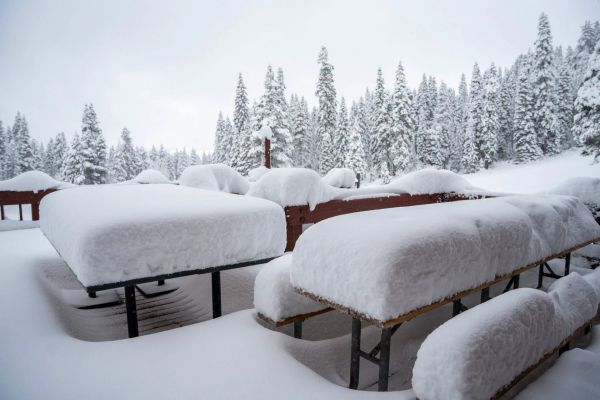
California Storm Cycle Delivers 86 Inches at Sugar Bowl and Pulls Openings Forward
A run of storms, including an atmospheric river, has buried the Sierra Nevada, with Sugar Bowl recording 86 inches (218 cm) between 14 and 20 November. Resorts across California and Nevada have pulled opening days forward after a dismal last winter. Here is what fell, who is open this weekend and what the forecast brings before Thanksgiving.
22 Nov 2026
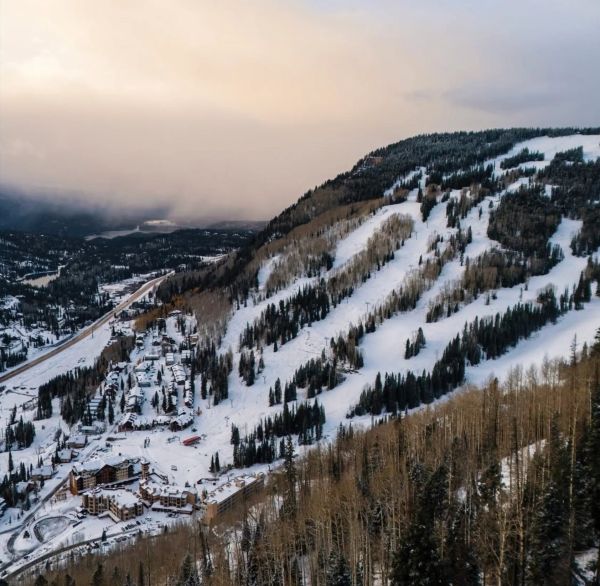
Purgatory Reveals Seven New Trails and a Colorado Couloir Chairlift Opening in December
Purgatory’s new trail map reads like a warning label. Seven new trails named after Dante’s Divine Comedy arrive with the Colorado Couloir chairlift in December, adding around 40 acres (16 ha) of steep pitches and gladed tree skiing. Five of them are black or double black. The resort opens for the season this Friday, 20 November.
19 Nov 2026
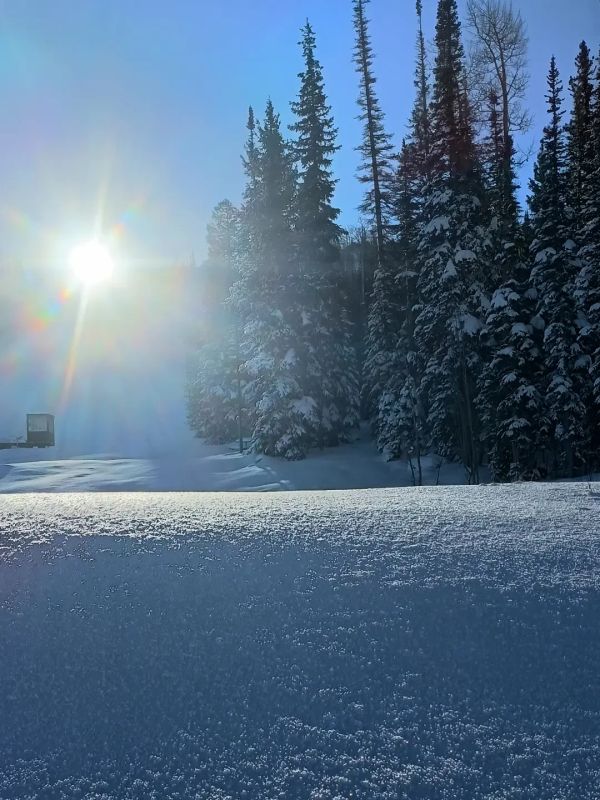
Brian Head Becomes First Utah Resort to Open for 2026-27, With Six Trails and a New Snowmaking Pipeline
Utah’s ski season has started, and it began in the south. Brian Head opened on Tuesday, 17 November, with six trails on the Navajo Express after 14 inches (36 cm) of storm snow and another half foot on opening day. It is the second year running the resort has beaten the rest of the state to first chair, and it has put nearly $1 million into a new snowmaking pipeline that can run 24 guns at once.
19 Nov 2026
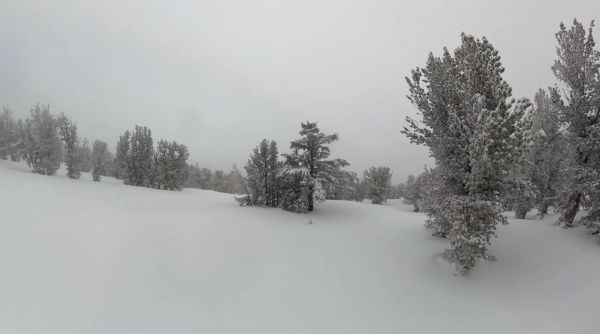
Heavenly and Northstar Open Friday as Lake Tahoe Snow Stacks Up, With Kirkwood Eyeing an Early Start
Tahoe has gone from dry to deep in a week. Heavenly and Northstar open this Friday, 20 November, with up to 24 inches (61 cm) already down at Kirkwood and 50+ inches (127 cm) in the 10-day forecast. Kirkwood normally waits until December, but this snow might change that. Heavenly is even talking about opening Stagecoach in Nevada early, which almost never happens this soon.
18 Nov 2026
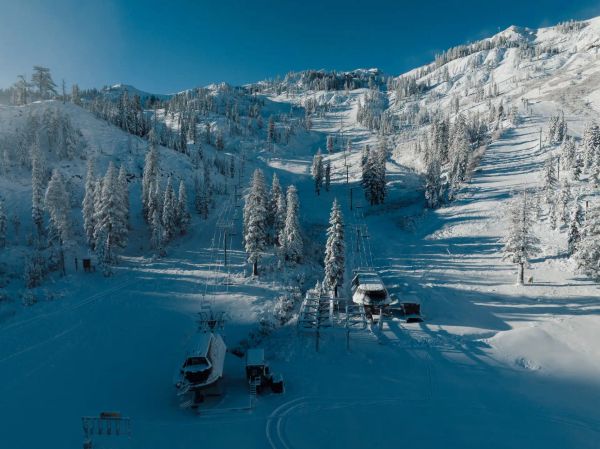
Palisades Tahoe Opens Saturday, Four Days Early, After 26 Inches of New Snow
Palisades Tahoe has pulled its opening forward by four days. Lifts spin this Saturday, 21 November, after 26 inches (66 cm) of new snow, with up to 50 more in the forecast. Opening terrain includes Treeline Cirque at Alpine and Gold Coast and Sunkid 1 at Palisades, though the resort says the weather could change the plan. Tickets are $99 through Tuesday.
18 Nov 2026
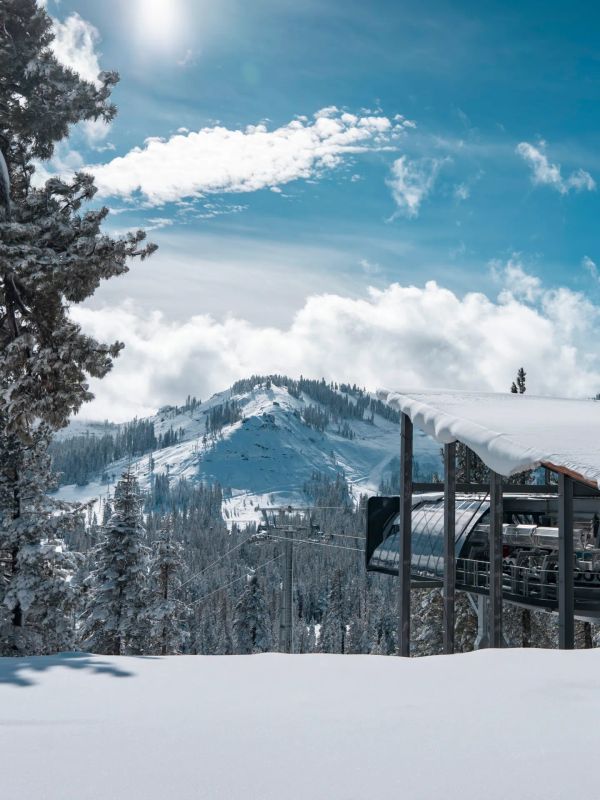
Sugar Bowl Gondola Slips to January 2027 as Opening Day Holds
Sugar Bowl still opens on 27 November, just without its new gondola. The eight-passenger Village Gondola is now targeting January 2027, with all eight towers up, the haul rope on and the first cabin hanging. Until it runs, everyone gets in through the Main Lodge, with curbside drop-off and parking lot shuttles. It replaces the first gondola in the western US, which dates from 1953.
16 Nov 2026
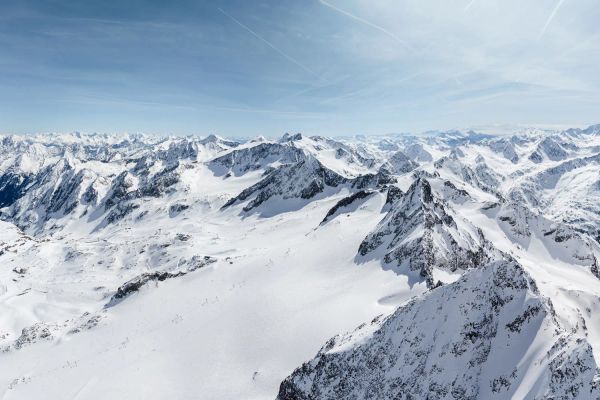
Stubai Glacier Avalanche Ends in Austria’s First Death of the Season
A 72-year-old American skier has died on Stubai Glacier after a small slab avalanche carried him over rocky ground and into a 20-metre crevasse. It is Austria’s first avalanche death of the 2026-27 season, and forecasters had flagged this exact setup two days earlier. Here is what happened near the Daunscharte, and what the snowpack was already telling anyone who was reading it.
15 Nov 2026
June Mountain Lift Tickets
June Mountain lift tickets & passes
Opening day for the winter 2026 - 2027 season is scheduled for Dec 19, 2026 (subject to change). Lift tickets at June Mountain typically go on sale well before the start of the ski season.
Day passes start from US$75, with peak rates up to US$115.
Ikon7 pass options
Single-day passes
Adult 19–64
Adult Daily Ticket
US$85up to US$115 peak
Full-day access to June Mountain's 1,500 acres of uncrowded Eastern Sierra slopes. Located just 20 minutes from Mammoth Mountain with 7 lifts, 41 trails, and beginner-friendly terrain.
Buy passYouth 13–18
Young Adult Daily Ticket
US$75up to US$105 peak
Discounted lift access for young adults at June Mountain. Enjoy Eastern Sierra skiing with less crowds than Mammoth and excellent beginner terrain.
Buy passChild 5–12
Child Daily Ticket
US$75up to US$105 peak
Child-friendly lift tickets for June Mountain's gentle learning slopes. Kids enjoy Eastern Sierra skiing with excellent ski school programs and family-oriented atmosphere.
Buy passSenior 65–79
Senior Daily Ticket
US$75up to US$105 peak
Senior discounted daily lift access to June Mountain. Enjoy peaceful Eastern Sierra skiing with beautiful mountain views and relaxed atmosphere.
Buy passChild 0–4
Kids 4 & Under Free
Free
Complimentary lift access for children 4 and under at June Mountain. Free skiing with proof of age, perfect for families in the Eastern Sierra.
Buy passSenior 80–99
Seniors 80+ Free
Free
Complimentary lift access for seniors 80+ at June Mountain. Free skiing with proof of age and $25 processing fee for season pass products.
Buy passSeason passes
Adult 19–64
Ikon Pass Access
US$1,009up to US$1,109 peak
June Mountain is included with Ikon Pass providing unlimited access. Also includes access to Mammoth Mountain and 70+ destinations worldwide.
Buy passLift tickets FAQ
How much does a June Mountain day pass cost?
June Mountain day passes range from US$75 to US$115 depending on the date and advance booking.
Can I buy June Mountain lift tickets online?
Yes, you can purchase tickets directly from the resort website or at the resort ticket office.
Are there discounts for multi-day passes?
Yes, multi-day packages typically offer significant savings compared to individual day passes. The per-day cost decreases with longer stays.
What is included with a June Mountain lift ticket?
Full access to all lifts and trails at June Mountain, including mountain safety and patrol services.
What is the difference between June Mountain lift tickets and ski passes?
"Lift tickets" and "ski passes" refer to the same thing at June Mountain - your access to the mountain's lifts and trails for your chosen duration.
When should I buy June Mountain lift tickets for the best price?
Purchase tickets at least 7 days in advance for the best rates, and consider weekday visits for further savings over weekend rates.
Does June Mountain offer group discounts on lift tickets?
Group discounts are typically available for parties of 10 or more. Contact June Mountain directly for group booking information and rates.
How can I check current conditions before buying tickets?
Before purchasing, check the live snow report and mountain webcams to see current weather, snow conditions, and lift operations at June Mountain.
More June Mountain intelligence: snow report, webcams, resort overview.