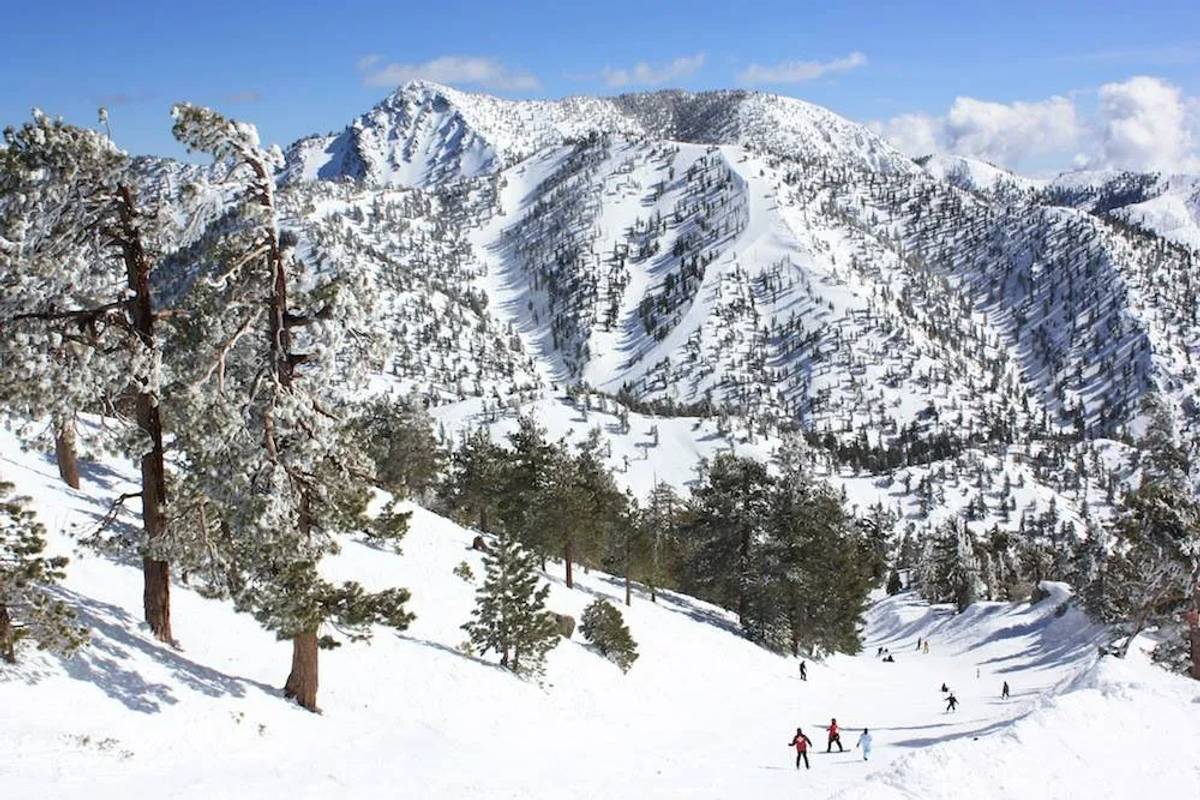
Mt Baldy
640m vertical, 800 acres, 26 runs. Southern California's highest ski area, 72km from Los Angeles. Since 1952.

Season 2026 - 2027
Opens
13 Dec 2026
Closes
8 Mar 2027
Days open
85
Annual snow
110in
The Overview
Michael Fulton
Melbourne-based skier and snowboarder with 50+ resorts across 5 continents. Specialises in Australian resorts and international resort comparisons.
Mt Baldy operates across 800 acres of terrain on Mount San Antonio in the San Gabriel Mountains, 72 kilometres from Los Angeles. The resort spans 1,981 to 2,621 metres elevation, delivering 640 metres of vertical drop across 26 runs. Operating since 1952, it receives an average 2.79 metres of annual snowfall and ranks as Southern California's highest ski area. The terrain splits into 20 per cent beginner, 40 per cent intermediate, and 40 per cent advanced and expert runs, with Thunder Mountain offering the steepest pitches in the region.
Advanced terrain dominates the mountain, particularly on north-facing Thunder Mountain where steep groomers, bump runs and natural chutes define the character. Chair 1 accesses the summit zone where legitimate black diamond terrain unfolds across exposed ridgelines and bowls. The longest run extends 4 kilometres from summit to base. Intermediate terrain spreads across Chairs 2 and 4, whilst Chair 3 serves the learning zone near the base area.
The mountain maintains an authentic no-frills atmosphere focused on natural terrain rather than resort amenities. Top of the Notch lodge at 2,621 metres serves as the only on-mountain facility. Weekend crowds from Los Angeles can fill the car park by mid-morning, but weekday operations remain quiet. The exposed summit provides clear-day views stretching to the Pacific Ocean and across the Los Angeles Basin.
Mt Baldy operates independently without multi-resort pass affiliations. Adult day tickets range from 65 to 75 US dollars, with season passes available from 349 dollars. The 2025-26 season runs 13 December through 8 March. The resort suits experienced intermediates and advanced skiers seeking challenging natural terrain within an hour of major population centres, though limited snowmaking and vintage infrastructure mean conditions vary significantly with natural snowfall.
2,100ft
Vertical
26
Runs
800 acres
Skiable
110in
Annual snow
The Terrain
26 runs across 800 acres skiable
Mt Baldy spreads across roughly 800 acres (324 hectares) on the southern flank of Mount San Antonio, with 26 runs falling from about 8,600 ft (2,621 m) to a base near 6,500 ft (1,981 m). That gives a vertical of 2,100 ft (640 m), among the largest in Southern California. The split is unusually steep for the region: 20% beginner, 40% intermediate, 20% advanced and 20% expert. Four double chairlifts do all the hauling, so the mountain feels old-school, with terrain left natural and few concessions to the crowds that arrive on weekends.
Thunder Mountain is the part to know, a north-facing zone where steep groomers, bumps and natural chutes give Southern California its most serious inbounds skiing. The summit zone around the Notch adds exposed ridgelines and open pitches that hold their snow longer than the sunnier slopes. Beginners and cautious intermediates have their own gentler lifts near the base. Conditions depend heavily on natural snowfall, since snowmaking is limited. Mt Baldy suits confident intermediates and advanced skiers who want real vertical and a no-frills day within reach of Los Angeles.
Terrain split
26
runs
26 runs across 4 grades
Beginner5 runs · 20%
Intermediate10 runs · 40%
Advanced5 runs · 20%
Expert5 runs · 20%
Time it right
When to visit Mt Baldy
The 2025-26 season opens 13 December 2025 and closes 8 March 2026, spanning 86 operating days. Season length depends entirely on natural snowfall, with some years extending into April when conditions permit. Operations remain weather-dependent without significant snowmaking beyond a small tubing area. Lift access continues year-round for hikers and mountain bikers outside winter months.
Mt Baldy averages 2.79 metres of annual snowfall, equivalent to 110 inches. The base sits at 1,981 metres whilst the summit reaches 2,621 metres, providing natural snow advantages over lower-elevation Southern California areas. North-facing Thunder Mountain slopes hold snow longer than south-facing terrain. Base depths fluctuate dramatically between storm cycles, with the resort occasionally closing mid-season during extended dry periods.
January and February deliver peak snowfall and coldest temperatures for optimal powder conditions. March brings spring corn snow and warmer weather, allowing morning ski sessions followed by afternoon beach visits. December and early-season conditions prove unreliable. Weekday visits avoid Los Angeles weekend crowds that pack the limited car parking by 9am during powder cycles.
The resort hosts no major annual events beyond general operations. Night skiing does not operate. Summer operations include scenic chairlift rides, hiking access, mountain biking, tent cabin camping and live music events. The resort operates as a year-round mountain recreation area rather than a winter-only ski facility.
Season 2026 - 2027
13 Dec 2026
Opens
8 Mar 2027
Closes
85
Days open
110 in
Annual snow
Getting there
Getting to Mt Baldy, and where to stay
Mt Baldy sits in San Antonio Canyon on Mount San Antonio's southern slopes in the San Gabriel Mountains. The unincorporated community of Mount Baldy Village lies at 1,280 metres elevation, 13 kilometres below the resort. The county line between San Bernardino County and Los Angeles County runs through both the village and resort. Angeles National Forest surrounds the entire area, with no development beyond the immediate resort footprint.
Upland serves as the primary foothill town 19 kilometres south of the village. Ontario sits 19 kilometres south at the base of the range. Claremont lies 20 kilometres southwest. Downtown Los Angeles sits 72 kilometres west via Interstate 210 and Mount Baldy Road. The resort ranks as the closest ski area to the Los Angeles metropolitan basin.
Mount Baldy Road provides the sole vehicular access from Interstate 210 at the Baseline Road exit. The narrow, winding 19-kilometre mountain road climbs through San Antonio Canyon from Upland. Drive time from the I-210 freeway to the resort base requires 35 to 45 minutes depending on conditions. Winter chains or four-wheel-drive become mandatory during active storms. No public transport serves the resort.
Ontario International Airport (ONT) sits 26 kilometres south, a 30-minute drive in normal conditions. Los Angeles International Airport (LAX) lies 97 kilometres west, roughly 90 minutes by car. Burbank Airport sits 84 kilometres northwest. No passenger rail serves the San Gabriel Mountains. Rental cars from Ontario or Los Angeles airports provide the only practical access for visitors without personal vehicles.
Where to stay
Search all stays →Stays map loads when you scroll here
Hotels and lodges near Mt Baldy, powered by Stay22.
Latest News
From the SnowStash desk
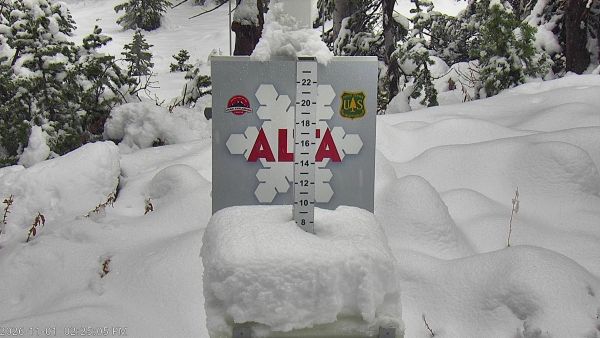
Utah Snow Storm Builds Early-Season Base Ahead of November Openings
Rain down low, snow up high, and a snow report full of zeros that mostly means ‘not updated yet’. Utah’s first proper storm of 2026-27 is rolling through the Wasatch, Snowbird’s snow stake is closing in on 10 inches, and Brian Head is five days from opening day. Early November snow rarely looks like much, but it is the layer every November opening date is built on. Here is where it stands.
1 Nov 2026
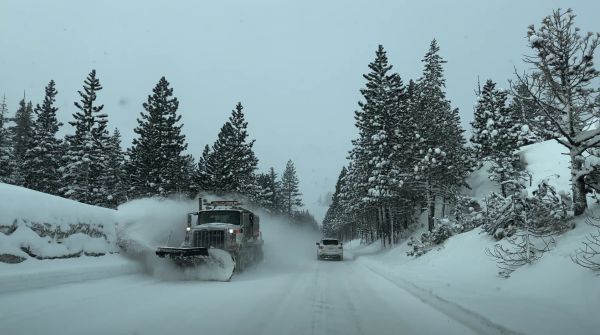
Sierra Nevada Halloween Storm: Dodge Ridge Forecast to Lead With 19 Inches
Halloween weekend brings a wet, windy storm to the Sierra Nevada. Our five-day forecast has Dodge Ridge on top with 19 in, followed by Bear Valley at 15 in and Mammoth Mountain at 12 in, with most of it landing on Saturday. A winter weather advisory covers the Tahoe Basin and Mono County until 7 AM Sunday, gusts could reach 47 mph and the freezing level swings between 4,900 and 8,700 ft, so some bases will see rain. A dry spell follows from Monday.
31 Oct 2026
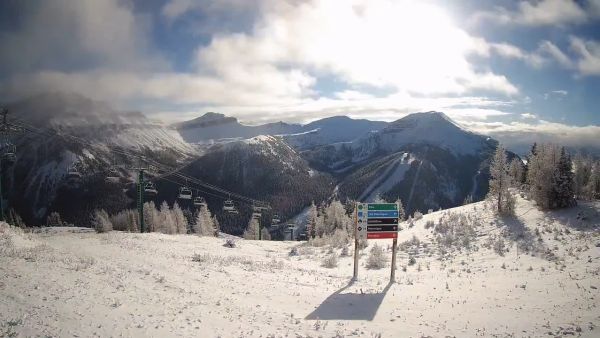
Lake Louise Opens Early on 1 November With Juniper Express and Easy Street
The Rockies get their first lift-served turns of the season early. Lake Louise opens Sunday 1 November, five days ahead of schedule, after a cold October and round-the-clock work from the snowmaking and mountain crews. Terrain is limited to Juniper Express Chair and Easy Street, with two small terrain parks and the beginner area for lessons. Opening-day tickets are over 60% off, with prices rising as more lifts open. First chair is at 9:30 am under the resort’s new lift hours.
31 Oct 2026
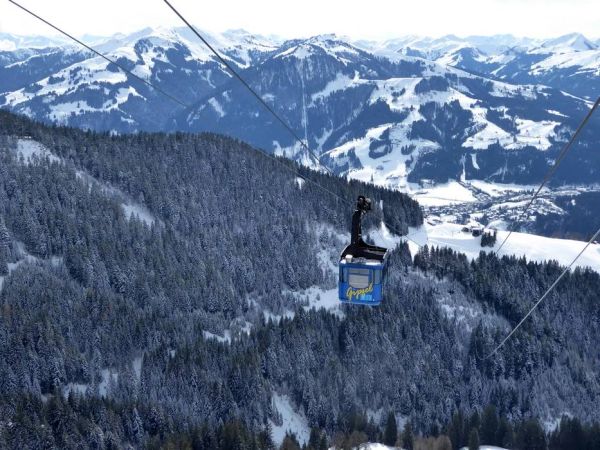
Kitzbüheler Horn Summit Cable Car to Be Replaced After 70 Years
A Tyrolean summit lift that has been carrying guests up the Kitzbüheler Horn since 1955 is on borrowed time. Its licence runs to 2045, but a new inspection rule has made refurbishment uneconomic, so Bergbahn AG Kitzbühel will spend around €15 million on a replacement on the same line. It should hold roughly 100 people and keep running in winds that would stop today’s lift. Building starts in autumn 2027, which makes this winter and next summer the last chances to ride the old one.
30 Oct 2026
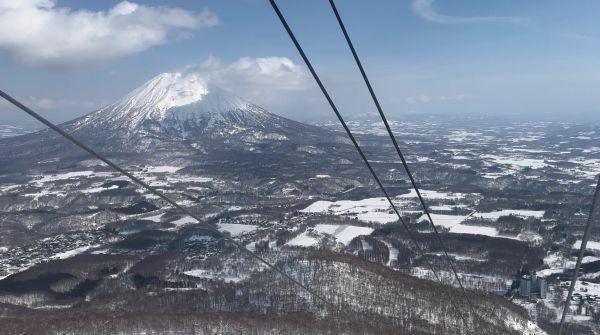
What’s New in Japan Skiing This Winter: Niseko Gondola, a Private Resort and a Bigger Ikon Pass
Niseko Village is replacing a lift from the early 1980s with an eight-person gondola, Tsugaike gets a six-person chairlift, Madarao joins the Ikon Pass and Togari opens Asia’s first private ski resort. Here’s what is actually new in Japan skiing for 2026/27, plus what is still a year or two away.
30 Oct 2026
Wolf Creek Opens on Halloween Weekend as Colorado’s Early Season Gathers Pace
Colorado’s early-season dominoes keep falling. Arapahoe Basin opened on Wednesday, Keystone follows on Friday, and now Wolf Creek is joining in on Saturday 31 October, just in time for Halloween. A storm on 23 and 24 October left 20 inches of natural snow in the San Juans, and three lifts will turn from 9:00 am, covering about 30% of the mountain. Expect rocks, unmarked obstacles and open water, but also Local Appreciation lift tickets at $73 for adults.
30 Oct 2026
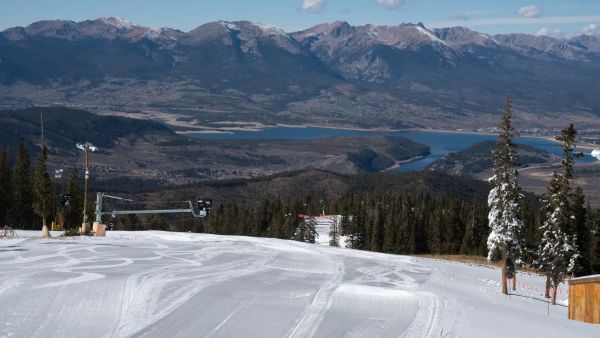
Keystone Resort Opens for 2026/27 With More Than Two Miles of Skiing
Keystone is next. After Arapahoe Basin claimed the first chairlift skiing of the season on Wednesday, Keystone opens on Friday 30 October at 9:00 am with more than two miles of snowmaking-built terrain on Schoolmarm and Silver Spoon, plus free donuts, coffee and a live DJ. Last year the order was reversed, when Keystone squeezed in a three-hour afternoon session to beat A-Basin by a day. Snowmaking has been running since 15 October.
29 Oct 2026
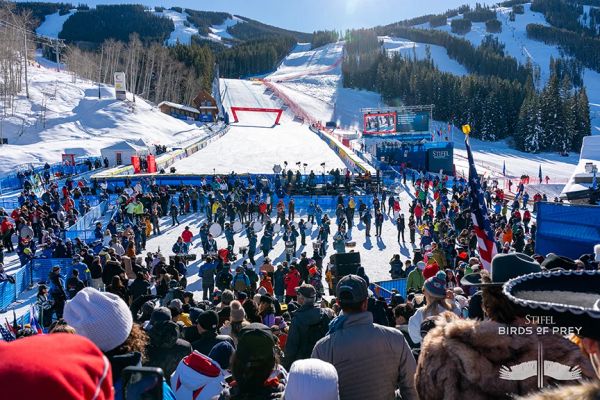
Beaver Creek Installs 16 Automated Snow Guns on Birds of Prey Ahead of Record World Cup
Beaver Creek is getting ready for the biggest Birds of Prey ever, and this time it is not leaving the snow to chance. Crews started making snow on 27 October with 16 newly installed automated guns on the lower third of the course, after last December’s warm spell forced a downhill off the schedule. Seven races across two weekends run from 3 to 13 December, the most the course has hosted since its 1997 debut, and the guns start themselves whenever the weather allows.
29 Oct 2026
Mt Baldy Snow Report
Snow Report
Awaiting live data
8,599ft
summit
+0in
new snow · last 24 hours
-°F / -°F · - -
Snowfall
24 hours
0in
48 hours
0in
7 days
0in
Base depth
-
Season total
-
Total lifts4
Live open status isn’t available right now.
13 Dec 2026 - 8 Mar 2027
Hour by Hour
Next 48 hours· Updated Nov 2, 2026 at 5:02 AM
Scroll for the full outlook · Open-Meteo
7-Day Outlook
8,179 ftUpdated Nov 2, 2026 at 5:02 AMOpen-Meteo
Days 1–7
0.0"
Days 8–14
0.0"
Mon, Nov 2
Overcast
Temp50° / 31°°F
Snow0.0"
Wind14 mph N
Live snow from the resort feed; forecast from Open-Meteo, via Supabase.
Understanding the Mt Baldy snow report
See what's happening on the mountain at Mt Baldy right now — snowfall, snow depth, and weather data to help you plan your day in California.
Snow measurements
Snow depth at Mt Baldy is tracked at both the base and summit, since the two elevations often see different totals — roughly a 640m difference here. We report fresh snowfall over the last 24 hours and 7 days alongside the running season total, in both metric and imperial units.
Weather conditions
Snow quality tracks closely with temperature and wind. We surface both alongside the snowfall data so you can judge whether conditions at Mt Baldy are holding up or starting to soften.
Data sources
We pull Mt Baldy's conditions from on-the-ground mountain reporting, then layer in forecast data so you get a fuller picture than either source alone. The mountain is served by 4 lifts in total.
When to check
Snow reports are typically updated early morning and late afternoon. For the most current conditions, check back regularly, especially if a winter storm is approaching.