
Snow Valley
240 acres, 317m vertical, 140 inches annual snow. Southern California's longest operating resort in the San Bernardino Mountains.
Season 2026 - 2027
Opens
5 Dec 2026
Closes
15 Mar 2027
Days open
100
Annual snow
12ft
The Overview
Michael Fulton
Melbourne-based skier and snowboarder with 50+ resorts across 5 continents. Specialises in Australian resorts and international resort comparisons.
Snow Valley spans 240 acres across 30 runs between 2,073 and 2,390 metres elevation, delivering 317 metres of vertical drop in the San Bernardino National Forest. The terrain divides into 32% beginner, 13% intermediate, 41% advanced and 14% expert, with Slide Peak offering the steepest pitches in Southern California. The resort averages 140 inches of annual snowfall and operates under special use permit from the United States Forest Service. Established in 1924, it holds the distinction as Southern California's longest continually operating ski resort and was acquired by Alterra Mountain Company in January 2023.
Slide Peak anchors the advanced terrain with runs like Show Me and Snake Run, whilst the expanded beginner area near Chair 2 provides dedicated learning space. The Snow Valley Express high-speed six-pack accesses over 300 metres of vertical and serves as Southern California's only lift of its kind. The resort maintains 100% snowmaking coverage across its accessible terrain, though water supply constraints mean the upper third operates primarily during natural snow cycles. Hidden Valley and Peak 9 deliver backcountry-style terrain accessible via Lift 9, with gladed runs and powder-filled bowls.
The base lodge sits at 2,073 metres with views across the San Bernardino Mountains to the Pacific Ocean on clear days. Thunder Mountain BBQ & Bar provides slopeside dining, whilst the Coyote Creek Tube Park offers Southern California's only chairlift-served sledding operation. Running Springs, 8 kilometres west, supplies the closest services, with Lake Arrowhead 18 kilometres distant. Night skiing operates Friday and Saturday from 3pm to 8:30pm. The resort draws primarily from Los Angeles and the Inland Empire, with manageable weekend crowds compared to Big Bear alternatives.
Indy Pass holders receive two days of access with no blackout dates, whilst the resort's own season pass costs USD 479 for unlimited skiing. Daily lift tickets range from USD 65 midweek to USD 95 on peak dates, with beginner-only access available from USD 45. Big Bear Mountain Resort manages Snow Valley alongside Snow Summit and Bear Mountain, creating a three-mountain network 21 kilometres apart. The resort suits families, learning skiers and Los Angeles day-trippers seeking accessible terrain without the Mammoth drive.
1,040ft
Vertical
30
Runs
240 acres
Skiable
12ft
Annual snow
Indy
Pass
The Terrain
30 runs across 240 acres skiable
Snow Valley covers 240 acres (97 hectares) of the San Bernardino Mountains near Running Springs, with 30 runs and a vertical of 1,040 ft (317 m). The summit reaches 7,840 ft (2,390 m) and the base sits at about 6,800 ft (2,073 m). The difficulty split is unusual: 32% beginner, 13% intermediate, 41% advanced and 14% expert, so there is a big gap in the middle. The Snow Valley Express, a high-speed six-pack, carries skiers towards the top, while the older doubles and triples serve the base and secondary slopes.
Slide Peak is the standout, with steep black and double black runs such as Show Me and Snake Run, the toughest pitches in the region. Beginners get a dedicated learning area near the base, while Hidden Valley and Peak 9 offer gladed, powder-style terrain reached from the mid-mountain lifts. Because intermediate terrain is scarce, progressing skiers can find it hard to step up from green to black. Snow Valley suits first-timers, families starting out and experienced skiers looking for a local steep fix without the crowds found at Big Bear.
Terrain split
30
runs
30 runs across 4 grades
Beginner10 runs · 32%
Intermediate4 runs · 13%
Advanced12 runs · 41%
Expert4 runs · 14%
Time it right
When to visit Snow Valley
The 2025-26 season runs from 5 December 2025 through 15 March 2026, providing 131 operational days. Snow Valley typically opens in early to mid-December depending on natural snowfall and snowmaking progress, with closures between late March and mid-April. The season length ranks among California's shortest due to the resort's relatively low elevation and Southern California's variable winter precipitation. Weekend-only operations occur during marginal snow years, whilst strong winters support daily operations from late December through February.
Annual snowfall averages 140 inches, with extreme volatility between seasons. Roughly 6% of winter months receive 90 inches or more, whilst 40% see less than 12 inches. The resort sits lower than Big Bear Lake's mountains at 2,073 metres base elevation, making it susceptible to rain events during warm storm cycles. Snowmaking covers 100% of operational terrain but relies on a limited water supply, typically supporting the lower two-thirds of the mountain. Mid-winter storms from late January through February deliver the most reliable powder, with Slide Peak holding snow longer than lower-elevation runs.
February offers peak conditions with the highest average snowfall and coldest temperatures. December and early January see building snowpack and holiday crowds, whilst March brings spring corn snow and thinning cover. Midweek visits from late January through February provide the best combination of snow quality, terrain availability and minimal lift queues. Night skiing Friday and Saturday evenings extends riding time for weekend visitors, with illuminated terrain on the lower mountain. Avoid Presidents' Day weekend and the week between Christmas and New Year for crowd management.
The resort hosts occasional competitions and learn-to-ski events but maintains a low-key events calendar compared to destination resorts. Alterra's acquisition has introduced limited synergy with Big Bear Mountain Resort programming. No major seasonal festivals anchor the calendar. Summer operations include lift-served mountain biking on weekends from May through October, scenic chairlift rides and special food and beverage events.
Season 2026 - 2027
5 Dec 2026
Opens
15 Mar 2027
Closes
100
Days open
12 ft
Annual snow
Getting there
Getting to Snow Valley, and where to stay
Snow Valley sits at 2,073 metres elevation in the San Bernardino National Forest on State Route 18, 8 kilometres east of Running Springs in San Bernardino County. The resort occupies mid-mountain terrain on the northern slopes of the San Bernardino Mountains, which rise between the Inland Empire and the Mojave Desert. Running Springs functions as the gateway community at the junction of SR-18 and SR-330, elevation 1,850 metres. The mountains form an east-west trending range reaching 3,500 metres at San Gorgonio Mountain, 50 kilometres east.
San Bernardino lies 58 kilometres southwest and 1,700 metres lower in elevation, serving as the primary urban centre. Los Angeles sits 140 kilometres west, Orange County 145 kilometres southwest, and San Diego 240 kilometres south. Lake Arrowhead, a resort community of 12,000, lies 18 kilometres northwest at 1,650 metres elevation. Big Bear Lake, the region's largest mountain town with year-round population of 5,000, sits 27 kilometres east at 2,070 metres. The National Children's Forest, a 1,400-hectare interpretive area created after the 1970 Bear Fire, borders the resort on Highway 18.
From Los Angeles and Orange County, take Interstate 10 east to Highway 330 north in Highland, which climbs 1,500 metres through switchbacks to Running Springs in 45 minutes. Highway 18 continues east 8 kilometres to Snow Valley. Total driving time from central Los Angeles averages 90 minutes in clear conditions, though weekend traffic on Highway 330 frequently doubles travel time during winter. An alternative route via Interstate 15 north to Highway 138 east and Highway 18 through Crestline adds 20 minutes but avoids Highway 330 congestion. From San Diego, take Interstate 15 north 200 kilometres to the Highway 138 junction.
Ontario International Airport sits 61 kilometres southwest with approximately one-hour driving time, offering major airline service and rental cars. Los Angeles International Airport lies 160 kilometres west with two-hour minimum driving time. Palm Springs International Airport, 110 kilometres southeast, provides seasonal winter access. Mountain Area Regional Transit Authority operates bus service from San Bernardino via Ontario Airport to Running Springs and Big Bear, with limited frequency unsuitable for day visits. Metrolink trains serve San Bernardino station, connecting to Mountain Transit buses, though total journey time from Los Angeles exceeds four hours. Private vehicles remain the practical access method, with chains or four-wheel-drive required during active storms.
Where to stay
Search all stays →Hotels and lodges near Snow Valley, powered by Stay22.
Latest News
From the SnowStash desk
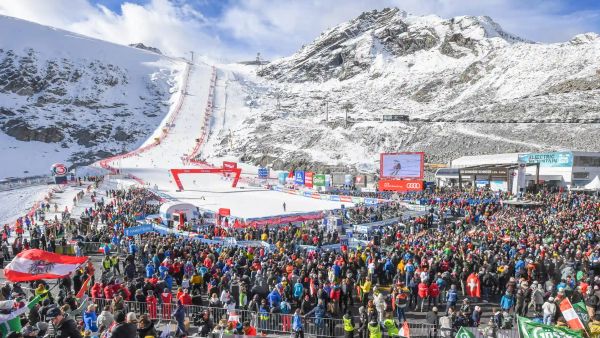
Pinheiro Braathen Wins Sölden Giant Slalom Opener by 0.48 Seconds
Two days at Sölden, two races decided by a hundredth somewhere on the podium, and one very quick Brazilian. Lucas Pinheiro Braathen led from the first run to win the men’s World Cup opener by 0.48 seconds, with Loïc Meillard second and Marco Odermatt third. River Radamus charged from 15th to fourth on a rutted course, and Britain’s Freddy Carrick-Smith banked his first World Cup points. Braathen still hasn’t lost a giant slalom since Olympic gold.
25 Oct 2026
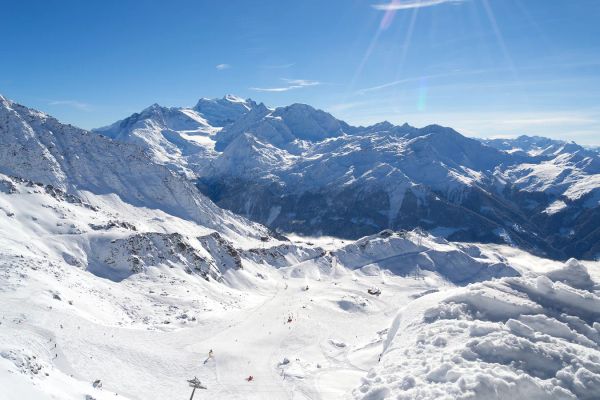
Alps Snow Forecast: Up to 64 cm Headed for the High Glaciers as the Snow Line Drops
The Alps are about to swap mild, sunny October weather for something far more wintry. A cold front arrives Tuesday, and SnowStash forecasts have Monterosa Ski out in front with 64 cm over 14 days, ahead of Blatten Belalp (55 cm) and Verbier (43 cm). The snow line should fall below 2000 metres by Wednesday night, and glaciers across Switzerland, Italy and Austria are in line for the best of it. The wind will have a say too.
20 Oct 2026
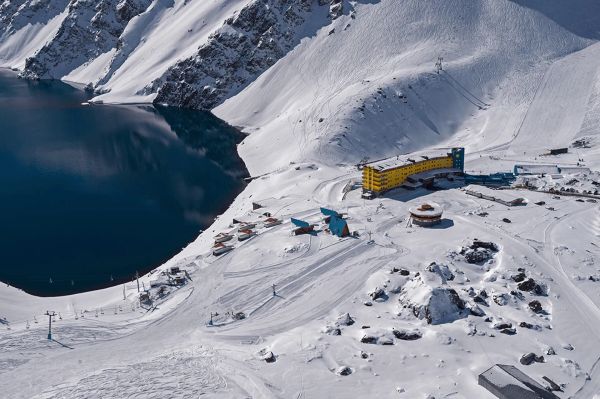
Four Dead After Avalanche Near Ski Portillo in Chile
A large avalanche struck near Laguna del Inca adjacent to Ski Portillo on Saturday afternoon, killing four people and injuring four others. The group were day visitors mountaineering in the backcountry after reportedly being warned about elevated avalanche risk by resort staff.
18 Oct 2026
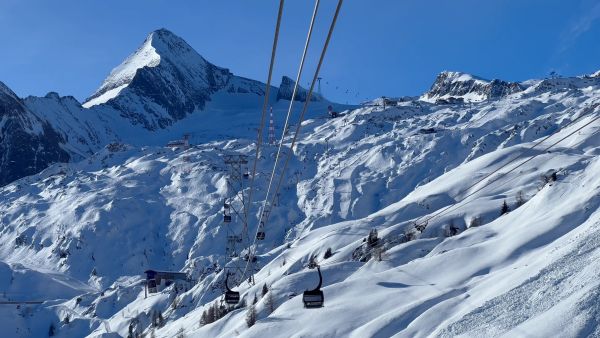
Europe Ski Resorts Open Now: What Is Skiable in Mid-October 2026
Europe’s ski season is open, technically. After a record-warm summer, glaciers in Austria, Switzerland and Italy are running a few pistes apiece, Sölden, Stubai and Kitzsteinhorn started late, Titlis has pushed back to 24 October, and Zermatt reopens a few lifts on 14 October after more than two months shut. Finland’s Levi and Ruka are skiing on stored snow. Here is what is open, and what you actually get at each.
14 Oct 2026

Zermatt Plans World Cup Downhill Return on the Gornergrat for 2028
Zermatt is having another crack at a World Cup downhill, and this time nobody has to cross a border. Around 13 million Swiss francs is going into rebuilding the Gornergrat piste, including a jump fed by a roughly 300-metre in-run across the roof of the Gornergrat Railway gallery, with the Matterhorn lined up behind it for the TV cameras. First men’s race is pencilled in for March 2028, pending FIS homologation.
14 Oct 2026

Mt. Rose Begins Snowmaking for the 2026-27 Season at Lake Tahoe
Lake Tahoe’s highest base elevation is paying off early: Mt. Rose has started making snow for 2026-27 after the first flurries and a cold snap. The Nevada resort is backing it with nearly US$2 million in upgrades, including a replacement snowmaking main line, a new PistenBully groomer and restraint bars on every lift. Opening day is yet to be confirmed, though Heavenly and Northstar are already eyeing 20 November.
13 Oct 2026

Utah Ski Resorts 2026-27: What’s New at Alta, Deer Valley, Powder Mountain and More
Utah is still building flat out. For 2026-27, Powder Mountain opens a steep new Skytrac chair into more than 1,000 acres of advanced terrain, Deer Valley adds 200 acres on Hail Peak, Sundance gets a new quad and Park City adds a gondola from its new parking structure. Snowmaking is expanding almost everywhere, Eagle Point stays closed after the Cottonwood Fire, and the 2034 Games are setting the pace. Here’s what’s new, resort by resort.
13 Oct 2026

Mt Hutt Invests NZ$12 Million in Base Area, Tripling Its Sun Deck
Mt Hutt is getting busier, and its base lodge is about to catch up. NZ$12 million goes into a heated sun deck roughly three times the current size (430 m² to 1,300 m²), plus a new toilet block, heated steps down to snow level, extra storage and a new food and beverage outlet. Building starts after the 2026 season, with everything due for winter 2027.
11 Oct 2026