
Bogus Basin
2,600 acres, 82 runs, 16 miles from Boise. Nonprofit resort with extensive night skiing and affordable tickets.
Season 2026 - 2027
Opens
28 Nov 2026
Closes
21 Mar 2027
Days open
113
Annual snow
21ft
The Overview
Michael Fulton
Melbourne-based skier and snowboarder with 50+ resorts across 5 continents. Specialises in Australian resorts and international resort comparisons.
Bogus Basin's summit reaches 7,591 feet, dropping 1,800 vertical feet to a base at 5,791 feet across 82 runs spread over 2,600 acres in the Boise National Forest. Terrain splits 50 per cent intermediate, 28 per cent advanced, 12 per cent expert and 10 per cent beginner, with average annual snowfall of roughly 250 inches. The resort holds Powder Alliance affiliation and sits just 16 miles from downtown Boise. Eleven lifts, including four quad chairs and three triple chairs, serve the mountain alongside four surface lifts for beginner terrain.
Bogus Basin is a nonprofit ski area, operated by the Bogus Basin Recreation Association rather than a for-profit company, with proceeds reinvested into the mountain instead of paid out to shareholders. This structure keeps ticket prices notably lower than comparable resorts of its size. Extensive night skiing is a defining feature, reflecting the resort's role as an accessible, close-to-town mountain rather than a destination resort. The 2,600-acre footprint on leased Boise National Forest land supports a broad mix of terrain within a short drive of the state's largest city.
Ski pioneer Alf Engen, known as the father of the American powder technique, selected the site in 1939, and Bogus Basin opened to the public in December 1942 with a 500-foot rope tow. The area has operated as a nonprofit since its founding, with the Bogus Basin Recreation Association gaining formal 501(c)(3) charitable status in 2005. More than 80 years after its founding by outdoor-minded locals, the resort has kept its community-access mission through generations of Boise's growth.
Adult daily tickets run from 69 to 89 US dollars depending on date, with season passes from 399 dollars for a Twilight Pass up to 1,099 dollars for the unrestricted True Bogus Pass. The nonprofit model and proximity to Boise make Bogus Basin the default local mountain for Treasure Valley families and after-work skiers rather than a fly-in destination. Its low price point relative to nearby resorts reflects the association's charitable mandate rather than a commercial pricing strategy.
1,798ft
Vertical
82
Runs
2,600 acres
Skiable
21ft
Annual snow
Powder Alliance
Pass
The Terrain
82 runs across 2,600 acres skiable
Bogus Basin spreads 82 runs over about 2,600 acres (1,052 hectares) of the Boise National Forest, with a summit at 7,590 feet (2,313 m) and a base at 5,790 feet (1,765 m), a vertical of roughly 1,800 feet (548 m). Half the runs are intermediate, 28% advanced, 12% expert and 10% beginner, so blue square cruising is the main business. Four quad chairs and three triples handle most of the uphill traffic, backed by four surface lifts for learners, and the mountain sits close enough to Boise to work as an after-work ski.
The Deer Point quad climbs to the upper mountain and also serves terrain parks, one pitched at advanced riders and another for beginners and intermediates. Superior, Morning Star and Pine Creek quads spread skiers across the remaining zones, with steeper black diamond pitches mixed through the trees and open faces. A good share of the terrain is lit, so evening laps are part of the routine here. Bogus Basin suits families, local intermediates and anyone wanting a varied day with a solid advanced slice, though it is a regional mountain and not a vertical-chasing destination.
Terrain split
82
runs
82 runs across 4 grades
Beginner8 runs · 10%
Intermediate41 runs · 50%
Advanced23 runs · 28%
Expert10 runs · 12%
Time it right
When to visit Bogus Basin
The 2025-26 season at Bogus Basin ran from 12 December 2025 to 20 April 2026, a roughly nineteen-week season typical for the mountain's Boise National Forest location. Average annual snowfall of around 250 inches supports a season of this length without heavy reliance on artificial snowmaking alone, though exact snowmaking coverage is not confirmed in available resort information. Season dates can shift slightly year to year based on early and late-season weather patterns.
Midwinter months from late December through February typically bring the most consistent natural snowpack, while early and late season can vary more depending on storm timing. Night skiing extends the useful ski day well beyond daylight hours throughout the season, a significant draw for Boise's after-work skier base. Weekday evenings tend to be markedly quieter than weekends, reflecting the mountain's role as a commuter resort rather than a weekend-only destination.
As a Powder Alliance mountain, Bogus Basin offers reciprocal benefits to season pass holders from other affiliated independent resorts, extending its reach beyond the immediate Treasure Valley. The nonprofit's community mission means programming leans toward accessible ski school and youth offerings rather than festival-style events. School holiday periods bring heavier family visitation given the resort's broad intermediate-weighted terrain.
Given its short 16-mile drive from downtown Boise, Bogus Basin sees some of its heaviest use immediately after storms and on weekday evenings once the lights come on. Specific event programming beyond standard operations and night skiing is not confirmed in available resort information. The nonprofit's reinvestment model keeps the resort focused on dependable, affordable access throughout the season rather than high-end destination amenities.
Season 2026 - 2027
28 Nov 2026
Opens
21 Mar 2027
Closes
113
Days open
21 ft
Annual snow
Getting there
Getting to Bogus Basin, and where to stay
Bogus Basin sits in the Boise National Forest, with a base elevation of 5,791 feet and a summit at 7,591 feet across a 1,800-foot vertical drop over 2,600 acres. The resort operates on a mix of private and leased Forest Service land just 16 miles from downtown Boise, Idaho's capital and largest city. This proximity to a major metropolitan area is unusual among Mountain West ski areas of comparable size.
Boise itself offers the area's lodging, dining and broader amenities, with most visitors staying in the city rather than at the mountain itself. The Treasure Valley's population base supports Bogus Basin's nonprofit model directly, with locals forming the bulk of the resort's visitation rather than out-of-state destination travellers. Boise's growth in recent years has increased demand on the close-to-town mountain.
Bogus Basin Road connects the resort directly to Boise, climbing from the valley floor into the Boise National Forest over roughly 16 miles. The drive typically takes 30 to 45 minutes from central Boise depending on conditions, making the mountain accessible for evening night-skiing trips as well as full weekend days. Winter driving conditions on Bogus Basin Road can include snow and ice, though the route is regularly maintained given its role as the resort's sole access point.
Boise Airport, the region's main commercial airport, sits roughly 25 miles from the resort and offers direct flights to numerous major US cities. This makes Bogus Basin one of the more accessible Mountain West resorts for fly-in visitors despite its identity as a local's mountain. Most day-to-day visitors, however, are Boise-area residents driving up rather than travellers arriving by air.
Where to stay
Search all stays →Hotels and lodges near Bogus Basin, powered by Stay22.
Latest News
From the SnowStash desk
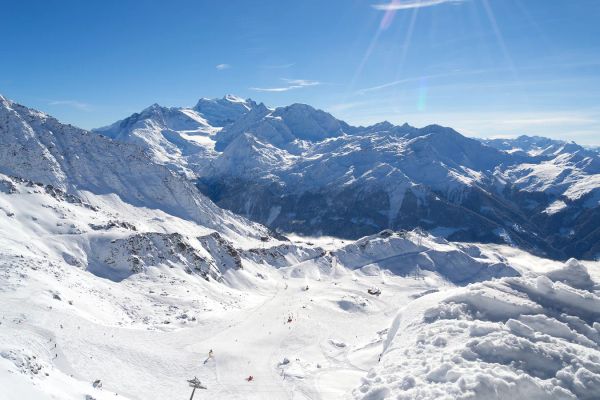
Alps Snow Forecast: Up to 64 cm Headed for the High Glaciers as the Snow Line Drops
The Alps are about to swap mild, sunny October weather for something far more wintry. A cold front arrives Tuesday, and SnowStash forecasts have Monterosa Ski out in front with 64 cm over 14 days, ahead of Blatten Belalp (55 cm) and Verbier (43 cm). The snow line should fall below 2000 metres by Wednesday night, and glaciers across Switzerland, Italy and Austria are in line for the best of it. The wind will have a say too.
20 Oct 2026
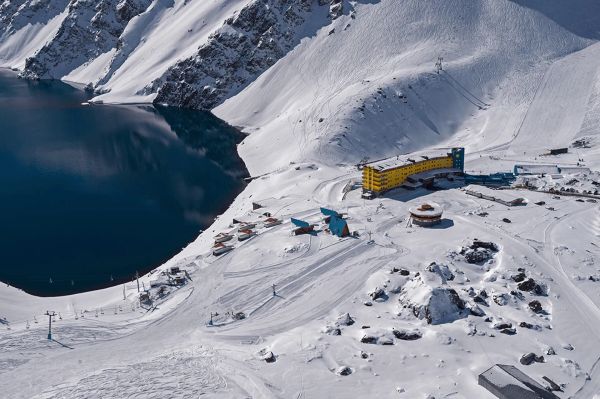
Four Dead After Avalanche Near Ski Portillo in Chile
A large avalanche struck near Laguna del Inca adjacent to Ski Portillo on Saturday afternoon, killing four people and injuring four others. The group were day visitors mountaineering in the backcountry after reportedly being warned about elevated avalanche risk by resort staff.
18 Oct 2026

Europe Ski Resorts Open Now: What Is Skiable in Mid-October 2026
Europe’s ski season is open, technically. After a record-warm summer, glaciers in Austria, Switzerland and Italy are running a few pistes apiece, Sölden, Stubai and Kitzsteinhorn started late, Titlis has pushed back to 24 October, and Zermatt reopens a few lifts on 14 October after more than two months shut. Finland’s Levi and Ruka are skiing on stored snow. Here is what is open, and what you actually get at each.
14 Oct 2026

Zermatt Plans World Cup Downhill Return on the Gornergrat for 2028
Zermatt is having another crack at a World Cup downhill, and this time nobody has to cross a border. Around 13 million Swiss francs is going into rebuilding the Gornergrat piste, including a jump fed by a roughly 300-metre in-run across the roof of the Gornergrat Railway gallery, with the Matterhorn lined up behind it for the TV cameras. First men’s race is pencilled in for March 2028, pending FIS homologation.
14 Oct 2026

Mt. Rose Begins Snowmaking for the 2026-27 Season at Lake Tahoe
Lake Tahoe’s highest base elevation is paying off early: Mt. Rose has started making snow for 2026-27 after the first flurries and a cold snap. The Nevada resort is backing it with nearly US$2 million in upgrades, including a replacement snowmaking main line, a new PistenBully groomer and restraint bars on every lift. Opening day is yet to be confirmed, though Heavenly and Northstar are already eyeing 20 November.
13 Oct 2026

Utah Ski Resorts 2026-27: What’s New at Alta, Deer Valley, Powder Mountain and More
Utah is still building flat out. For 2026-27, Powder Mountain opens a steep new Skytrac chair into more than 1,000 acres of advanced terrain, Deer Valley adds 200 acres on Hail Peak, Sundance gets a new quad and Park City adds a gondola from its new parking structure. Snowmaking is expanding almost everywhere, Eagle Point stays closed after the Cottonwood Fire, and the 2034 Games are setting the pace. Here’s what’s new, resort by resort.
13 Oct 2026

Mt Hutt Invests NZ$12 Million in Base Area, Tripling Its Sun Deck
Mt Hutt is getting busier, and its base lodge is about to catch up. NZ$12 million goes into a heated sun deck roughly three times the current size (430 m² to 1,300 m²), plus a new toilet block, heated steps down to snow level, extra storage and a new food and beverage outlet. Building starts after the 2026 season, with everything due for winter 2027.
11 Oct 2026

Vermont Ski Resort Opening Dates 2026-27: Few Dates Set, Killington Waits on the Cold
Vermont's season is slow to take shape. Stratton is tentatively targeting 18 November and Sugarbush 21 November, while Pico has Friday 11 December on the calendar. Killington never sets a date and opens when the snowmaking allows, and Vail Resorts has yet to name days for Stowe, Okemo and Mount Snow. The forecasts disagree about snow, and the main El Niño worry for the Green Mountains is warmth.
9 Oct 2026